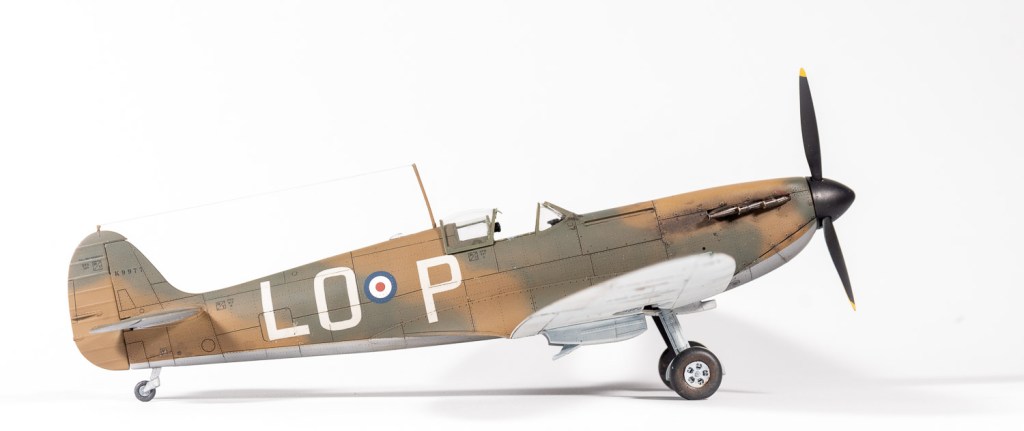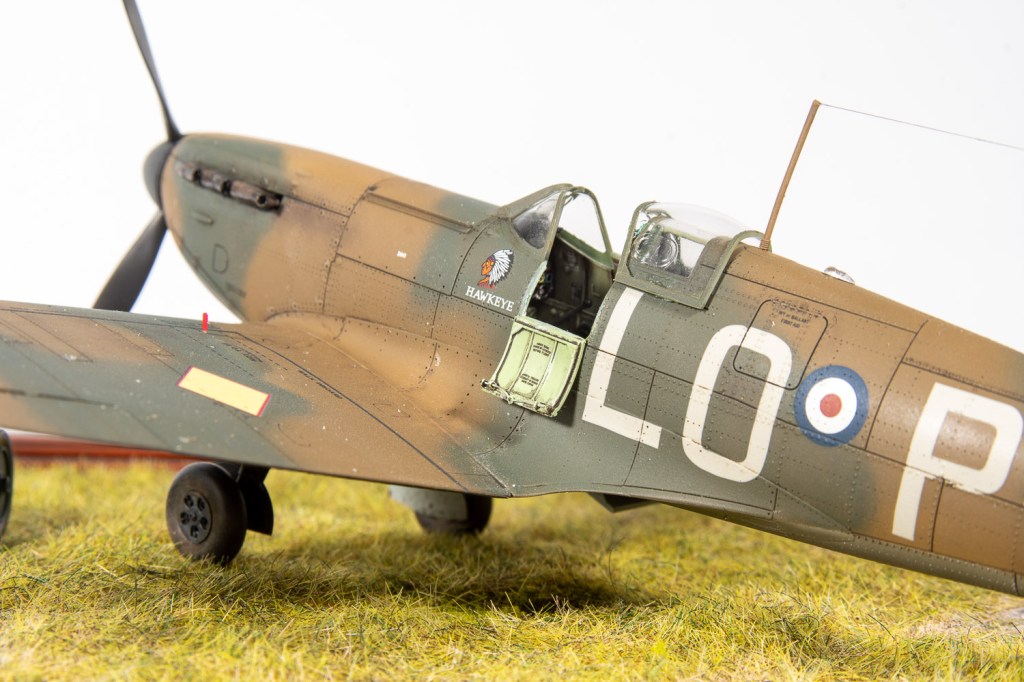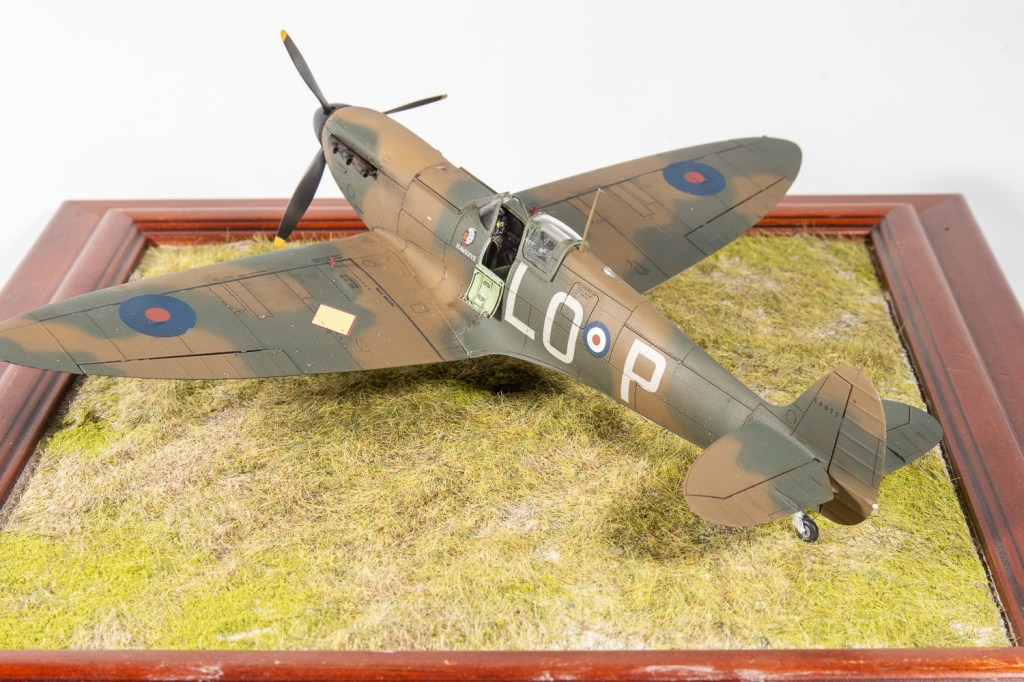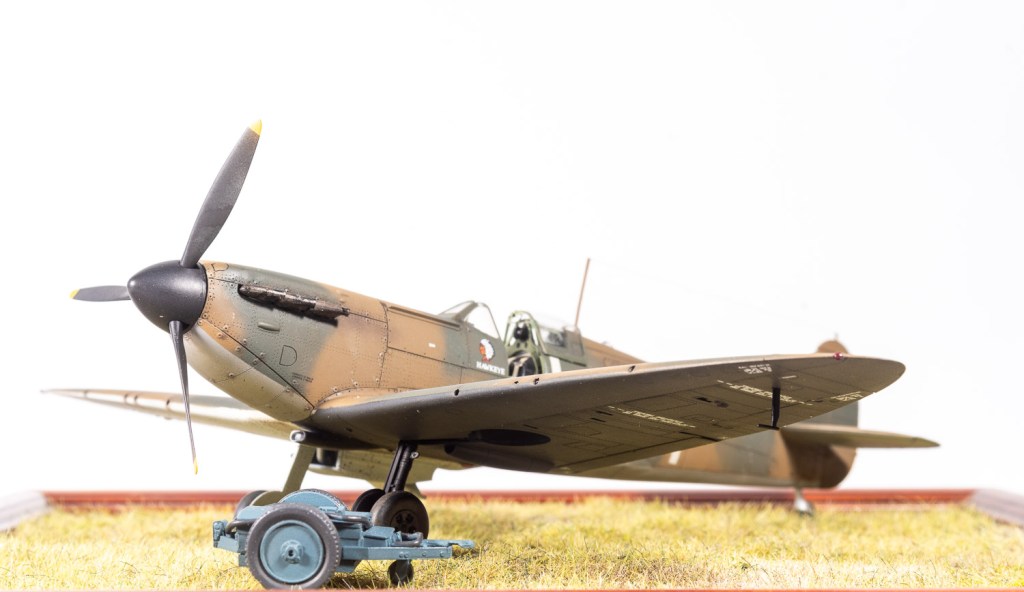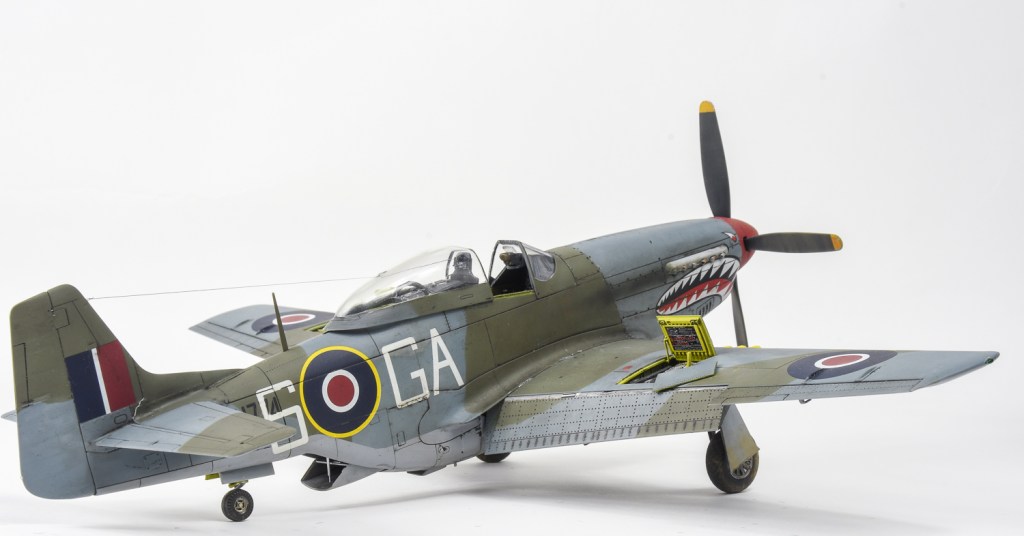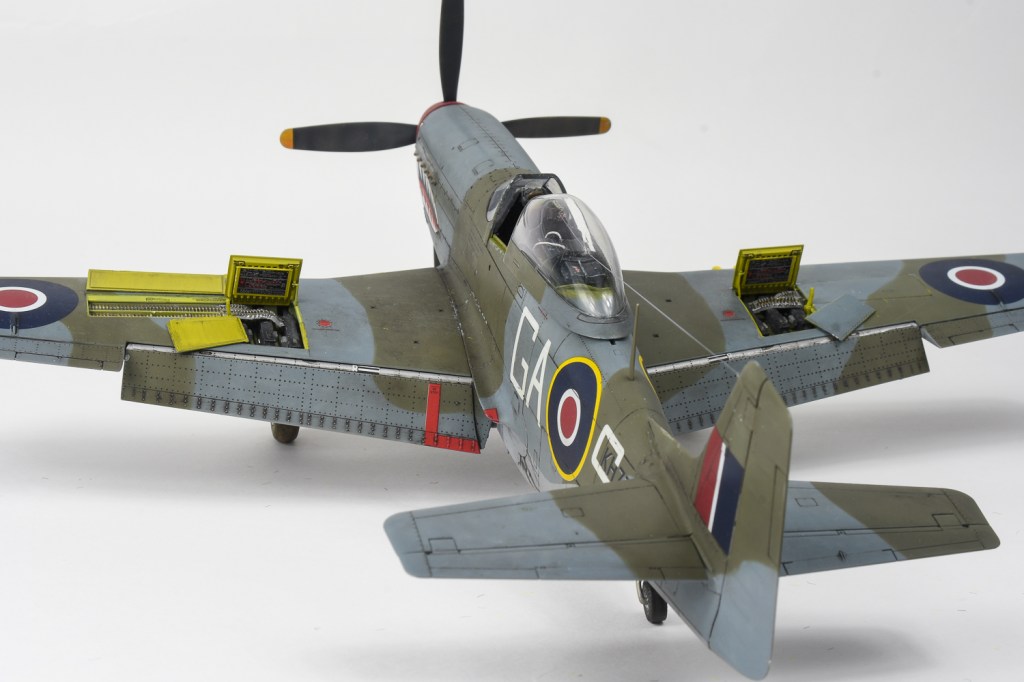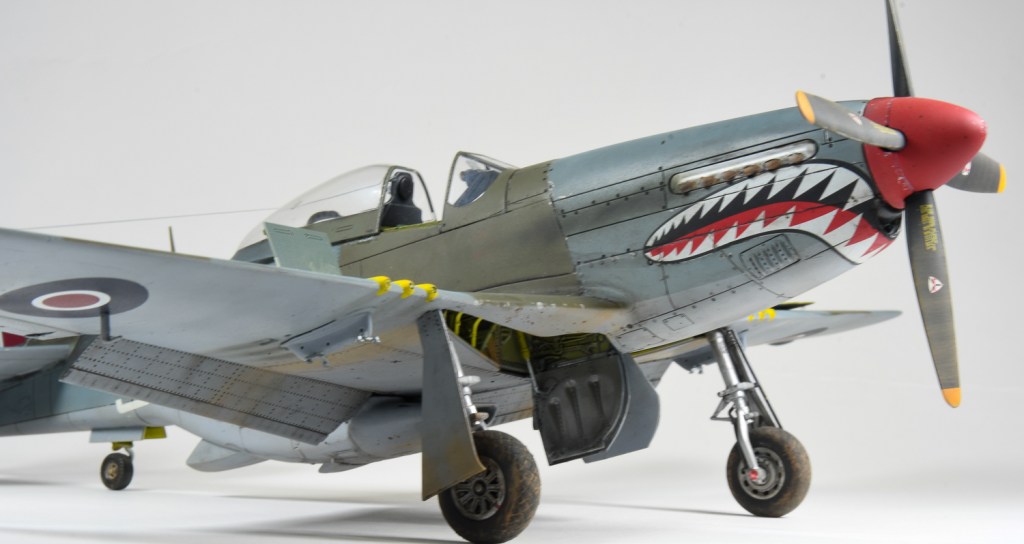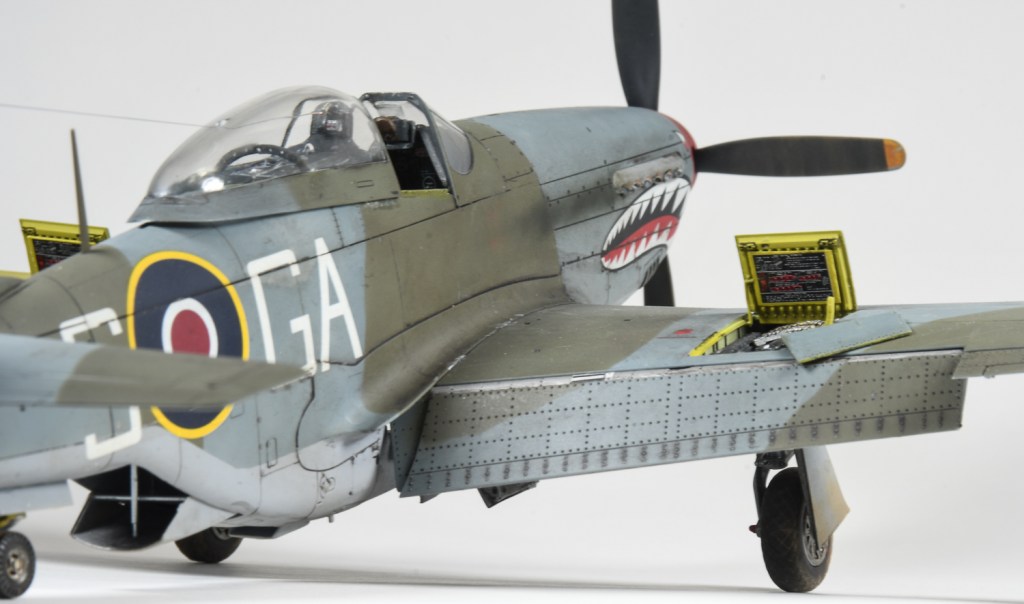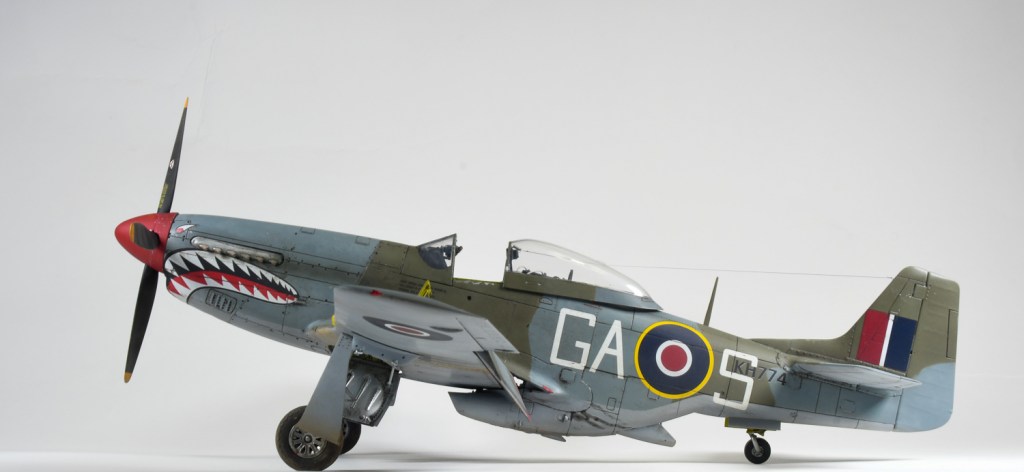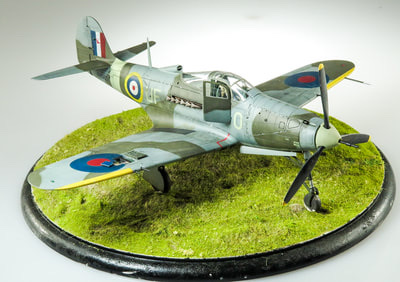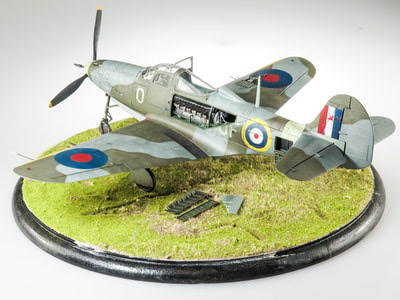
Trumpeter 1/32 P-47D Thunderbolt

Built:  2019
     Enhancements Used: 
Gunbays: Eduard PE. Wheels-Brassin. Seat Belts-HGW. Gun Barrels-Master Barrel

Decals:  Combination of Ad Astra masks and Superscale Cowl checks

One of my New Year resolutions was to tackle some of the stalled builds taking up room in my cupboard. 
Being as the Trumpeter Thunderbolt box was taking up the most room, it was summarily dragged down onto the Cutting Mat.
I’m not sure when or why work on this stalled, but a look in the box revealed all major sub assemblies completed, just needing their seams dressed and then bringing together to be ready for paint.  A nice shortcut to getting Build No.2 done for the year. 

I rate Trumpeter’s Razorback Thunderbolt as  one of their nicer kits. Reasonably accurate, options to allow dropped flaps. open gunbays, open or closed canopy, and plenty of underwing stores options.  It also goes together quite quickly if you don’t use all the unnecessary interior parts. such as the   full ducting for the superchargers.  Contrary to a lot of on line builds and reviews out there, the  cockpit does not require the ducting to sit on, as it is will locate quite solidly  into slots provided on each fuselage half.  The wing spars slot through the openings provided for them as well without needing the ducting added.  Leaving these parts out plus the engine accessory bay greatly simplifies the assembly of the model.

All I added behind the engine was the bulkhead and firewall to provide some rigidity to the fuselage.  Its a big model, and you do not want seams popping open when it is picked up or otherwise handled. Assembly still throws out a few  fit issues.  Steps on the wing undersides when fitted to the fuselage, leading edge gun inserts and windscreen all required attention on mine.  The attention taking the form of filler and plastic shims to even up gaps and steps.  I have heard the gunbay panels can be an troublesome fit, but this would not concern me as I wanted mine open.  If the details there, why not show it off, right?

The only frustration I found, in common with all Trumpeter’s radial engine kits is the poor fit of the engine parts.  The parts certainly do not click together with the result it is quite easy to end up with an engine and propeller out of alignment as I found on my Hellcat build. 
This is then compounded by Trumpeter also not engineering the cowling to be a strong positive fit to either the engine or airframe.  At least in the thunderbolt, the engine is held solidly within the cowling by a frame.
I further reinforced the cowling airframe join by inserting two pieces of plastic tubing into the cooler ducts to provide a more positive fit

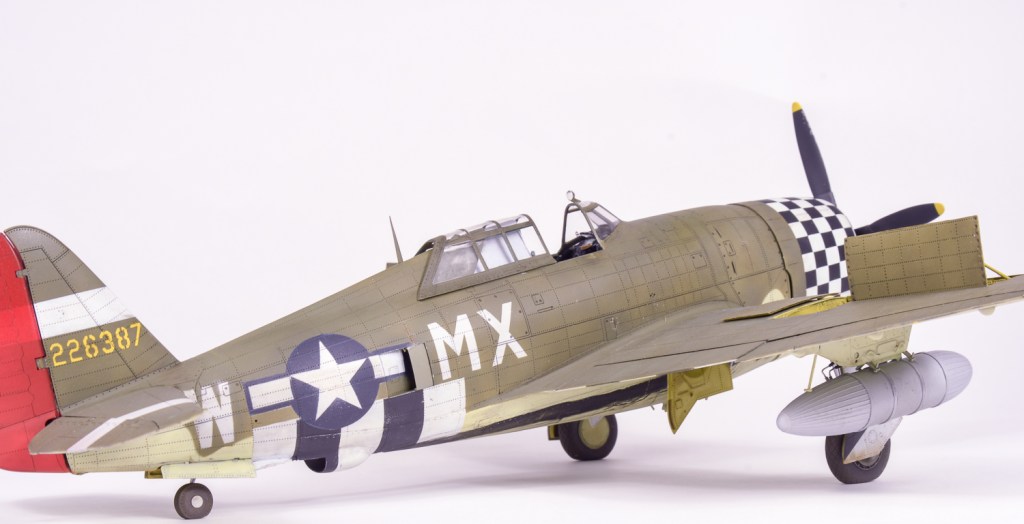
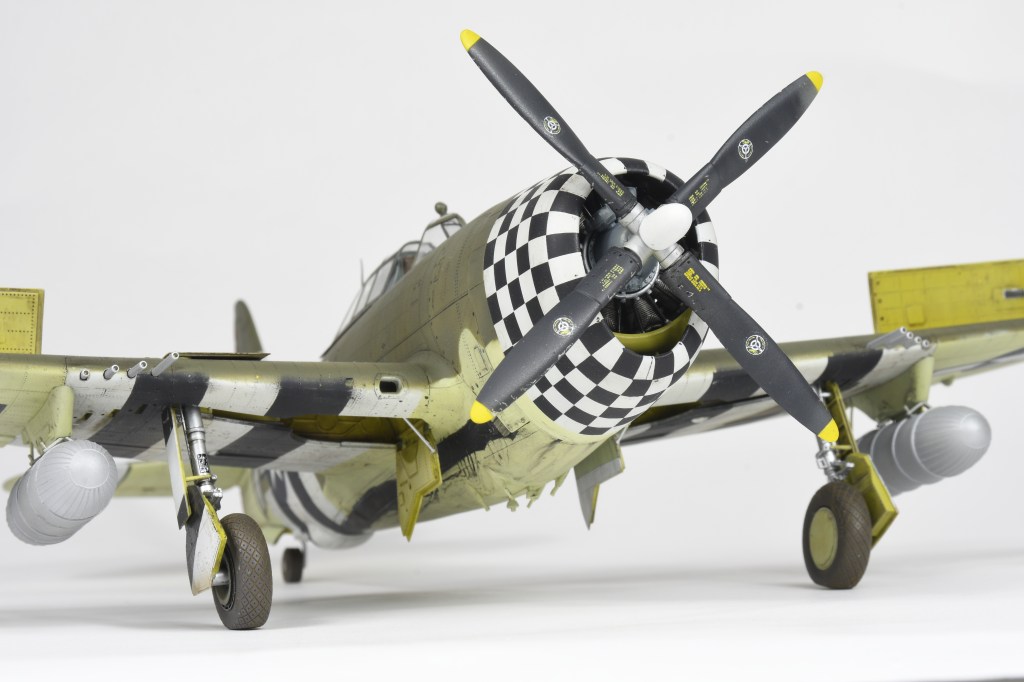
In regards to the chosen scheme, I have always thought the checkered cowling of the 78th FG would stand out in the cabinet, so looked for a suitable machine to model.  I was quite taken by “Miss Behave” with her RAF colours of dark green upper surfaces, and sky undersurfaces.  Invasion stripes, red rudder and the scalloped area under the canopy remaining NMF reinforced my choice. 

With this scheme originally picked when the model was originally started, masks for all markings were ordered from a bloke in Canada that called himself Ad Astra masks.  Now sadly no longer doing them as mask set was excellent to use.  He based the masks on photos of the real aircraft and an aeromaster decal sheet.

This time, the deciasion was made to apply the insignia first, mask and then paint the camouflage.  It was hoped doing this, the masks would be easier to align, and I would avoid that thin white ring of built up paint you can get if painting the markings last
What I learnt from this was the US star and bar markings must be the most complex markings to paint, even more so than RAF type A1 roundels.  There are just so many elements you need to ensure are aligned and straight.  Anyway I got there in the end having to only touch up two stars  Painted markings are the only way to go in 32 scale in my opinion.  Even the “miss Behave” came out nicely, a true testament to the great job Ad Astra did cutting these masks.  Then there was the cowling!
Well, I tried to mask that too using a montex mask set, but it was just an abject failure, so was my attempt at cutting little squares of Tamiya tape.  Buggar it, I thought, this will be decalled, so I dragged out the Barracuda sheet, but I could not get this aligned either despite it being sized for the Trumpeter kit.  It must be me as I imagine Roy would have been meticulous in designing the sheet..  Rapidly running out of options, I found an old Superscale sheet with checks on it for the old Revell kit.   It fit surprisingly well, just needing a couple of black squares filled in with black paint around the cowl opening and underneath where the two halves met.

This just left the final assembly where I discovered I had lost a wingtip light and also one of the landing gear covers.  Despite hunting high and low, no sign of them.  I can only think I accidentally chucked the gear cover out as it was stuck to  the big ball of Tamiya tape that was sitting on my desk.  The jigsaw that are HGW belts were then assembled using wild guesswork as to how they all threaded together!  HGW could really help here by providing step by step instructions rather than just a picture of the completed belts.  

Searches of the various fora hasn’t revealed anyone else knowing how to assemble them either!  The guns also provided a bit of frustration trying to get them all aligned and properly seated.  I really need to either test fit these items and engineer proper fit, or assemble them way before I get to this stage.  I had the same problems with the guns on my hellcat.  To add the brass gun tubes, I simply drilled the holes in the leading edges out slightly and pushed them through into the breechs. 
The 108 gallon drop tanks are from the kit with plumbing added from wire and steadying braces from plastic rod.  If I was being strict to the 84FS’s missions I should have added bombs as after D-Day this squadron switched from long range escort duties to ground attack, but I wanted my aircraft to wear the tanks.

​Adding the ammo bay doors, I also discovered I had the door upside down when I painted the star and bar portion on it.  A modeller worried about perfection would have repainted the star.  I just flipped the door upside down as the model had got to the stage where I just wanted it off the bench so I could move onto something new. 
Does anyone else get like this?

The photo I had of Miss Behave showed no chipping or fading that I could make out, just that very extensive oil streak leading from the oil cooler doors, so this was added with black oil paint, and then the whole model dullcoated .  I should probably go back and gloss the oil streaks at some stage.
It was then time to sit back and enjoy the model, happy that I had reduced by one the small amount of kits on the shelf of doom. (there’s still 6 on the SoD if you must know!)
Overall, not as good as I was hoping it would turn out, but it still looks imposing on the shelf and Im happy I have a 32 razorback in markings not usually seen.  I just love that big checkered cowling.  I really hope that we get a 1/32 P-47D from Tamiya at some stage.

Republic P-47D-22RE Thunderbolt 84FS 78thFG 8th A.F U.S.A.A.F Duxford England. 1944

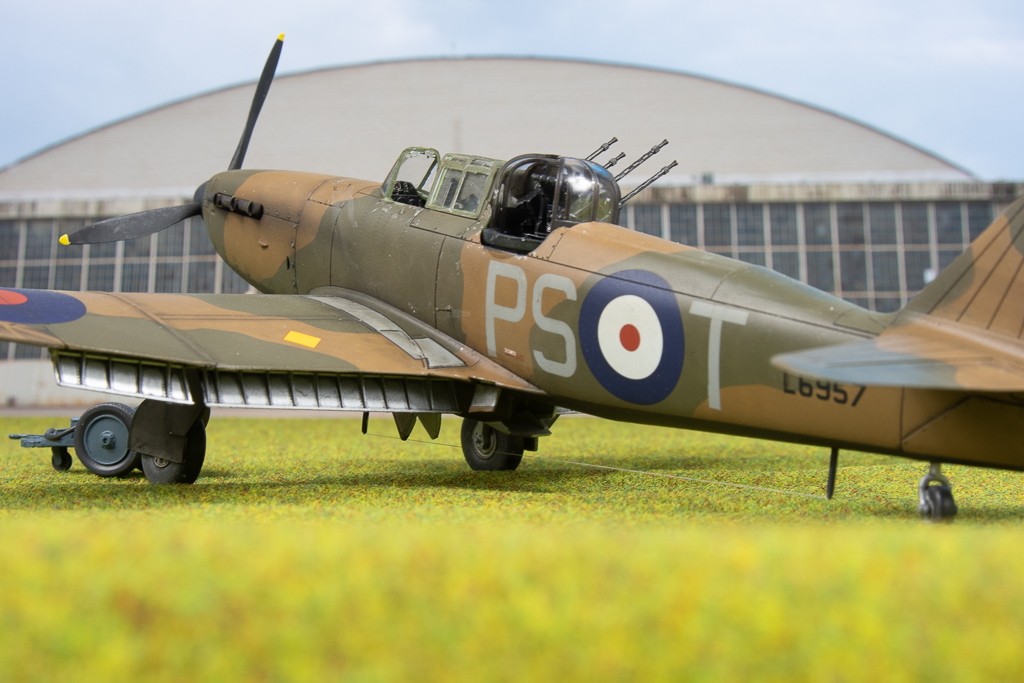
Airfix 1/48 Boulton Paul Defiant Mk1

  • Built: 2019
         Enhancements :  Eduard Interior and exterior details
  •                                    Landing Flaps: Eduard. 
  •                                    Gun barrels; Master Model
  •                                    Wheels; Barracuda Studios 
  •                                    Exhausts: Quickboost    
  •                                    Paint:  Gunze
    ​                                   Decals: Ropasmodels 
Airfix’s 1/48 Defiant, released in 2016, and purchased by myself soon after is what we have now come to expect from Airfix’s new line of kits.   Evocative box art, soft grey plastic, sharply printed decals and well illustrated  clear instructions outlining the different  ways you can complete your defiant, in flight, or wheels down, separate control surfaces, choice of open or closed canopy, this also extends to the turret, which can be modelled with the doors open, and raised or lowered turtledeck  (why are they called turtle decks?)
Neither the now obsolete Classic Airframes or Trumpeter kit offered that.

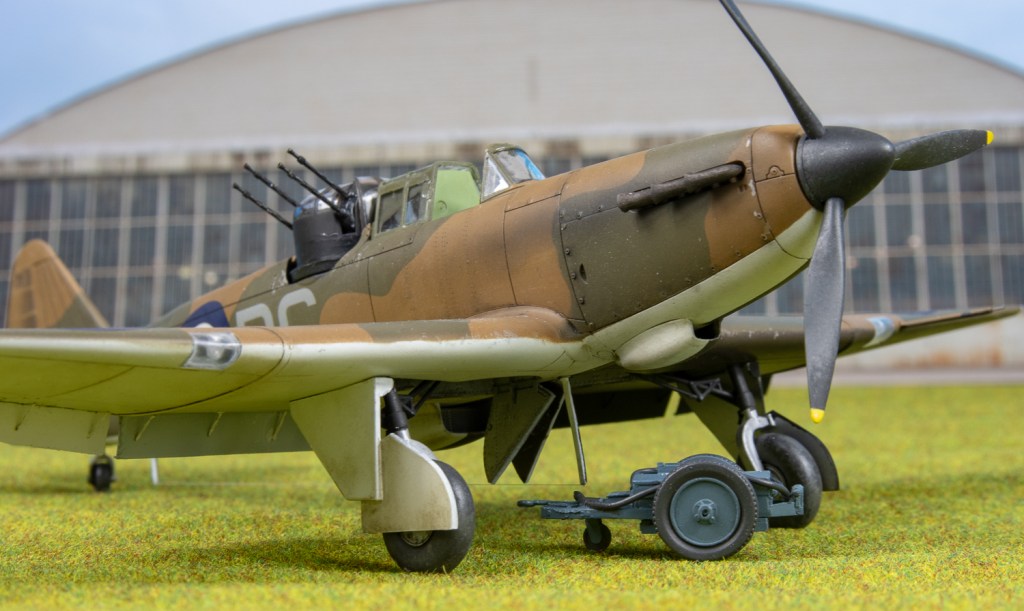
I decided that wasn’t enough for me though, so added Eduard’s flap set.  My search of defiant photos revealed a few on the ground with flaps cracked open, certainly not fully open as I have depicted, but that’s how I pictured I wanted the completed model to look.
Construction was fairly painless, fit being almost excellent.  I needed to trim the cockpit floor on one side as the wing assembly did not not quite close up snugly underneath the fuselage on one side.  The cowling also needed a bit of clamping, as again on one side I had a bit of a gap underneath the oil tank cover.  I can only surmise I had the floor slightly out of alignment.  The eduard set added the colour printed instrument panel and some side console detail plus the seat straps for pilot and gunner.  I have read some on line reviews bemoaning the simplified cockpit, to me, what you get in the box is fine, especially when dressed with the eduard PE.  The wheel wells also get a helping of PE around their walls which brings them to life.  The model built up quickly, the smallest amount of filler being needed around the tailplanes and the rear underside join of the power wings to the fuselage.  The PE flaps were folded up without difficulty (surprisingly for me) and offered up to the previously cut out kit flaps.  Some shimming was needed to spread the open areas of the rear wing to ensure the rear wall of the brass flap bay sat at the same level as the underside of the wing.  I should have taken my time a bit more here ensuring a better fit, and cutting out the slots for the flap actuators which I completely missed.
The machine gun barrels were cut off and the breeches drilled to take the sublime master Models barrels. I fit these wherever possible as they really add to the look of the model.  It would be icing on the cake if they came pre blackened!  The kit pitot tube was also replaced with Albion Alloys tubing.  Although there is nothing wrong with the kit wheels, being moulded as they are, weighted and with separate hubs, I had a set of Barracuda wheels in the box, so these were duly added.  Waste not, want not. The landing lights were not the best fit, so were fitted at this time, so they could be faired in prior to painting.

The turret popped into place without all the fuss, some other online and magazine builds report, but I was surprised to have trouble pushing the clear dome down onto the base, thinned white glue being required to fill the resultant small gap.

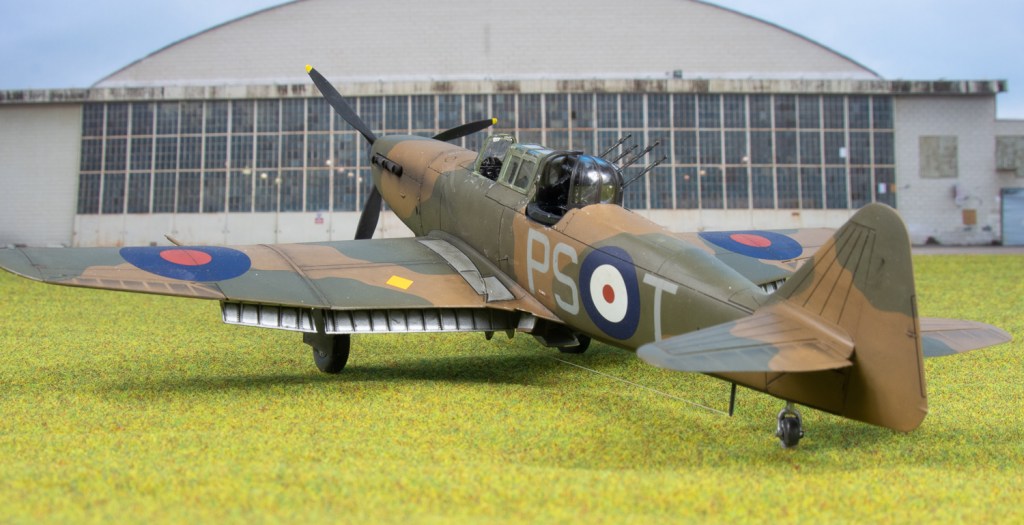
Painting was made easy using a set of camouflage masks from Mal Mayfield.  From the decal sheet, I had decided on an early war scheme with the black and white undersides and A type fuselage roundel to push home the early war use of this aircraft.  The decal manufacturer was new to me, I ended up using the kit roundels and codes and Ropos’  roundels looked a little bright, whilst the codes looked too pale.  The “T” was sourced from an Extradecal Medium Sea Grey RAF Codes sheet, as  With the multitude of decal sheets on the market, these generic sheets are not as probably as handy as they once were, but to me, they are still a must have in my decal bank for this very reason.  The only decals I used from were the serials and these performed fine, being quite thin.  No stencilling was applied to the underside as they would have all been overpainted when the undersides were done. AK panel line wash for brown/green aircraft was used as  a wash on the top surfaces.  Chipping was added using vallejo silver, whilst highly thinned tamely black was used for the exhaust stains.  Emboldened by watching Plasmo use his dremel to  surgically cut parts out, I set forth with my dremel to open up the kit exhausts.  30 seconds later, I was ordering quickboost  exhausts from BNA Modelworld. Rather than displaying the same skill as Plasmo, my exhausts looked like Dexter, the serial killer had gone to work on them.  You will need to cut off one of the locating tabs  in order to fit them into the airfoil slots.  Whilst you are ordering your exhausts, also order a set of landing gear covers, as the kit ones are overly thick and simplified, and do not portray the real ones very well.

Final assembly involved adding the undercarriage which fitted snugly into their respective sockets.  I was expecting a fight with the flaps and their tiny actuators, but was pleasantly surprised how easy they were to place.  In reality the actuators should fir in their respective slots, but I failed to cut out the ones on the bottom wing and clogged the flap ones with a thick coat of future I had applied to also act as a glue.  Therefore my actuators are a butt fit to wing and flap which is not correct for the real machine.
An  aerial line from EZ line  and a bit of sprue and punched plastic disc to represent the extended gunners footstep bought my first build for 2019 to a close. 

Boulton Paul Defiant Mk.1 264 SQN Royal Air Force. Biggin Hill. February 1940
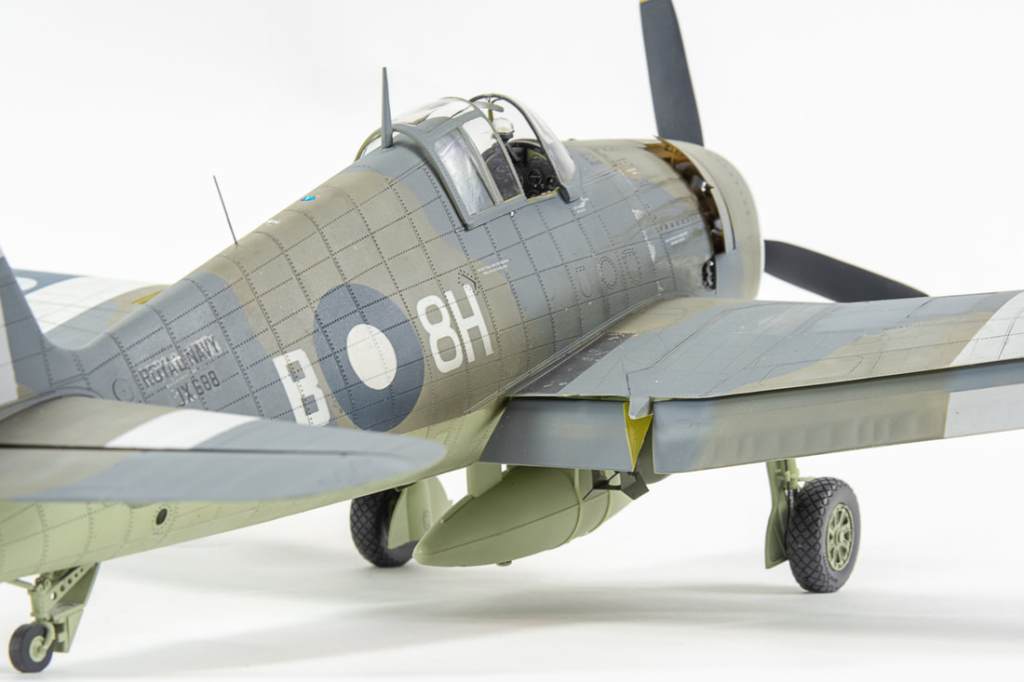
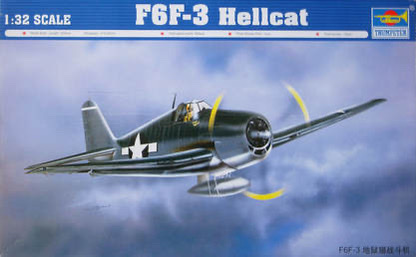
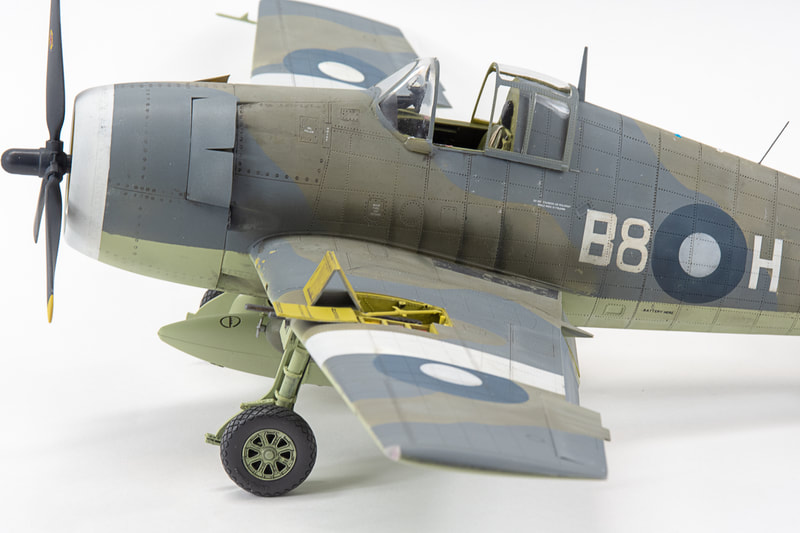
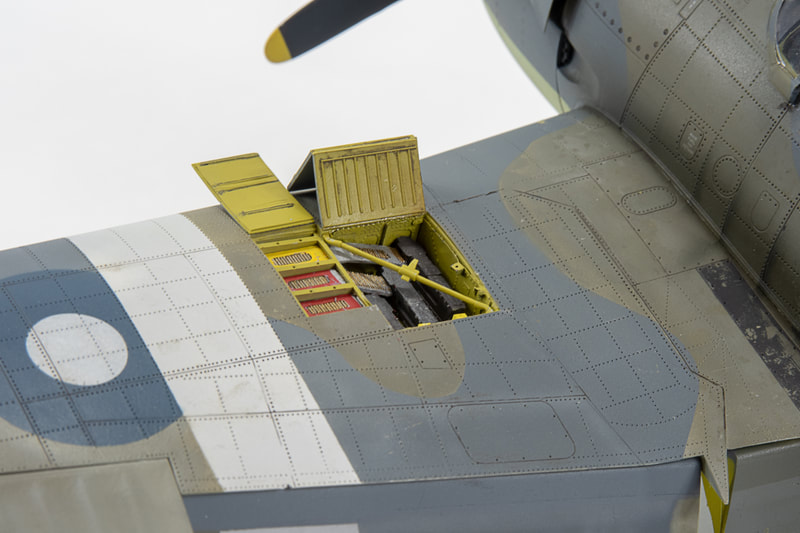
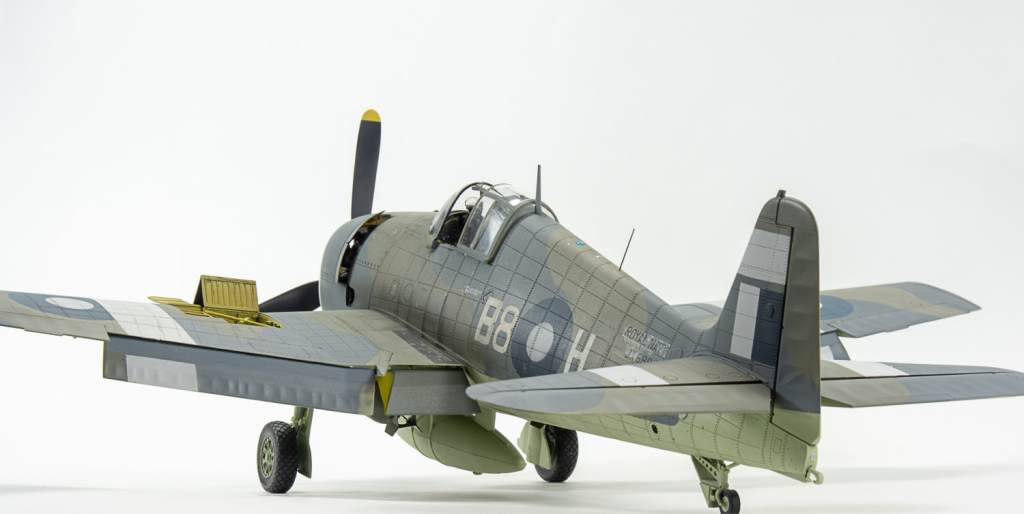
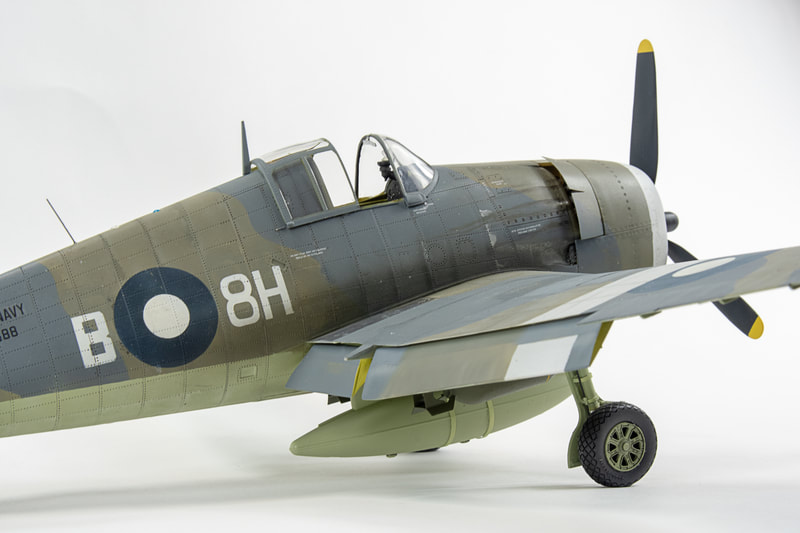
Trumpeter 1/32 Hellcat MkII

  • Built: 2018

    Aftermarket Used:  Cockpit:Eduard Interior. Wheelwells, Eduard PE. Wheels-Barracuda. Seat Belts-HGW. 

Decals:  Home made masks

I first made the trumpeter hellcat in 2007, and finished it as a FAA machine.  I quite liked the build, and the scheme, but unfortunately the model got damaged in a house move.  I bought this model with the idea of making another FAA Hellcat, and initially was quite motivated when the kit made my to do pile for 2018 builds.  That motivation evaporated when it hit my bench and I discovered the wings had sink marks in them over the rear spars.  As I had just completed two involved builds of the HobbyBoss Tomcats, here and here I just didn’t need the grief, so the model went on the “For Sale” pile.  A week later, I decided I wasn’t going to let any minor sink marks beat me, and the kit ended up back on the bench.  A bit of brushed on Mr Surfacer 500 made quick work of the sink marks.  Restoring the rivets wasn’t as hard as I had imagined which is what really led me to put the kit aside in the first place.  A Rosie Riveter tool was used  plus the ubiquitous sewing needle.

The Eduard interior set was used for the cockpit, the pre painted etch certainly giving that busy look to the consoles and circuit breakers that painting just cannot achieve. The Trumpeter hellcat suffers from a few inaccuracies, the main one being the cockpit is far too wide and the rear fuselage does not capture the flat sides of the real machine.  This did not bother me greatly with my first hellcat, but with this one, I cant unsee it.
In an effort to reduce the oval sides, I sanded flat  the curved sides of the interior bulkheads, and when glueing the fuselage halves together, pushed in the fuselage sides aft of the cockpit.  If it made any difference, it was minimal.  The engine accessories, bearers and oil tank were all left out, as was the radio equipment as none of it will be seen, the engine itself pushed into the  firewall, so the bearers are not required to be assembled.
Fit of the major parts was pretty good as it usually is with most trumpeter kits, even the wing halves mating nicely in the extended position, although I managed to introduce a slight step between the port wing sections.
Prior to this, the moulded wheel well ribs had been shaved off so that the eduard parts could be used.  These being fairly easy to place and  superior to  the shallow kit detail.
The completed wing sub assembly nestled in nicely to the fuselage, with again just a smear of Mr Surfacer.  Eduard provide a PE panel that skins the panel adjacent to this seam so that you don not lose any detail through sanding.  Painting the scheme was made easier by using LF Models  camouflage mask but I’m jumping ahead!  As my chosen aircraft was a Hellcat MkII, or F6F-5, and the kit represents a late -3, a few changes had to be made.  The windscreen in particular needed some frames sanding off.  The clarity was restored with various grades of micromesh, and Eduards canopy mask set for the trumpeter -5 used to save me masking some tricky curves.  A rear view mirror was furnished from then plastic card and added to the interior of the screen.  FAA Hellcats also had a round external mirror mounted to the top of the windscreen and this has still to be added to the completed model.  The camouflage was started by first spraying the white areas before masking these off so the sky undersurfaces and  dark slate grey, and extra dark sea grey uppers could be painted.  Extracolour paints were used for this, the final model I will be using enamels on as I finally made the decision to abandon them in favour of acrylics and lacquers.  For the roundels, a friend cut them from an upscaled and scanned aeromaster sheet for FAA Hellcats.  This is the second time I have got a friend to cut masks for me, and I’m wondering whether I should just buy a cutter myself although the learning curve with the software scares me.  Trumpeter also left the supporting straps off the drop tank although they have included the holes in the fuselage underside for them.  I fashioned them from thein strips of plastic card glued to rod which then was pushed into the holes.  Bombs were from the kit, although the tailfins were from the Eduard sheet.  Stippled on Mr Surfacer represented the cast iron bodies before they were painted olive drab with a yellow ring denoting HE.  Around this point my interest in the model started to wane.  I had had to repaint the roundels a couple of times and touch up various parts of the airframe paintwork caused by clumsy handling and poor masking. The serials which were decals had also silvered.
  The model was not reflecting the vision I had started with, and I was keen just to get it finished and off the bench.  I decided to scrimp a lot of the weathering and shading I had planned instead opting for a simple wash and some oil streaks using AK Dark wash.  This is something I really need to beat next year, so that I see each model through to completion with a consistent level of skill and patience. Roy Sutherland’s superb resin wheels were painted and glued to the previously assembled undercarriage legs, which had had wire brake lines added.
 Finally exhaust streaks were added with highly thinned Tamiya NATO black, although I don’t think they are nearly pronounced enough before the whole model was hit with Testors Dullcote, and that signalled the end of 2018 for me modelling wise.  Shame about those silvered decals, and Ive just noticed the prop is off centre too!


Grumman Hellcat MkII. 896 SQN. Royal Navy Fleet Air Arm.  HMS Emperor 1945


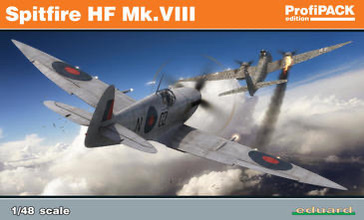
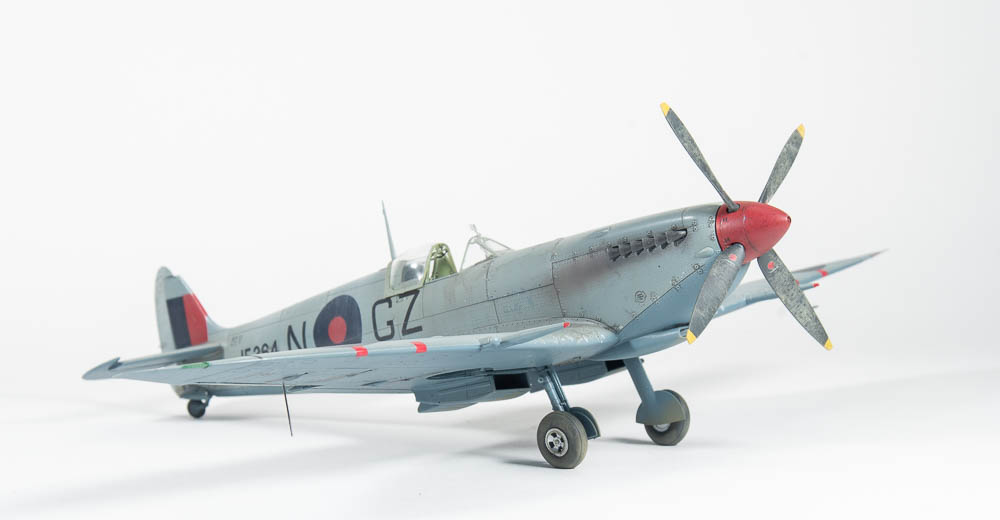
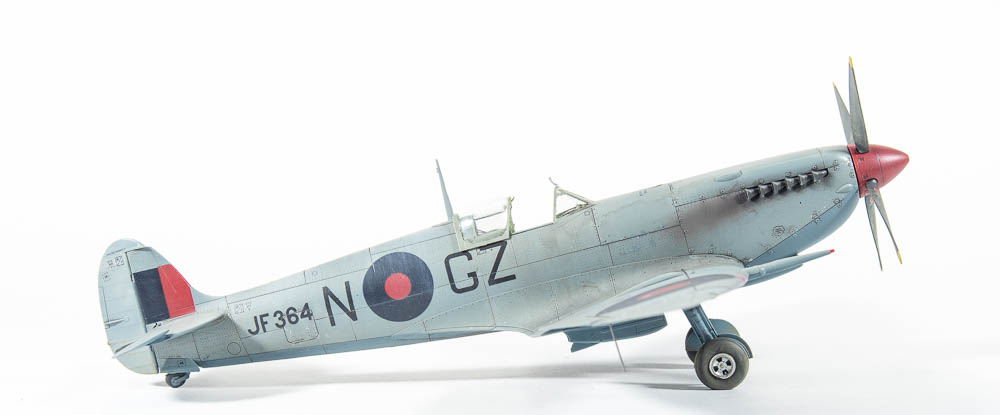
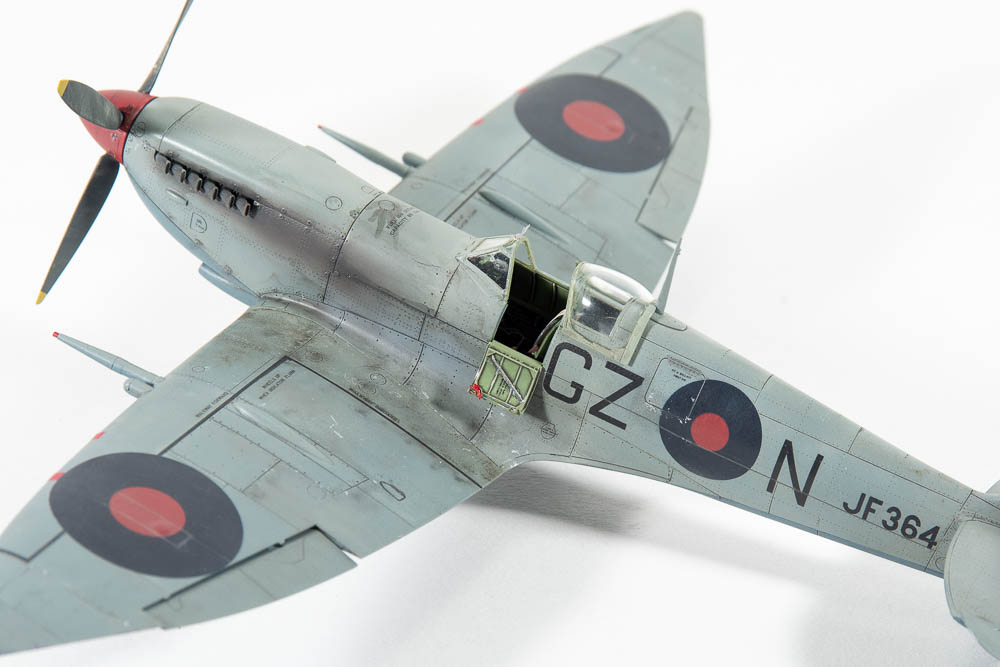
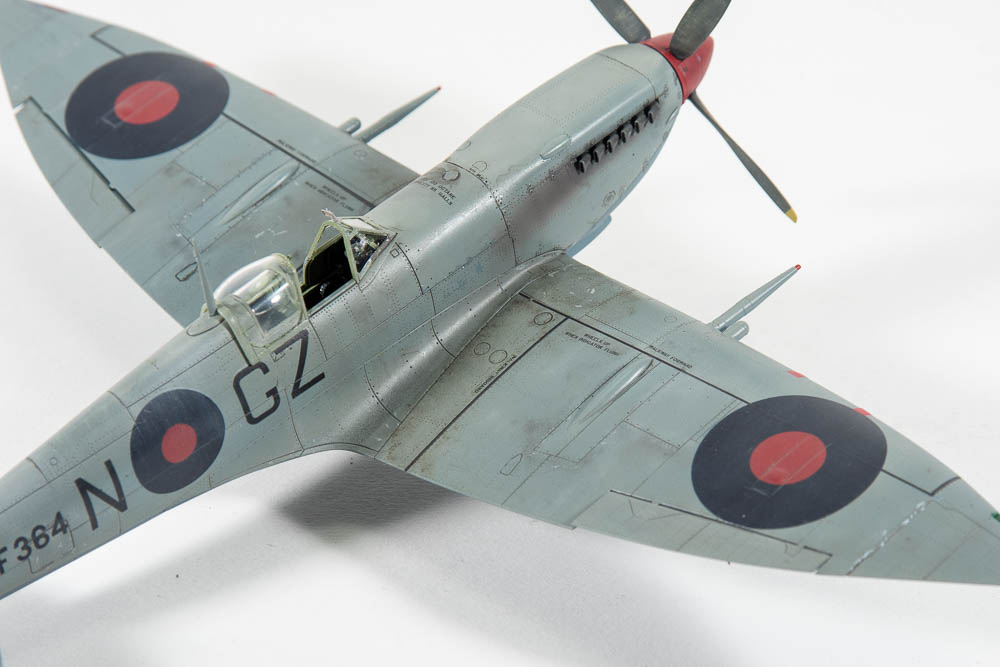
Eduard 1/48 Supermarine Spitfire HFVIII

  • Date Completed:2018
  •   Aftermarket Used:  None, model built completely from box
  •   Paint Used: Xtracolour Medium Sea Grey and PRU Blue

Supermarine Spitfire HF Mk.VIII 32 SQN Foggia. Italy 1944

This model was completed as a review build for The Modelling News, so I will not put a detailed guide here as the article covers the build and finishing in depth.
http://www.themodellingnews.com/2018/08/build-guide-spitfire-mk-hf-viii-in-48th.html
http://www.themodellingnews.com/2018/08/painting-finishing-bruce-tops-off-his.html#more
  Which only leaves me to say, this really was an enjoyable build.  If you have not built one of the Eduard Spitfires, Get On it!!!

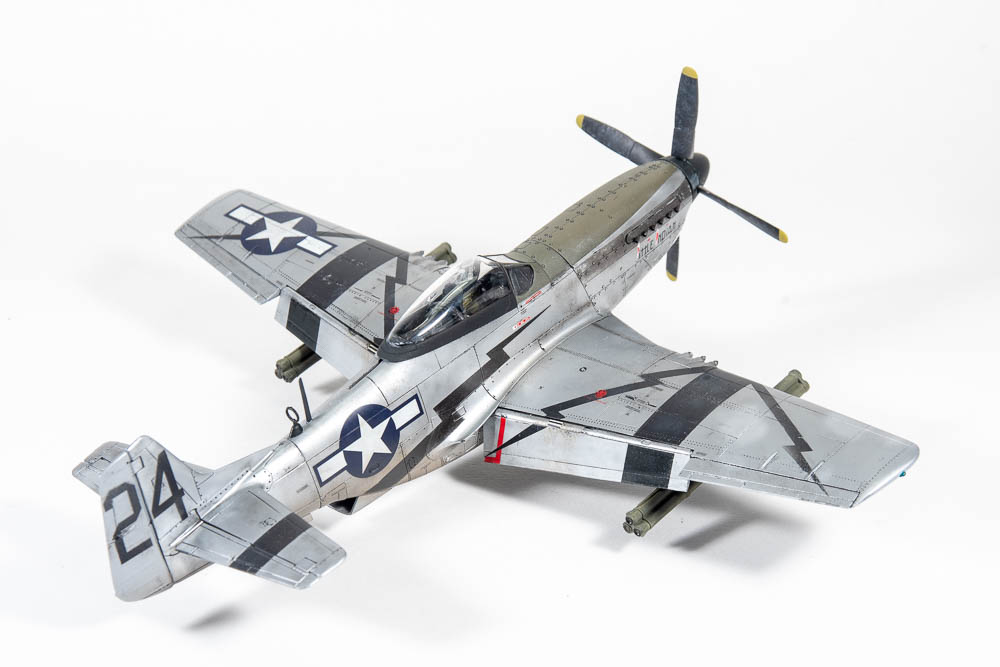
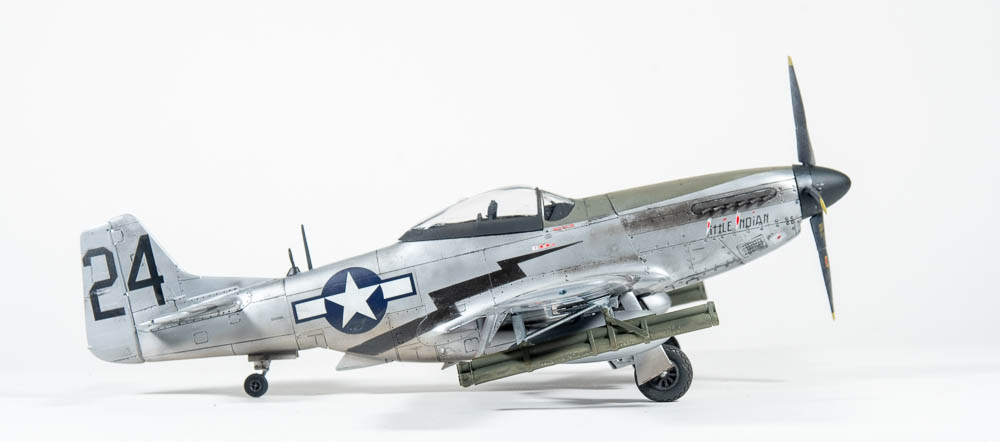
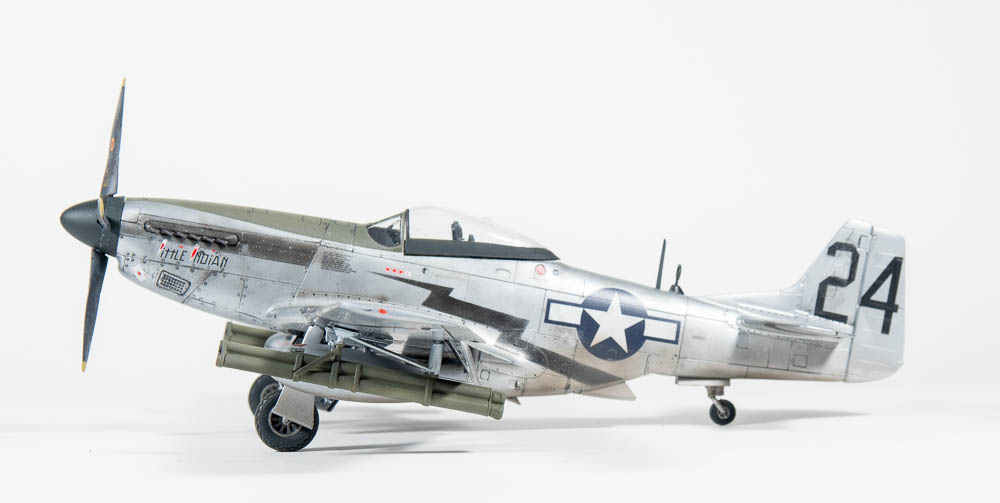
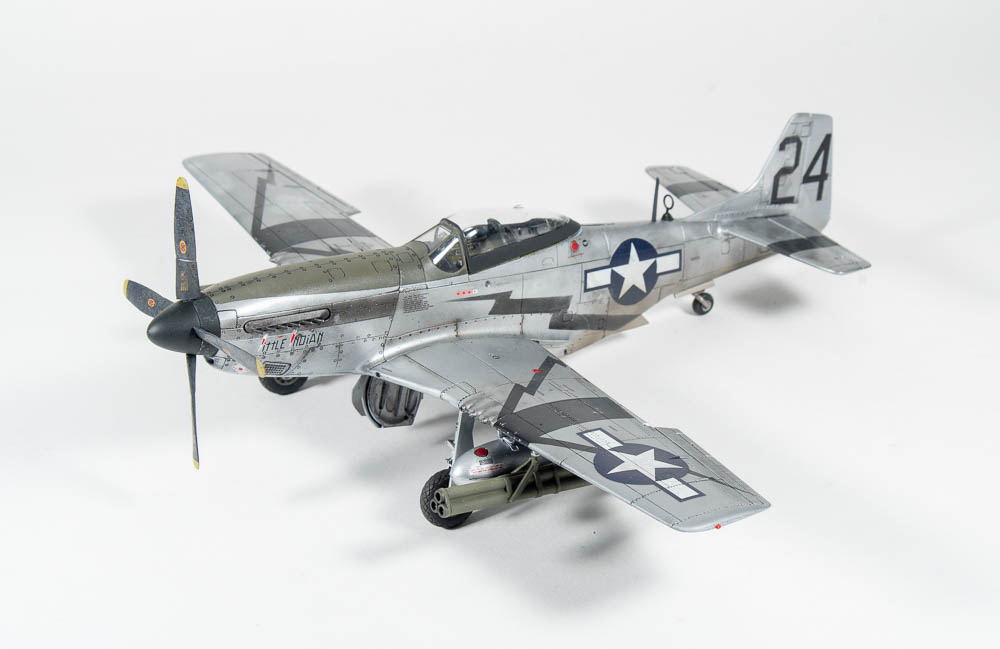
Airfix 1/48 North American P-51D Mustang

Year Purchased: 2018
Date Completed:  April 2018
Aftermarket Used: Eduard Brassin shrouded exhausts
Paint: Floquil Bright silver, Xtracolour Olive Drab, various vallejo and tamiya colours used for detail painting

Construction Notes: Im loving the new Airfix kits.  This is the second Ive built after the walrus.  From the excellent box art to the many options included in each kit, you can tell they are designed with the modeller in mind.
Airfix’s mustang was a very enjoyable build, with excellent engineering, detail and fit.  That there will be other boxings is evident from the options in the kit for different windscreens, canopies and tail units.  A Commonwealth boxing has already been announced.  As good as the kit is, it is let down by a few parts, mainly the cross hatched wheels, where the tread just does not extend to the centre of the tyres.  You will either have to source replacements, or scribe the tread in ( badly) as I did.  Brassin make resin replacements, but inexplicably would have you drill out the hubs rather than use the same mounting as the kit uses.  I would also recommend the Brassin M-10s as the kit ones are a little clunky.

 The propeller has some sink marks on the blade tips, and the gun inserts aren’t the best fit.  Other than these minor quibbles, the kit is a joy. 
There is some rivet detail on the wings which you will need to fill should you so desire, but the wheel wells are moulded correctly with the straight rear spar. The kit cockpit looks busy enough assembled OOB and even comes with decals for placards.  When choosing a scheme, I could not go past the striking 2ACG machine with its Black Lightning bolts on wings and fuselage, and it meant I could use those M-10 airborne bazooka tubes.
Rather than use the kit decals for the arrows I had a friend cut some masks for me.  Other than the black arrows, the kit decals were used and performed flawlessly.

I used Floquil Bright silver for the finish, with grey and black preshading underneath to try and get a bit of tonal variety. This will bear further experimentation as in certain light, you can see a bit of variation in the silver finish.
 I decided on impulse to build the kit for an upcoming themed competition, so feel I rushed it a little bit. Everything was going fine until I applied one of the Mig Panel line washes over what I thought would be an  impervious base of Future but to my horror, as well as removing the excess wash with an old T shirt, I also removed paint in some areas.  This then began the downward spiral of touchups which never match.  Anyway, its done, but Im annoyed that this is another finish that was going nicely until this stuff up sent it down a different path.  I can only surmise my coat of future was not thick enough.  Another enjoyable build, although these days I would build the Eduard kit.

U.S.A.A.C P-51D Mustang 2nd Air Commando Group India 1945

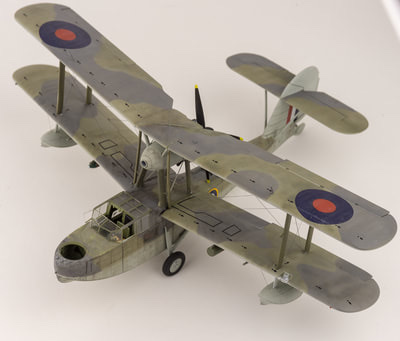
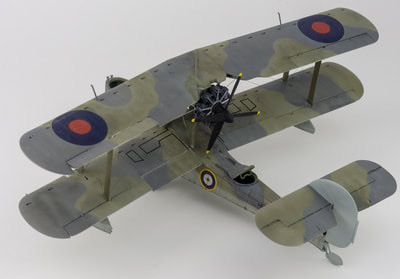
Airfix 1/48 Supermarine Walrus Mk1

  • Year Purchased: 2017
  • Date completed     March 2018
  • Aftermarket used:  Eduard mask set
  • ​Paint: Xtracolour Dark sea grey, Dark slate grey,  FAA sky grey

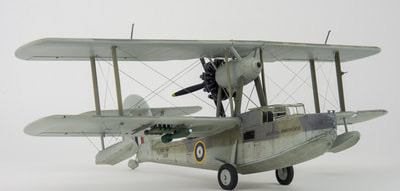
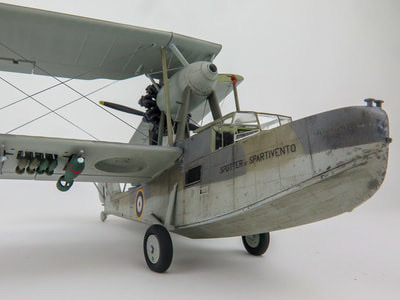
I had held off on getting Airfix’s new Walrus due to me having HPHs big resin 32 scale kit to build, however upon seeing a mate’s I just had to buy it. Not only that, I had to build it straight away!
Airfix are really kicking goals with their new 48 scale kits, and this is no exception, with a fully riveted hull,  stressed skin effect on the roof, a nice interior, and  several options that allow you to model the wings folded or spread, canopies open or closed and wheels up or down 
The model assembled well with good fit. I found it a thoroughly enjoyable build, well, until I got to the rigging!

Painting was done with xtracolours and all was good until I got to the rigging.  A combination of super glue that had gone off and would not instantly set and not really knowing what I was doing sort of bought the build undone.  Still, I got their in the end, better equipped to handle that wingnut wings kit I want to tackle this year.
Construction Notes
Although there are plenty of injection moulding pins present on the interior surfaces, you cant see any, apart from two in the extreme nose once the fuselage is together.
I elected to glue the roof to one side to better handle the joint as I could then attack it from both sides. Airfix have moulded some lovely surface detail into this kit so you want to reduce any need for sanding as much as possible
The centre “fan looking thing” needs all traces of the moulding seam sanded off before glueing between the two engine nacelle halves
I found the open cockpit a little too wide for the fuselage, although that could have been a fault on my part.
Back to my kit.  I found when on its wheels the folded wing float dragged on the ground due to me not securely glueing the wing spar.  At the last minute I decided to cut the spar off and have both wings extended, This is the wing with the aileron deflected up.  I could not debond the glue join unfortunately, so I will just have to live with it.
An enjoyable kit, although the rigging turned it into a bit of a grind in the end.

Supermarine Walrus Mk1 700 N.A.S Royal Navy. H.M.S Sheffield

Cyber-Wings 1/32 Messerschmitt Bf-109E3

  • Date Completed:  January 2018
  • Aftermarket Used
  • Gun barrels: Master Model
  • Paint: Mr Paint, Mr Color, Tamiya, Creos GSI
  • Decals: Stencils from kit, National markings painted on using Montex masks.

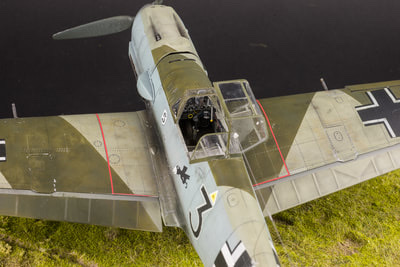
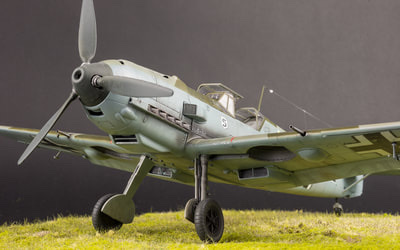
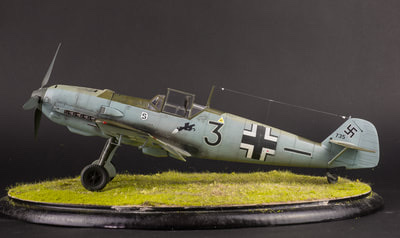
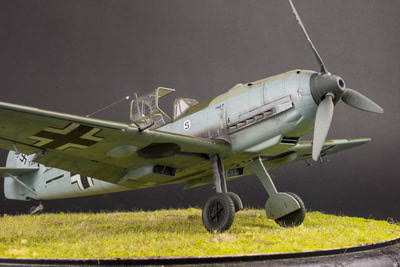
Ive always liked the lithe looks of the E model 109, and have always wanted to build one in “classic” Battle of France/Britain colours.  I have several 109s in the stash but picked out the Dragon one to do.  I also decided this would be a good kit to practise riveting on.  I used some plans I found in the Aero detail volume on the 109E firstly marking all rivet lines with a pencil and then using a Rosie The Riveter tool to emboss them on the kit parts.  It went quicker than I thought.  Otherwise the kit is OOB.  My copy had two left hand wheel well liners in it.  All attempts to get a replacement one from the so called support service “Dragon care” went unanswered.  Thanks for your useless after sales care Dragon!
The only difficulty I encountered with the kit was the well known problem of getting the engine cowl to sit over the guns.  I ended up just using the barrels glued to a bulkhead I fitted into the interior of the cowl.  Still not happy with the fit.  I thinned the rear edge as the real cowl is not a seamless fit with the gun cowl, certainly not as pronounced as the gap on my model though.  The kit PE was used for the seatbelts.  The kit PE hinges were fiddly to construct but look and function well when done.
Montex masks were used to portray Lt Walter Schneider’s machine from May 1940, not the most photographed aircraft but I managed to find a pic which tallied with the Montex masks.

Messerschmitt Bf-109E-3 Luftwaffe. France 1940
Kittyhawk 1/32 P-39 Bell Airacobra Mk1

Year Purchased: 2016
Date Completed: 2017
​Aftermarket used
Eduard 
Cockpit interior set, and exterior set ,exhausts
HGW Seatbelts RAF eraly style Sutton Harness
Mastercaster early style wheels and fishtail exhausts for Mk1
Master Model  .50in and .303 gun barrels with no flash hider
Maketar Masks  RAF and RAAF airacobra for Special Hobby kit

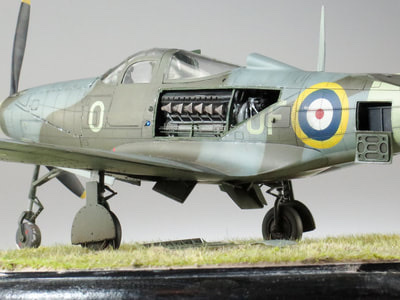
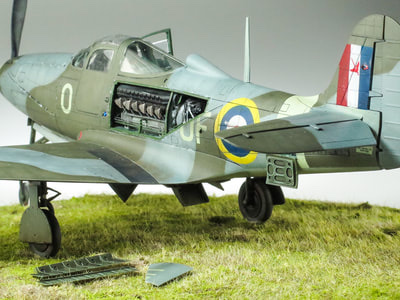
I have always loved the Airacobra in Royal Air Force markings, so when Kittyhawk announced their kit, thoughts turned to modifying it to represent a Mk 1 Airacobra as briefly used by 601 SQN
Research revealed there weren’t too many visible differences between the kit version and the one I wanted to model.  Fishtail exhausts, wheels, armament and a smaller diameter propeller being the main ones.  Mastercaster did wheels and exhausts for a Mk1.  Although made to fit the Special Hobby kit, they were easily adaptable to the KH kit.  Master of Poland supplied the gun barrels for wings and fuselage, the nose cannon being made from brass tubing.  I had planned to have the nose gun bay open, and had even gone as far as to replace the kit 37mm cannon with a 20mm hispano robbed from a HobbyBoss Spitfire, but in the end was not happy that I had portrayed the interior correctly, so reluctantly glued the panels shut.  The aerial mast was scratchbuilt from plastic strip, and the pitot tube came from a Trumpeter P-47
Overall I found the kit a reasonable build, although there were a couple of areas where fit was less than stellar, the wingroots being the main culprit.  This was due to the recess for the inner walls of the wheelbays not being deep enough.  The problem was solved by fitting the wings to the fuselage minus the wheelwell inner walls.  These were fitted after the wings were glued on.  To enable this, you need to cut the tabs off the wheelwell front and rear walls that the inner walls locate onto.  Do this and you will be rewarded with a join that just needs a smear of filler to hide.  It remains one of my favourite builds.

Bell P-39 Airacobra Mk1 601 SQN. Royal Air Force. Duxford 1941

Bronco 1/48 Curtiss Tomahawk 81-A2

  • Built: 2016
  • Aftermarket Used: Nil
  • Decals: Kit

This was the second review I did for The Modelling News and I had high hopes for it.  Unfortunately  the kit was  a bit of a chore, whether this was because I had just built a kittyhawk, or because of all the remedial work required,  I found myself having  to dig deep to finish the build.  
Despite its inaccuracies, the kit has some nice features, although I can not recommend it given the Airfix kit is far superior.  I imagine this will be relegated to the shadows, especially in the Western market.

Curtiss 81-A2 Hawk. American Volunteer Group. China. 1941

Special Hobby 1/32 Brewster Buffalo Mk1

  • Built: 2016
  • Aftermarket Used: Nil
  • Decals: Montex masks

This one had a period on The Shelf of Doom due to me damaging the windscreen.  Special Hobby kindly came to the rescue and supplied me a new one free of charge.  Exceedingly generous of them seeing as I was the one who cocked it up.  I added a few additions to the cockpit such as a British reflector gunsight and armoured glass screen to reflect the British modifications. All markings are sprayed using Montex masks.  I have since discovered a few colour inaccuracies, the fuselage band should be sky blue and there should be no yellow ring on the underside roundel.  I still like it though.  Its actually a kit that I would like to revisit as I do i have a soft spot for the tubby Buffalo.  This being the third one I have built, well fourth, as I remember building the old tamiya kit as well. 

Brewster Buffalo Mk 1 67 SQN. R.A.F Burma 1941