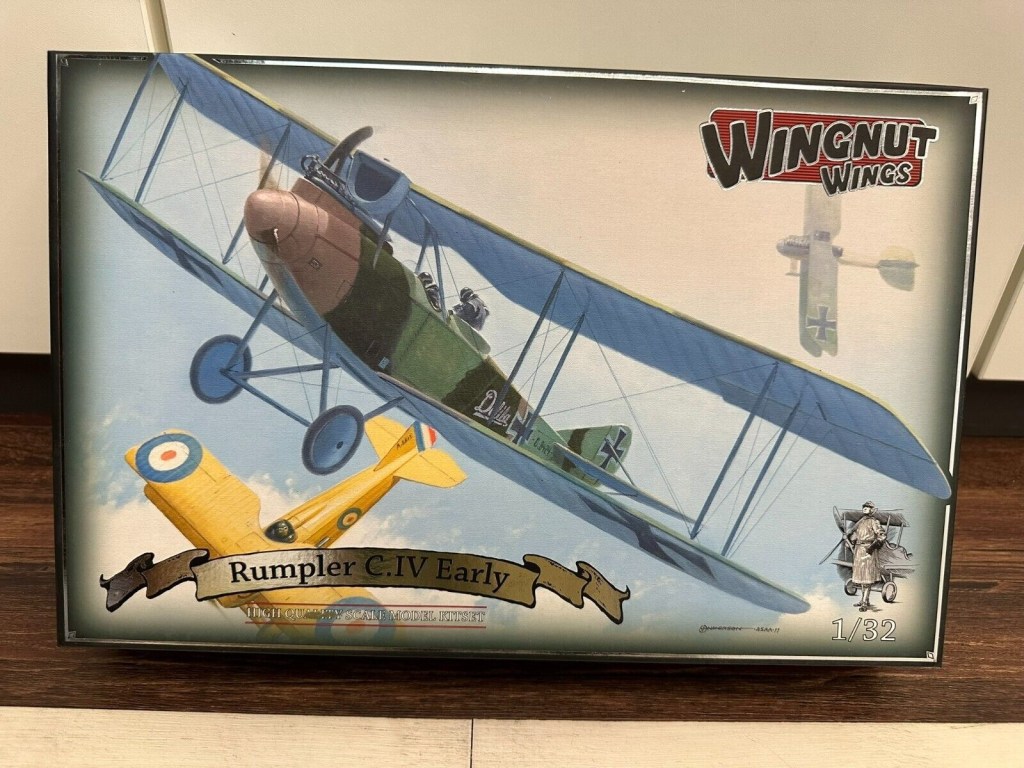
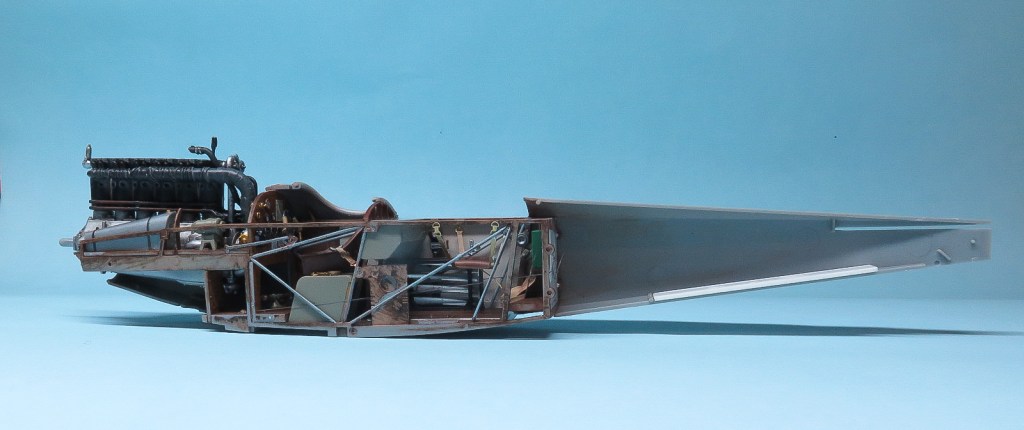
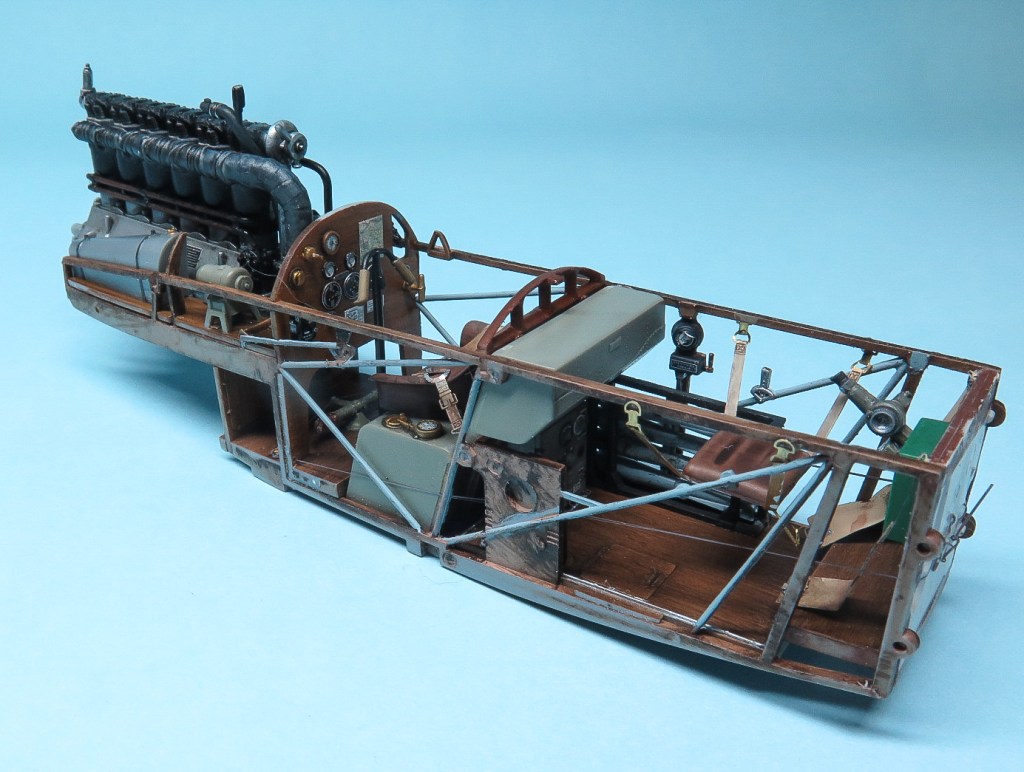
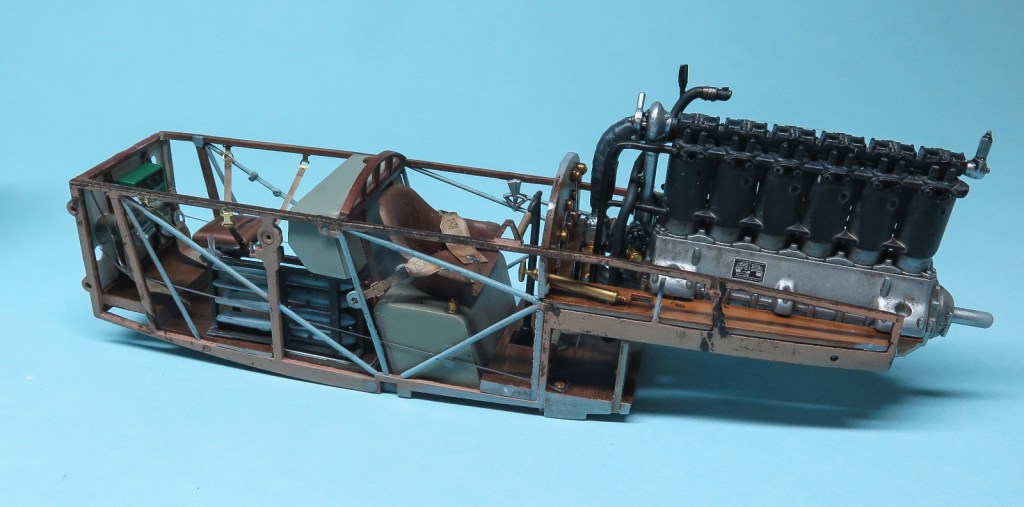
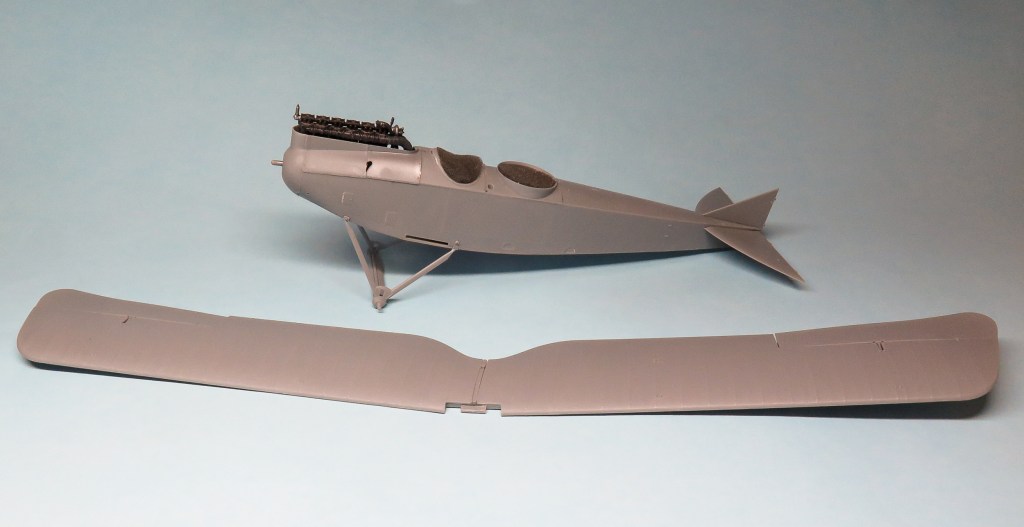
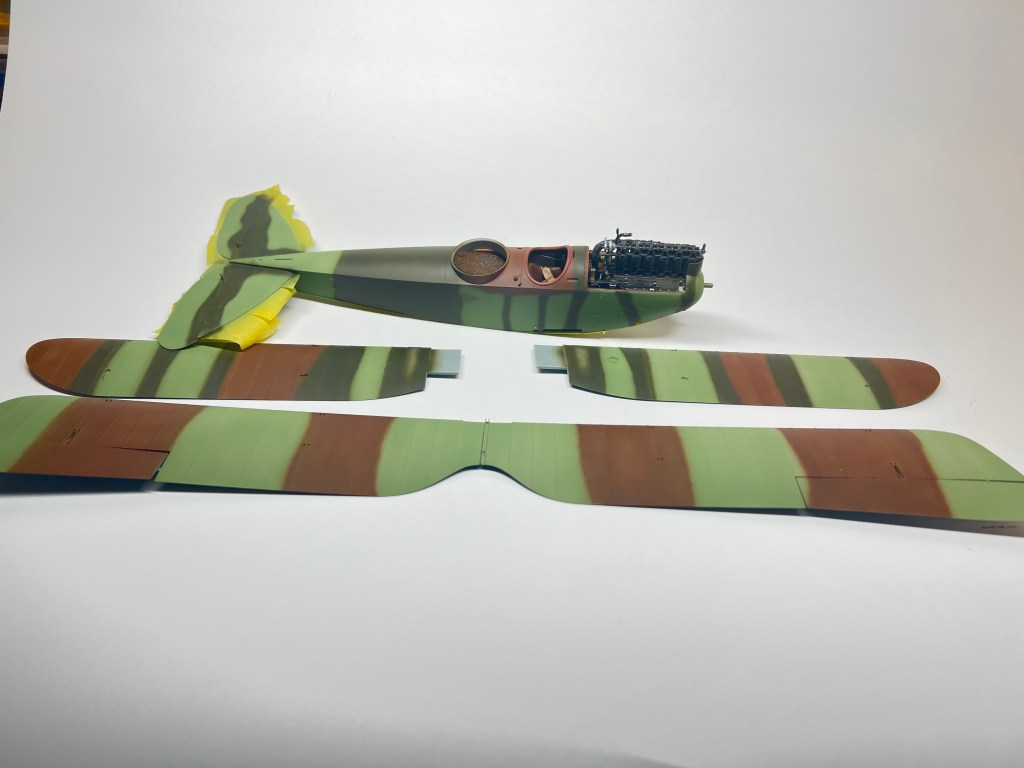
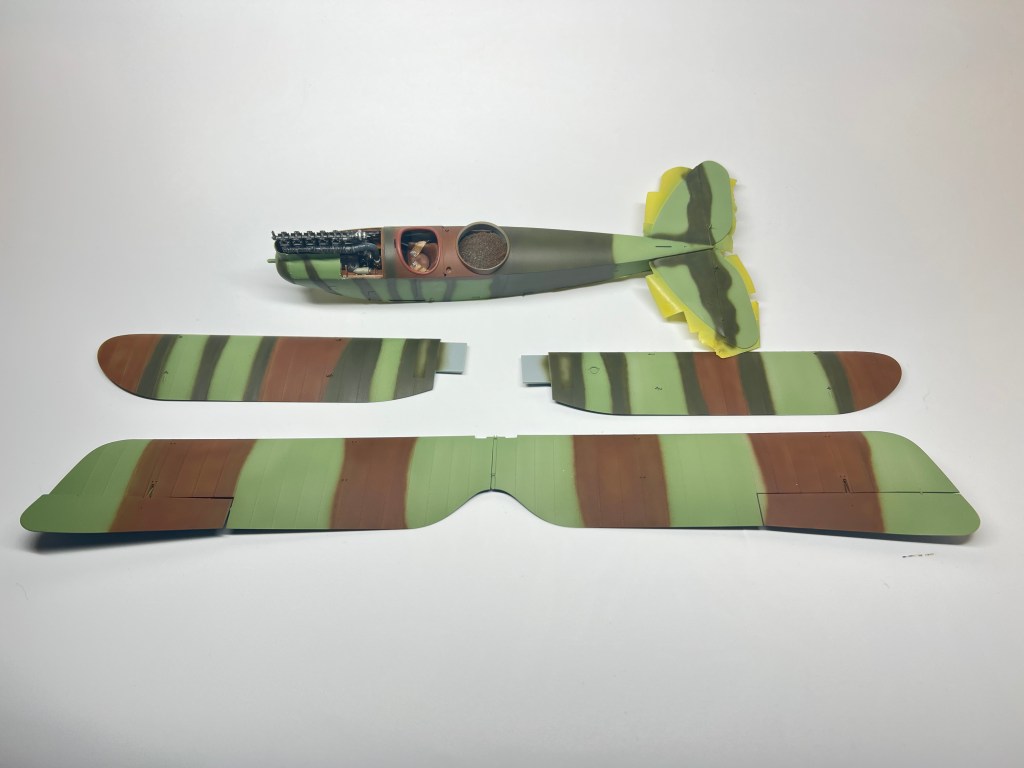
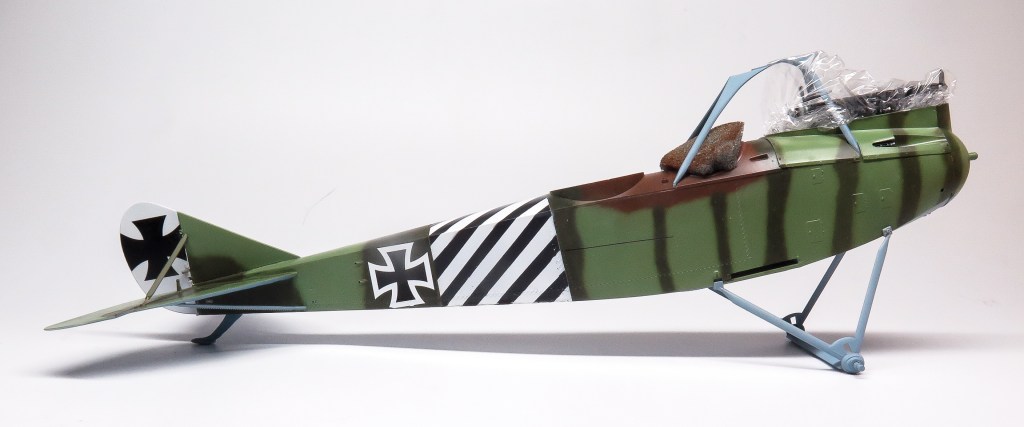
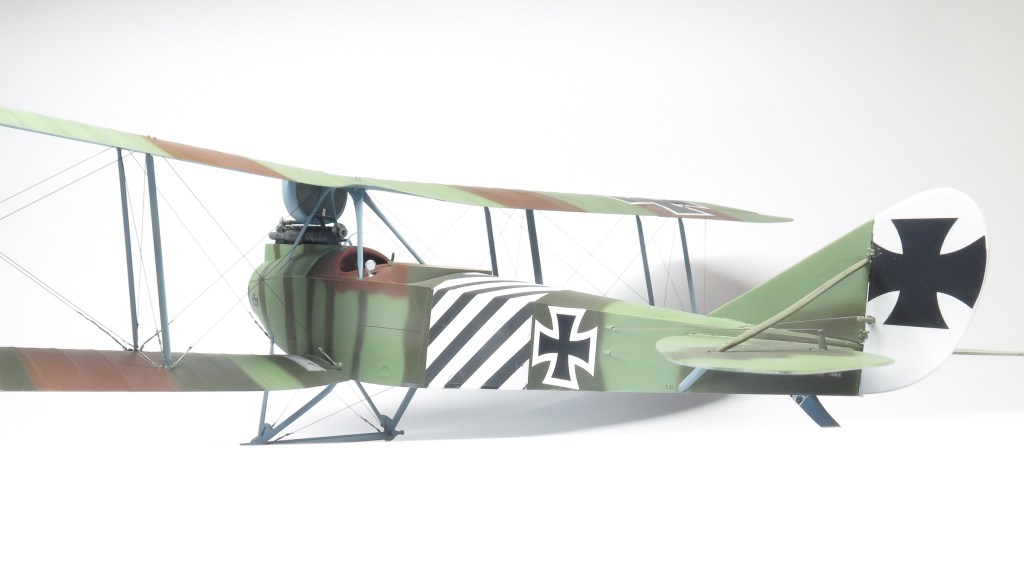
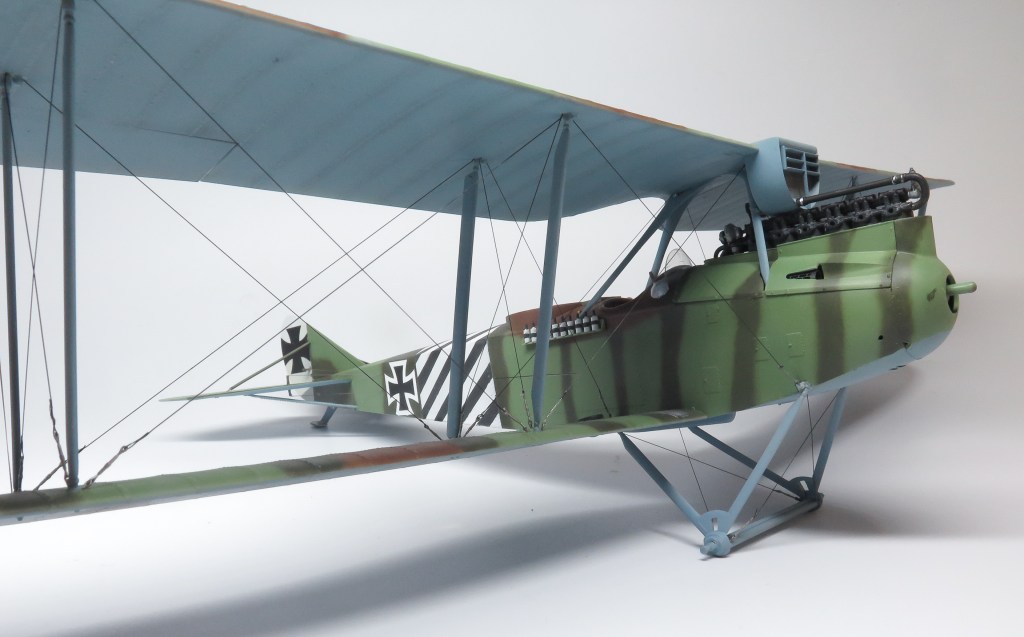
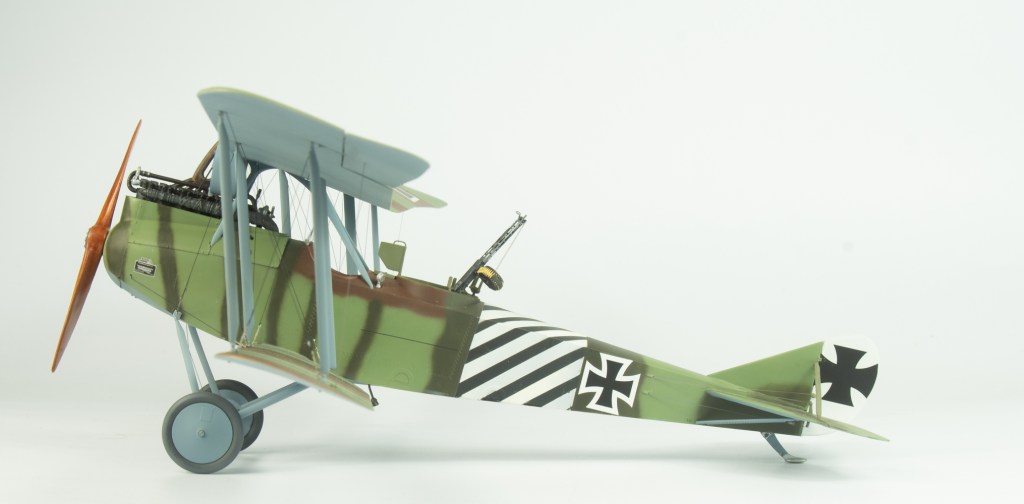
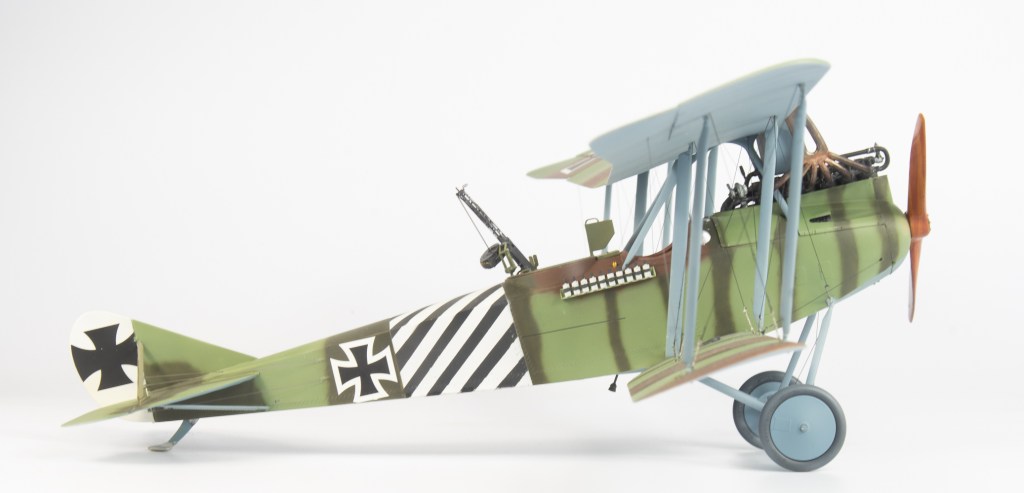
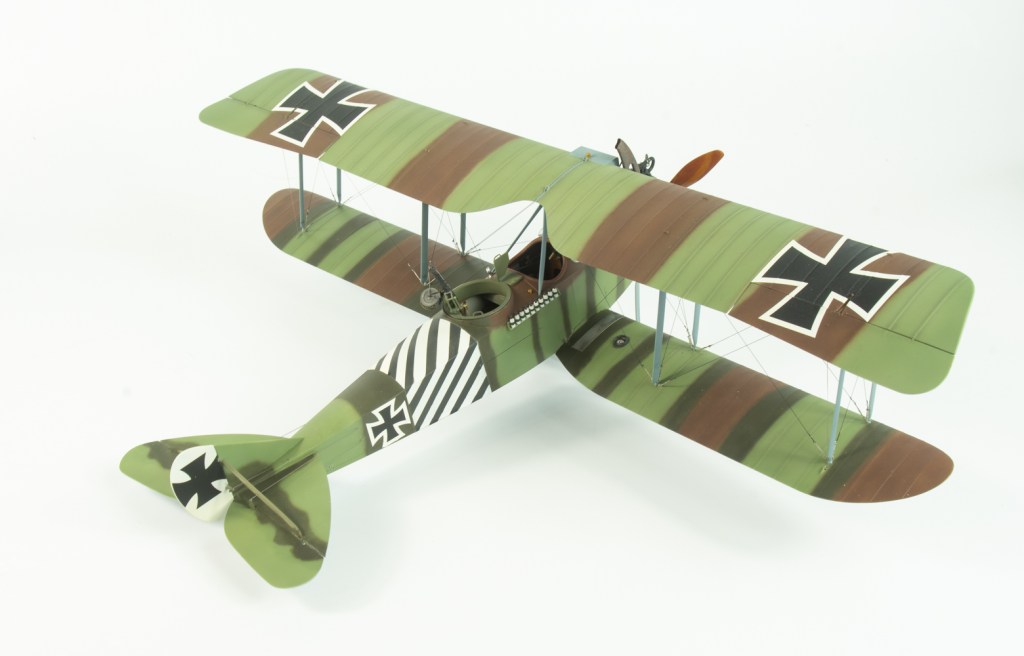
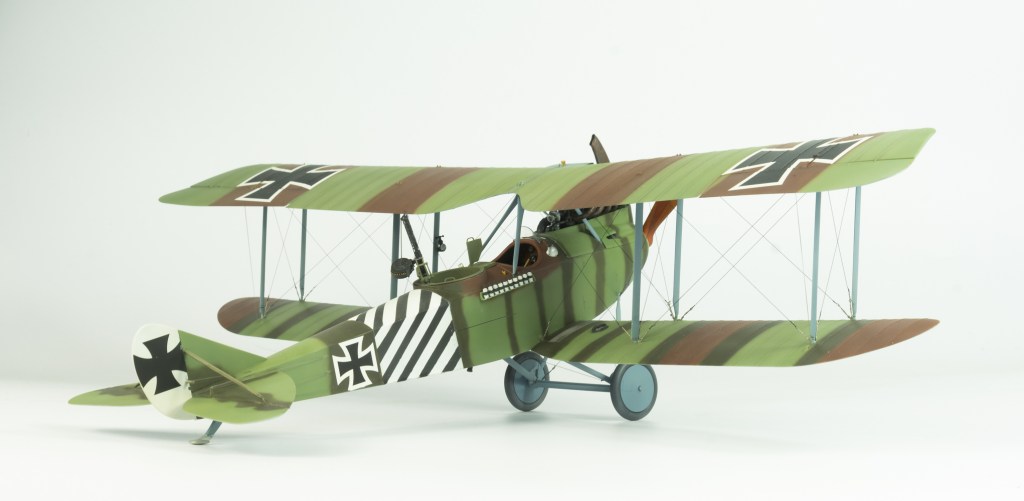
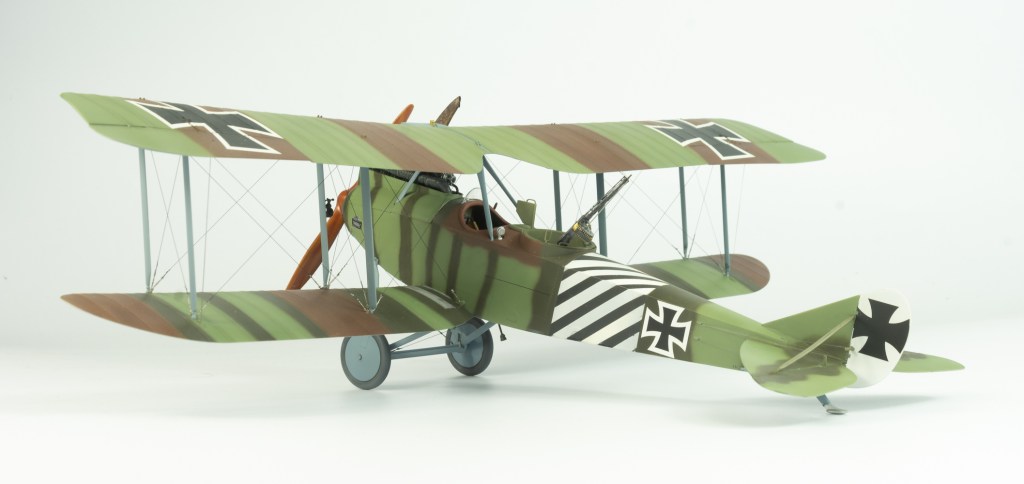
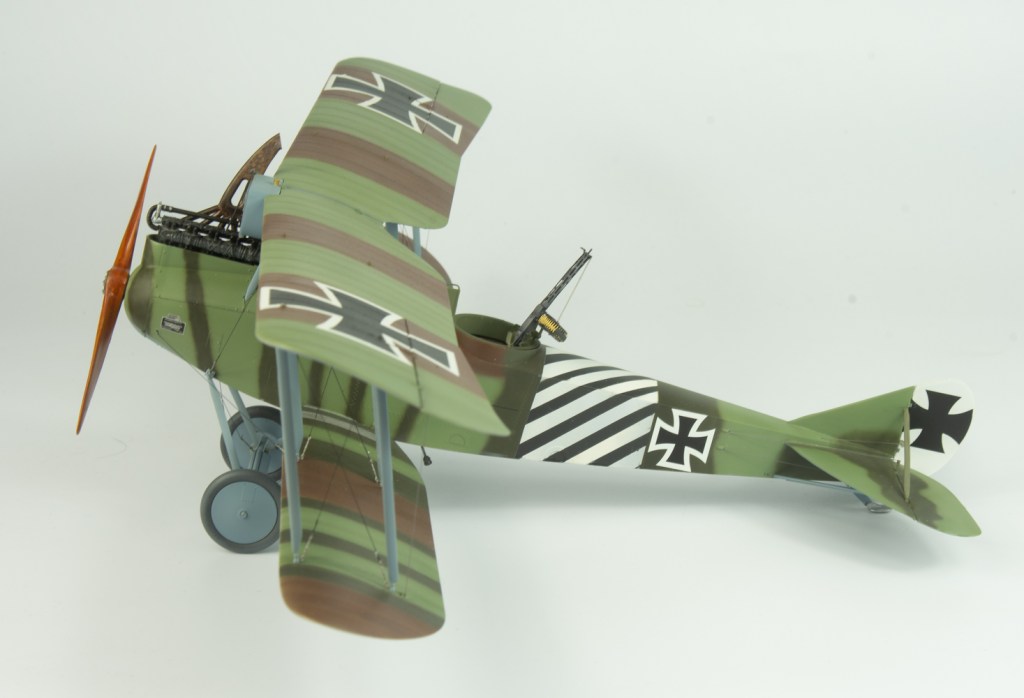
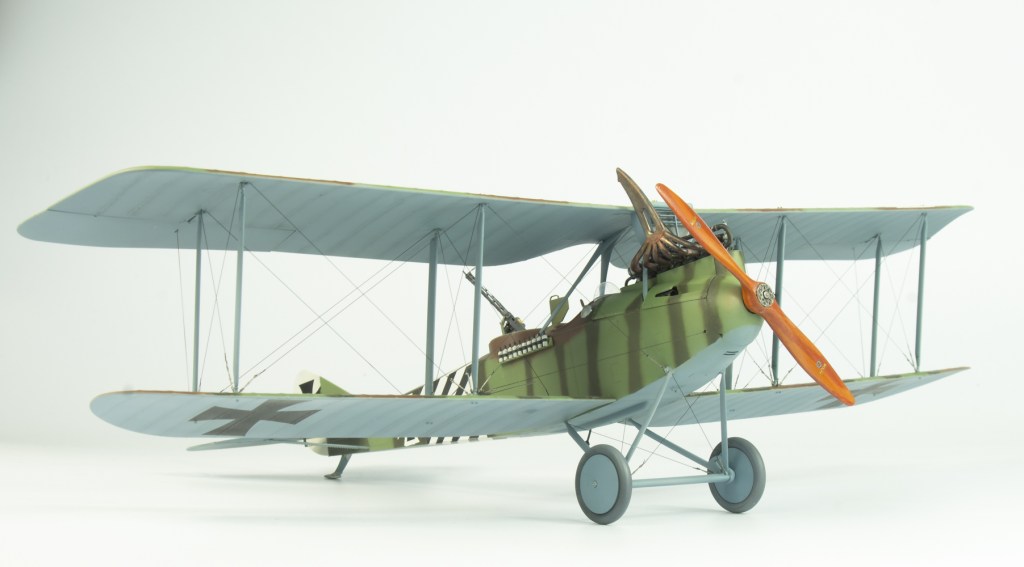
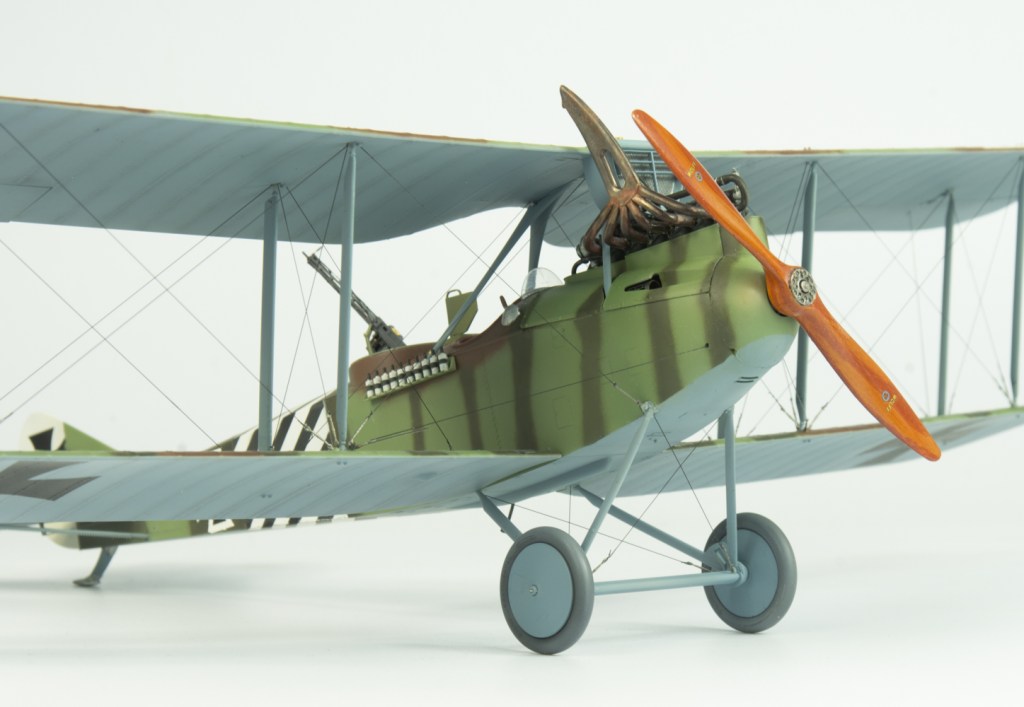
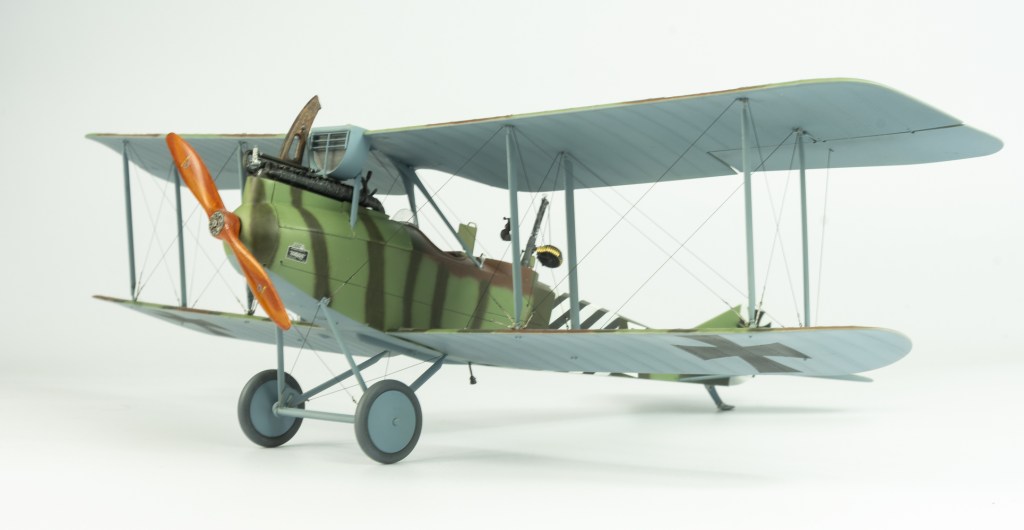
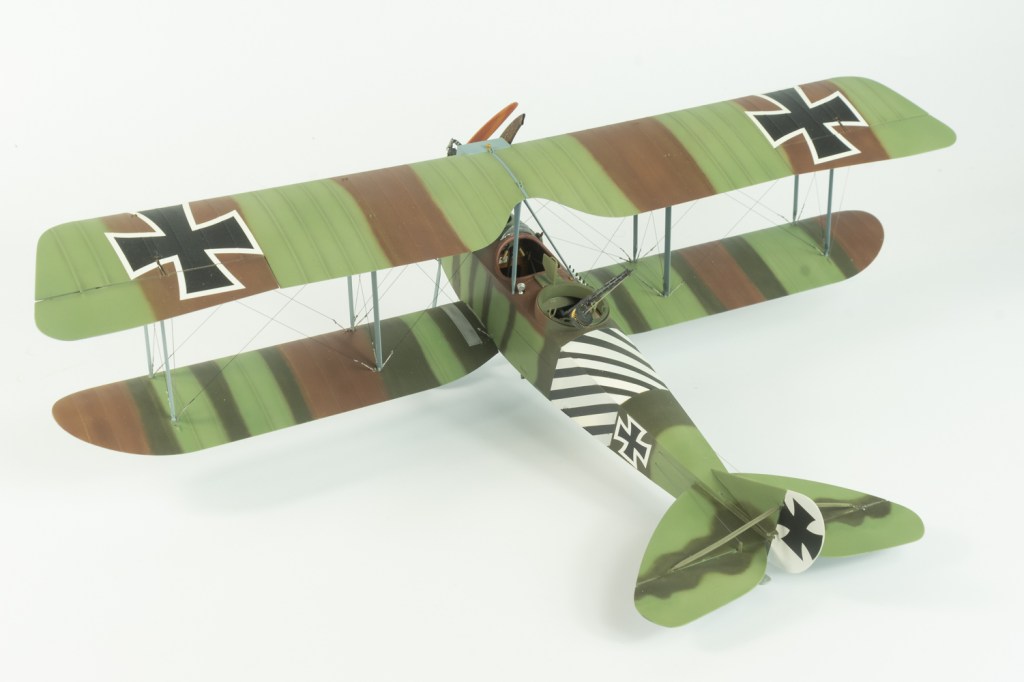
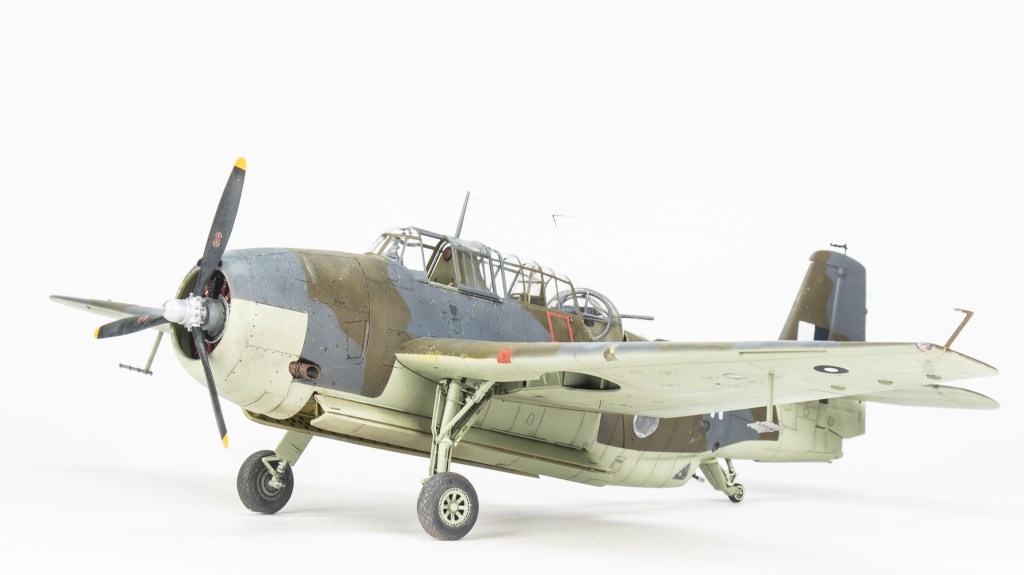
Im going to let the photos do the talking for this one, as it was pretty much a trouble free build, thanks to WNW quality engineering and production.
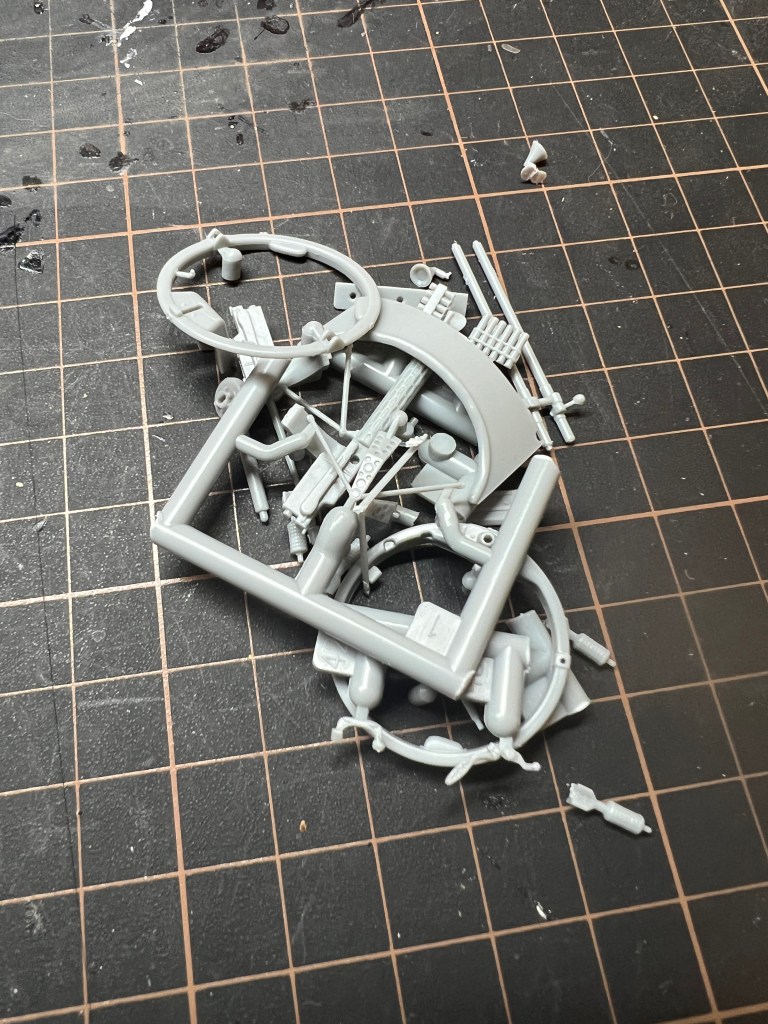
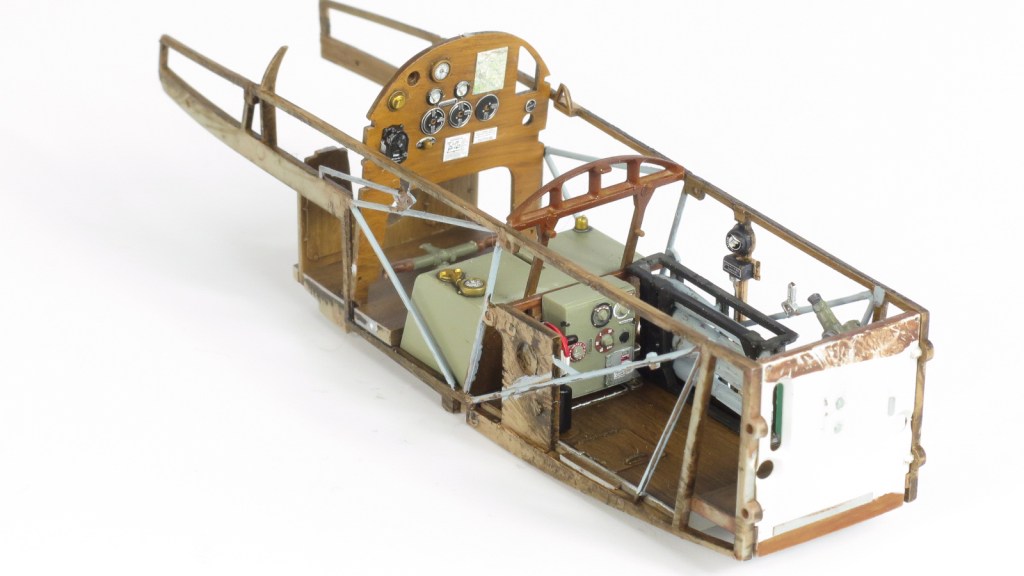
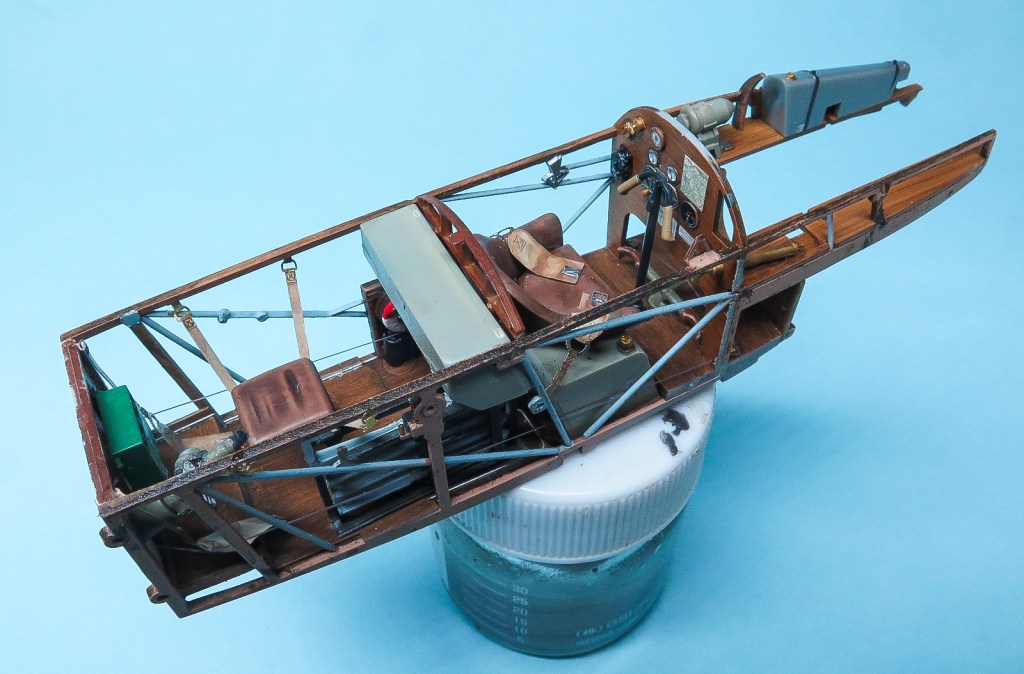
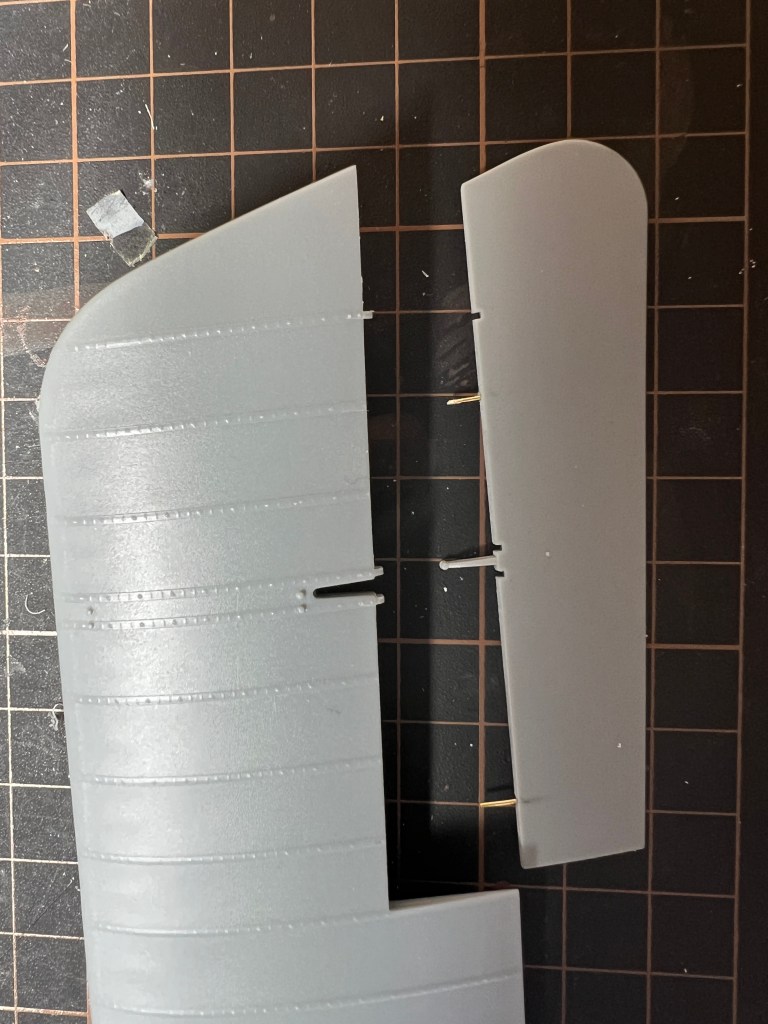
As with all my builds, construction started with removing all parts that WNW mark as “not needed”. This minimises the chance of using the wrong parts for your version.The cockpit and engine components were all prepainted prior to being assembled. the wood areas were base coated with MRP Middle stone, then the wood colour added with Burnt Sienna oil paint. Like all aircraft models, once the interior was completed, the airframe build up fairly quickly, more so when doing a WNW kit as all the wings are one piece. The ailerons were reinforced with bits of brass wire so as to provide more strength rather than relying on the very small glue area.
Painting and Decalling
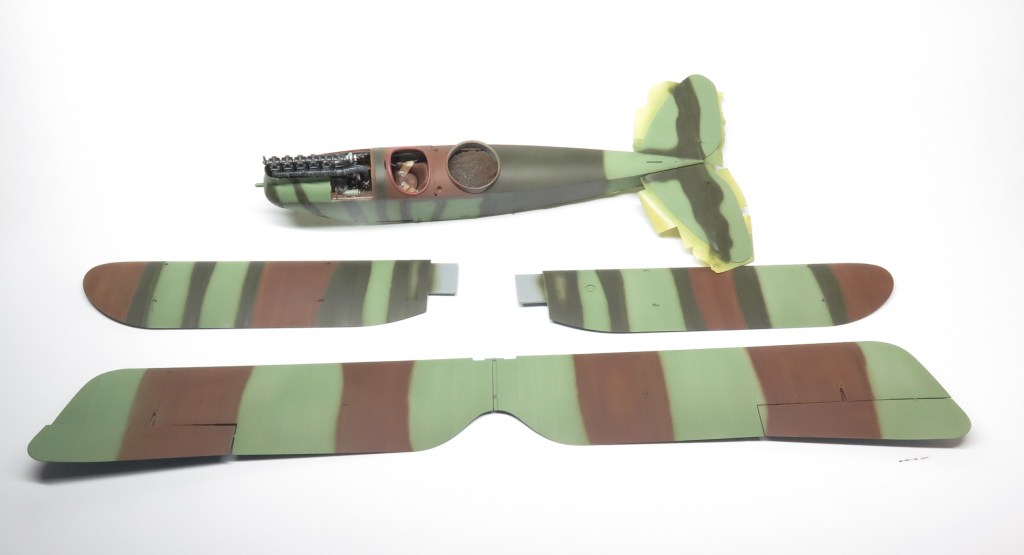
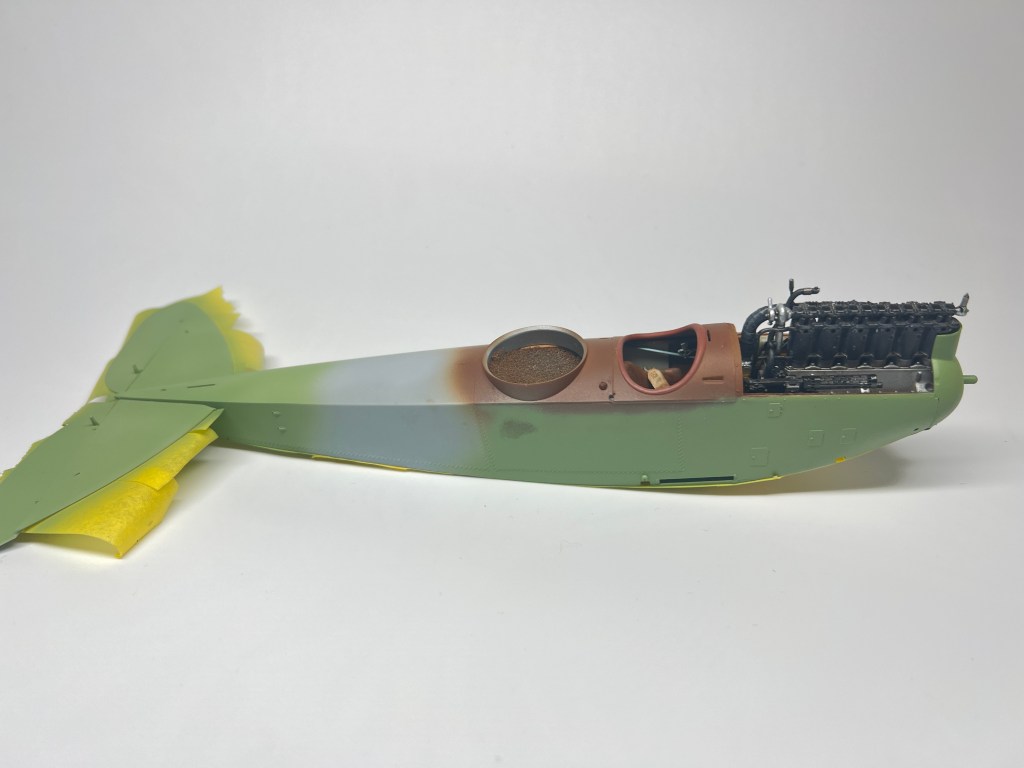
Painting was achieved on this occasion using Tamiya paints using the colours called out in the instructions. the exposed engine being first wrapped in GladWrap to ensure no overspray marred its finish
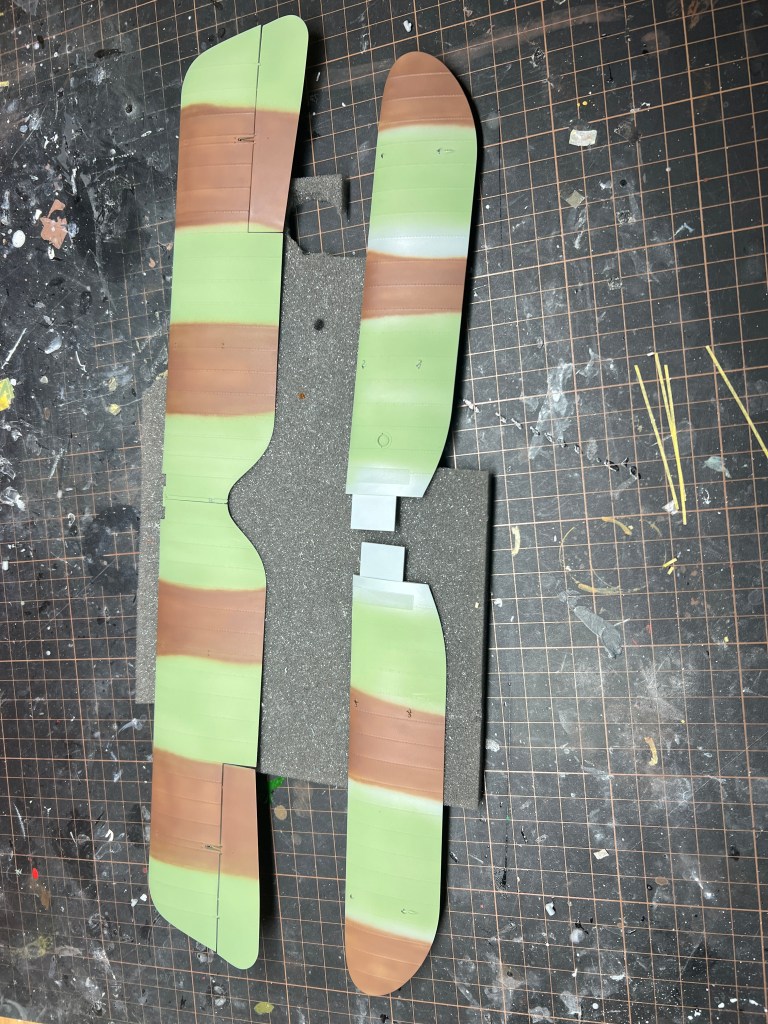
This would be a clean build, so no weathering was undertaken, however some shading to emphasise the ribs was done with some highly diluted black/brown airbrushed over the masked wing ribs. A tedious job, but I liked the effect.
Although masks had been cut on my silhouette machine for the markings, only the stripes were airbrushed on, the decals for the national insignia being used on this occasion. Micro sol and soft ensuring they all hunkered down over the surface details. And just like that, we were ready for the GULP…….Rigging!
Rigging and Final Assembly
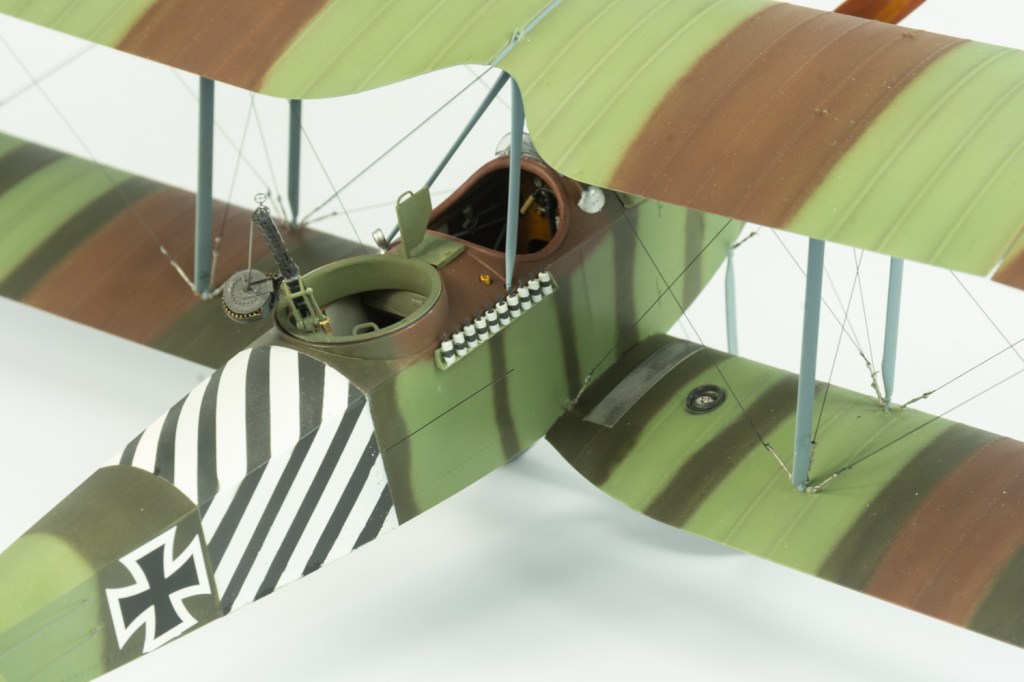
Although WNW don’t advise using turnbuckles in their hints and tips section – due to them looking overscale – my thought was they would at least make the rigging easier.
Plus, there were about 4 packs of Gaspatch turnbuckles in my aftermarket tub. Care needs to be taken when fitting these into your pre drilled holes that they will lie roughly in line with the rigging line. In the case of the Rumpler, turnbuckles were only fitted to the lower wing end points of the rigging wires. Model Kasten line was used rather than my usual EZ Line. It seemed to take to the CA glue a lot better than the EZ line, which in my experience just curls away when introduced to the glue. The Model Kasten line is also round in section, so you don’t get the twists that you do with EZ line. The downside however, is its a lot more expensive than the EZ line.
Using the turnbuckles allowed the rigging to proceed far more quickly and trouble free than any of the others methods Ive used to rig my biplanes this year. I did manage to cut the actual rigging line when trying to trim the line on a few occasions, but this was easily repaired.
Also in my AM tub were brass barrels for the Spandau and Parrabellum guns, but the kit PE jackets were rolled using a rolling set and looked convincing enough. They were finished using Humbrol Gunmetal which can then be gently buffed using a cotton bud to impart a nice metallic sheen.
With the addition of the propeller and REXX exhausts – which should really have been added at the time of building the engine- she was done.
Conclusion
This was without doubt the most enjoyment Ive had from a model over the last couple of years. The parts fit is exemplary, as is the moulded detail and Wingnut’s instructions. Once you have the various interior components painted, the model builds up very quickly, and precisely.
If you are sitting on some WNW kits, so yourself a favour and build one≥. They are simply too much fun to build to have them sitting unbuilt in the collection, unless that is actually your thing.
Weapons; AIMS, Master details barrels and Vector MG131s
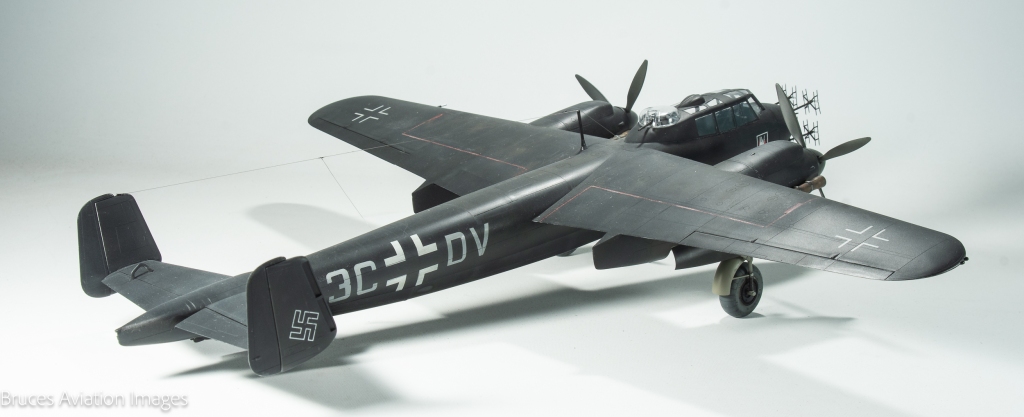
I’ve wanted a 1/48 Do217N in the collection since Koster Aero Enterprises bought out their vacform conversion for the Monogram kit way back in the early 2000s. Despite this, the kit and conversion set were sold in The Great Stash Slash of 2004. But, now that doesn’t matter as we have a much nicer kit of this variant that can be built straight from the box
The path that led me to the purchase and building of ICM’s lovely kit was again, one of impulse!
I had recently purchased some of AIMS 1/32 night fighter conversions for the Revell Ju88, which saw me flipping through a book on German night fighters.
A picture of an all black 217 rekindled the earlier enthusiasm with the resultant jump to remembering reading a build article by Andy King on the ICM 217 he did for The Modelling News.
Next minute, I’m on the BNA website and its in my basket! How does this stuff happen??? As a mate and I have repeatedly theorised, impulse buys need to be started straight away, whilst the enthusiasm is hot, or the danger is you will be selling that same kit at a swap and sell 5 years down the track.
So, box was duly opened, my work bench being opportunely clean of current builds.
The size of the aircraft took me by surprise upon opening the box and looking at the one piece wing, the only other ICM kit Ive built being the Do17. One could say the Do217 is to the Do17 as the Super Hornet is to the Classic Hornet
That wing has beautifully engraved crisp panel lines, but these do not carry over to the rest of the kit, the fuselage and some parts like radiators having shallower detail, and also quite textured surfaces that will require a rub down before paint. Two complete engines are included in the kit should you wish to display the model with cowlings off. I saw no need to make the aircraft uglier than it already is, so my nacelles will be closed. A bomb bay is also included as there are parts to allow both opened and closed doors. I dallied with the idea of an open bay to show off the interesting way the doors open, but again, the aircraft looked decidedly pregnant with open doors, plus there is only very rudimentary detail. A fuel cell is included, but no bombs. As my chosen schemes was the all black night fighter, I didn’t think a bomb load would be carried.
Construction Notes
The instructions are a bit vague in places in regard to where some of the cockpit components fit to each other. I found by studying all the parts, there are locations for the pilot seats and floor in the side walls, just that they are not called out very well in the instructions. I also found them a little confusing regarding displaying the engines until I realised you are required to cut the cowlings off if you want to display the engines. After this, it all made sense. This model was being made all closed up, so all steps dealing with the engines were crossed out to avoid mistakes and make things a little clearer.
I used part A15 as a jig to position the cockpit side walls. The cockpit was painted RLM 66 instead of ICMs suggested 02, as I think by 1943 this was the colour of Luftwaffe cockpits. Tamiya XF24 Dark Grey standing in for RLM66 on this occasion. Beware of the decal dials for the instrument panels as they are separate, not a one piece decal. Here was my first introduction to the keenness of ICM decals to fold over themselves, hmmmmm, those wingwalks were going to be fun! Make sure you paint the back of part E12 as it can be seen through the canopy. Ask me how I know!! It has a pin mark that needs to be filled or, do as I did and skin the rear of it with some plastic card. I went to the trouble of adding thin stretched sprue levers to part E31, I didn’t bother with the decal as it will never been seen. Seat belts were added to all seats from Eduard.
Although ICM say you can leave out the bomb bay floor if doing the 217 with closed doors, I decided to add it to provide a little bit of structural support to the fuselage. It a long assembly with minimal surface area for glue and I could see me cracking joins just through picking it up. In the event, I should also have added the sidewalls C18 and 22 for added support as the floor by itself does not really add any strength.
I managed to crack the wing leading edge joint several times, due to the broad chord of the wings coupled with , again minimal glueing area at the leading edge mating surfaces.
Take particular care ensuring you are using the correct parts for the nacelles. I managed to glue the port outer to the starboard inner side, then wondered why the nacelles weren’t a good fit! This was luckily, quickly corrected with a much better fit of the nacelles being achieved, in fact, the fit throughout was above average.
I found the best fit for the wing was to push it as far forward as possible to ensure a tidy fit on the ‘shoulders” This does leave you with a gap to be filled at the rear, but this was easily filled with a shim of plasticard. Before adding the wing, ensure all mating surfaces are free of burrs and flash, which helps in getting the best fit possible. Of course this advice should stem to all facets of assembly, in addition to plenty of dry fitting.
I replaced the peg on the tailwheel yoke part E42 with brass wire, similarly, I drilled and pinned the undercarriage legs for added strength rather than relying on the kits butt joins. ICMs wheels are fine OOB, but I had already purchased the Aires set. I would also suggest Quickboosts resin exhausts if you don’t want to deal with the joins on the kit items.
Painting and Decalling
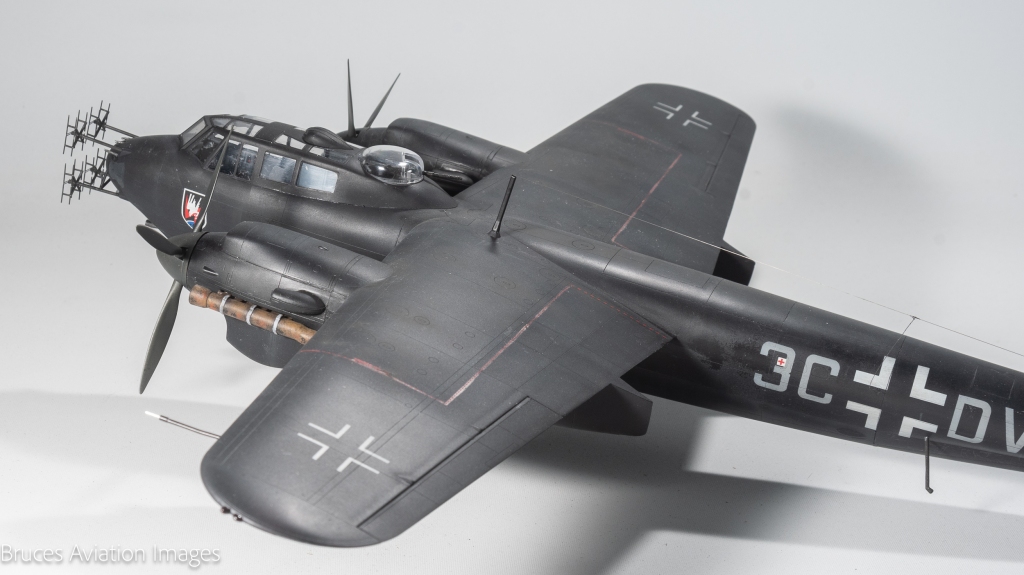
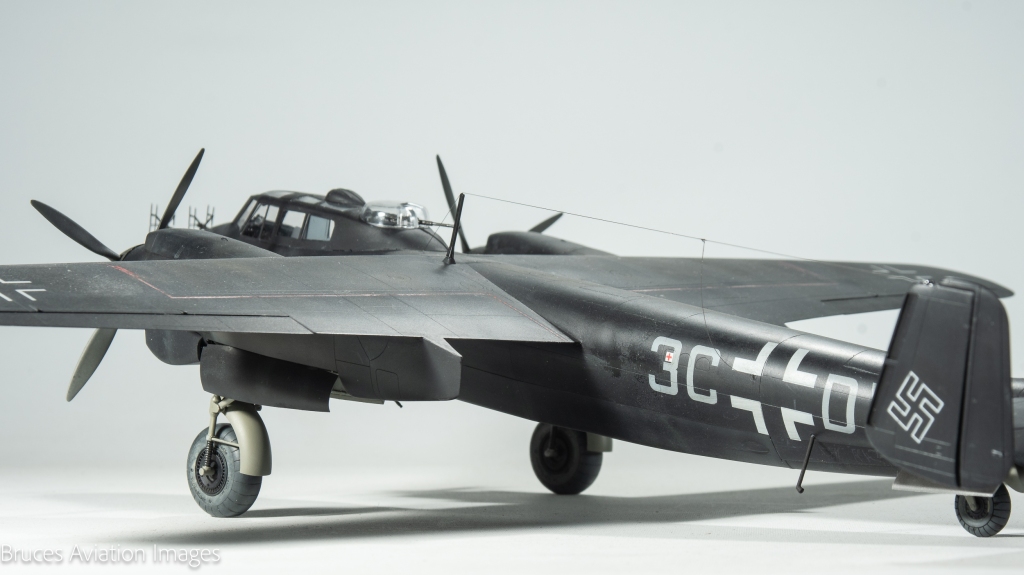
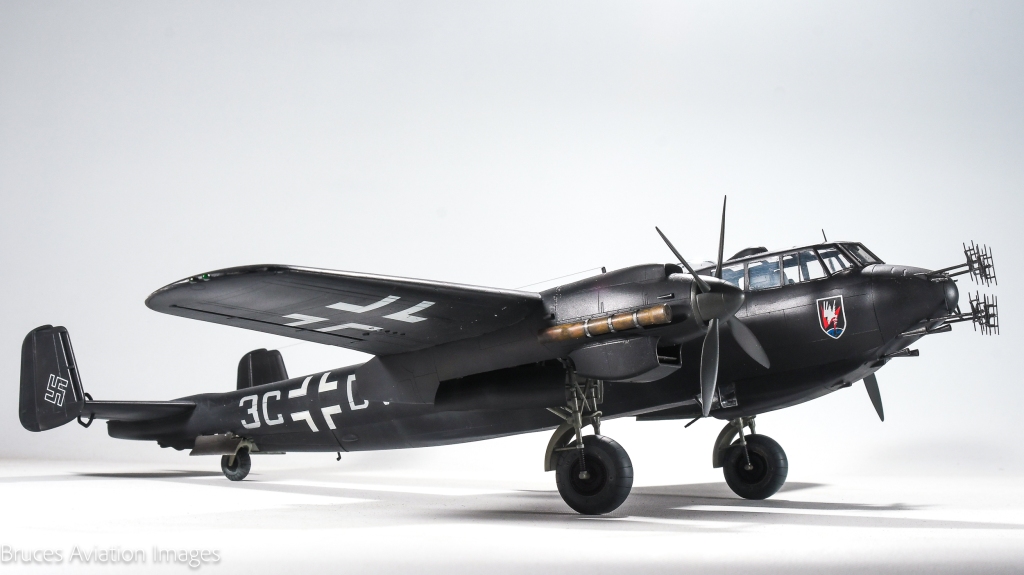
SMS Camo black was settled upon as the base colour. This is quite a nice warm dirty black, very similar in fact to the colour of Mr Surfacer 1500 black. For highlights I used SMS German grey randomly mottled on the wing centre section through various Uschi van Der Rosten masks. All national insignia save for the swastikas was sprayed on using a montex mask set. The swastikas came from an old Aeromaster sheet.
Im not sure if these machines were painted black at the factory or at maintenance units, but figured either way – rightly or wrongly – the stencilling would not have been reapplied perhaps apart from the wingwalks.
I elected to use the wing walk decals which went on surprisingly well, despite me and long thin decals usually not getting on. Plenty of water was the secret. I was still congratulating myself on this miracle right up to the point where I managed to accidentally touch and remove a strip of the decal! Luckily a very generous modelling friend in the UK sent me some make for painting dotted wingwalks . Thanks Andy
ON reflection, I wished I had painted all the wingwalks as I was left with some silvering.
Some panels were then masked off and MRP black sprayed along panel lines which stood out nicely. Well until the Dullcote was applied. Then everything kind of blended together. Typical!
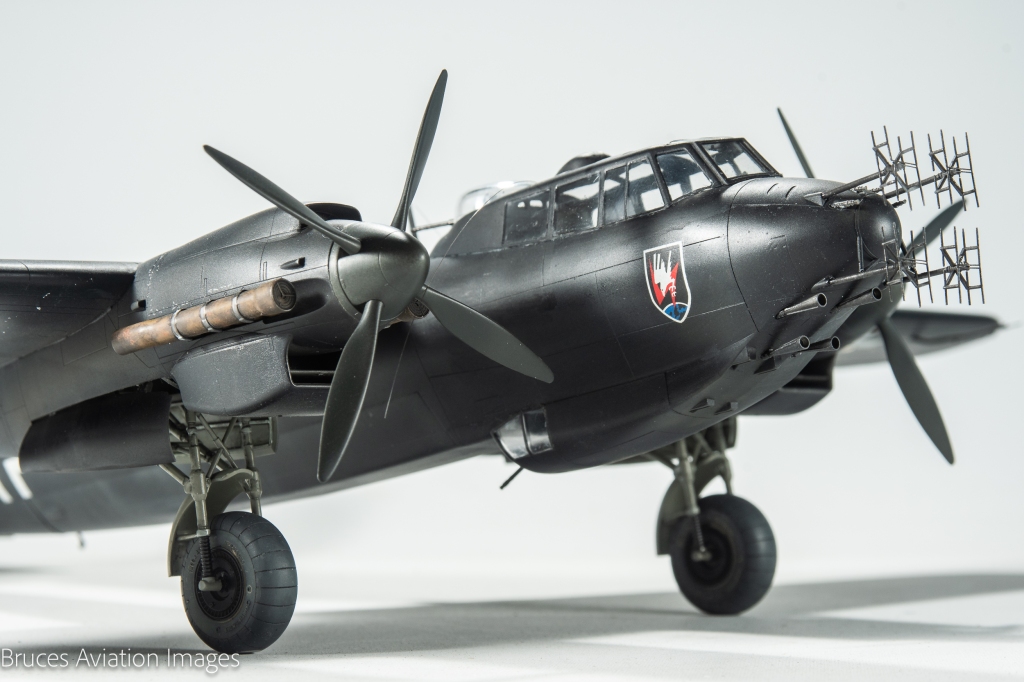
Exhausts were base coated in SMS dark earth before a layer of hairspray was added, then a mix of NATO brown and NOTO black . This was then chipped off. To be honest, Im not really happy with the results. I think I would have been better off stippling these colours on with some sponge
For the canopy, this is the second model I have used interior canopy masks on. This is a leaf out of Jamie haggo’s book, as he does it on all his models where the canopy interior is visible from the outside, his rationale being painted interior framing looks much better than the shiny plastic visible if you were to follow the normal convention of spraying the interior colour from the outside. And he’s right!
Final Assembly
This comprised of adding the undercarriage doors, all of which located securely. The aerial was added from invisible thread, and the machine gun and cannon barrels added. AIMS cannon barrels were used as, unlike the kit ones, they had open flash suppressors. I didn’t bother drilling out the mg barrels as the diameter was too small. Finally, the piece-de-resistance. the Gaspatch radar array was added. Cutting them away from the supports was heart in mouth stuff, let me tell you! I employed a new scalpel blade plus used a new set of nippers. They were painted in Tamiya dark Iron. If there is one must have Aftermarket accessory for this kit, its these, although looking at my slightly wobbly ones in my photos, this crew will have a hard time finding any Lancasters!
Conclusion
Im really happy to have a black Dornier 217 in the cabinet, and a much better replica than the old KAE and Monogram kit would have provided thanks to the access we now have to things like 3DP radar arrays and brass gun barrels.
The model itself was very enjoyable to build, with no real vices along the way, aside from the somewhat soft plastic, which does not suit structural components like landing gear. Despite this I look forward to building more ICM kits. The Do217N was unloved by its crews, its performance suffering greatly due to its increased armament, and all the added radar gear. But in my cabinet, its loved greatly by me!
Enhancements: Gun barrels replaced with aluminium tube
Decals: Combination of kit decals and painted using Montex masks.
Construction Notes
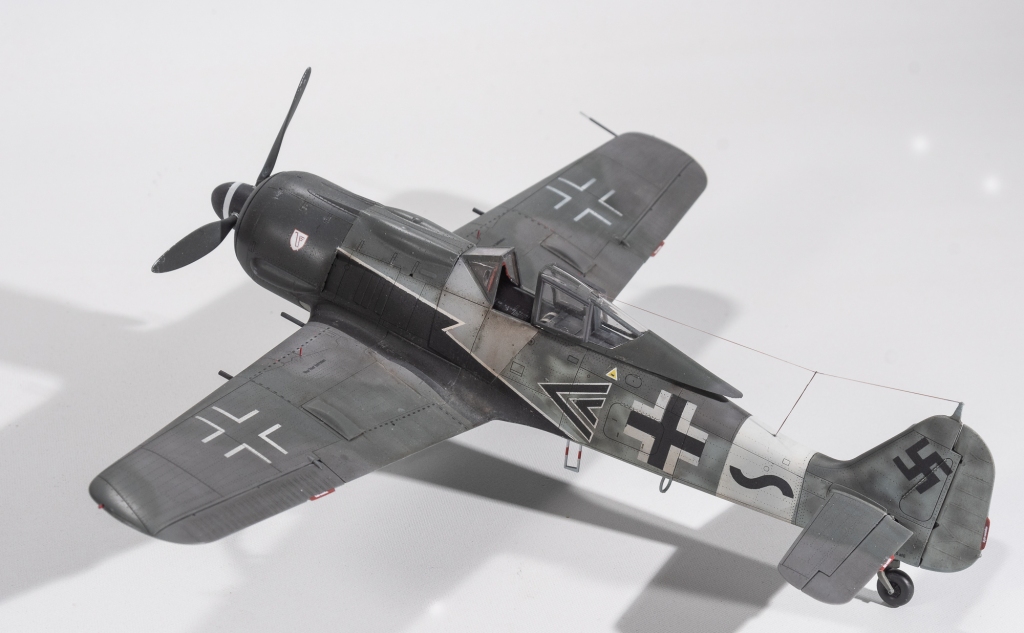
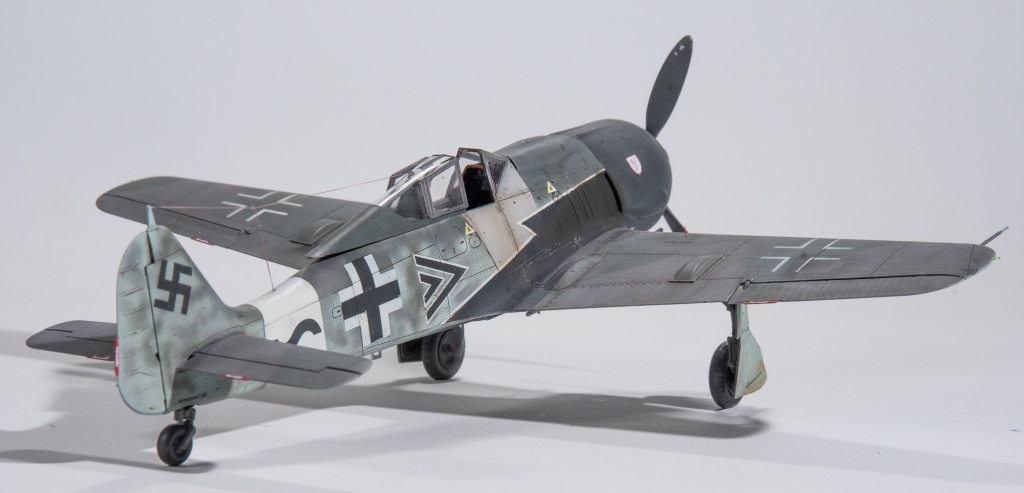
Eduard’s new series of 190s have been written about in various online reviews as being viceless builds. Whilst they show a marked improvement in engineering, ease of assembly and surface detail over the older kits, I still found a few issues.
Everything in the cockpit is fairly straightforward, although I found the instrument panel has a tenuous and somewhat vague location between the two fuselage halves.
The same with part A32, I found it difficult getting it to seat properly. With the wheel wells, I was initially dubious of Eduards call out to paint them RLM76 rather than the usual RLM02. Perusing Eduard’s instructions for their other 190s showed me Eduard do call out 02 for the earlier marks. The A8/R2 kit is the only model where they suggest 76 wheel wells,
I decided they must know something I don’t! They have done quite significant research into the Rammjager as evidenced by back copies of the info magazine.
I cut the barrels off the inboard guns – to be reattached during final assembly – as they were bound to get knocked off during sanding operations.
Dry fitting the wing to the fuselage revealed a gap on one wing root. Consequently I delayed adding the gun deck and upper cowl parts to the fuselage so as to allow me to push the fuselage half out to meet the wing and reduce the gap. Great in theory, but I think doing that just created another problem for myself.
With the airframe together, one wing looked to have greater dihedral than the other. The wing root join was broken by way of using tamiya extra thin to rehydrate the join, then a shim added to reduce the dihedral. This seemed to fix the problem, or so I thought!
I should know better. Fiddling with wing roots like this just seems to muck with the geometry. Probably would have been better to add a sprue spreader under the cockpit. There are 2 more Eduard 190s in the stash, so it will be interesting to see if this problem appears on those, or was a construction fault on my part.
This aside, the model built up quickly. Filler was used on the centreline seam and the leading edges of the wings only. The tailplanes and gun covers fit perfectly.
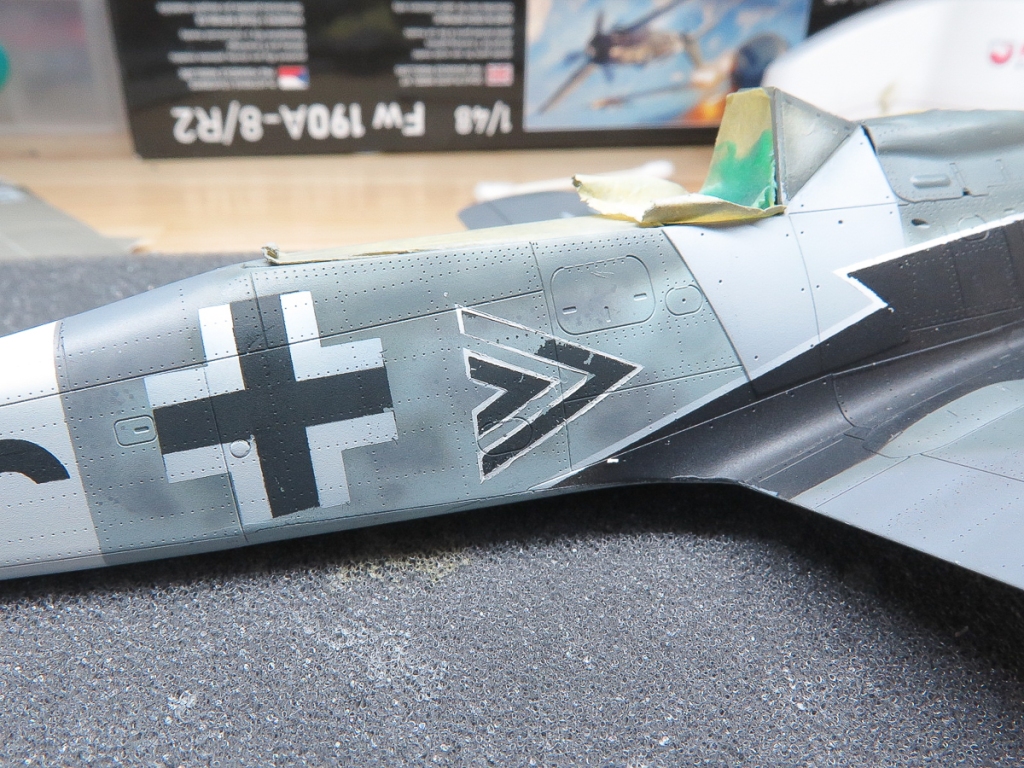
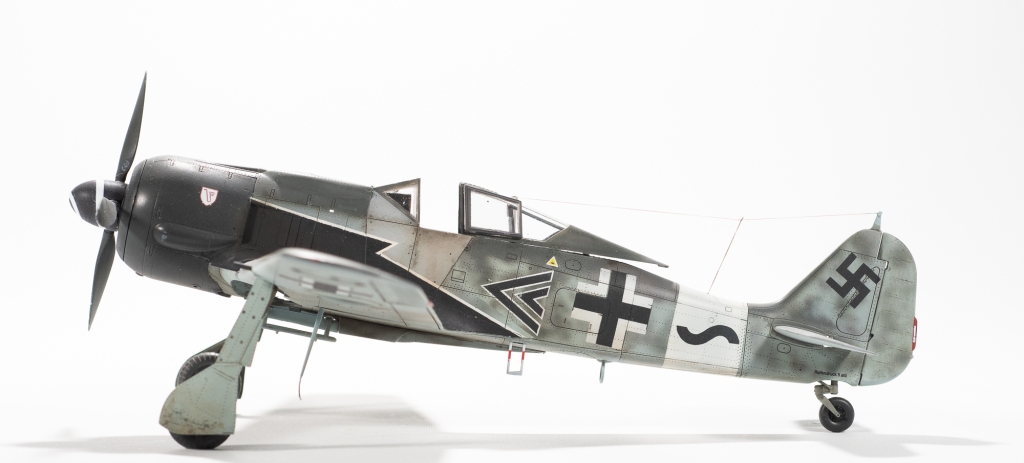
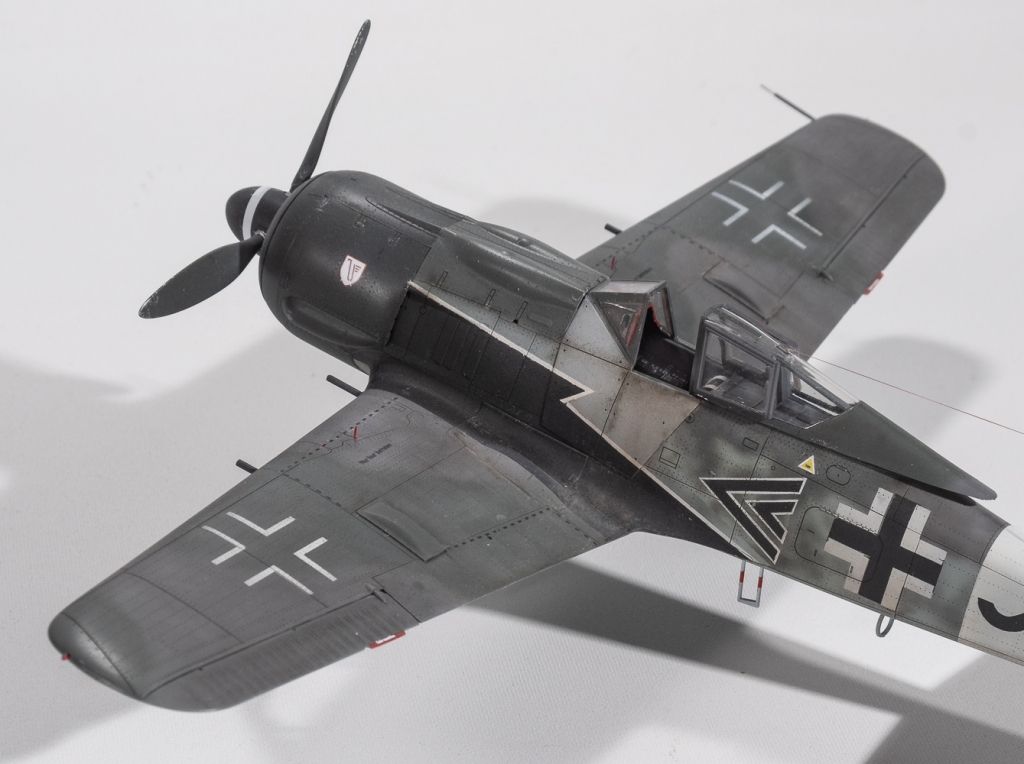
Of course, its too much to ask of me for a build to go flawlessly, and so it was again in this case, although problems did not rear their head until well into decalling. Again, an unforced error, falling foul of Eduards decals. Well, thats probably a bit unkind on Eduard. It was me trying a new (to me) technique of removing the carrier film with white spirits. This had gone swimmingly on the wing crosses, then I got cocky. For those not aware of this technique. I refer you to Gary Wickham’s excellent tutorial contained within his superb Tempest build. My mistake was I left the white spirits on the swastika and chevron for longer than a minute, the result being the white spirits removed the carrier film, the decal AND the underlying paint. AAAGGGGHH
Had I mentioned I was really happy with my overall paint job and tight mottling? No, well I was! In all, this was a fairly simple mistake to correct, but it occurred during a stage in my modelling where frustration with this kind of thing was overriding my perseverance, so back in the box it went.
Completing the phantom renewed my enthusiasm to complete the 190, so back out of the box it came. The existing paintjob was stripped using Gunze thinners and now that I had a blank canvas again, was repainted using Mr Colour paints, although my mottling was probably a little tighter on my first attempt.
For the major markings a montex set designed for the tamiya kit was used. This was also not without some problems with recurrent peeling of paint and repeated masking and touch ups required. A couple of months earlier , this would have seen it relegated to the box or the bin, but this time I powered through, even cutting a new chevron and underwing code letter on my silhouette to replace the by now distorted montex masks. Its amazing how little achievements like this can lift your enjoyment for the hobby. Kit decals were used for the Udet emblem on the cowling, on this occasion, the carrier film not being peeled as they had laid down perfectly.
SMS flat was used as the final coat as this is not dead flat but leaves a nice sheen, which can be seen on period photos of Luftwaffe machines, the service life of which – by this stage of the war- could be counted in weeks, even days.
Oils were used on the underside to impart some staining. This technique still eludes me, analysing my attempt on this model has led me to think I need to apply smaller amounts in future. Oils certainly go a long way!
Casting an eye over the completed model, the geometry looks a bit askance to me despite Eduards engineering to ensure the added undercarriage sits at the right angles.. That added shim to the wing perhaps contributing to this, one wingtip still measuring higher.
Im reasonably happy with my efforts on this, more so, that – with this model – I had the perseverance to push through a couple of hurdles that presented themselves. I definitely feel Im back on the horse!
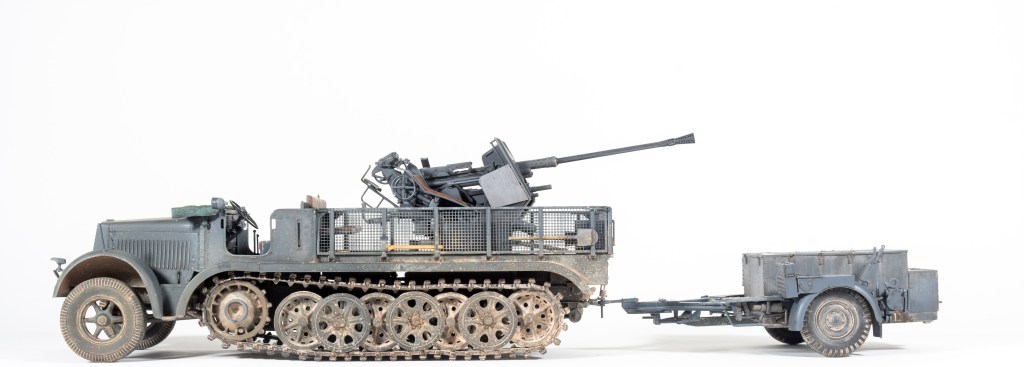
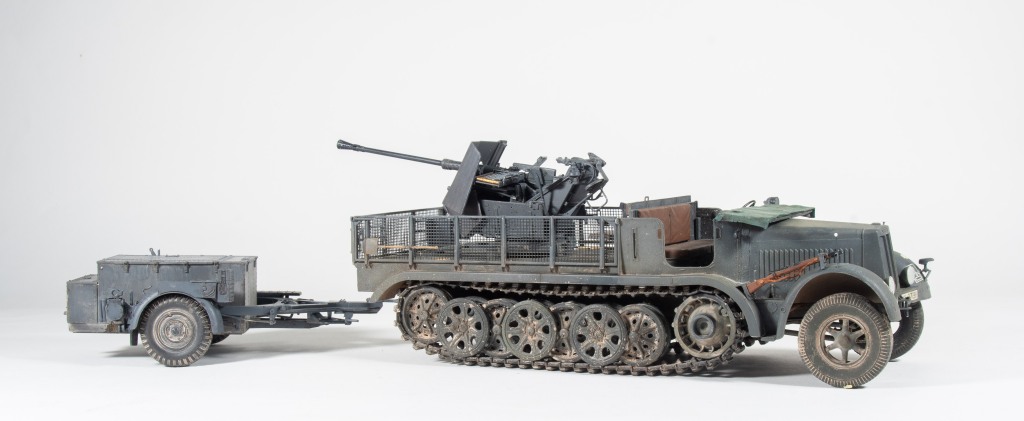
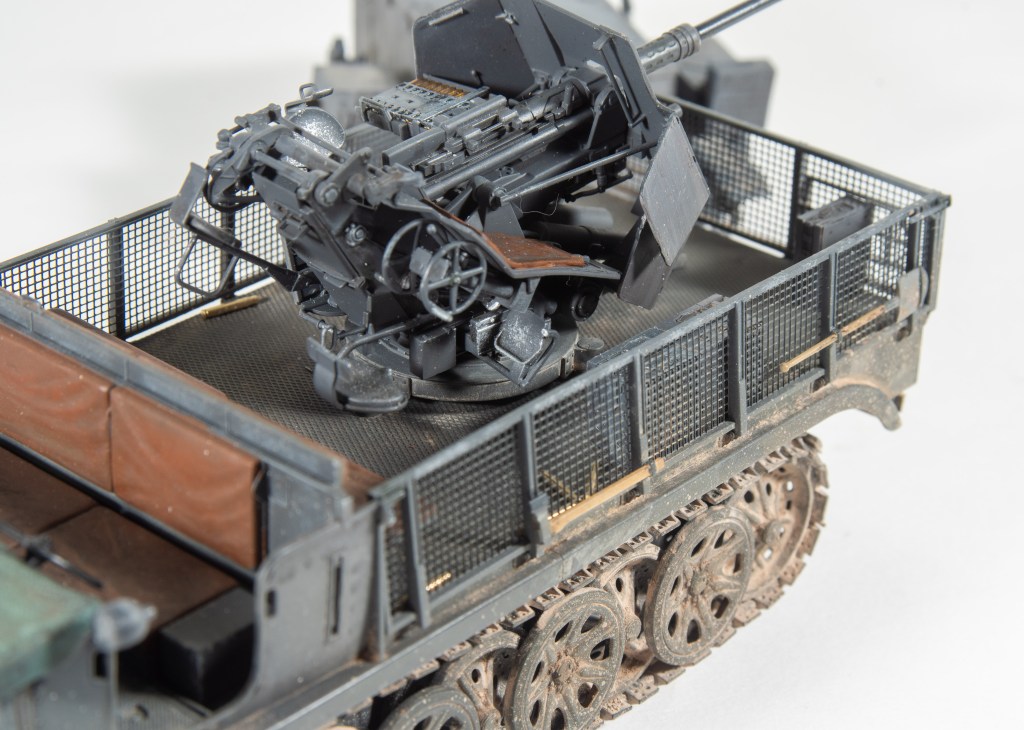
I have a vague recollection this kit was purchased during an armour buying blitz. As has happened on far too many previous occasions, I get a bee in my bonnet about building a particular kit, after seeing a completed example or reading a review, and not only do I buy the particular kit, but also a swarth of other AFVs, trucks, ships, whatever, only to sell most off them off when I realise I won’t build half of them! Anyone else do this? This kit having survived “The Post Loss of Interest Sale” was plucked from the stash to form part of this years build schedule, which my modelling mates had randomly picked for me.
If you have only ever built tamiya armour, are you in for a treat! but only if you love assembling tens of parts into assemblies that tamiya would mould as maybe three parts. Then there is the instructions. small crowded drawings on a fold out page that do not do a good job at all, on illustrating to the builder, what parts are needed for what variant.
To me this is not a big thing, as I primarily build armour as a bit of a palette cleanser from aircraft. But if you’re a purist that cares what month the Stug III production line started using 8 hole sprockets instead of 6, Dragon ain’t your friend! The instructions are also littered with misnumbered parts and some parts were difficult to place thanks to vague placement drawings. Instructions aside, the Dragon Sd.Kfz7 series kits build up into well detailed examples of the vehicle. Construction proceeds quickly thanks to the well fitting parts. I had a slight gap at the rear of the bonnet, but disguised this with a strip of glue soaked tissue paper as the actual vehicle has a canvas boot cover fitted here. PROTIP. Cut the tissue AFTER it has been soaked in glue and allowed to dry, not before!
You could leave the bonnet sides and top off if you wanted as the kit does include the engine, but I didn’t want the hassle of the extra detailing this would warrant. The other thing to watch out for is the axles are a little spindly, coupled with the tight fit of some of the wheels when pushing them on as I had a couple of axles that snapped. To make life easier, ensure that you remove all mould seams from the axles so that the wheels will slide on easier. Dragon surprisingly don’t supply decals for the drivers dials either. I thought I would be smart and fit the steering column later than the instructions call out, to aid in painting. Don’t do this. It needs to be added when called out.
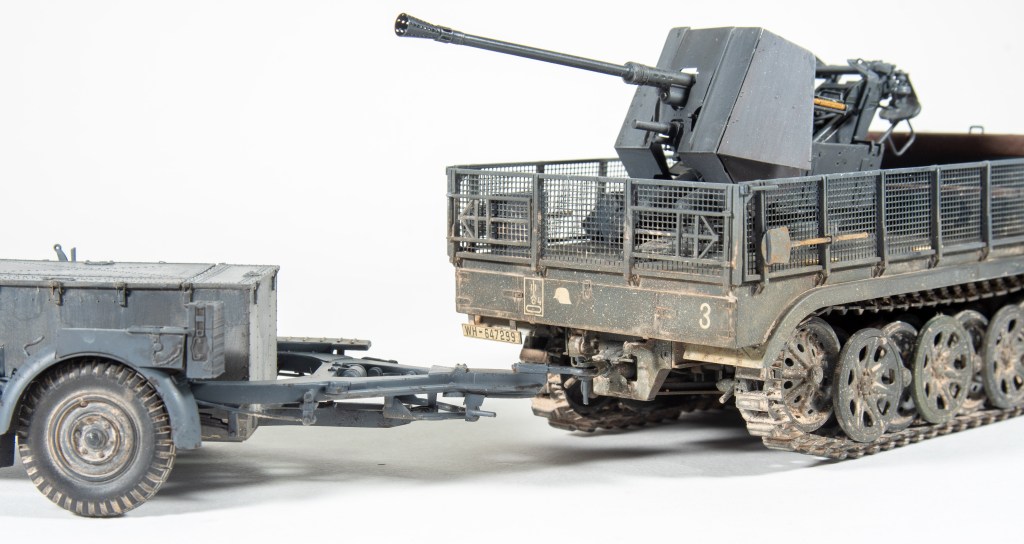
I found assembling the gun quite fiddly, and the instructions certainly did not help here. I would have liked a lot more detail drawings of where parts fitted. The dragon flash hider, although moulded quite nicely was replaced by the Voyager part as this had all the holes drilled out. I have no idea how they mill this parts but they look absolutely superb. The barrel was also replaced with the brass item.
For the finish, I envisaged an early war grey vehicle used during the dry summer months in Russia coated with a layer of dust. In reality, well I don’t think I have weathered it very well at all. Pigments were used to represent the dust, and it again just looks like I have caked it on. I need to learn a little pigment goes a long way. More successful were the oil washes I used on the rear deck. The Grey was tamiya. I looked at SMS, but there’s is a very dark colour. I know the actual colour was in real life quite dark, but small vehicles look better when the colour is lightened I think. Mud spatters were added using Mig products. I would advise all readers to look at the many tutorials available on Youtube to see these techniques demonstrated. Adding the tracks also proved quite fiddly with them breaking a few times. They are provided as separate links. Im thinking the enamel thinner used to fix the pigment in place may be weakening the glue. Ill use fruit tracks when I do the SdKfz7.
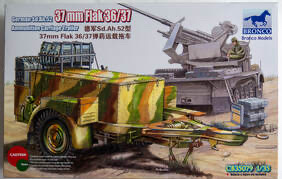
Well, this model was drawing to a close, but wait! There’s More! Looking at the few photos out there of this vehicle, it was quite often seen towing an ammunition trailer behind it. Bronco Models to the rescue. Their trailer assembled quickly, the only weakness being again, spindly axles. I ended up replacing one which I again snapped with more substantial brass wire. Much better. The trailer was coupled to the half track and then she really was complete, after a few of the voyager brass wheels were littered around the bed. Not too many as Im sure the crew would just kick them off before moving. The kit could have a lot more accessories added to give it that lived in look, but I was at the stage where I wanted to move onto the next project.
Soft skin vehicles really appeal to me, perhaps its because they don’t have to be weathered as extremely as tanks. Armour weathering is still a real learning curve for me. The Dragon SdKfz7 and 88mm gun are also in the stash having survived a couple of Stash Slash. (EDIT They didn’t survive the latest 2023 one!) Im looking forward to building them too, now that I know what to look out for.
Decals: Stencils from kit, National markings painted on using Montex masks.
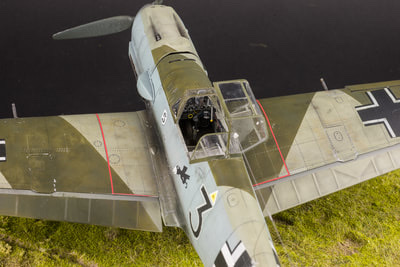
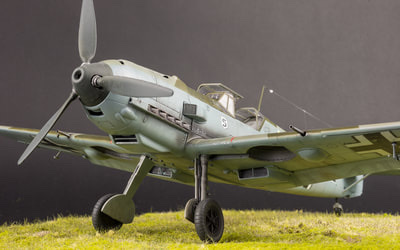
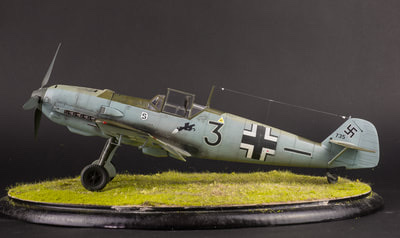
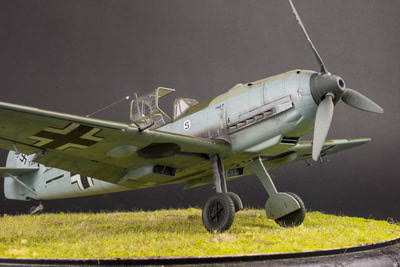
Ive always liked the lithe looks of the E model 109, and have always wanted to build one in “classic” Battle of France/Britain colours. I have several 109s in the stash but picked out the Dragon one to do. I also decided this would be a good kit to practise riveting on. I used some plans I found in the Aero detail volume on the 109E firstly marking all rivet lines with a pencil and then using a Rosie The Riveter tool to emboss them on the kit parts. It went quicker than I thought. Otherwise the kit is OOB. My copy had two left hand wheel well liners in it. All attempts to get a replacement one from the so called support service “Dragon care” went unanswered. Thanks for your useless after sales care Dragon! The only difficulty I encountered with the kit was the well known problem of getting the engine cowl to sit over the guns. I ended up just using the barrels glued to a bulkhead I fitted into the interior of the cowl. Still not happy with the fit. I thinned the rear edge as the real cowl is not a seamless fit with the gun cowl, certainly not as pronounced as the gap on my model though. The kit PE was used for the seatbelts. The kit PE hinges were fiddly to construct but look and function well when done. Montex masks were used to portray Lt Walter Schneider’s machine from May 1940, not the most photographed aircraft but I managed to find a pic which tallied with the Montex masks.



























 Bruce’s-Scale-Models
Leave a comment