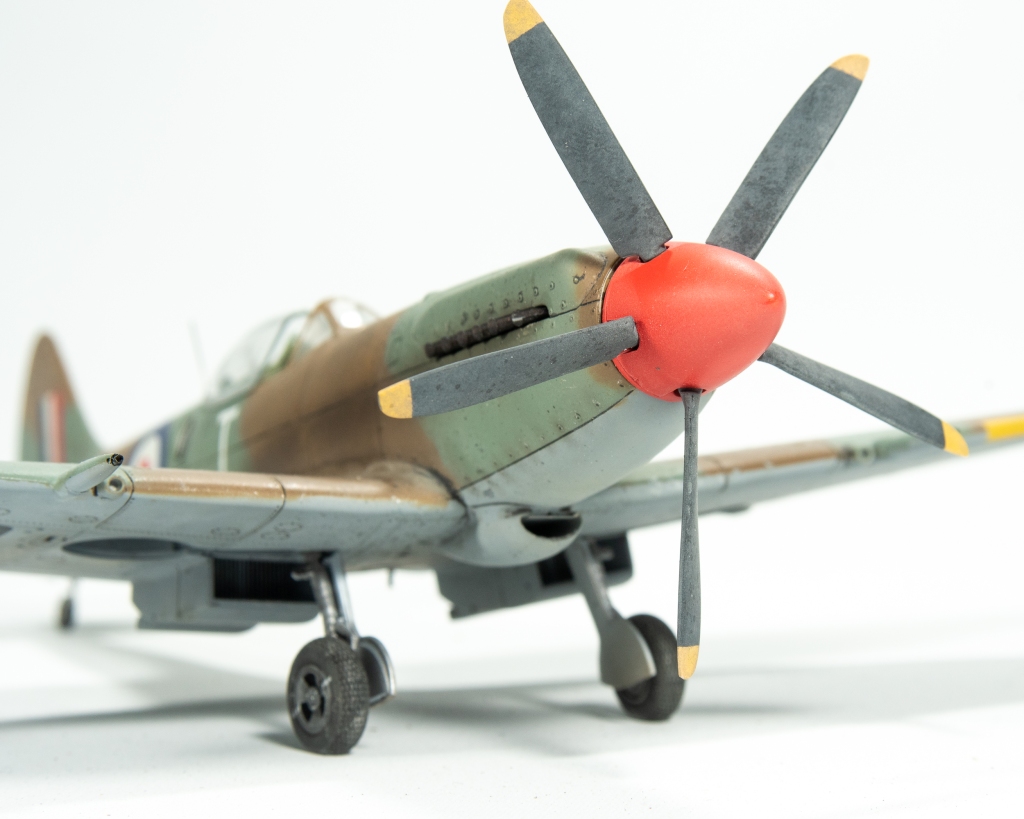
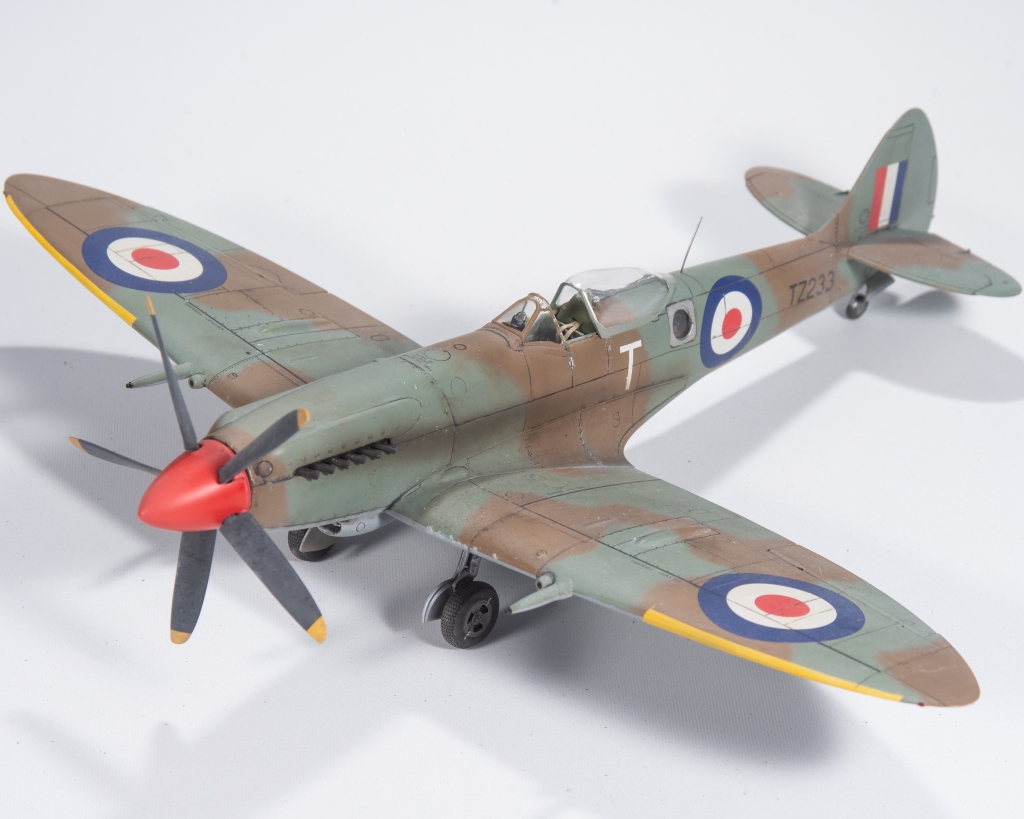
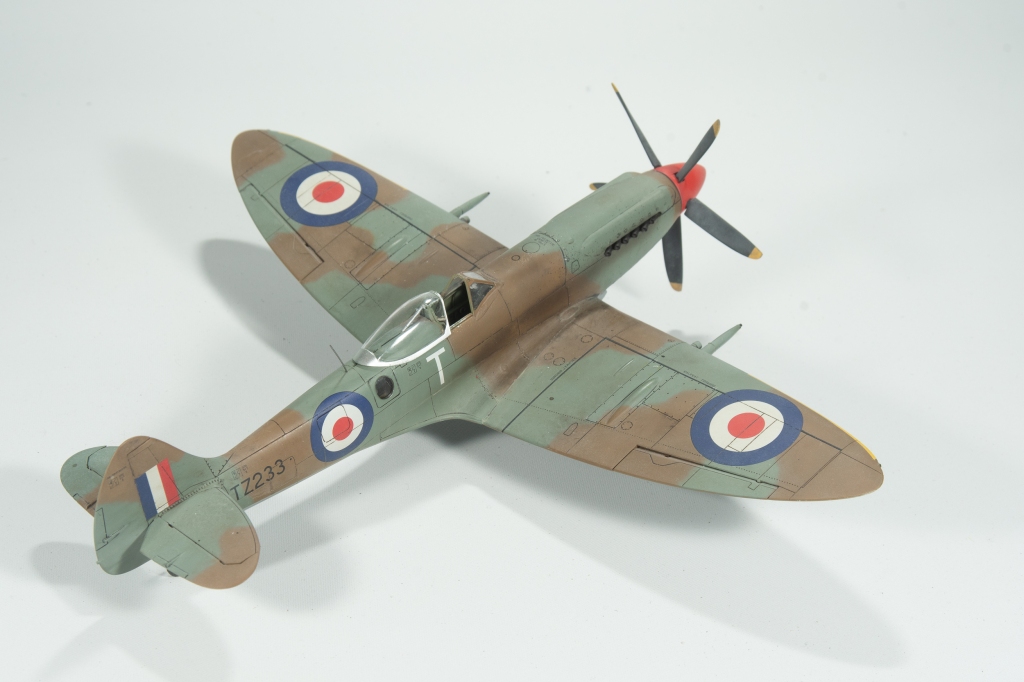
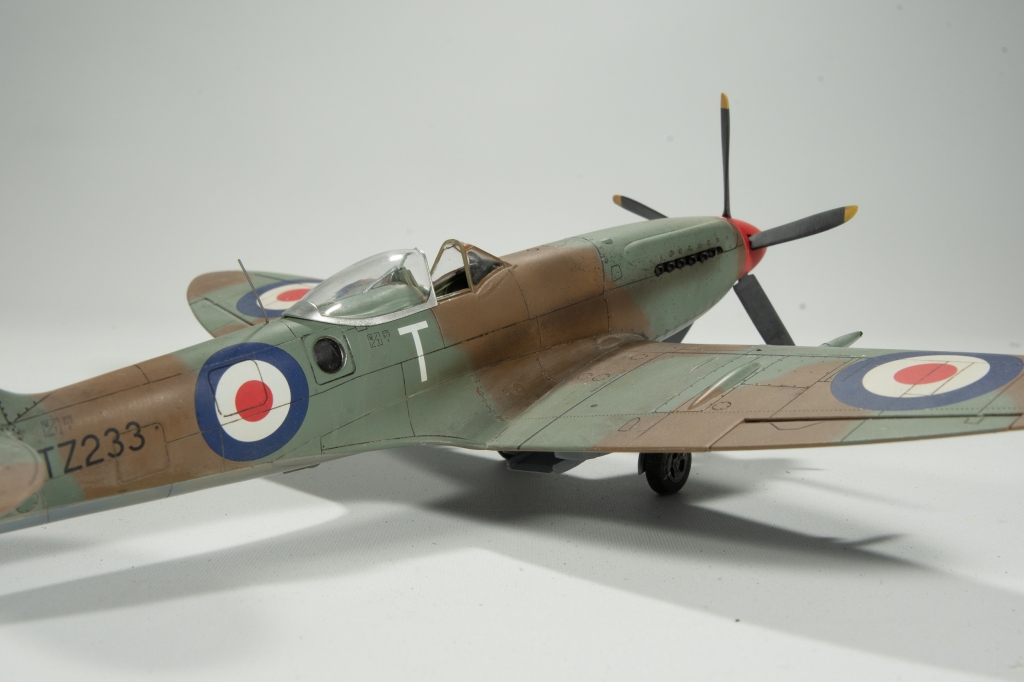
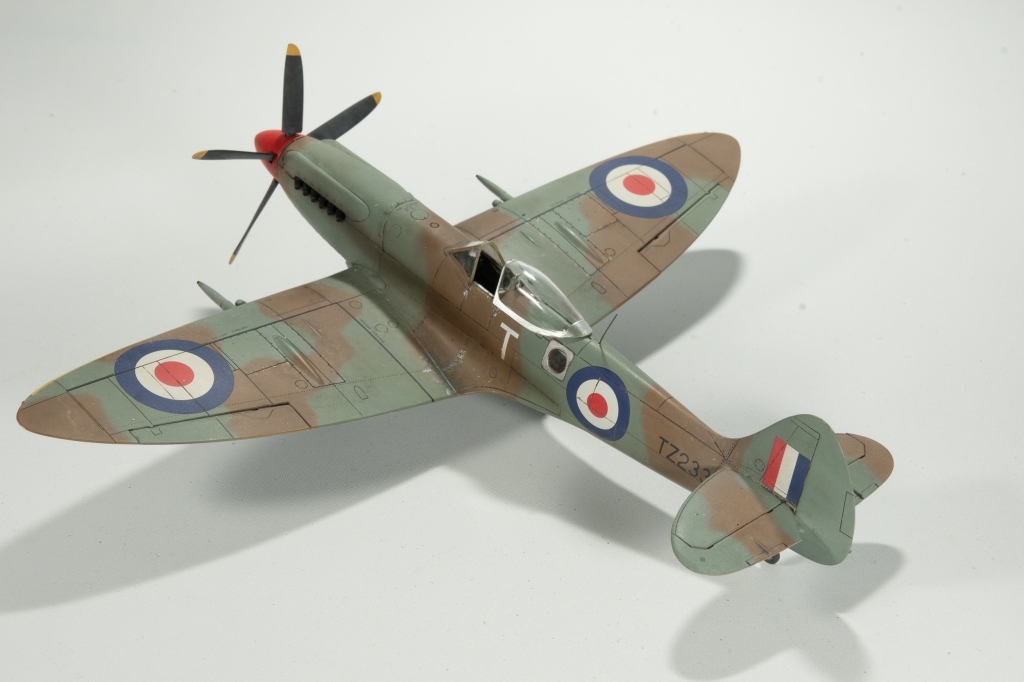
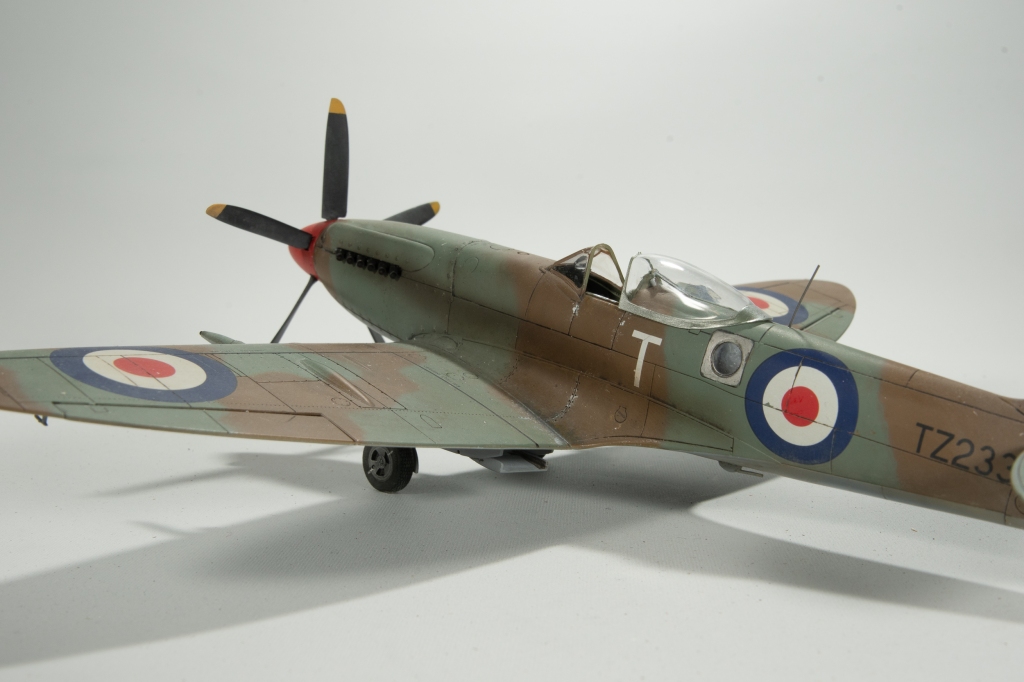
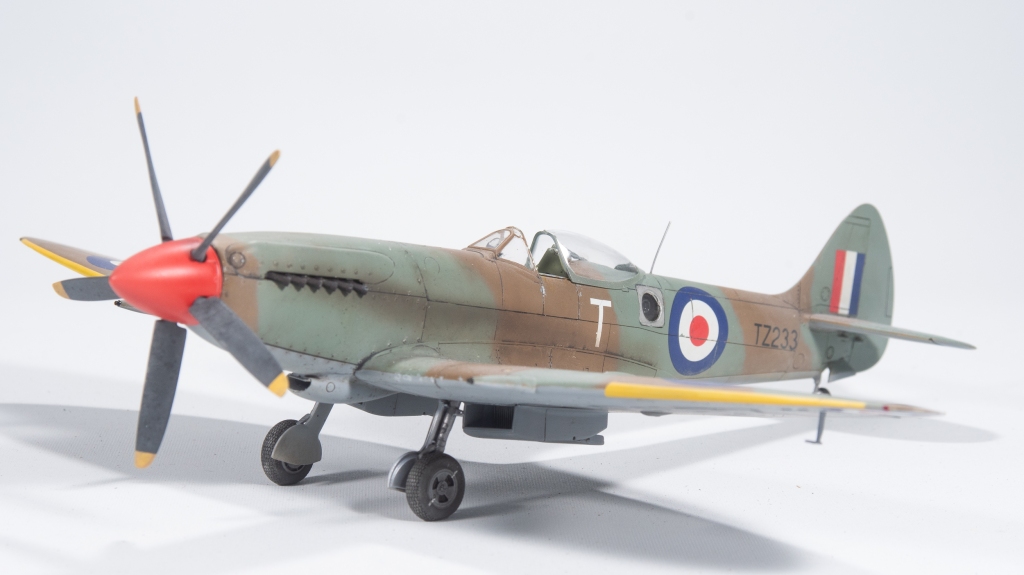
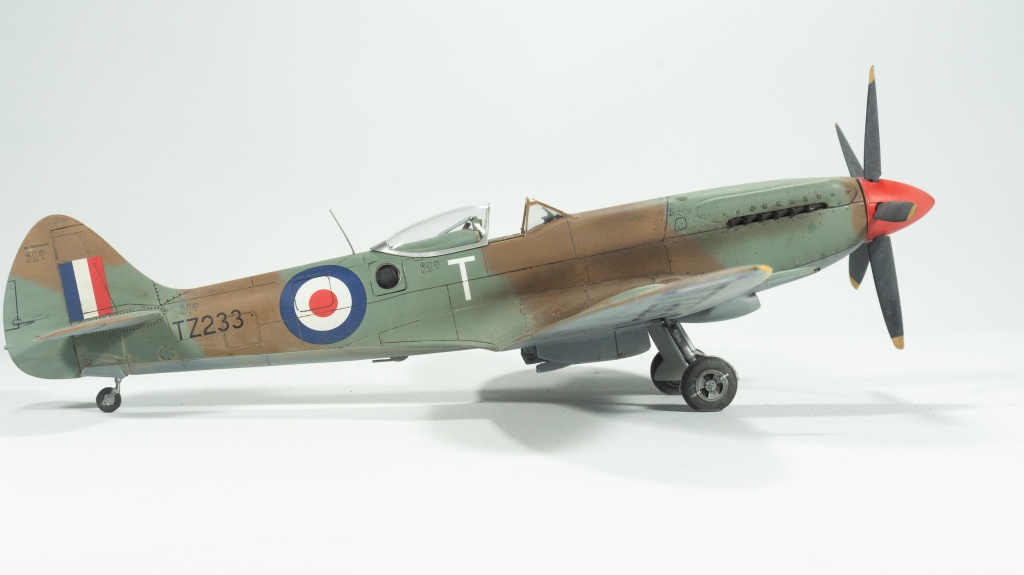
Airfix 1/48 Spitfire FRXIV (yes, another one!)

  • Added to Stash; 2022
  • Completed; 2023
  • Enhancements:
  • Exhausts: Brassin
  • Wheels: Brassin
  • Seat Belts: Eduard
  • Guns: master barrel
  • Decals: Xtradecals

Well! I certainly did not see myself completing another of these kits, immediately following on from my other one, but I had become intrigued by a few comments on my Facebook page as to how to get a better fit at the wing roots.

The suggested method was to fit the upper wings direct to the fuselage . This allowing the best way to get a tight fit, then the lower wing is added.

I was doubtful this would work on this model, given the very small contact area for the upper wings abutting the wing fillets. Instead I added the upper wings to the lower wings, only glueing the tips together to ensure there would be no step. As the wings had had no glue added inboard of the aileron cut outs, the soft plastic allowed me to spread the upper and lower wing to fit over the undercarriage location stubs moulded in situ along the wing root. My wing root gap was almost non existent this time, needing only a thin smear of Mr Surfacer to reduce the join.

My other major departure from the instructions with this build was to glue the fuselage halves together, completely dress the join, then add the fuselage from below. The fuel tank was still a poor fit.

I added a 10thou shim to the front. The shim was sanded to conform to the cross section of the cover before it was put fit on. Result was a much tighter fit.

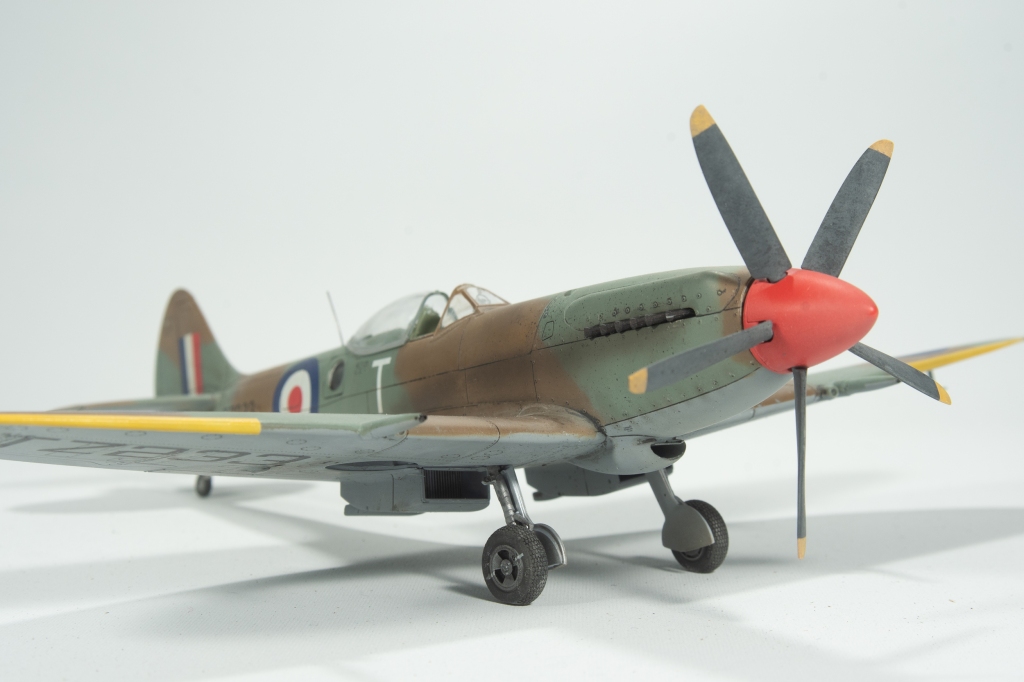
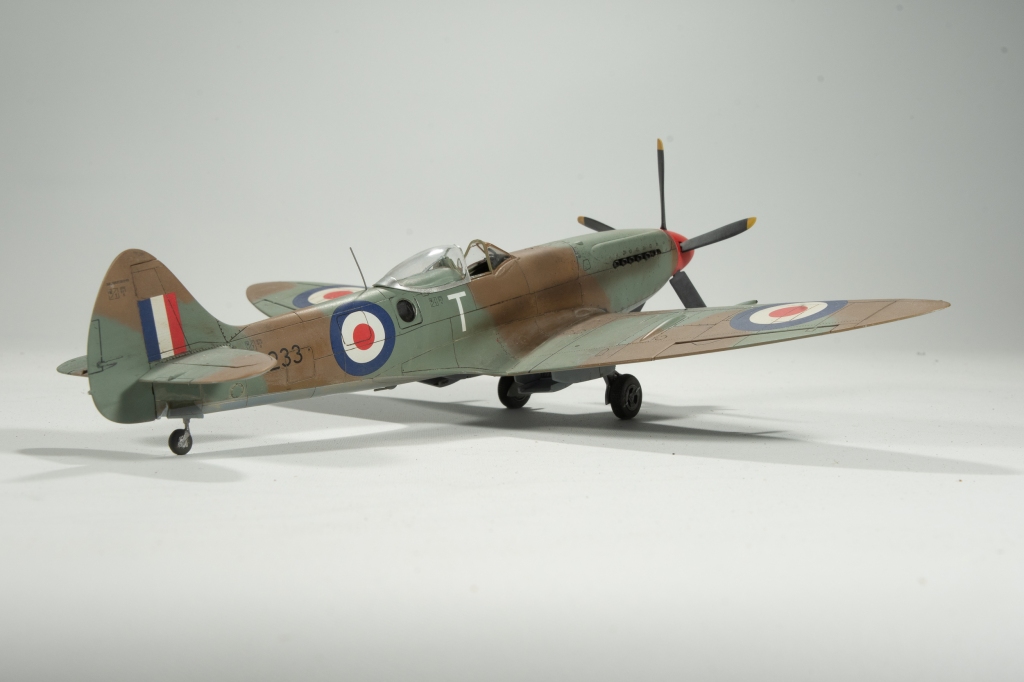
The construction on this was looking a lot tighter than my first one, which pleased me. For the finish, a modified desert day scheme used by the RAF post war was settled on. The different scheme a mate had used on his really appealed to me, so I wanted something similar for mine.

Not the same, obviously as I didn’t want to show him up!

The modified desert scheme was only used on two aircraft types that I know of, the Spitfires XIVs of 208 SQN and Tempests of 6 SQN. It was arrived at to differentiate the spitfires of the RAF from those of the Israeli Air Force and the Royal Egyptian Airforce, following a couple of “friendly’ fire incidents, which led to the loss of a few RAF machines.

During this time frame, all three Air Forces flew Spitfires, albeit different marks, so making your aircraft different from the others was a necessity.

Colours used were Gunze’s dark earth and MRPs light slate grey and medium sea grey for the undersides. The camouflage being freehand with my Iwata HP-C. Some tonal variation was achieved by utilising a random preshade of differing colours such as yellow, tan and light grey,

Decals were from xtradecals and there was no problems with applying them over a gloss coat, the post war D type roundels looking superb against the drab camouflage. With the national markings done it was time for the stencils which came from the kit sheet, well that was if I hadn’t accidentally thrown them out during packing up for the house move. Actually, there was nothing accidental about it as I can remember looking at them and thinking “I won’t need these, its a field applied camouflage” so in the bin they went.

I may have been correct in this assumption as the only two photos I could find on the net of these machines showed weren’t the best quality, so I couldn’t make out if there was stencilling or not. Given the machines were completely painted in a new scheme – well the top surfaces anyway – my supposition was stencilling was reapplied. In any case a lat mark spitfire stencil sheet by Barracuda Studios was duly ordered

Given Roy Sutherland markets this as suitable for any Spitfire from mark nine to mark 22, it was disappointing to find only enough stencils for four propeller blades, not five as needed in my case, or in fact for a mark 22/24.

Wing Walk lines were masked and painted as long thin decals and I don’t get on well!

An interesting little fact I discovered on Spitfires post VIII – the mechanical undercarriage down rods which extend above the wings when the gear is down, were deleted. So I didn’t add them as was my original intent and what started me down the stencilling rabbit hole

I was particularly pleased with my handling of the canopy on this kit. It was sharply masked and remained crystal clear, which is not usual for me, well thats how I remembered it before the move.

Imagine my horror when I pulled it from the box to discover a dirty great crack the length of it.

No problem, there’s two in the kit, in fact I had two remaining ones from both kits. I had used one as a mask when painting this kit, so cleaned it up with some MR Thinner, which revealed that this one was also cracked, I mean for christs sake!!!! Maybe I applied too much pressure whist holding it when painting the kit. So, the remaining canopy was masked up and painted. Unmasking this revealed………. a tiny spot where the plastic had crazed, what caused it. I don’t know, no glue had been near it, only lacquer paint, whether it pooled on this spot whilst painting, I have no idea. The offending area was sanded out and repolished but I could not eradicate it completely.

Thanks though to some fellow modellers following a plea on one of the facebook sites, I soon had not one but two extra canopies to replace my marred example. The whip aerial was added from some piano wire and she was done.

Looking at the completed model with a critical eye, there are a few areas Im not happy with, and some unforced errors I continue to make, but the different camouflage certainly sets it apart from my other Spitfires, and I have really grown to love the Griffon engined spits.

Supermarine Spitfire FRXVIII 208 SQN Royal Air Force Egypt 1949

Leave a comment

TanModel 1/48 RF-84F ThunderFlash

Built: 2019
Enhancements: CMK MB ejection seat 
Paint: AK Real Colours
Decals: OOB

My second attempt at Tanmodels Thunderflash was borne out of my dissatisfaction at my first attempt, and I have to say, Im not really happy with the second attempt either

This example was built from the first issue of the kit, but using the second release decal sheet, as it is far superior to the initial issue in quality, anyway, although I do think the first sheet had better options. Confused yet?

This first release of the kit had very pebbled plastic, so a NMF finish was out, I decided.

;In any case, I wanted to complete a camouflaged jet so as showcase the aircrafts service life and different operators.

Assembly on this one was streamlined by keeping the nose camera covers closed.You still have to build the camera bodies, which still constitute a finicky assembly due to their near scale racks.

The rest of the jet assembled a little easier than my first attempt as well.

This time, the intakes and wings assembling without any fit issues. Aside from this, all the weak points of the other build were still encountered, the disappearing panel line and rivet detail around the bottom of the fuselage, that required rescribing, the very weak attachment points for the nose landing gear doors and the sloppy fit of the tailplanes.

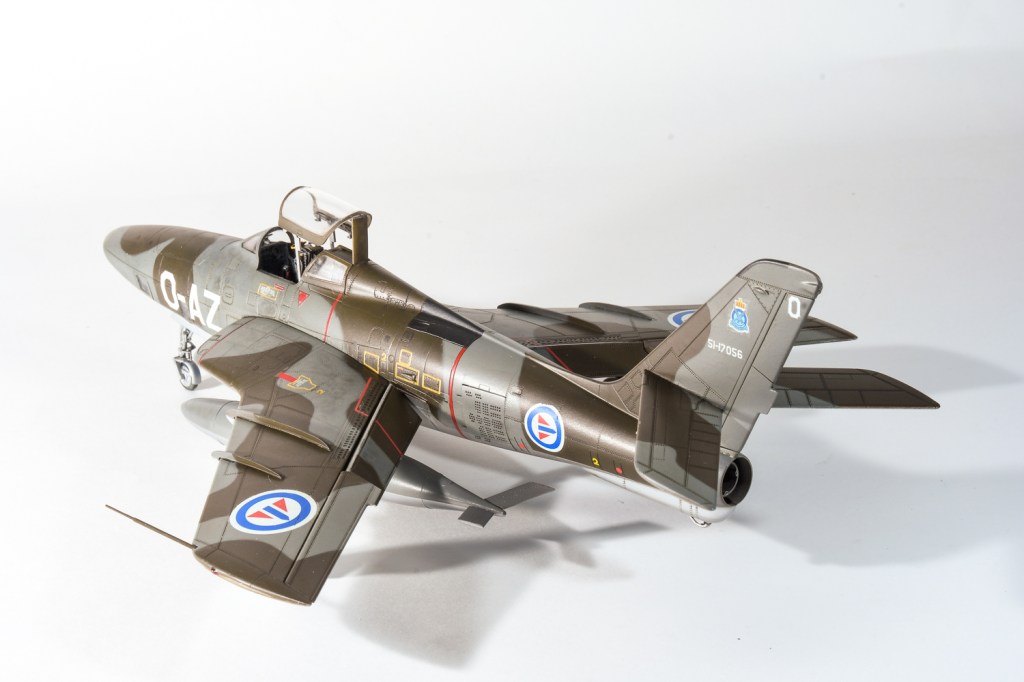
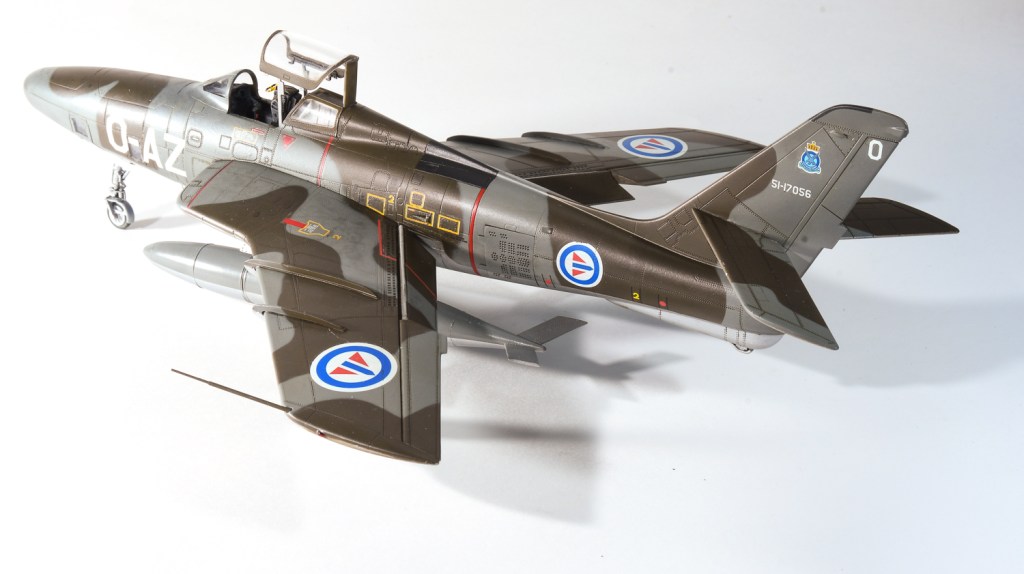
The model was painted using the RAL shades by AK Real Colours, my first time using these paints.  I thought they sprayed OK, but a few modelling friends have raved about their performance, so maybe I need to revisit them. The camouflage pattern was laid out using blu tac sausages.

A gloss coat was then applied and recalling commenced. The decals on this revised sheet, as stated before are a big improvement over the first sheet, being both in register and a little thinner. Im not sure about the Norwegian roundels though as they look a bit pale when compared to photos on the web.

AKs panel line wash for grey green aircraft was then brushed on and the excess removed after an hour before a final semi matt coat was sprayed all over.

The masking from the canopy was removed and the CMK seat added as these jets, in fact, all the NATO jets – apart from the French ones – were fitted with a Martin Baker seat.

The CMK seat has excellent detail and was a drop fit.

Finally the undercarriage was added, the nose leg still being a less than sound fit and the drop tanks added, although I have failed to push one of them home against the pylon with the result the nose of it droops, and it is out of line with the other one. During the build I managed to lose one of the airbrakes (I seem to lose a part every build) 

An email to Tanmodel resulted in them sending me a replacement part without charge which was very kind of TanModel, seeing as it was my fault.

So, my second TanModel ThunderFlash and the last one I can see myself doing. 

The result, again is a model that Im far from happy with. I have seen some very nicely done examples on the net, so it can be made up into a lovely looking model. As can any kit really!

Again, my lack of satisfaction with the project and how it was progressing led me to rush it towards the finish line. In fact I sold this one off in 2021.


Republic RF-84F Royal Norwegian Air Force 717 SQN. Rygge Air Base. Norway 1956

← Back

Thank you for your response. ✨

Warning
Warning
Warning
Warning.

TanModels 1/48 RF-84 Thunderflash

  • Completed:        May 2019
  • Enhancements: Seatbelts ExtraTech
  • Wheelwells, CMK
  • Camera access Doors- CMK
  • Control Surfaces CMK 

After the Trumpeter Thunderbolt, I was looking for something of a quicker build, so when my random stash pick system yielded the tanmodels Thundeflash, I was initially happy as I had been thinking about building this for a while. That initial enthusiasm quickly dissipated during the early stages of construction. Ejector pins marred the interior surfaces, the plastic parts had a pebbly texture that would require lots of polishing if I wanted to do a NMF and the surface detail almost disappeared on the underside of one fuselage half, meaning a rescribe would be in order. Coupled with this, assembling the brackets that hold the cameras proved fiddly with small in scale parts that had minimal glueing area. It fell apart on me a couple of times.  It would have gone back in the box if it were not for the reason I am trying to reduce the number of half built models on my stalled list, not add to them!  So construction carried on. The cockpit reminds me of the old monogram kits with nice relief on the side consoles that responded very well to dry brushing, same with the instrument panel. The seat had some generic US Seat belts added, painted, and was seat aside after a wash of Mig Products Dark Wash.

The kit has the option to cut out the camera access doors, and seeing as TanModels had gone to the trouble of including all the cameras, I thought I should show them off. The doors are demarcated by cut lines on the inside surfaces.  These lines are a little wide, so care is needed in cutting them out.  I used repeated scalpel passes, until they came away.  Separate doors are in the kit, but I decided to use nicer detailed ones from CMK that show the insulation on their interior surfaces. The cameras, save the nose one were left out until final assembly. Suddenly I was up to closing the fuselage halves! They fit together without problem I’m pleased to say, and a scribing tool and riveting tool was used to reinstate and deepen the underside surface detail using dymo tape as a guide. This actually went a lot better than I thought, given rescribing isn’t one of my better skills.  It wasn’t until this stage that I actually started enjoying the build! Dry fits had shown a very nice tight fit of the wing assemblies that slide into recessed areas on the fuselage without any need for filler, however with the intakes added, the fit was nowhere near as nice. I ended up dissembling the wing intake trunking and splitter plates (thanks Tamiya Super Thin Glue) and reassembled the splitter plates and trunking to the wings one piece at a time, constantly checking the fit of the wings to the fuselage.  This worked and led to the initial nice tight fit that the first dry fits had shown. I have no idea what the problem was, but can only guess the splitter plates when added to the assembled fuselage trunking caused the interference. It has to be said the internal trunking does not really fit together seamlessly. Ensure when done, that you sand the openings flush so that there are no steps that will cause the splitter plates to sit proud. Prior to gluing the wing halves together the CMK wheelwells were glued in place.  I found the plastic around the wheel bay opening needed to be thinned slightly.  I used a dremel. If its one measuring tool I have of my increasing skill, it’s the dremel. In years gone by this would have resulted in carnage and unusable wings. These days I can manage quite surgical cuts and thinning.  The CMK nose wheel was also used which is just a direct replacement for the kit part, but with greater detail. I also used CMK ailerons and flaps as I had them in the box for some reason, but there is no discernible difference in detail that I can see. I now had a complete airframe with filler only being used on the underside centre seam and a tiny bit around the windscreen panel.  Overall I found the fit excellent and my initial bad thoughts about the kit had disappeared.  Before any primer could be applied though, that pebbly texture had to go.

Republic RF-84F Thunderflash
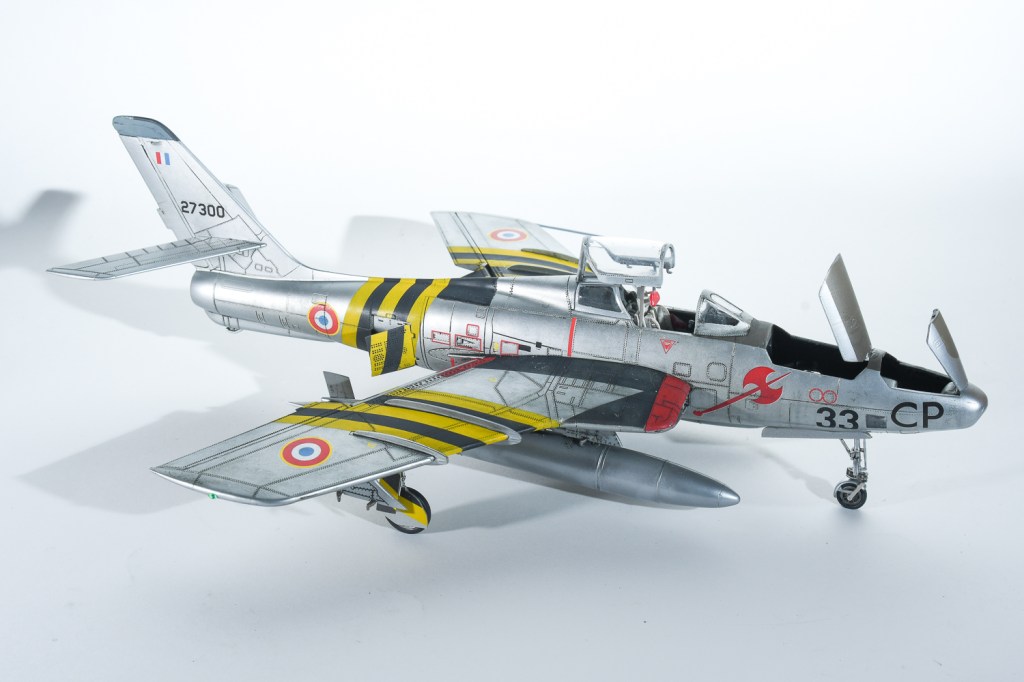
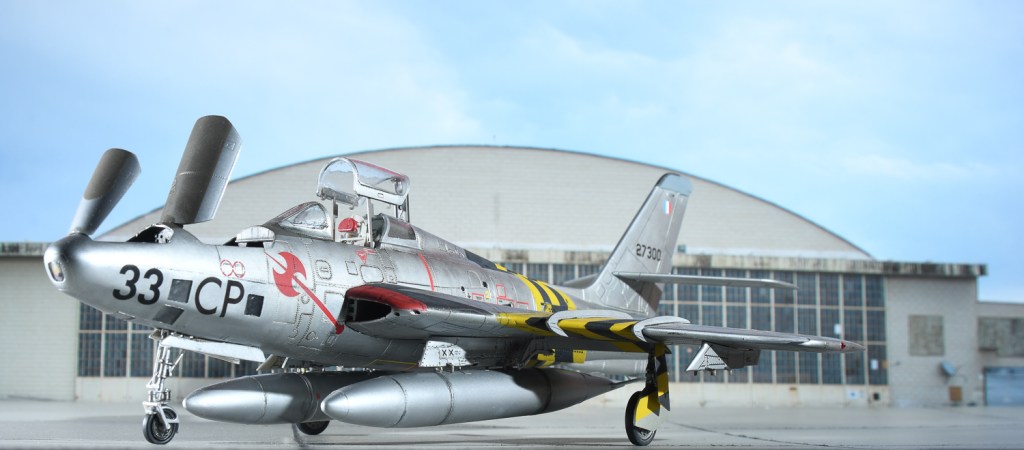
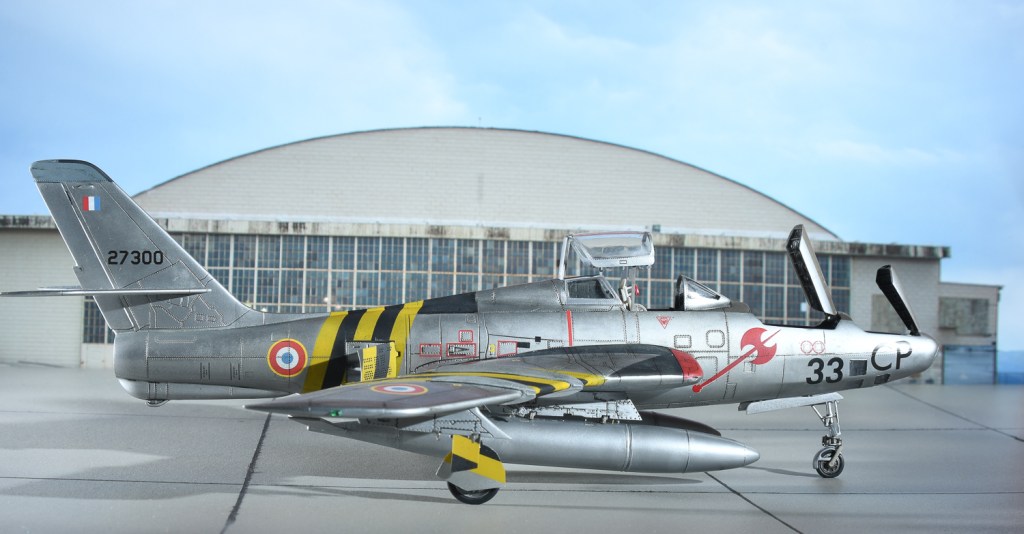
27300 ER 4/33  Armee de l’Air RAF Akrotiri. Cyprus 1956