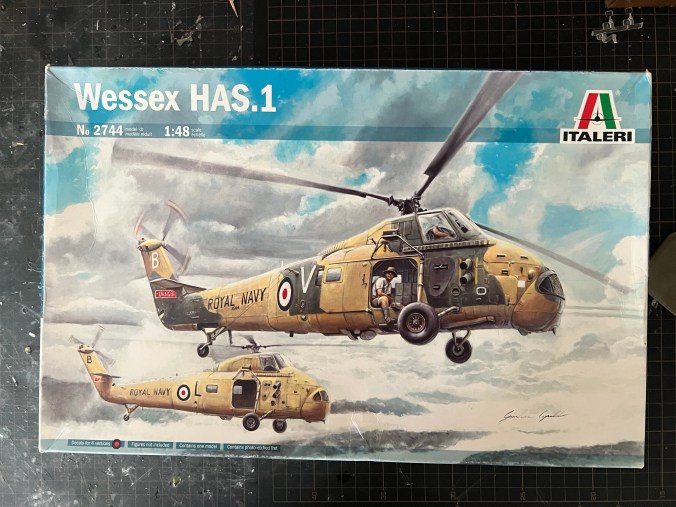
- Purchased: 2025
- Built 2025
- Enhancements
- Interior – Eduard Wessex Cockpit set for Wessex UH5
- Exterior – Eduard Wessex exterior set for UH5
- Exhausts – Hendie Scale Models
- Lobsterdeck – Hendie Scale models
- Wheels. Armory
- Decals Kit
Introduction
Despite my previous Wessex build feeling at times like a bit of a slog, I still felt like there was one more left in me. The green and sand scheme on the box. quite appealed to me.
But, where to find one though? Turns out these things are like rocking horse poo, Italeri no longer producing the HAS1 boxing.
However, by a great stroke of luck and planets aligning, a local club member was selling one, so it was promptly snatched up. My second Wessex build was on! Would I regret it?
Construction Notes
Construction of the Italeri Wessex has been outlined in my 31B article, although with this kit , I employed an Eduard cockpit PE set, Instead of building up complete PE seats, which would have been very fragile and would not have had seat cushions anyway, I chose instead to just add the seat PE side pieces as veneers to the kit parts 4c and 5d. This also had the added benefit of retaining the plastic seat locating pins so that a much more solid fit was achieved between the seats and the rear bulkhead. This would have been an extremely fragile fit just using the PE seats.
For the cabin, the same Seaking that had its seats raided for the 31B gave up its last remaining seats for this build. PE from the Eduard Wessex UH5 set was added to the kit interior framework, which surprisingly added some much needed depth to it.
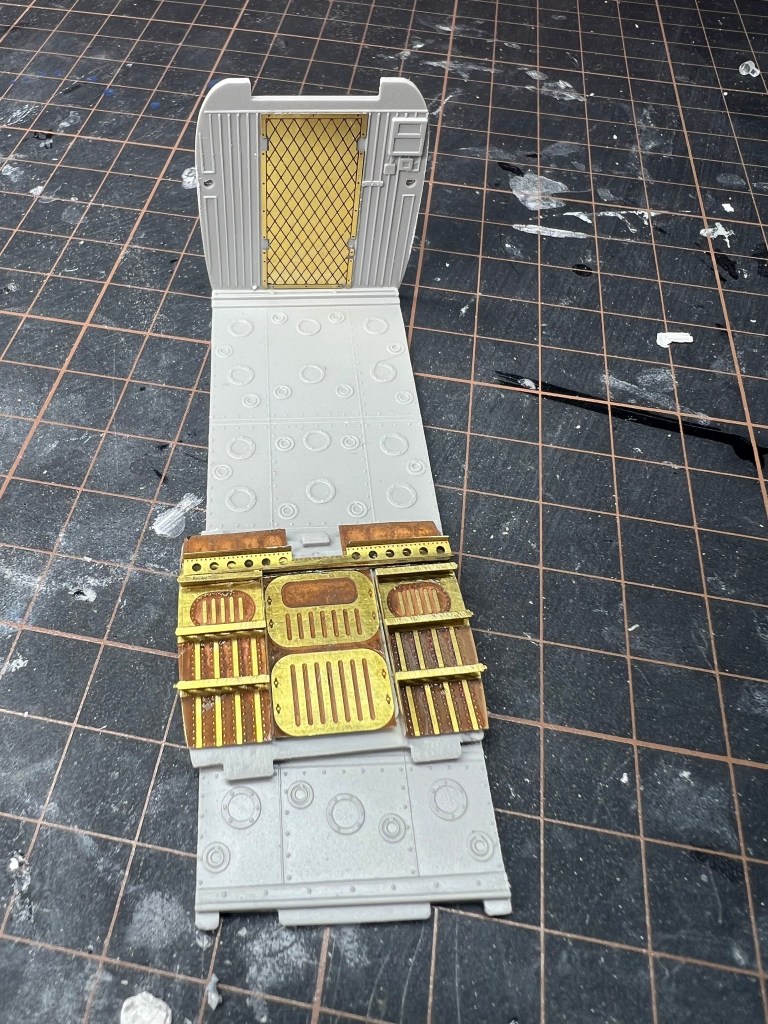
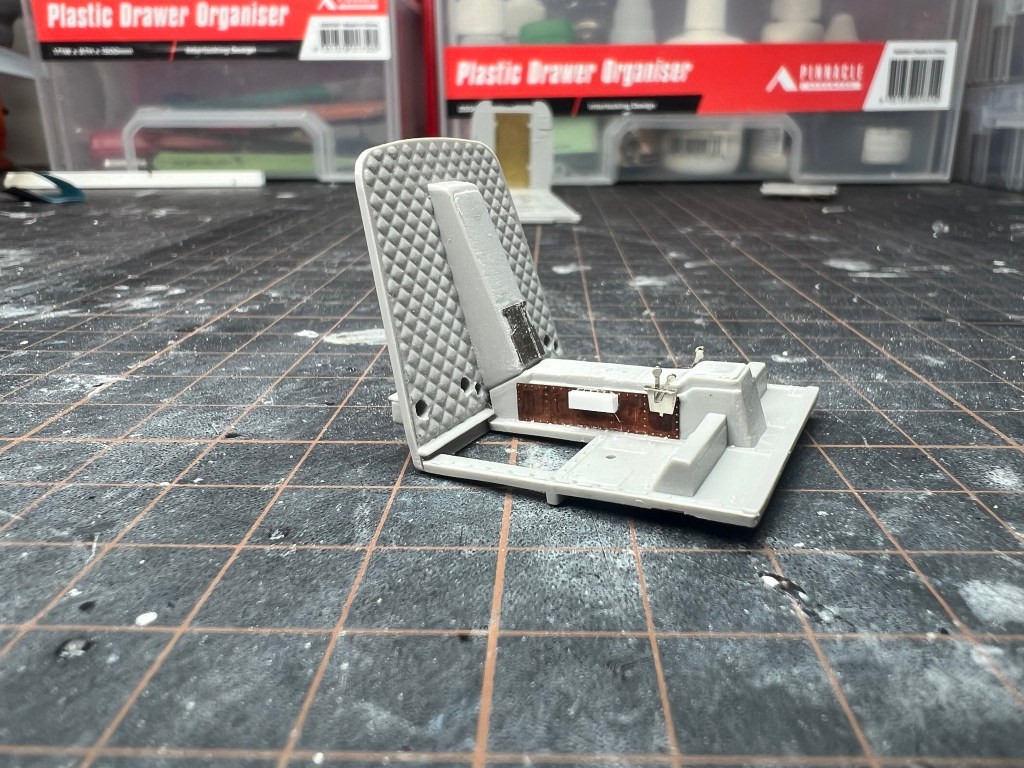
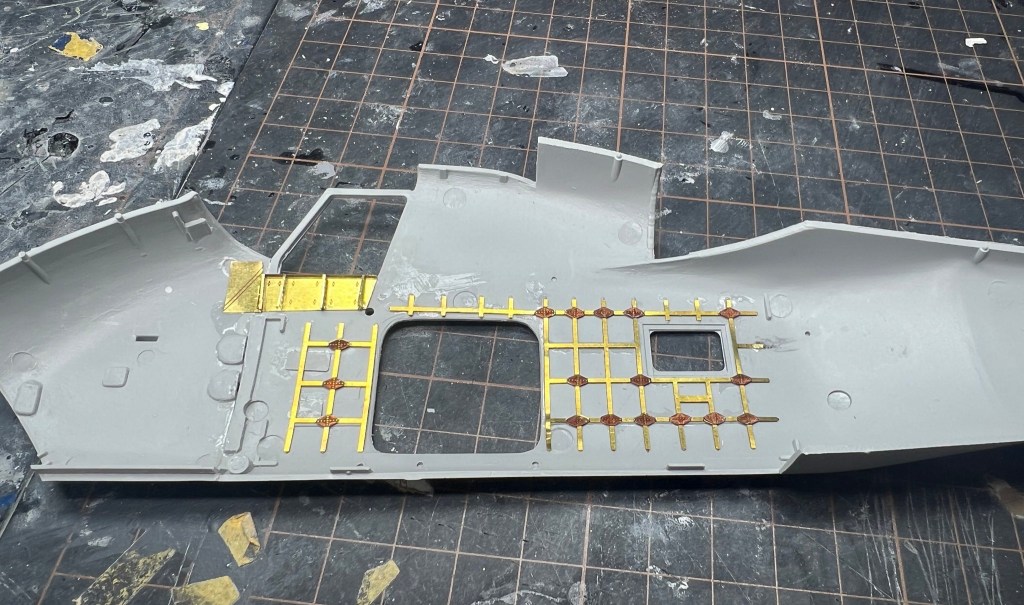
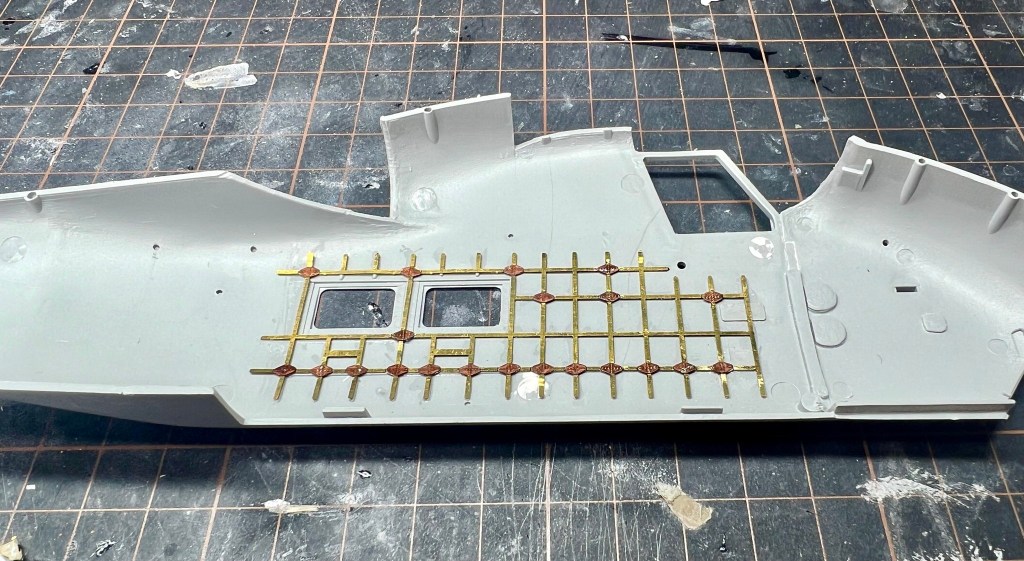
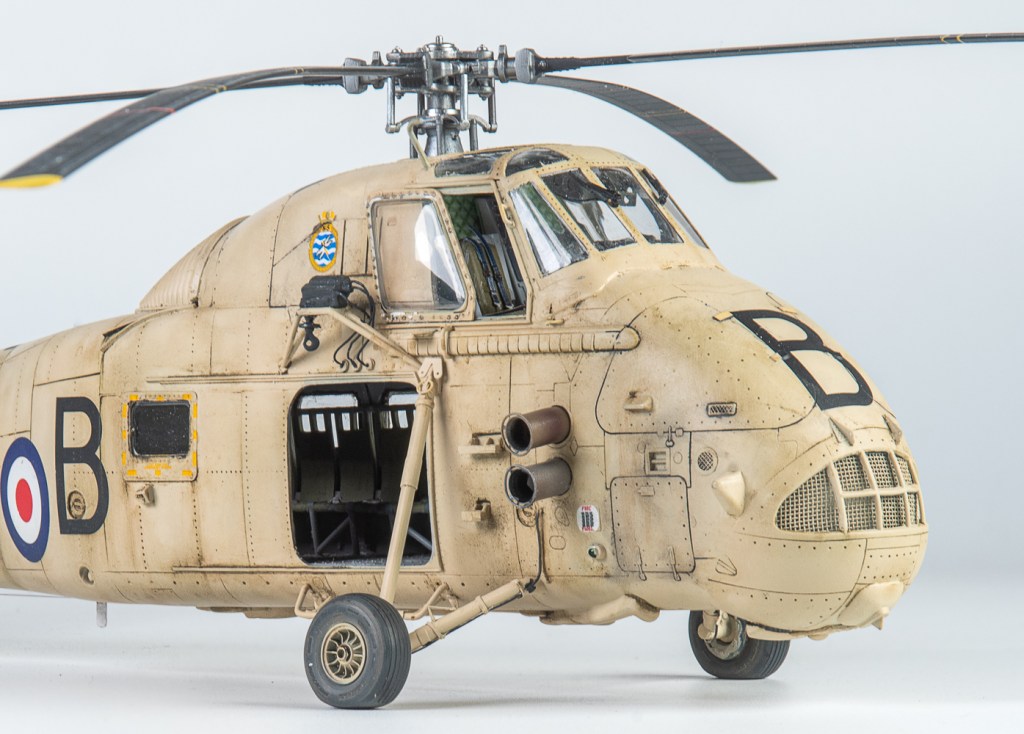
The rest of the build proceeded fairly easily with the same fit issue around the hellhole mesh framework part 18A as the previous kit., although this time more care was taken with reinstating the detail around to make it look like a separate panel. Again, the windscreen was not the best fit, requiring filling around its base. Also in common with the other kit was the terrible pebbled plastic that required a lot of sanding and polishing to get a smooth surface, although in hindsight, I could have still put a bit more effect into this. Hendie’s 3DP parts again provided the lobster deck and exhaust pipes.
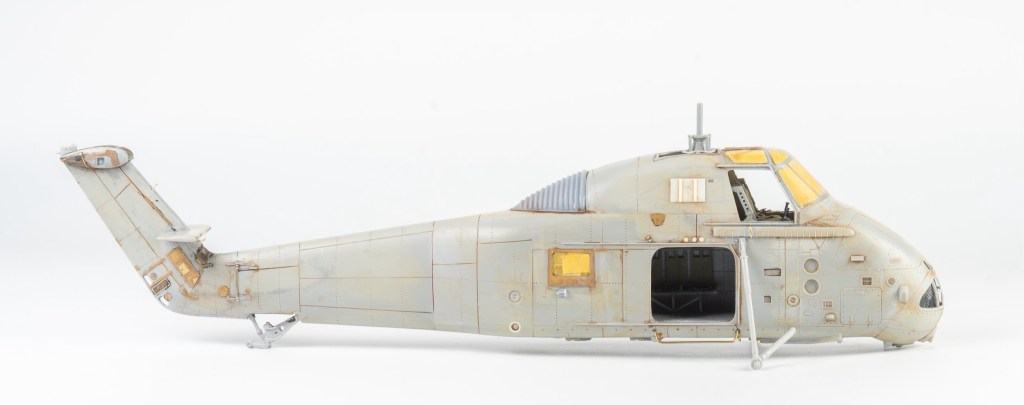
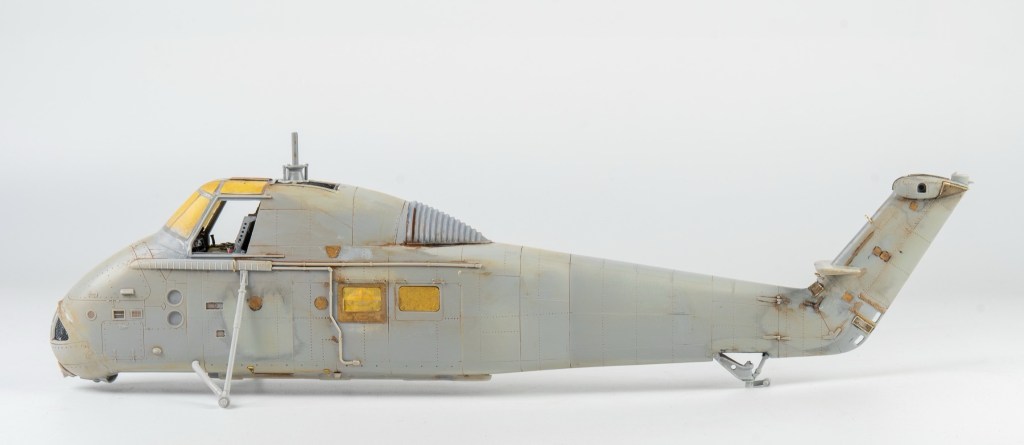
Painting and Decalling
I usually decide on the scheme before starting the build. This case was no different with the camouflaged version being chosen..
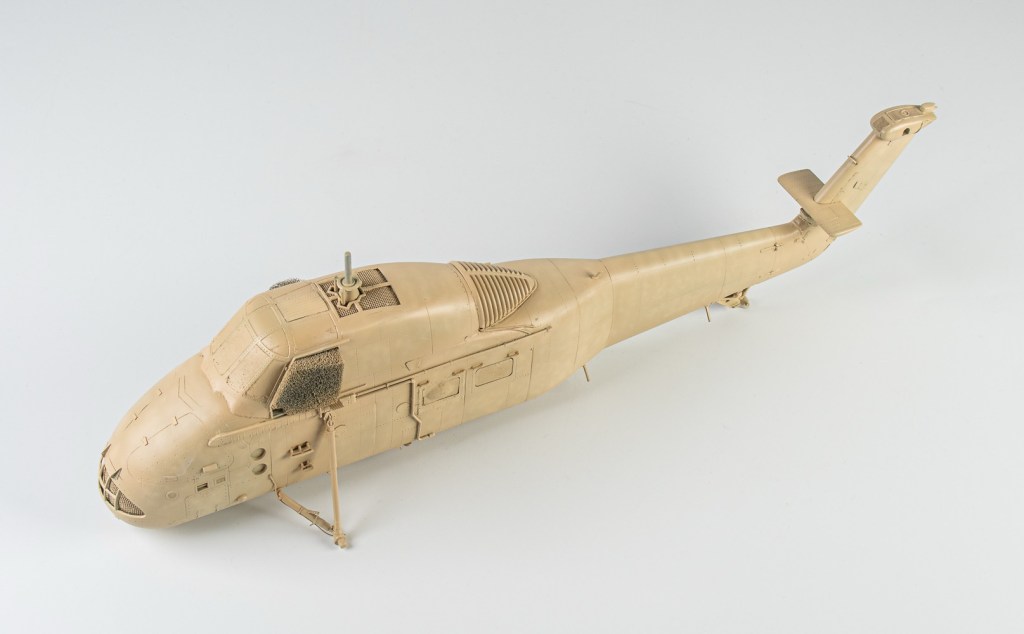
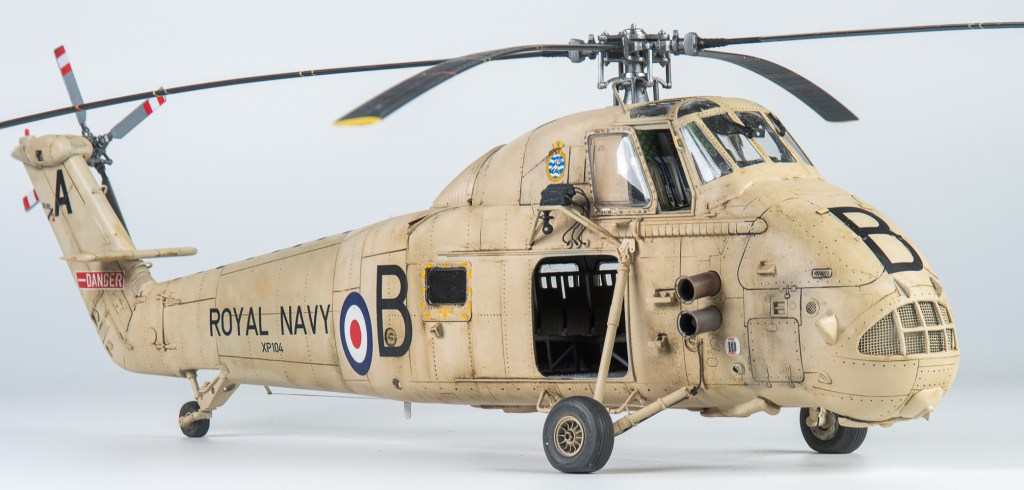
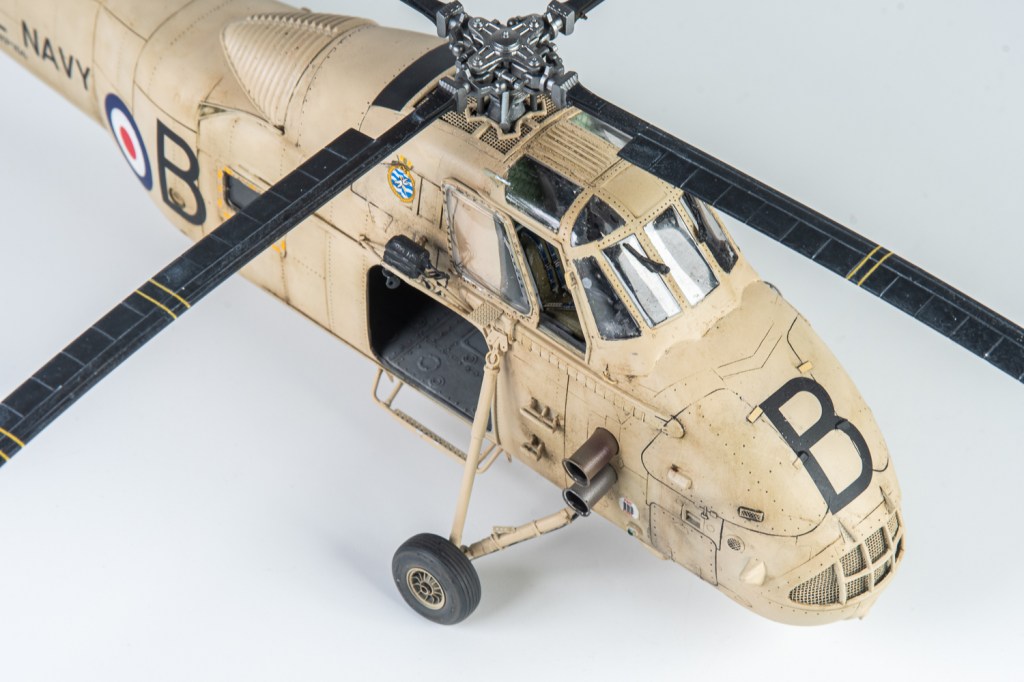
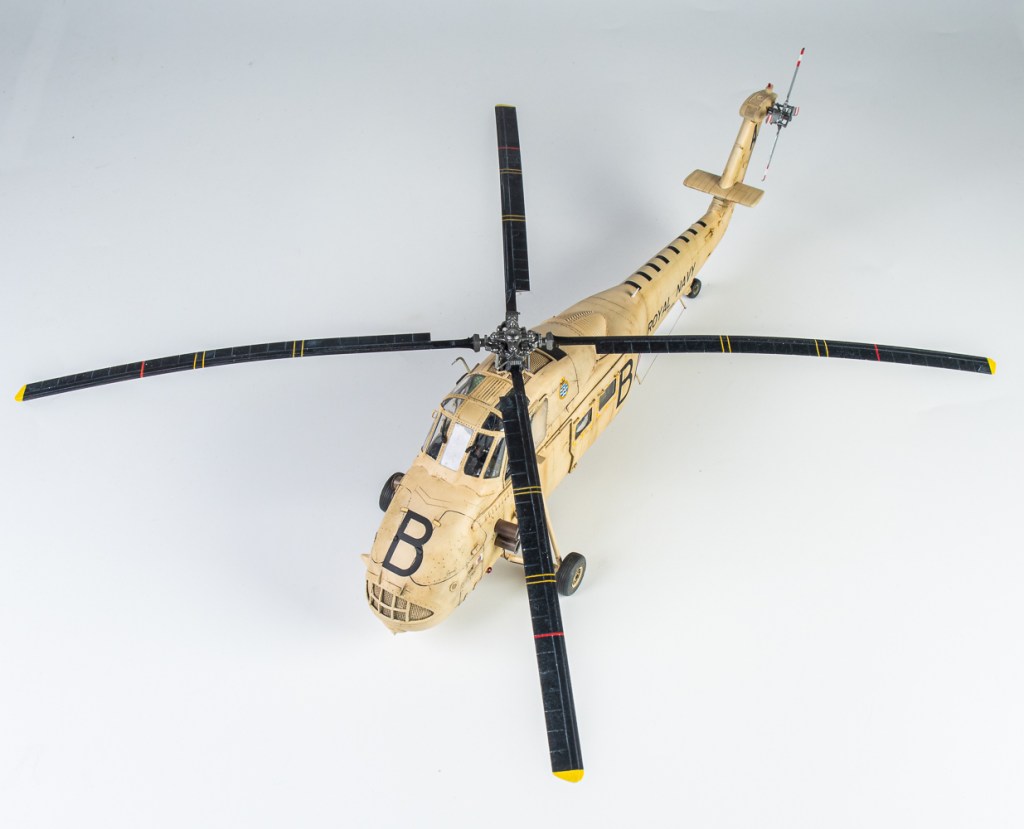
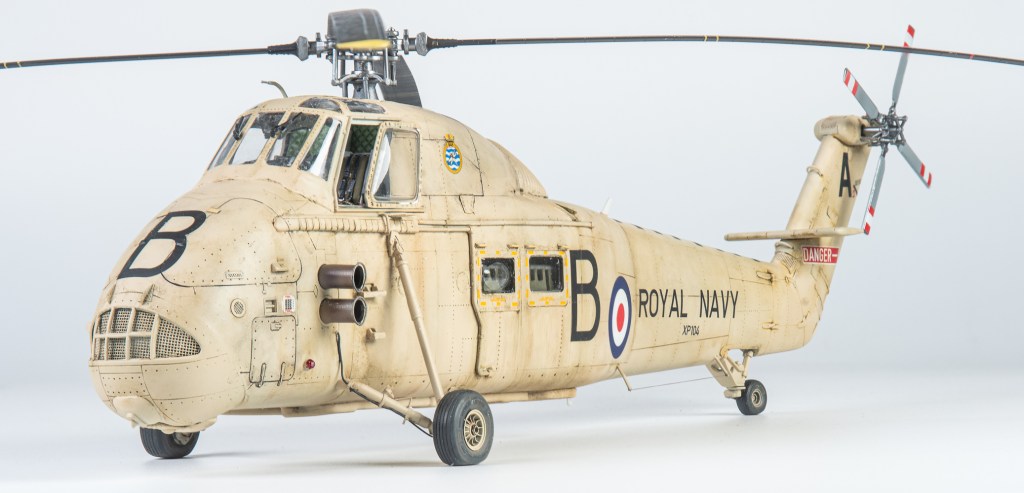
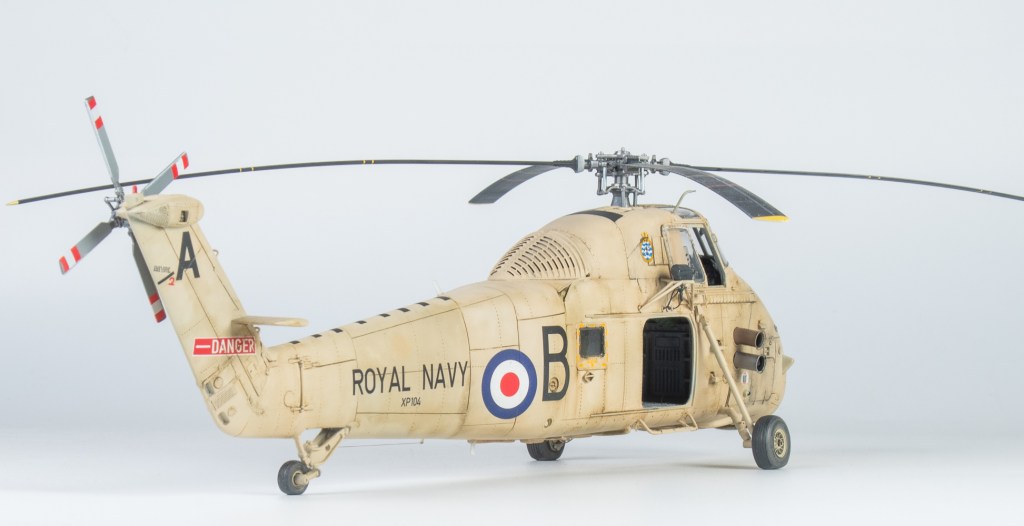
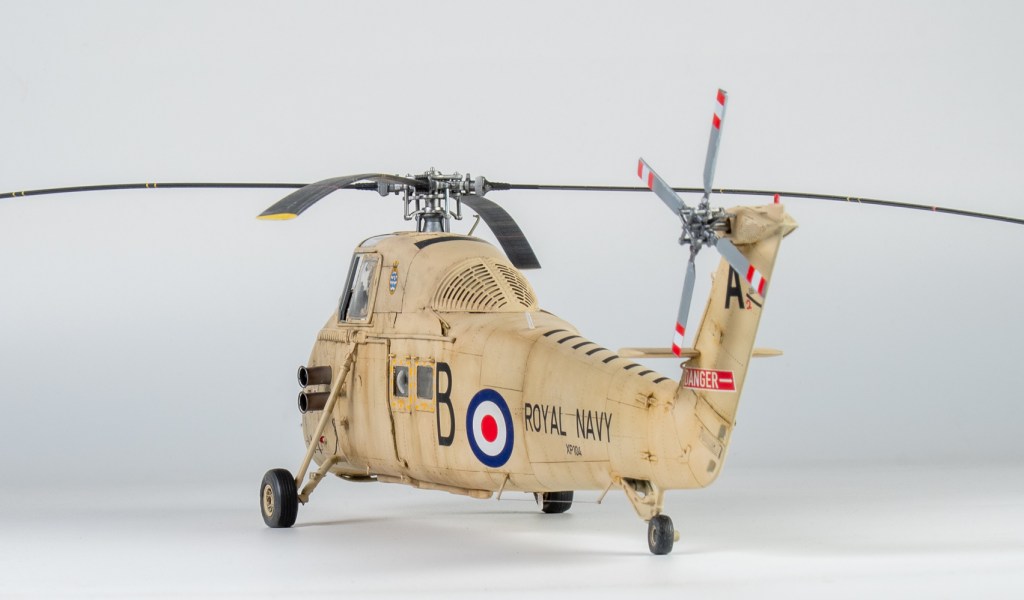
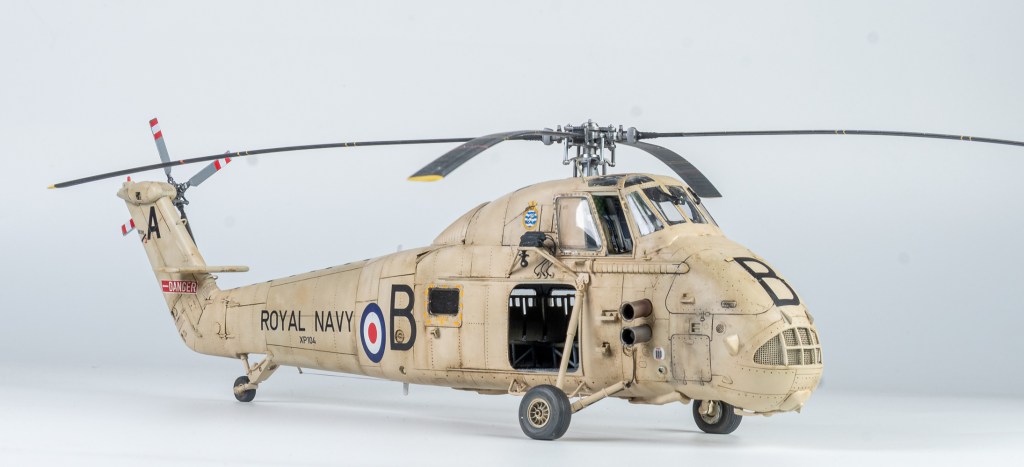
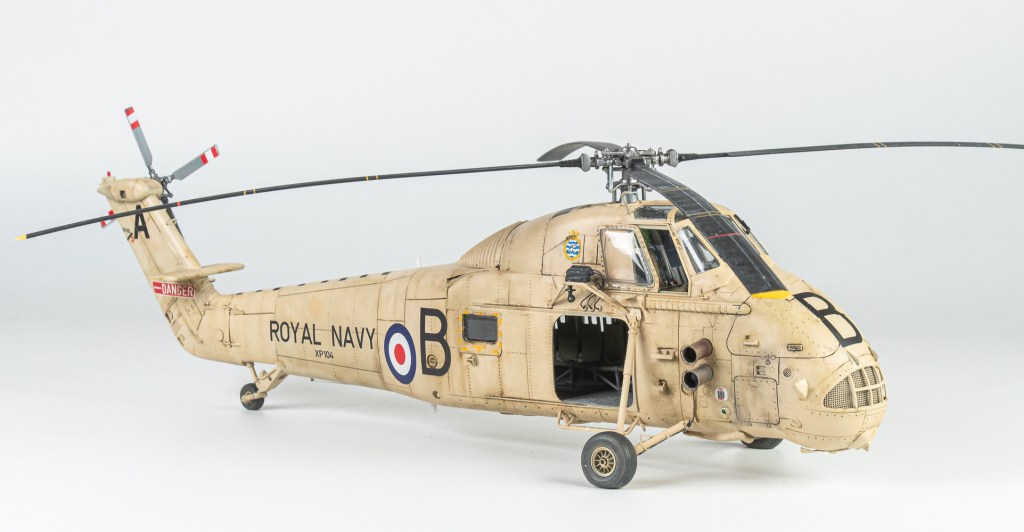
However once the light sand had been applied, using Tamiya LP27 Light Sand, I decided an overall light sand machine would look quite different from other Wessex models that had been looked at on the various modelling fora. ( Yes, sites such as BritModeller are still visited on a weekly basis)
Over the existing sand coat another coat lightened with Tamiya buff was mottled and streaked in random patterns. To this mix, white was added and some random streaking applied, which imparted a bit of a bleached look to the colour. Things were progressing nicely. A thin wash made of Sepia oil paint was then applied to all the panel lines and rivets. Opening panels had a black wash applied. The next day a gloss coat using SMS Gloss clear was applied and this too was allowed to set overnight
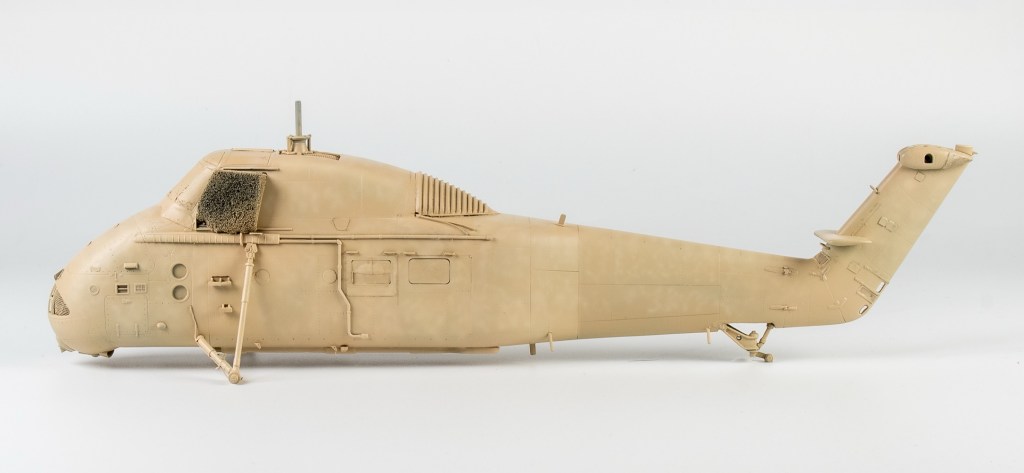
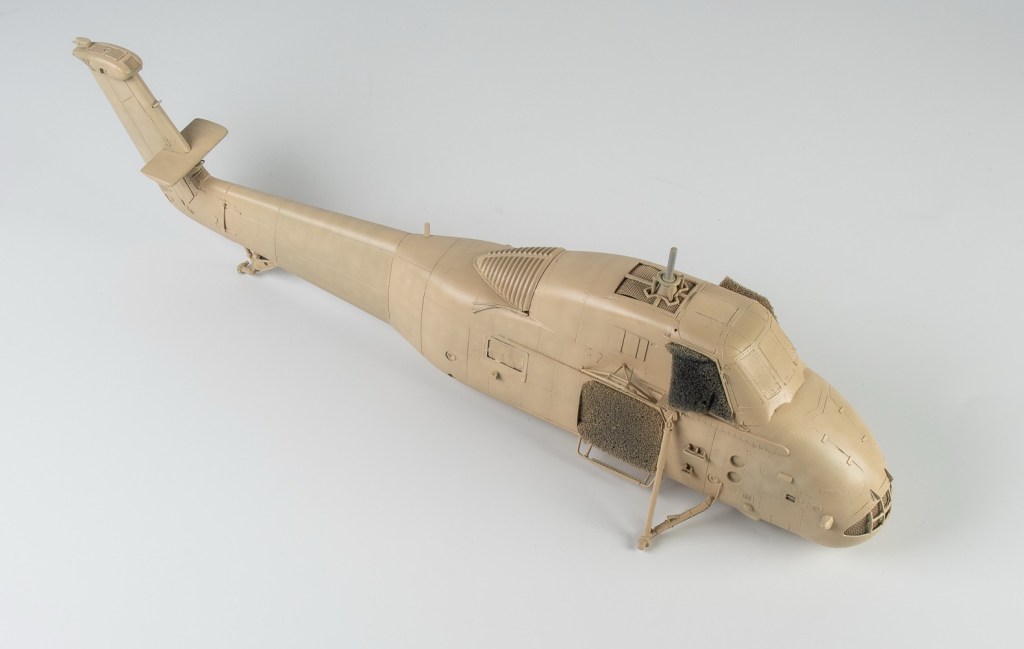
The kit decals were used and these performed magnificently, sucking down into the detail using a couple of applications of Gunze Mr Setter. Again, the decals were left overnight to completely set and allow the decal solutions to work their magic. Allowing these things to set overnight is a recent new technique for me. Yes I know lacquer is dry within an hour, but this allowing these coats to set properly has rewarded me with hardier paint coats that less easily chip and scratch. These days, I also wet sand with micro mesh between coats.
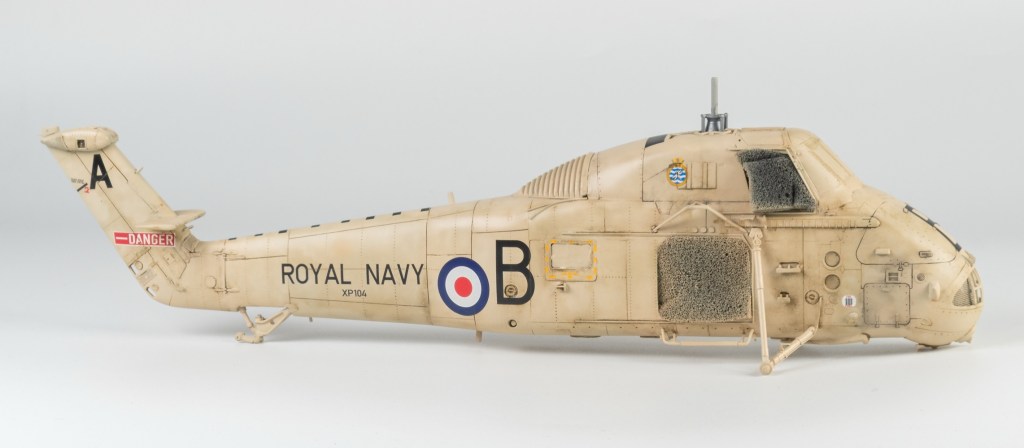
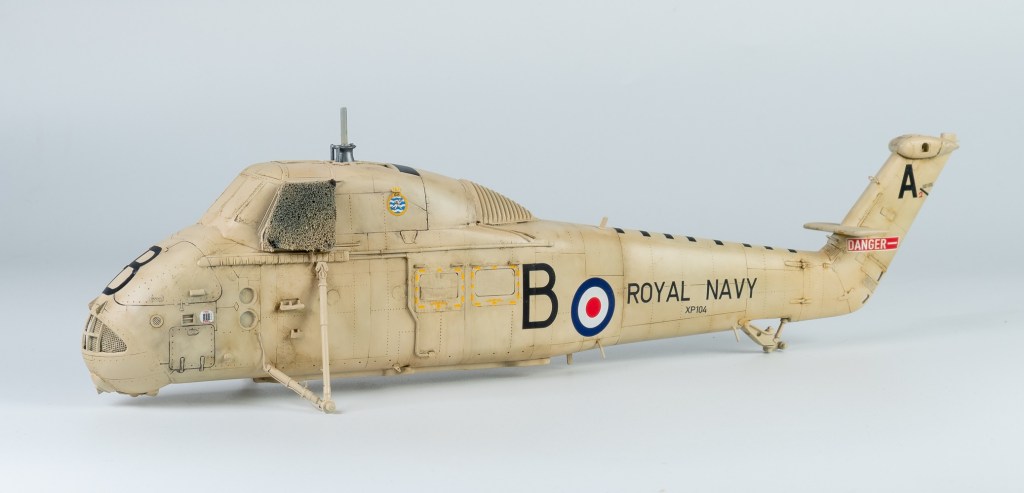
The next clear to go on was a VMS satin coat to allow some key for the oils which were going to be used for further leaks and stains. Various photos of the real machines found on The Imperial War Museum website showed them surprisingly clean and free of leaks , although there was quite a lot of staining from grubby fingerprints around the nose access doors. Ammo Starship Filth was my weapon of choice in achieving these, whilst Sepia was used to add various rain streaks from window frames and the conduits on the fuselage. The exhausts were painted with steel and then very thin coats of Alclad Sepia and Violet glazed over the top with the airbrush.
Final Assembly
The wheels were painted AK Rubber Black with sand hubs, then Mr Weathering Color Sandy Grey liberally applied over everything., taking care to ensure no pooling. This imparts the tyres with a lovely dirty warm colour. The treads had a black wash run into them.
The winch was added with the plumbing from 0.2mm lead wire, then the previously painted rotors were added. Lastly, the clear parts were unmasked. Everyone’s favourite part of a build although, always done with trepidation. On this build, there is a slight glue blemish on the windscreen. So close!
One day, I will be rewarded with truly clear flawless clear parts.
Conclusion
Im still surprised that after finishing one Wessex, I immediately wanted to do another, given the Italeri kit is not the best- albeit only- starting point in 48 scale. What can I say. I just love the subject. Its such a purposeful, brutish looking machine, very Cold War British
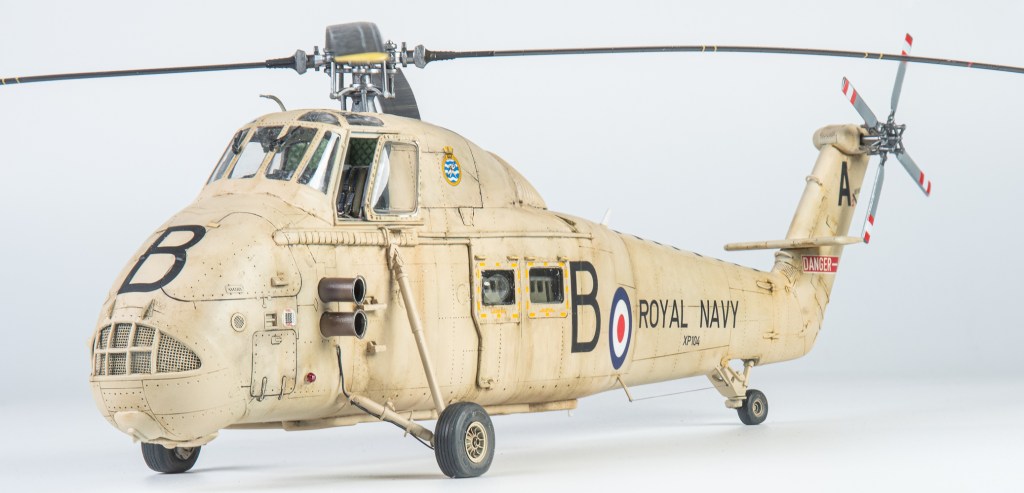
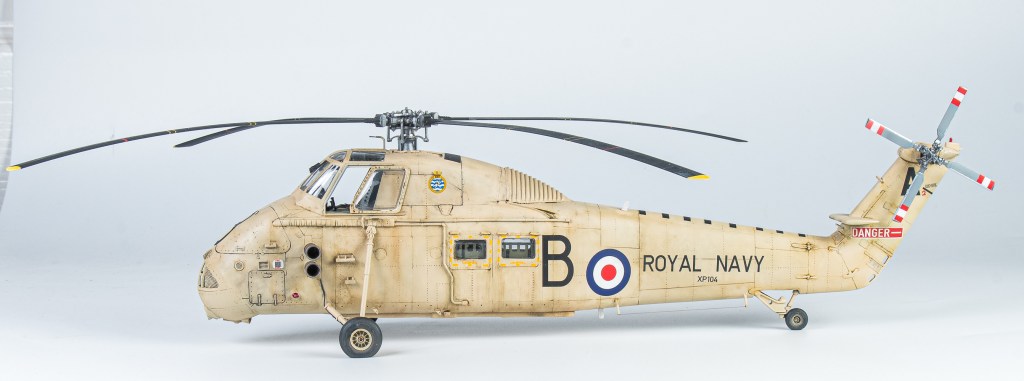
The overall light sand colour serves to emphasise those big code letters, D type roundels and Royal Navy titles. I love it, its now one of my favourite builds, but that’s it for me and the Italeri 1/48 Wessex.
Westland Wessex HAS1. 945 N.A.S Royal Navy. Borneo. 1962




 Bruce’s-Scale-Models
Leave a reply to andyk21 Cancel reply