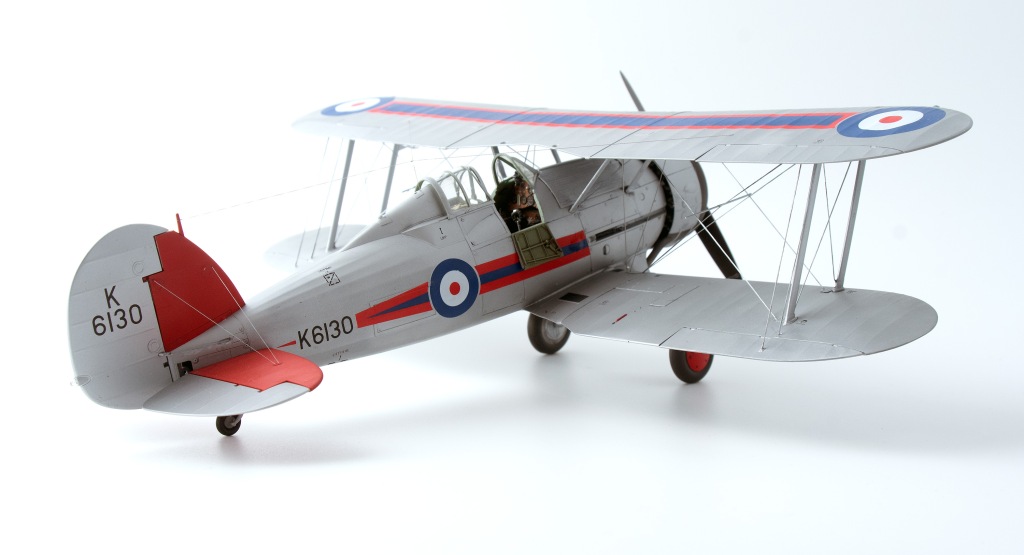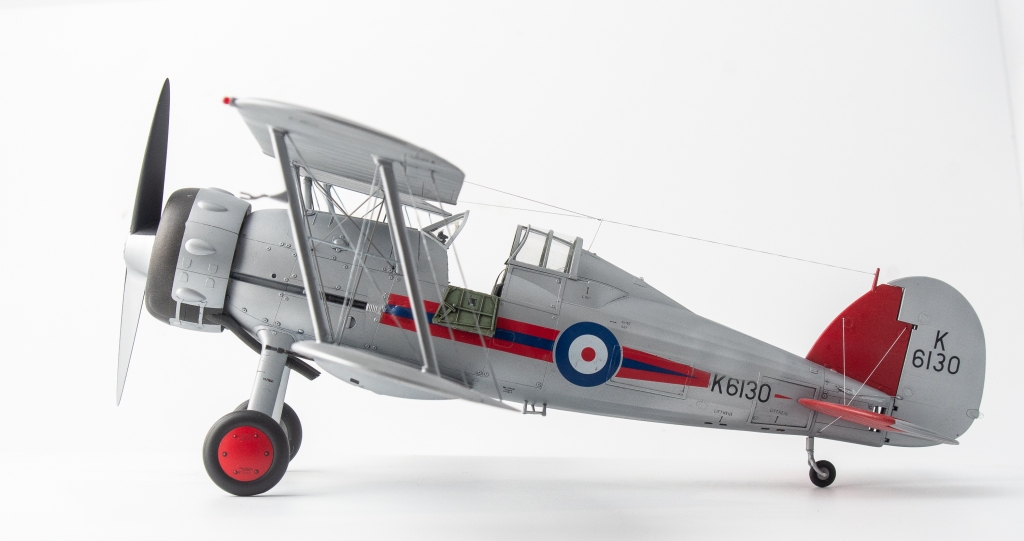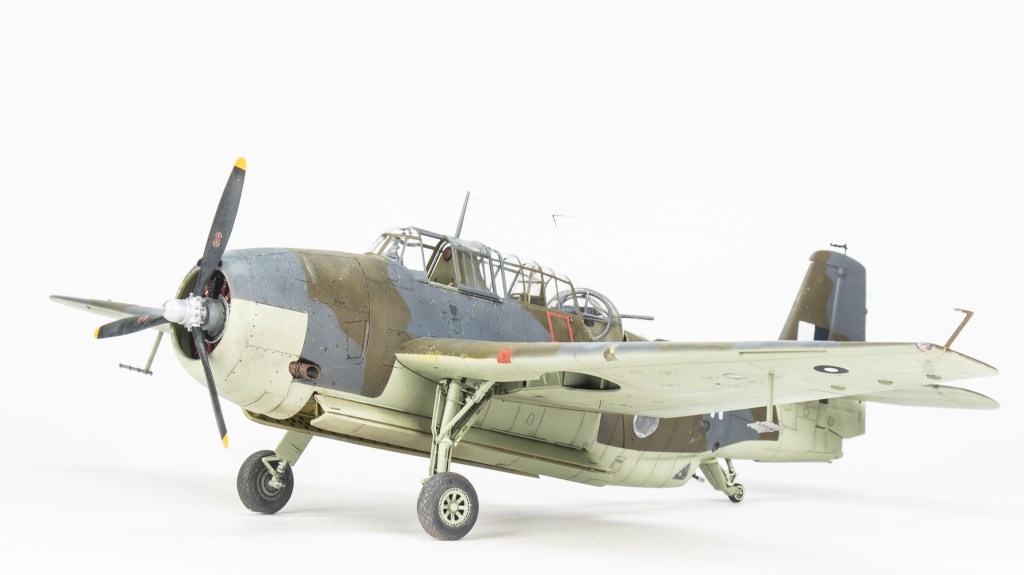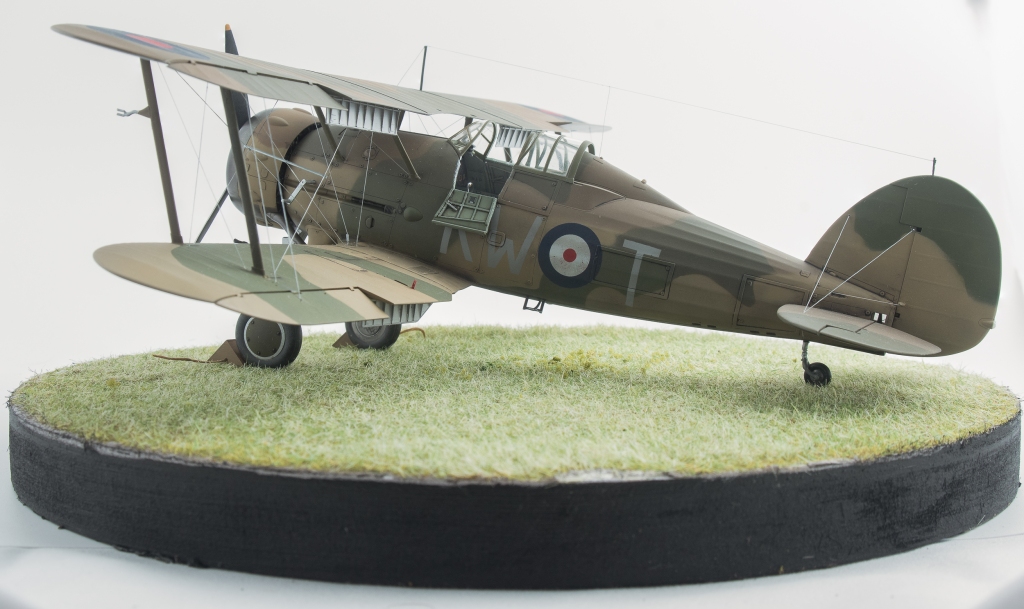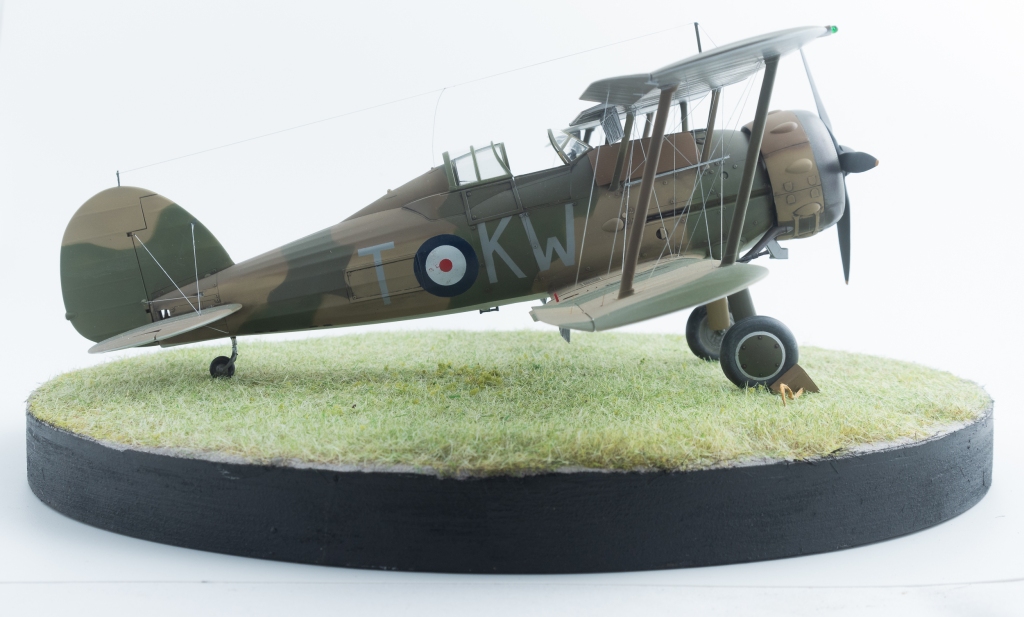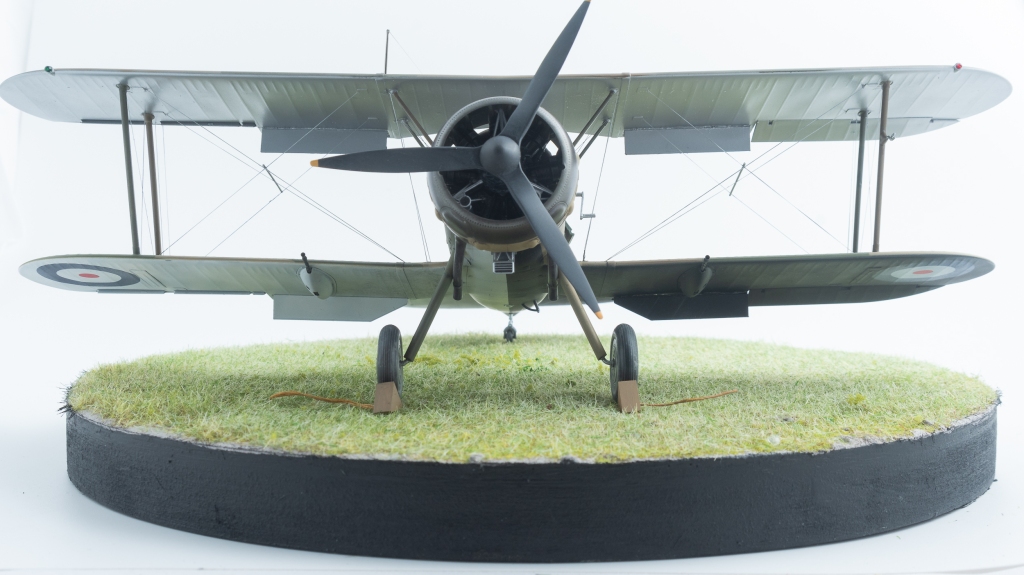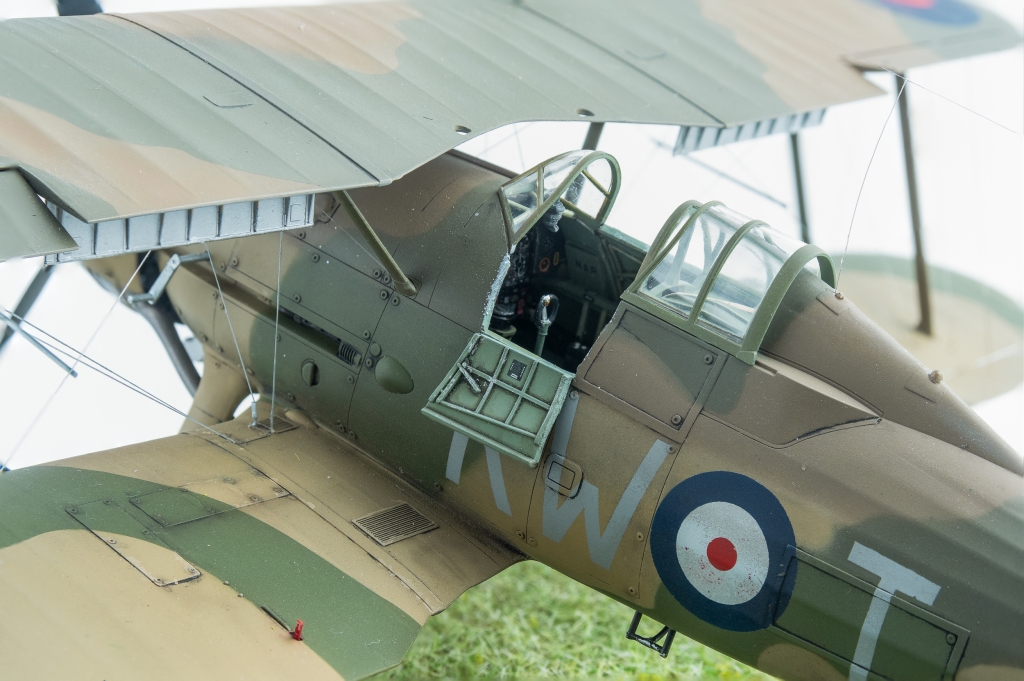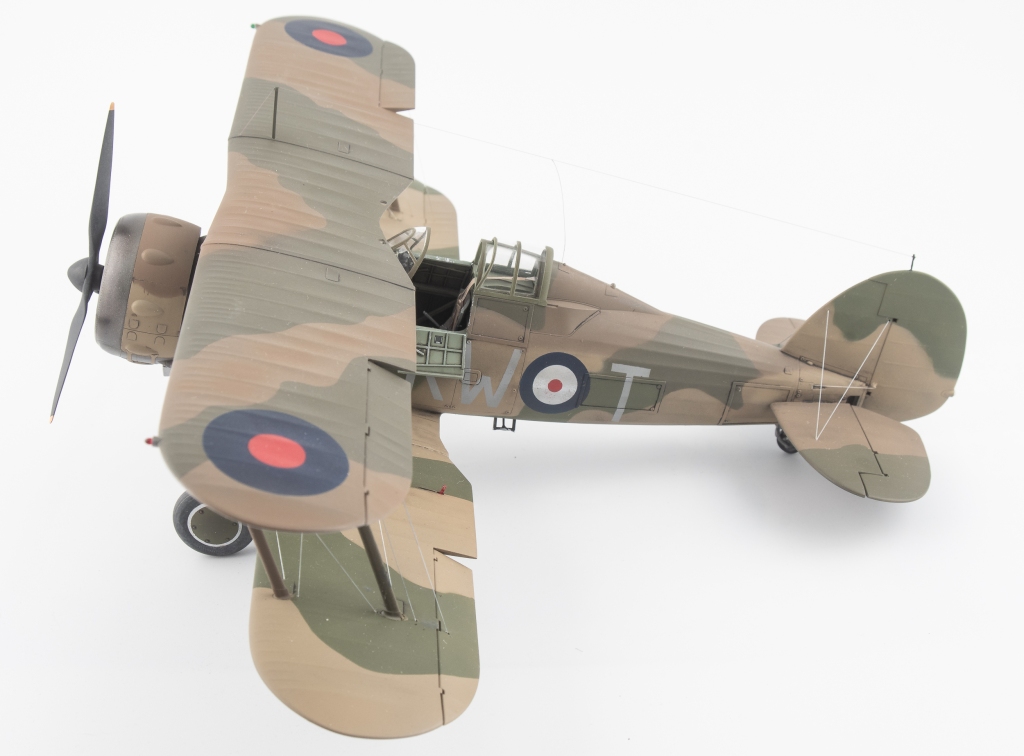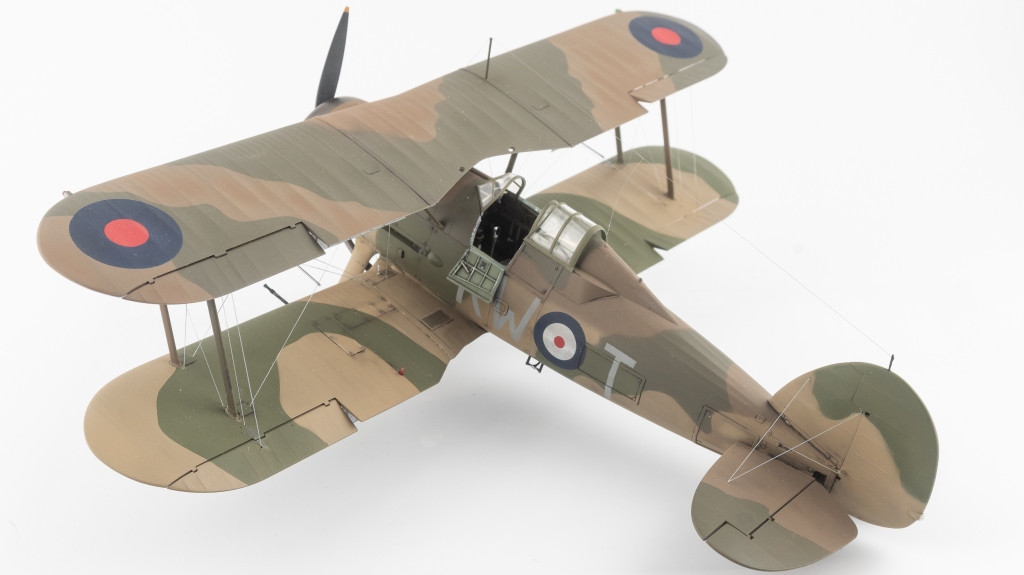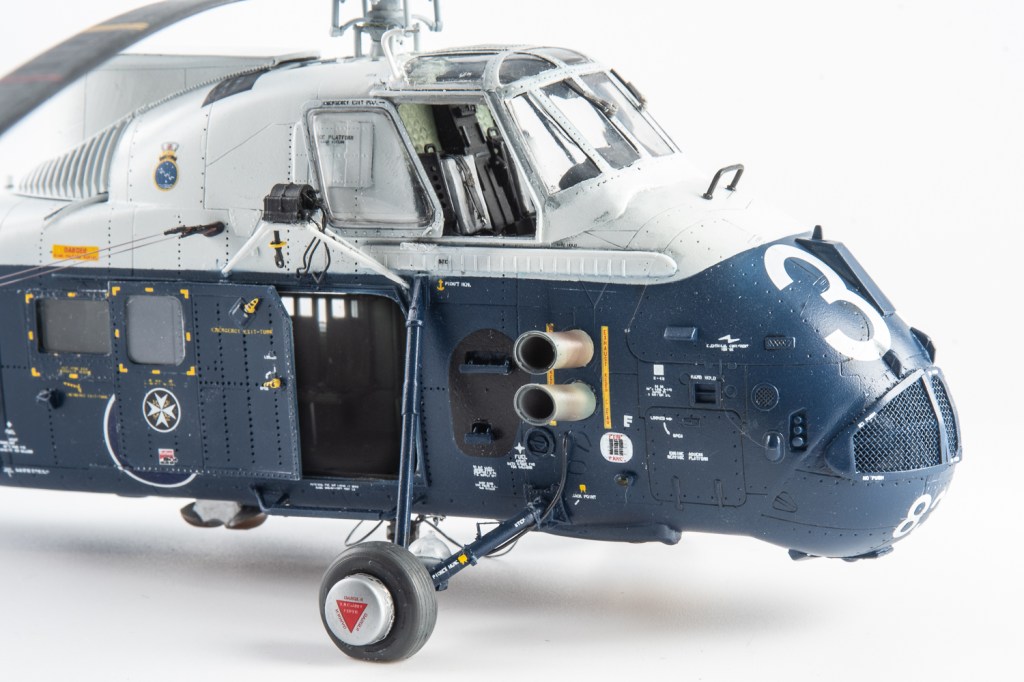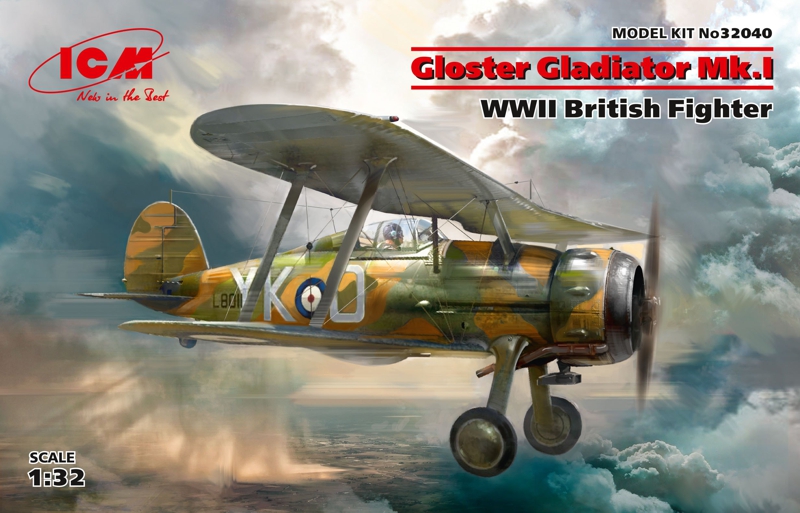
ICM 1/32 Gloster Gladiator MkI

  • Purchased; 2019
  • Built: 2024
  • Enhancements:
  • Instrument panel: Quinta
  • Seat Belts:Quinta
  • Gun barrels; Master Details
  • Cockpit Doors; Quickboost
  • Air Breather pipes; Quickboost
  • Compass Pedestal: Quickboost
  • Decals: Aero craft Models

Introduction

I enjoyed my other Gladiator so much, I decided to build the second one in the stash rather than selling it as was the original intention.

Even without considering the “foreign” air forces, such as Sweden or Finland one is spoilt for choice with Gladiator schemes, do you do a silver interwar one, or a camouflaged war RAF example? Then there are the Sea Gladiators as well. My previous model was finished in early war RAF camouflage, so this one would be a silver interwar RAF example.

Construction

To take a different path from the usual “starting with the cockpit”, the rudder, stabiliser and elevator halves were first glued together so that they would have time to properly set up and allow any glue shrinkage to show itself.

With this done, construction returned to following the steps outlined in ICMs instructions, starting with the cockpit.  ICM provides parts that when built up result in a reasonably busy looking cockpit.  

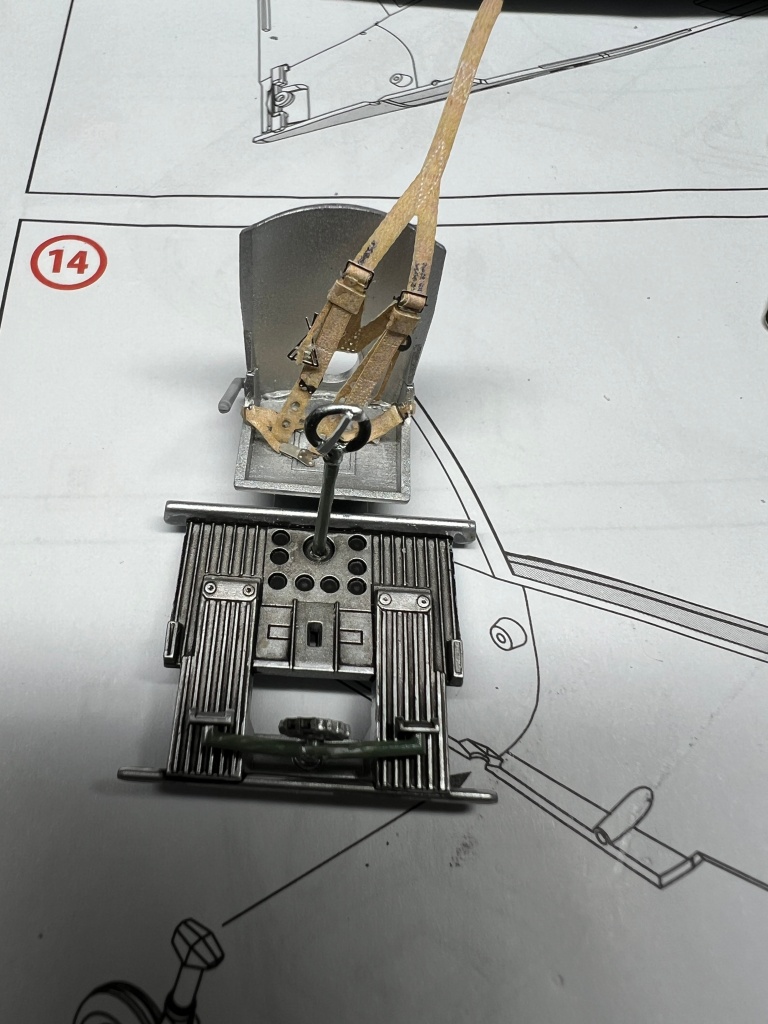
Of course, the builder can improve on this. In my case I included some simple additions and refinements starting off with wrapping thin copper wire around the spade grip of the very plain looking control column.  A brake lever, cam and the brake line were added from scrap plastic and solder.  

Map cases were built up out of plastic card, and the slots on the throttle quadrant deepened with a Trumpeter scriber before new throttle levers were added from slivers of plastic card topped with blobs of paint.  

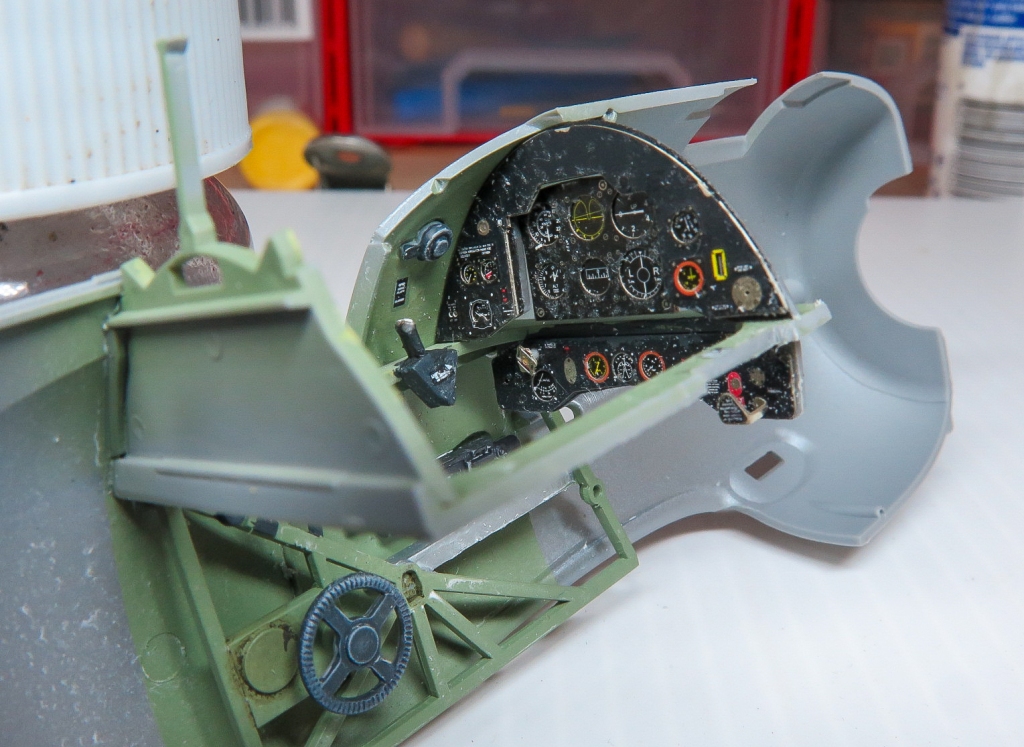
Quinta 3D Decals were used to replace the instrument panels and seatbelts.  The kit compass pedestal was replaced with a better detailed Quickboost item.

There is an ejector pin in the seatback that needs to be filled and the gunsight requires the clear reticule adding.  A punched disc of clear plastic did the job here.  

Once the cockpit shelf is added, you really can’t see too much into the depths of the cockpit, even with the cockpit access doors opened.  Speaking of shelves, to better replicate the real item, the rear shelf behind the pilot (part C22) was cut down to leave just the central beam.  To my eye, this really adds to the open framework look of these 30’s era aircraft.

If you wanted to add detail to the now visible interior behind the pilots seat, frames and a radio could be built up from card and strip.  I didn’t bother as my canopy will be open and sitting over the top of the fixed canopy section, so hopefully, that empty space will not be too visible.  Finally, the machine gun barrels were cut off, as these would be replaced by brass Master Detail barrels once all painting had been completed.

With the cockpit painted and detailed to my satisfaction, the fuselage halves could now be closed.  This was achieved with Tamiya Extra Thin Glue which was liberally applied allowing the excess to ooze out to fill any gaps.

The two halves fit tightly.  The lower insert…..not so much.  That said the gaps here were minor and were eradicated with CA glue mixed with Mig Ammo Steel metallic pigment.  To me the pigment seems to make the CA slightly easier to sand and  also has the benefit of colouring the glue so you can see what you are sanding!

The fuselage was then mated to the lower wing assembly with some filler required to blend in the rear join.  A result of the soft ICM plastic the wings are alarmingly flexible but adding the struts and top wing will hopefully add some rigidity.

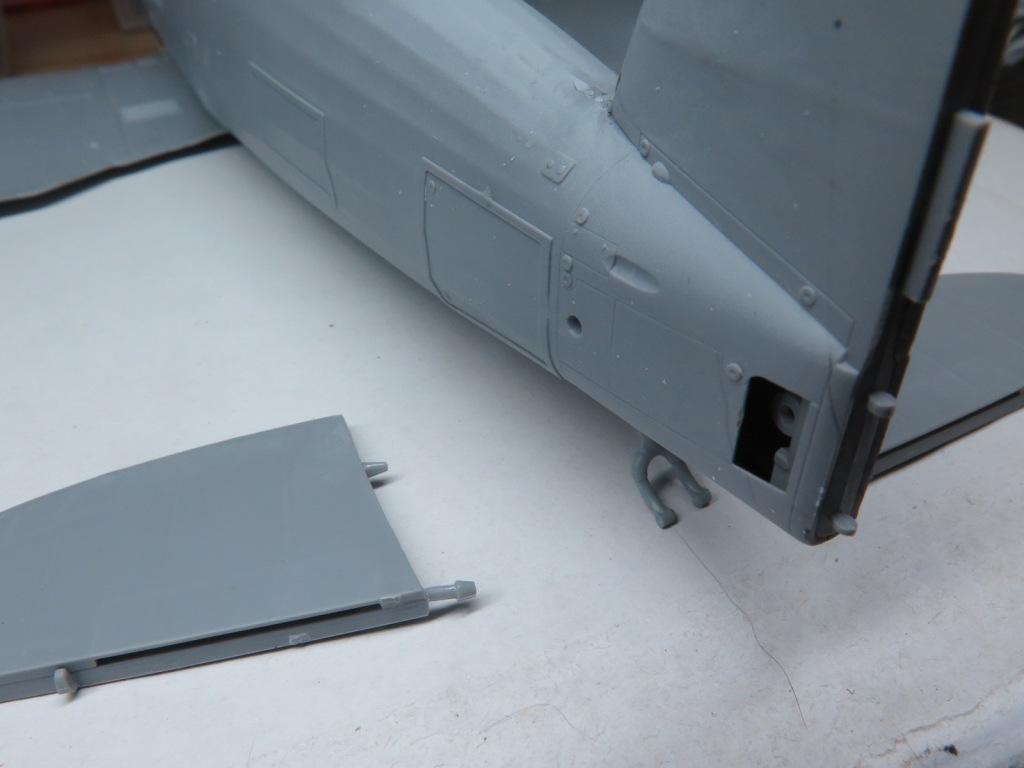
ICM would have you rely on a small diameter plastic peg, inserted into a hole in the fuselage to hold the horizontal stabilisers in place.  Given the soft plastic, this would likely end in tears so the pegs were cut off and a suitable diameter brass rod used to provide far more strength.  Even more fortuitous is that the real Gladiator has a small gap here between the fuselage and stabiliser.  While you have the brass rod out, the tailwheel strut can also be cut and replaced as this is another weak area of the model.

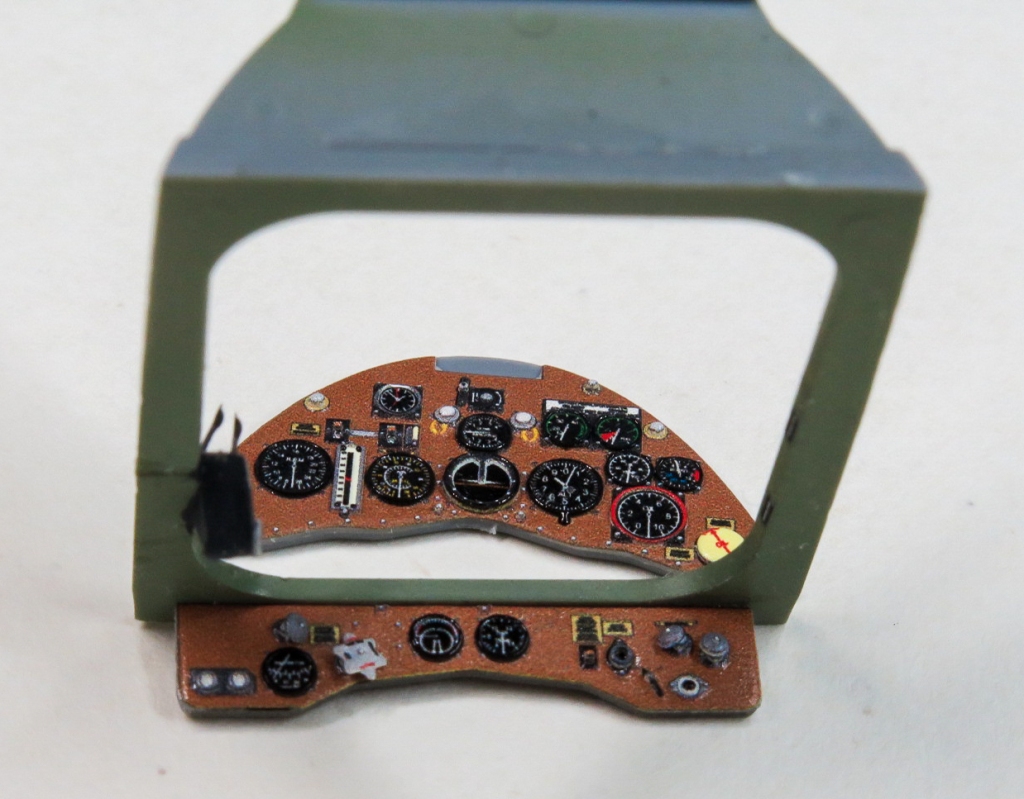
With this done, a complete airframe and top wing sat on my bench awaiting primer.  Prior to priming, a No. 77 drill was used to open up all the rigging points as I intended to use EZ line for the rigging.  Once all holes were drilled, the struts were cleaned up and attached in their respective positions.

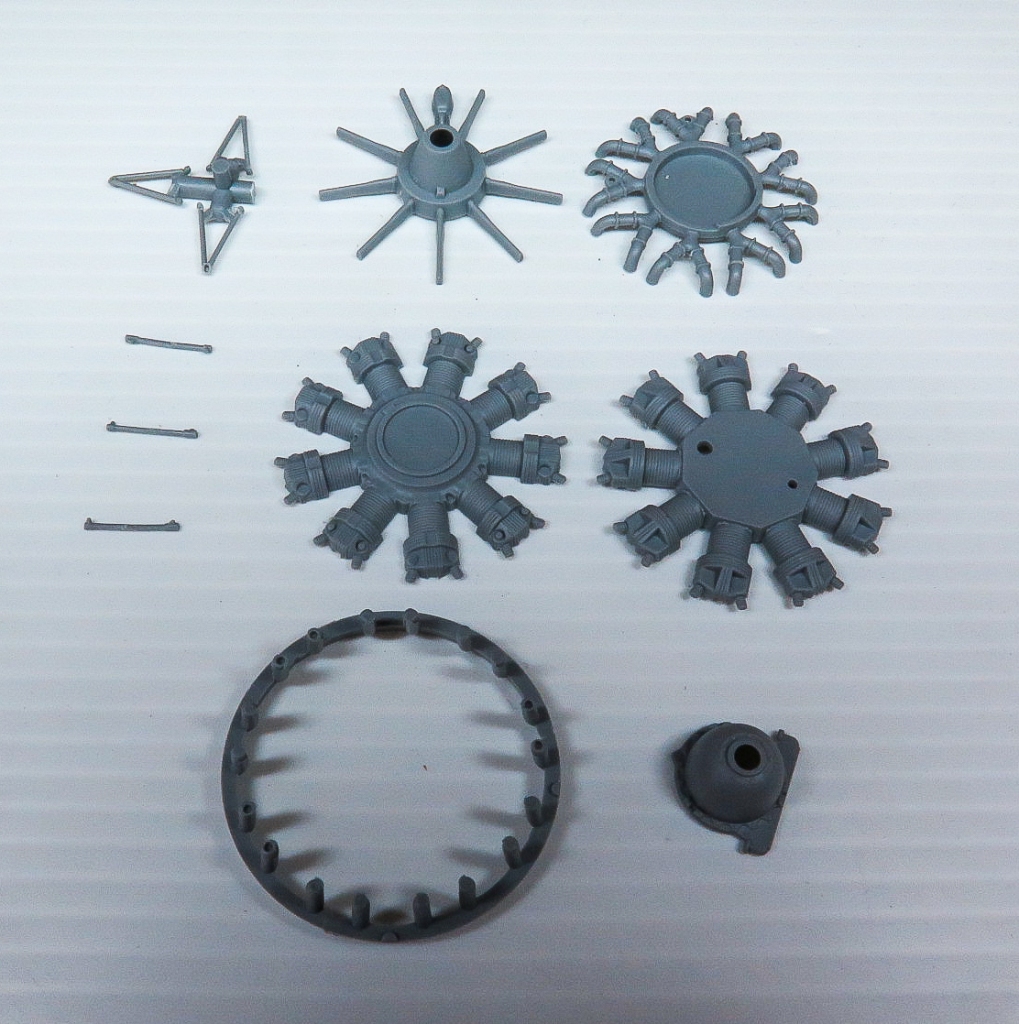
Next up was the engine. Again, ICM have done an excellent job of portraying the Mercury engine.  When completed it looks quite busy with its cowling support braces and cooler intake tubes.  Quickboost do make one piece air cooler intake tubes that are slightly better detailed however I didn’t use them on my model as the kit ones looked fine to my eyes.  The instructions here were slightly confusing, but eventually I worked out you have the option of building the cowling closed or open.  If building the closed version, do not add the cylinder heads, parts D14 or exhaust pipe “plates parts D21 and D22.

In a perfect illustration of the pre planning that goes into all my models, it was now that I decided the model would look better rigged with the AIMS PE Bracing wire set rather than the EZ line.  The reasoning being that the PE would better represent the flat RAF wires that were used on the real aeroplane.  The set was promptly ordered from AIMS in Hungary.  Post from Hungary to Australia takes about three weeks.

Painting and Finishing

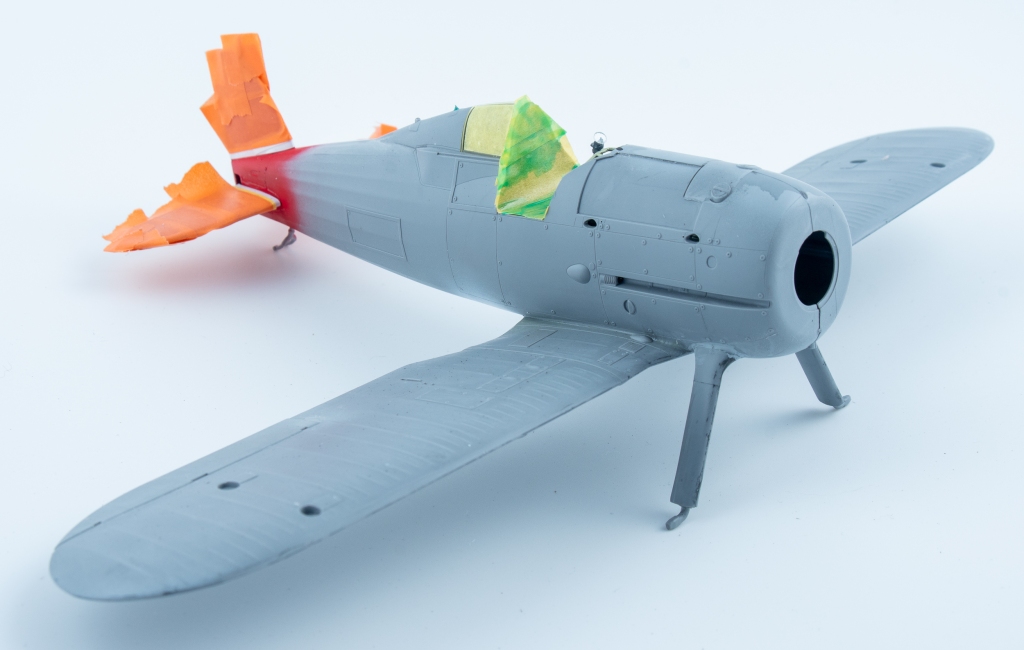
While waiting for the PE bracing to arrive the model was painted.  A primer coat of Mr Surfacer 1500 revealed a few seams, mainly around the lower fuselage insert. These were eventually dealt with, some which required multiple attempts!

The fixed tail surfaces and wheel hubs were then given several light coats of SMS red.  This was then masked off and the remaining airframe, tail control surfaces and cowling got the Tamiya LP11 treatment with the model being rubbed down with fine 8000 grit sanding pads between coats.

Once the AIMS rigging arrived a careful perusal of the instructions revealed that AIMS wants you to remove the moulded inspection hatches from the wings so that they can be replaced with PE items.  The idea being that the hatches are placed over half the hole drilled for the rigging to make a slot for the PE bracing wires.

Whilst the AIMS instructions provide clear photos of an actual Gladiator to assist you with placing the PE bracing wires, it would have been more useful to have been given precise measurements as to where to drill the holes to accept the wires.  Of course, this meant that some of my previously drilled holes were in the wrong spot so these were carefully filled and redrilled all the time dodging previously installed struts.

In the end it all looked a bit messy, so the decision was made to strip the model using Mr Thinner and repaint.  This took me back to where I was 3 weeks prior.  I would complete far more models each year if I didn’t have to do so much twice or three times to each model!

On the other Gladiator build I had used a 1 Man Army mask set for the stencils and these had really impressed me sot they were put to work again.  If you have not seen these sets, they are laser cut masks for not only the national markings, but also all the maintenance stencils.  As the surrounding area needs to be taped off to prevent overspray, all these markings were sprayed prior to applying the decals as I did not want to be applying Tamiya tape over decals.  SMS Super matt Black was used to spray all the stencils, and then the masks removed.

The decals are by Aerocraft Models.  These performed very well, laying down with the aid of Microset and Microsol.  However, (there’s always a however!) Aerocraft do not give you handed fuselage Sqn flashes.

Both flashes provided are for the port side fuselage.  To apply the flash correctly to the starboard side and have the serial read correctly, the modeller will need to cut the serial from the flash and apply it separately so it is correctly orientated.  If applied straight off the sheet without modification your serial on one side will be upside down and back to front.

The front of the stripe is also angled to follow the panel line there, and if not corrected, this will slope the wrong way also. Aerocraft helpfully supply some spare striping in both red and blue, and this was used to reverse the angle of the flash on that side.

A sealing coat of SMS flat varnish was then applied over the whole model.  Once dry, panel lines were given a wash using Tamiya dark grey panel line accent with the excess being wiped off using white spirits.  Removable panels were outlined with black wash.

I wanted something different from my usual weathered finishes so on this model I went with a cleaner finish.

The exhaust collector ring and exhaust pipes were painted in a mix of MRP Exhaust Colour and SMS Dark Bronze.  If using the kit exhaust pipes, they will need their ends drilled out.

The Master Details machine gun barrels were first sprayed with Mr Metal Primer, followed by a coat of Tamiya Semi-Gloss Black with a final coat of Humbrol Gunmetal.  This was then gently buffed for about 20 minutes which imparted a lovely metallic sheen.

Rigging

The rigging could now be attended to using the AIMS set. All started well with the crossed cabane wires and inboard wires working as advertised.  Turning to the tail, despite drilling the holes as called out in the instructions, I just could not get the AIMS wires to fit.  AIMS only provide measurements for the holes in the tailplanes.  I really wish they had supplied all measurements.

Of course, a better modeller than me would probably have measured the wires against their respective positions before drilling.  As a consequence, the interplane wires were far too short to span between the holes I had drilled so EZ line was used for the rigging.  EZ Line was also used for the tailplanes.  In all, only the cabane rigging was used from the AIMS set. Other people have used this set without drama, so the inability to get a good result using it was purely my doing.

Final Steps

On the final stretch the wheels were added.  Then the model was given another coat of SMS Flat varnish, which dulled the silver nicely, making it look more like doped silver.

The clear parts were then unmasked and the gun barrels added.

The aerial wire on these early machines extended from the tail fin post to a point just behind the canopy where it then split into two wires reaching out to each wing.  To portray this, first a length of EZ line was added stretching span wise across the wing.  Next, another length was glued to the fin post with its other end intersecting the wing line.  Tension was then taken up so that the wing line stretched into a V, meeting the fuselage wire at a point over the spine.  A couple of turns around the wing wire were added and then a drop of Superglue was added to the fuselage wire to keep it all in place.

Finally, a length of monofilament thread was run from behind the cockpit up to meet the junction of all these wires.  Small dabs of Vallejo matt varnish were brushed over the superglue to remove any shininess and the model was done.

Conclusion

I found the ICM Gladiator an enjoyable build, to the point this is the second one I have completed.

Only a minimum of aftermarket enhancements were added to enhance certain details.  In my opinion there is enough detail out of the box to satisfy most modellers, what is there providing an excellent base for further detailing and refining if that’s your thing.

For me, the machine gun barrels, seat belts and instrument panel were “must have” refinements.  To this I would add the Quickboost cockpit doors, exhaust pipes, and if doing a MKII, the carburettor intake as “seriously think about getting”.

The AIMS bracing wires did not work FOR ME, but I do think they would enhance the finished model nicely being the proper flat section wire.

Weak points (literally) of the model were the stabiliser and tailwheel mounting points due to the ICM soft plastic.

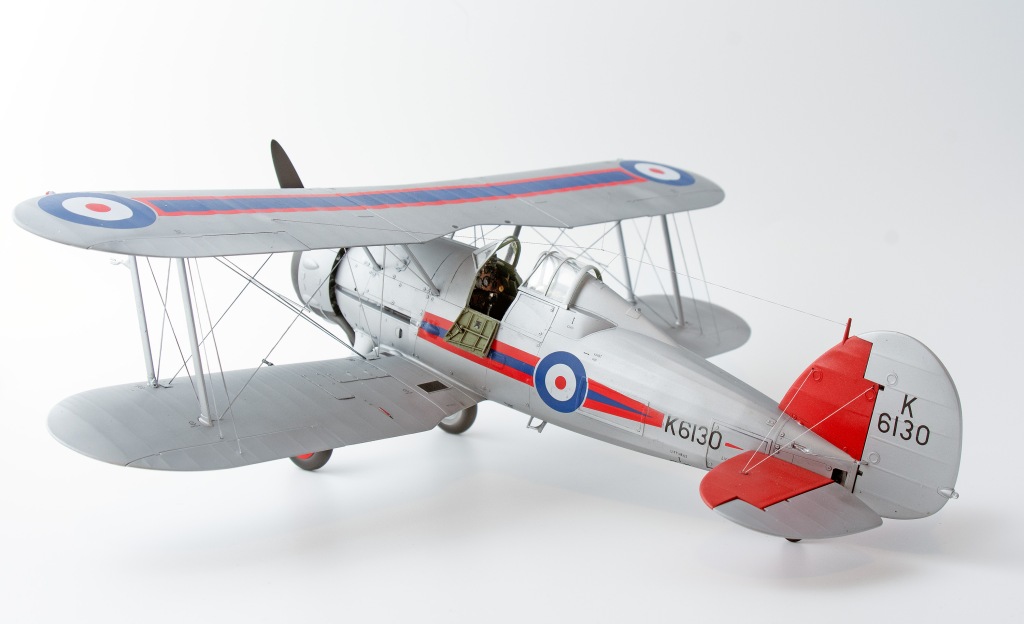
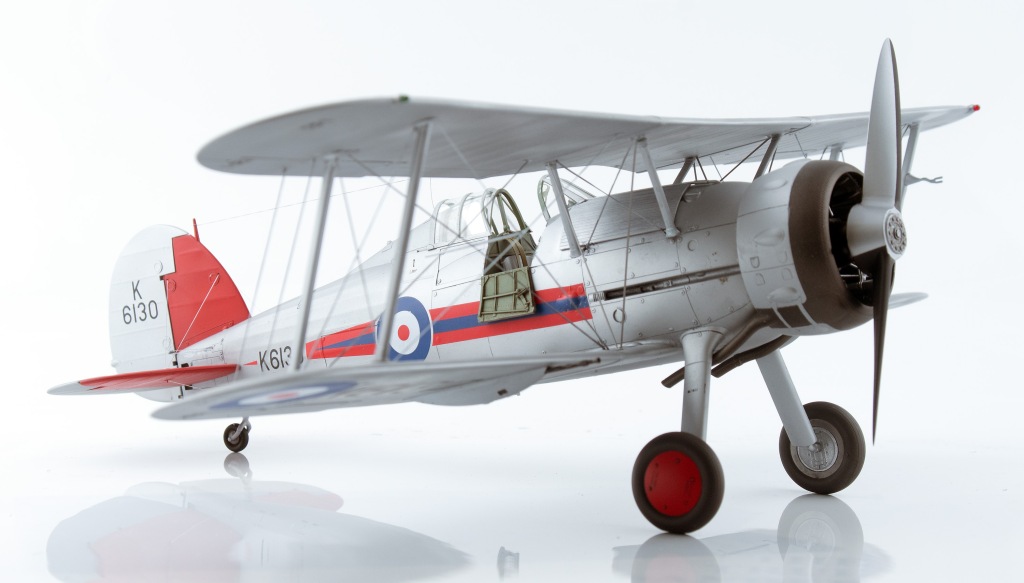
Gloster Gladiator Mk.I No.72 Sqn Royal Air Force Church Fenton. UK 1937
Leave a comment

ICM 1/32 Gloster Gladiator MkII

  • Purchased; 2020
  • Built; 2024
  • Enhancements;
  • Seatbelts : HGW
  • Gun Barrels Quickboost
  • Instrument Panel; Yahu
  • Flaps; AIMS
  • Carburettor intake; Quickboost
  • Compass pedestal; Quickboost
  • Decals;1 man Army paint masks

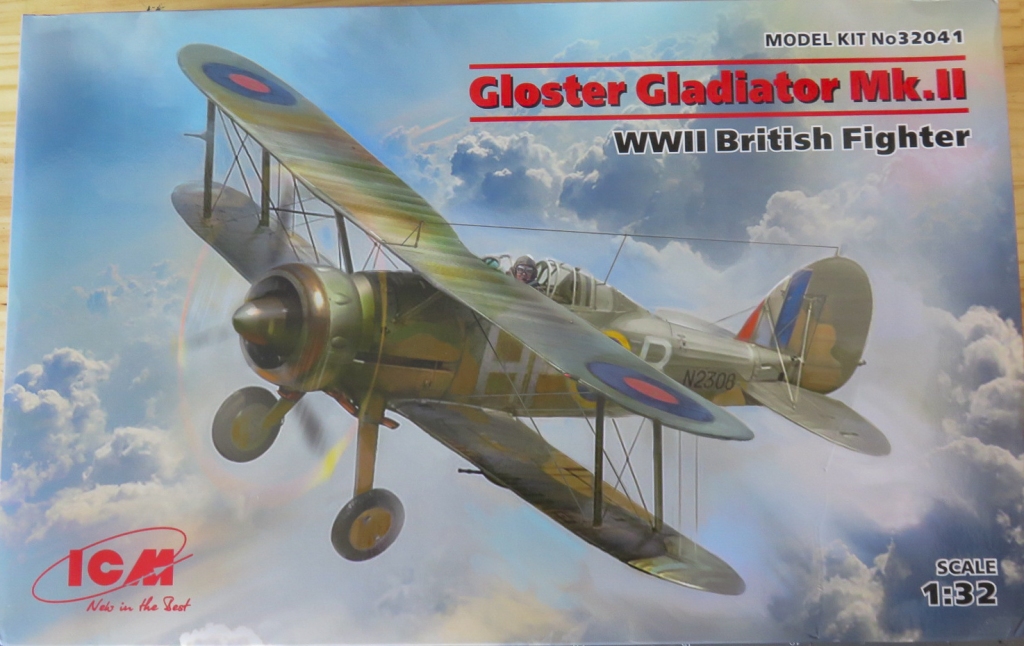
ICM released two boxings of the Gladiator. An initial Mk.I boxing followed by the Mk.II boxing a year later.

The MKII boxing being the one to get as it also contains all the MkI parts.

The kit is well moulded and comprises surprisingly few parts. This is the second ICM kit I have built, and they’ve both been very enjoyable build experiences, aided by good fit.

I was very much looking forward to starting this one too.

Construction Notes

Construction on this model started with the engine. No additions were used, it being built straight from the box. The completed engine looking quite busy to my eye. But spark plug leads could be added if desired, for a proper prototypical look. The join between the front collector ring and manifold should be filled, although this would be tricky to clean up, unless using a water based putty.

The breakdown of the cockpit gave me the initial impression ICM had greatly simplified it -true of every kit cockpit. But again upon completion and fitted, it looked suitably busy, especially if you enhance the Instrument panel with one of the 3d printed sets on the market, like Quinta, or as I used Yahu.

The throttle quadrant had two slots cut into it to accept the throttle and pitch control levers, and the rear of it was backed with some scrap card. The compass pedestal was replaced with the better detailed Quickboost item with the -in my case- out of register Yahu compass rose added to the face. The machine guns all had their barrels cut off, to be later replaced with brass barrels from Master Detail. The gunsight, part D19 also needs the reflector added from scrap clear plastic, a strange omission by ICM. 

An example of how ICM have simplified the cockpit is Part C22, the rear shelf, which to be accurate should in fact, not be a shelf, but just the central beam. In the actual machine, you can see down into the fuselage either side. On the port side there is a TR9 radio , the face of which Yahu supplies in their set. Some photos show a rectangular box mounted to this frame that sits behind the pilots head. All this would be quite easy to replicate from scratch if the modeller so desired.

The very plain control stick really should be replaced with either a better detailed resin item, or detailed with sprue and scrap to better replicate the real thing. I just added a hand brake lever to mine, and left it at that 

SMS British interior green was used, with a wash added from Modellers World ”wash for cockpit green.” Photos were conflicting on whether the cockpit was all green or green just above the sill with everything below silver. Mine was all grey green with a silver floor and seat. Once the prominent ejector pin mark in the seatback had been filled, seatbelts from HGW were added

With the cockpit added, the airframe built up fairly quickly, even with the added complication of cutting the flaps out and building up the AIMS PE flaps, which was achieved with some thin super glue applied with a bit of brass wire. The plastic flaps were cut from the kit wings with a thin PE saw after deepening the scribed lines so as to act as a guide for the saw.

Any gaps were filled with my super glue/metallic pigment mix. The underside insert needing a couple of passes before it was completely eradicated . There is no way those skinny little tailplane locating pegs are going to survive a knock, especially given ICMs soft plastic, so they were pinned to the fuselage with an old broken drill shank. The real machine having a gap between the tailplanes and fuselage. Whilst we have the brass rod out, the tail wheel should also have its locating peg replaced with the brass. This is another part that is prone to breakage, especially as ICM would have you fit it early in the construction process. All struts were left off until the painting was completed. Their fit to the wing is both positive and secure, so no problem adding them later. Same with the undercarriage, in hindsight, I wished I had of added it later as it made handling the model during the rigging process trickier. Whatever stage you add them, ensure you check the fit of the wheels to the axles. Mine were a little tight with the consequence that I broke an axle, which was sort of inevitable, given the soft plastic. The silver lining to this was it was repaired with a bit of brass wire that greatly increased its strength and also removed the flex from the plastic.

Painting and decaling

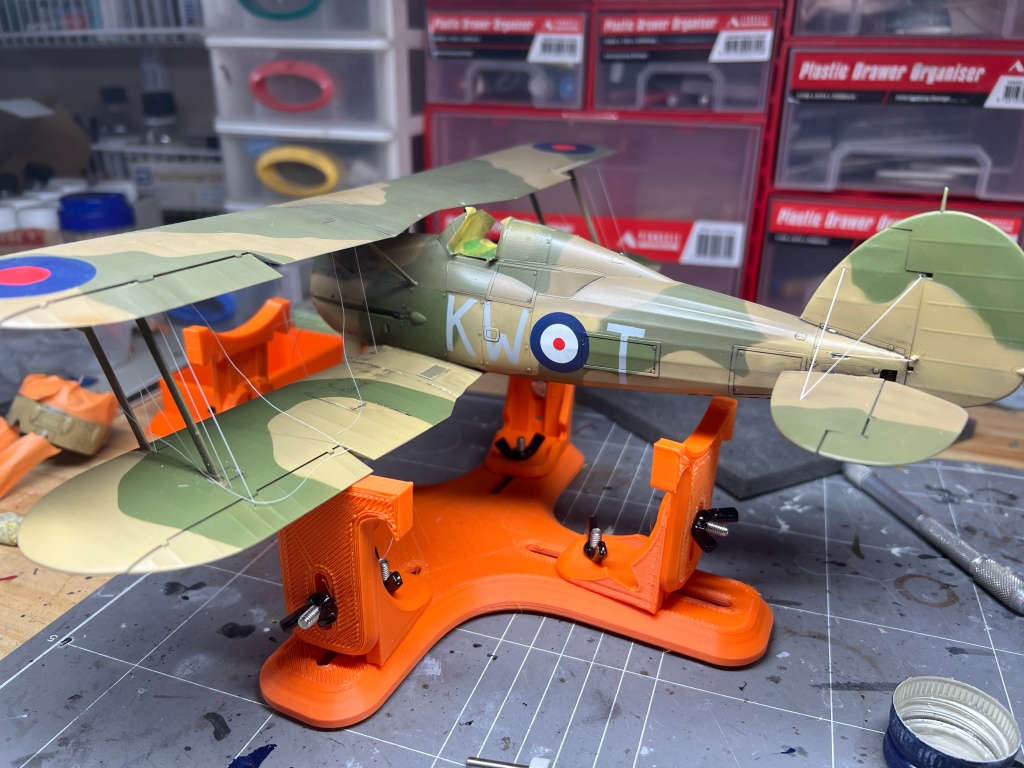
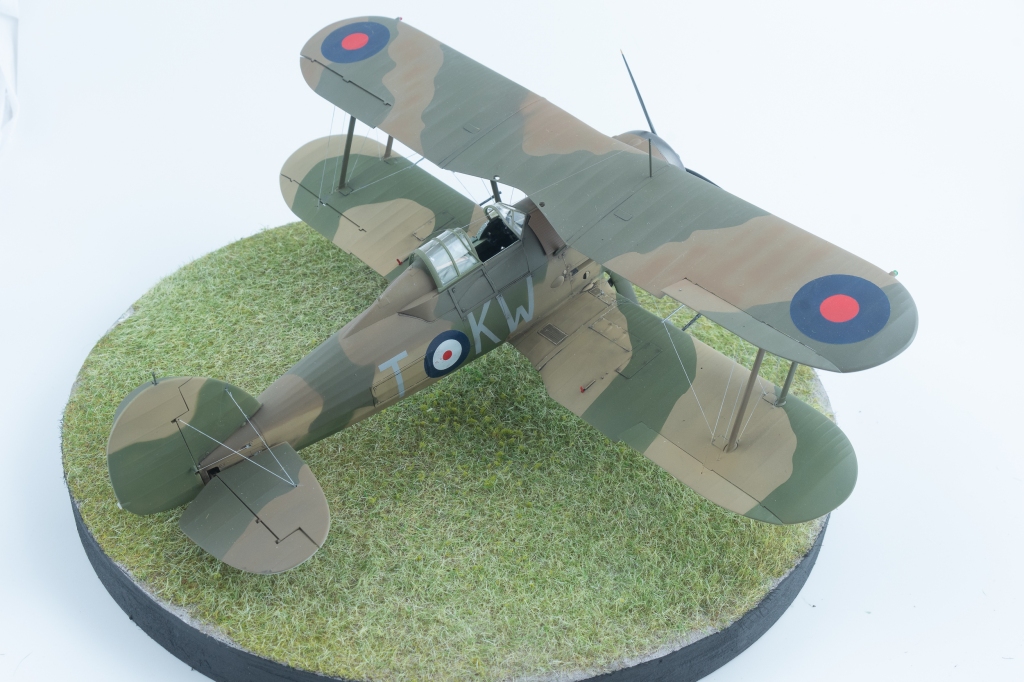
It took a great deal of studying photographs to decide on a scheme. The decision was complicated by the fact I wanted chosen scheme to feature black and white undersides , underwing roundels, early war type roundels and the four colour counter shaded scheme. If you think this would be an easy ask, think again! Early war Gladiators featured a multitude of schemes, sometimes, even in the same SQN. The Munich crisis roundels really appealed to me, but these aircraft were mostly silver undersides with no roundels. Eventually the 615 Sqn machine was picked, and to my joy, upon opening the 1 man Army mask set, roundels and codes for this very machine were included, saving me some Silhouette design time.

Painting started with the white half of the undersides using MRP white. The areas between the ribs were then sprayed with SMS German Cream and MRP Insignia white for some tone differences. The black half was base coated with SMS Camouflage black (my favourite black incidentally) and then the areas between the ribs were sprayed Tamiya rubber black. This was then masked off and a 50:50 mix of Gunze dark earth and MRP middle stone to represent the light earth was then sprayed on the top surfaces of the wings and lower fuselage. Tamiya RAF Green type 2 was mixed with a “smidge” of SMS Yellow for the light green. For painting the flying surfaces, TopNotch masks were used for the pattern, however the masks for the fuselage did not match the camouflage pattern of this particular aircraft , so blu tac sausages were used to mask the camouflage pattern.

These machines had gone over to France camouflaged in the standard DE/DG camouflage in 1939, Whilst there, the newly developed counter shade scheme was applied, possibly around early 1940. I imagine it would not have been the neatest job, due the RAF having no large maintenance facilities in France. In any case Gladiators in France did not last too long, the SQN being re equipped with Hurricanes soon after.

The Dark Earth and Dark Green were Gunze colours subtly shaded with some lightened and darkened mixes.

There is no definitive proof what colours the wheel covers actually were. Both red and green being called out by various profiles and kit manufacturers. I went with green.. The white outline though is very clear from period photos.

MRP Medium sea grey was used for the codes, the roundel colours are tamiya Royal Blue and SMS red, the red at this stage of the war being the bright red.

Rigging

This was by far the most frustrating part of the build. Contrary to all those modelling articles stating how easy EZ line is to use. “Just add a drop of super glue into your pre drilled hole and the line pulls taut” my experience was anything but the simple, relaxing task all these articles and youtube videos make rigging out to be!.

First off, the CA, despite being a new bottle would not stick, not sure if it was the humidity, but you’d think that would help set it. This was after 10 interminable minutes first trying to get the EZ line to into my drilled hole! It seems if the EZ line even sniffs the presence of CA, it curls up, refusing to be poked into the hole. Poking the line into the unglued hole was easy enough, but then getting the CA glue onto your brass wire applicator and then apply it accurately into the hole. You need another two hands!

EZ line was used as I wanted to replicate the flat RAF wires, despite my best efforts, there are some twists in my rigging lines, and by this stage I’d lost all patience in going back and removing the twists. Anyway, for what its worth my method was to attach the various lengths of line into No.80 holes drilled into the top wing, which at this stage has not been attached to the model, ensuring that they would be aligned so as to give the flat effect of the real rigging.

The top wing was then attached and the lines cut to slightly shorter than the required length and fed into the pre drilled holes in the lower wing. This is where it all started to get pear shaped. Anyway, I persisted until all wires were added.

The eagle eyed most you will spot a gas patch white metal RAF terminal used on the lower wing to see how this looked. This was the only one used as I found it too hard trying to line up the others to the exact angle needed, the metal not being malleable at all. Finally it was all painted Vallejo steel. and the model just needed the canopies unmasking and she was done.

Well not quite done as I needed to add the antenna post as ICM don’t include one. Probably a blessing as any part supplied would probably not stand up to the pull of the EZ line that was used for the antenna wire. A mast was formed out of brass wire and glued to the starboard wing, not centrally as ICM show on their box art

CONCLUSION

I really enjoyed this build, so much so that I started the MkI that was still in the stash which was initially going to go on the for sale pile. ICM have done a lovely job on this model and delivered it in a scale which does the real aeroplane justice. There are some annoyances, the soft plastic being the main one as it really requires the modeller to replace the tailwheel and stabiliser mounts which otherwise are far too weak and prone to breakage. Other than that, I found the rigging very frustrating, but thats on me! Lots more practise needed before tackling all those Wingnut Wings kits in the stash, me thinks!

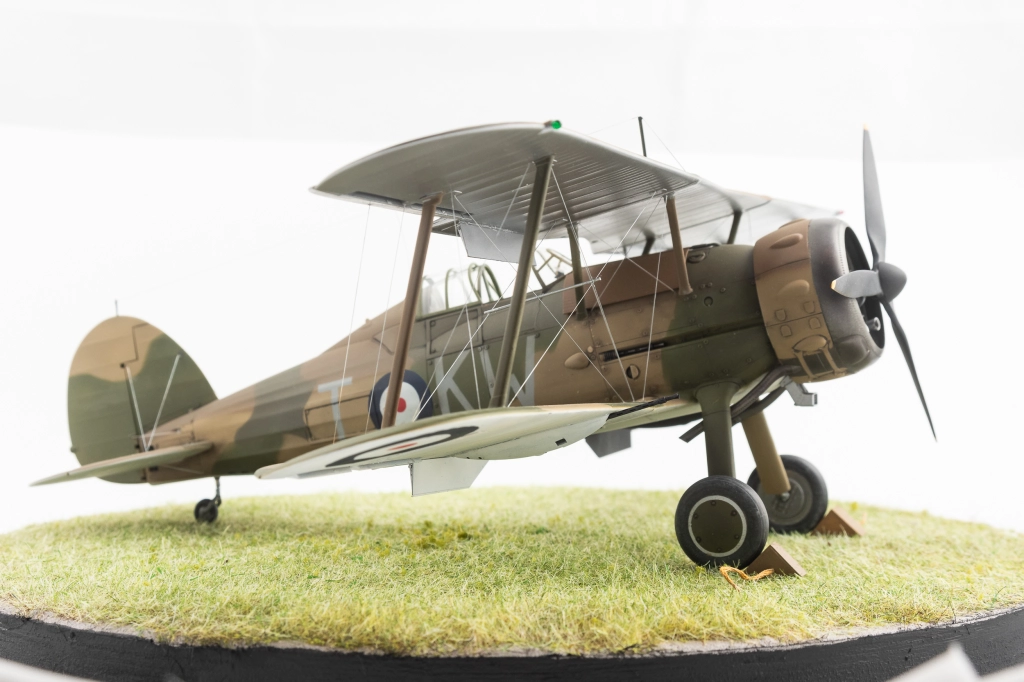
Gloster Gladiator MkII 615 SQN RAF St. Inglevert. France 1940

Leave a comment

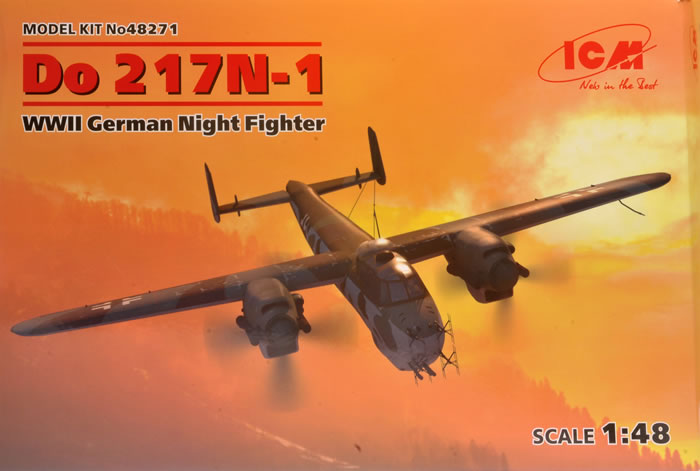
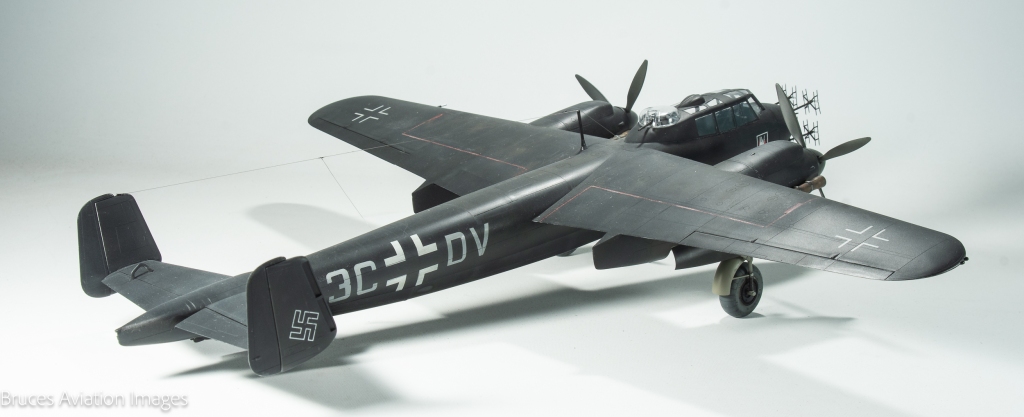
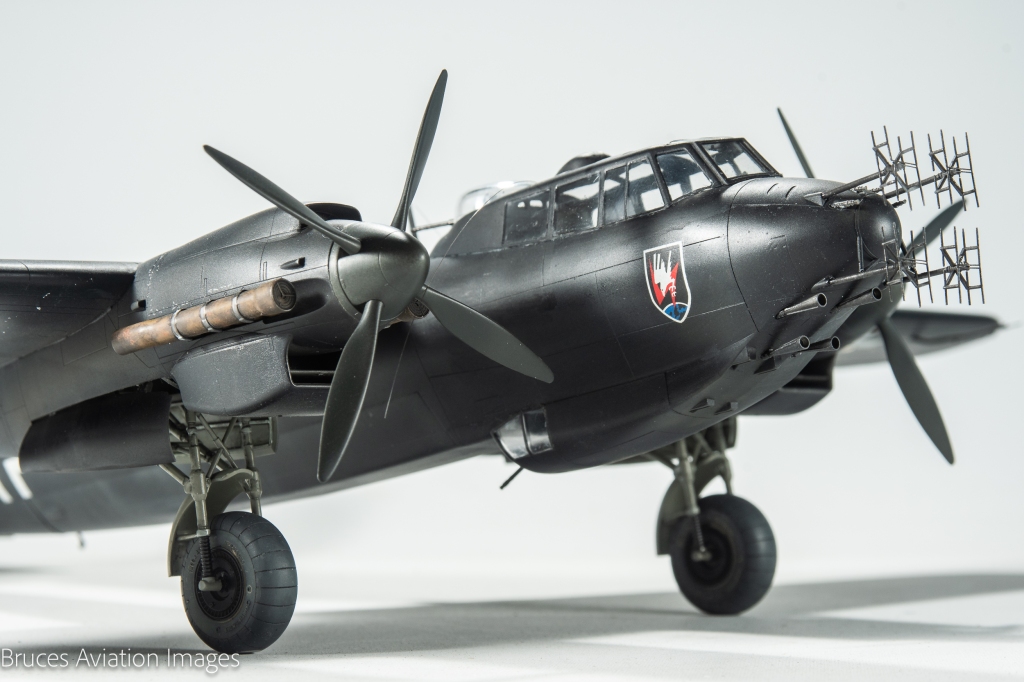
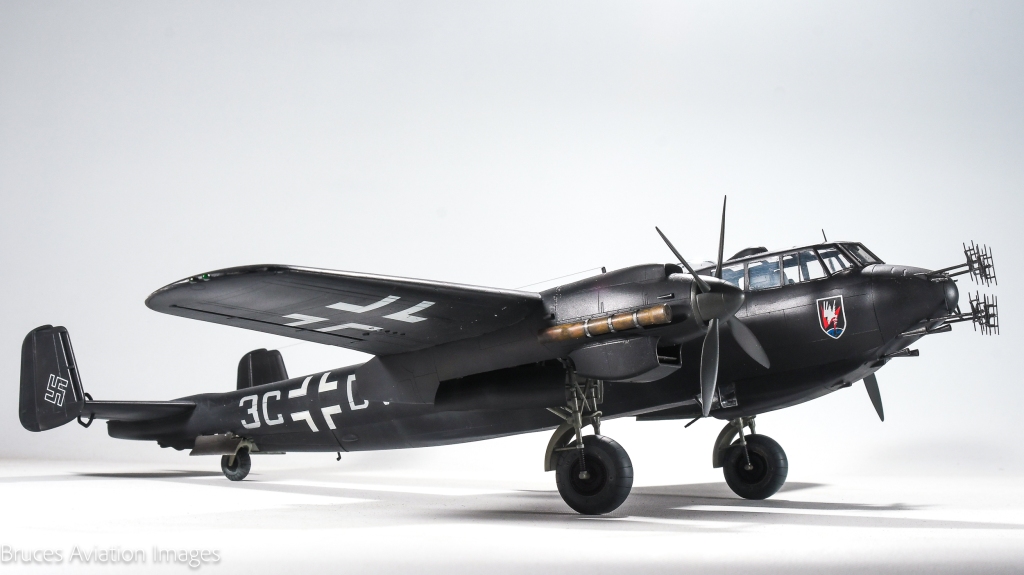
ICM 1/48 Dornier Do 217 N-1
  • Purchased: 2023
  • Built: 2023
  • Enhancements:
  • Seat belts; Eduard
  • FuG 202 aerials: Gaspatch Models
  • Wheels: Aires
  • Decals: Painted using montex mask set
  • Weapons; AIMS, Master details barrels and Vector MG131s

I’ve wanted a 1/48 Do217N in the collection since Koster Aero Enterprises bought out their vacform conversion for the Monogram kit way back in the early 2000s. Despite this, the kit and conversion set were sold in The Great Stash Slash of 2004. But, now that doesn’t matter as we have a much nicer kit of this variant that can be built straight from the box

The path that led me to the purchase and building of ICM’s lovely kit was again, one of impulse!

I had recently purchased some of AIMS 1/32 night fighter conversions for the Revell Ju88, which saw me flipping through a book on German night fighters.

A picture of an all black 217 rekindled the earlier enthusiasm with the resultant jump to remembering reading a build article by Andy King on the ICM 217 he did for The Modelling News.

Next minute, I’m on the BNA website and its in my basket! How does this stuff happen??? As a mate and I have repeatedly theorised, impulse buys need to be started straight away, whilst the enthusiasm is hot, or the danger is you will be selling that same kit at a swap and sell 5 years down the track.

So, box was duly opened, my work bench being opportunely clean of current builds.

The size of the aircraft took me by surprise upon opening the box and looking at the one piece wing, the only other ICM kit Ive built being the Do17. One could say the Do217 is to the Do17 as the Super Hornet is to the Classic Hornet

That wing has beautifully engraved crisp panel lines, but these do not carry over to the rest of the kit, the fuselage and some parts like radiators having shallower detail, and also quite textured surfaces that will require a rub down before paint. Two complete engines are included in the kit should you wish to display the model with cowlings off. I saw no need to make the aircraft uglier than it already is, so my nacelles will be closed. A bomb bay is also included as there are parts to allow both opened and closed doors. I dallied with the idea of an open bay to show off the interesting way the doors open, but again, the aircraft looked decidedly pregnant with open doors, plus there is only very rudimentary detail. A fuel cell is included, but no bombs. As my chosen schemes was the all black night fighter, I didn’t think a bomb load would be carried.

Construction Notes

The instructions are a bit vague in places in regard to where some of the cockpit components fit to each other. I found by studying all the parts, there are locations for the pilot seats and floor in the side walls, just that they are not called out very well in the instructions. I also found them a little confusing regarding displaying the engines until I realised you are required to cut the cowlings off if you want to display the engines. After this, it all made sense. This model was being made all closed up, so all steps dealing with the engines were crossed out to avoid mistakes and make things a little clearer.

I used part A15 as a jig to position the cockpit side walls. The cockpit was painted RLM 66 instead of ICMs suggested 02, as I think by 1943 this was the colour of Luftwaffe cockpits. Tamiya XF24 Dark Grey standing in for RLM66 on this occasion. Beware of the decal dials for the instrument panels as they are separate, not a one piece decal. Here was my first introduction to the keenness of ICM decals to fold over themselves, hmmmmm, those wingwalks were going to be fun! Make sure you paint the back of part E12 as it can be seen through the canopy. Ask me how I know!! It has a pin mark that needs to be filled or, do as I did and skin the rear of it with some plastic card. I went to the trouble of adding thin stretched sprue levers to part E31, I didn’t bother with the decal as it will never been seen. Seat belts were added to all seats from Eduard.

Although ICM say you can leave out the bomb bay floor if doing the 217 with closed doors, I decided to add it to provide a little bit of structural support to the fuselage. It a long assembly with minimal surface area for glue and I could see me cracking joins just through picking it up. In the event, I should also have added the sidewalls C18 and 22 for added support as the floor by itself does not really add any strength.

I managed to crack the wing leading edge joint several times, due to the broad chord of the wings coupled with , again minimal glueing area at the leading edge mating surfaces.

Take particular care ensuring you are using the correct parts for the nacelles. I managed to glue the port outer to the starboard inner side, then wondered why the nacelles weren’t a good fit! This was luckily, quickly corrected with a much better fit of the nacelles being achieved, in fact, the fit throughout was above average.

I found the best fit for the wing was to push it as far forward as possible to ensure a tidy fit on the ‘shoulders” This does leave you with a gap to be filled at the rear, but this was easily filled with a shim of plasticard. Before adding the wing, ensure all mating surfaces are free of burrs and flash, which helps in getting the best fit possible. Of course this advice should stem to all facets of assembly, in addition to plenty of dry fitting.

I replaced the peg on the tailwheel yoke part E42 with brass wire, similarly, I drilled and pinned the undercarriage legs for added strength rather than relying on the kits butt joins. ICMs wheels are fine OOB, but I had already purchased the Aires set. I would also suggest Quickboosts resin exhausts if you don’t want to deal with the joins on the kit items.

Painting and Decalling

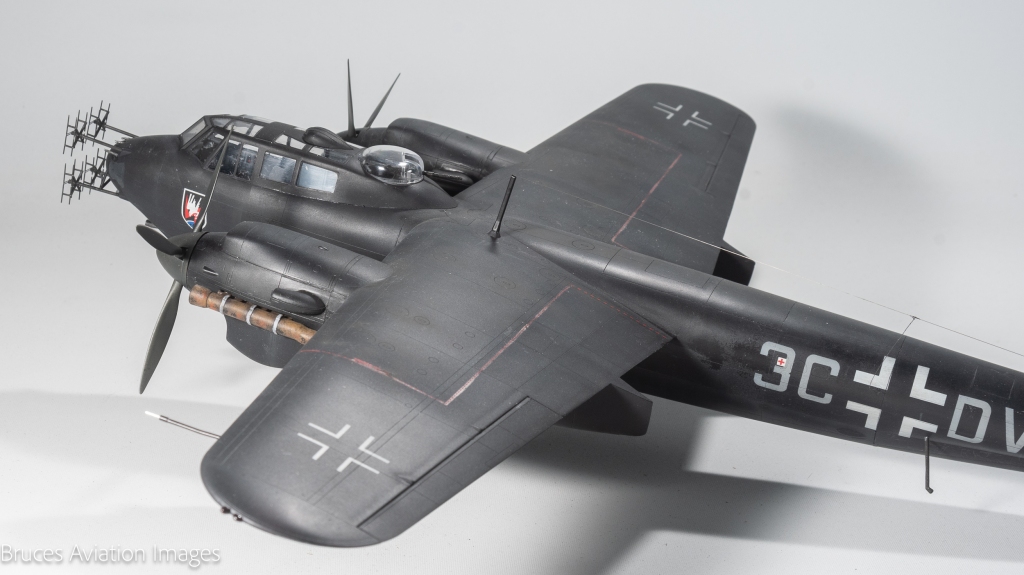
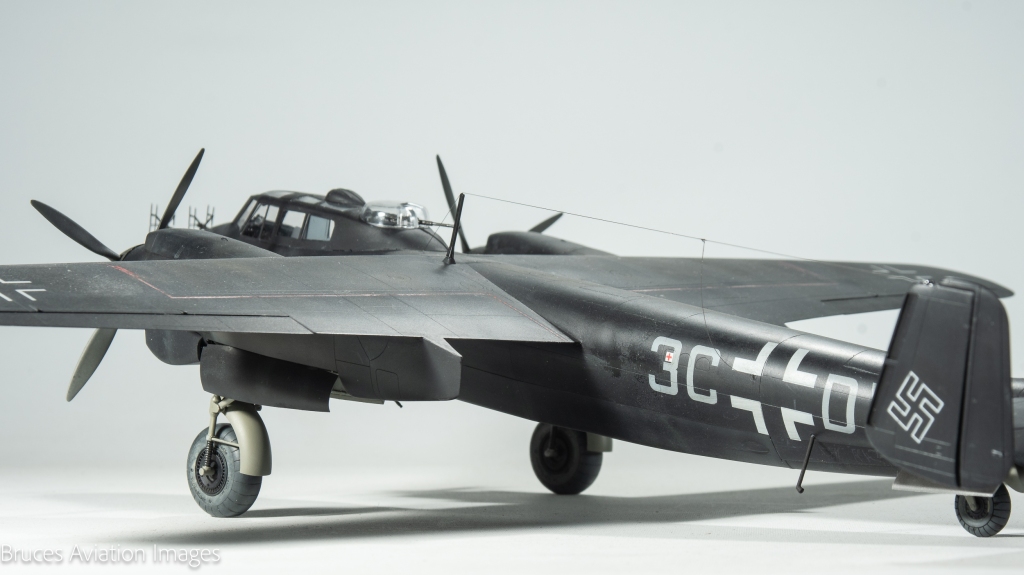
SMS Camo black was settled upon as the base colour. This is quite a nice warm dirty black, very similar in fact to the colour of Mr Surfacer 1500 black. For highlights I used SMS German grey randomly mottled on the wing centre section through various Uschi van Der Rosten masks. All national insignia save for the swastikas was sprayed on using a montex mask set. The swastikas came from an old Aeromaster sheet.

Im not sure if these machines were painted black at the factory or at maintenance units, but figured either way – rightly or wrongly – the stencilling would not have been reapplied perhaps apart from the wingwalks.

I elected to use the wing walk decals which went on surprisingly well, despite me and long thin decals usually not getting on. Plenty of water was the secret. I was still congratulating myself on this miracle right up to the point where I managed to accidentally touch and remove a strip of the decal! Luckily a very generous modelling friend in the UK sent me some make for painting dotted wingwalks . Thanks Andy

ON reflection, I wished I had painted all the wingwalks as I was left with some silvering.

Some panels were then masked off and MRP black sprayed along panel lines which stood out nicely. Well until the Dullcote was applied. Then everything kind of blended together. Typical!

Exhausts were base coated in SMS dark earth before a layer of hairspray was added, then a mix of NATO brown and NOTO black . This was then chipped off. To be honest, Im not really happy with the results. I think I would have been better off stippling these colours on with some sponge

For the canopy, this is the second model I have used interior canopy masks on. This is a leaf out of Jamie haggo’s book, as he does it on all his models where the canopy interior is visible from the outside, his rationale being painted interior framing looks much better than the shiny plastic visible if you were to follow the normal convention of spraying the interior colour from the outside. And he’s right!

Final Assembly

This comprised of adding the undercarriage doors, all of which located securely. The aerial was added from invisible thread, and the machine gun and cannon barrels added. AIMS cannon barrels were used as, unlike the kit ones, they had open flash suppressors. I didn’t bother drilling out the mg barrels as the diameter was too small. Finally, the piece-de-resistance. the Gaspatch radar array was added. Cutting them away from the supports was heart in mouth stuff, let me tell you! I employed a new scalpel blade plus used a new set of nippers. They were painted in Tamiya dark Iron. If there is one must have Aftermarket accessory for this kit, its these, although looking at my slightly wobbly ones in my photos, this crew will have a hard time finding any Lancasters!

Conclusion

Im really happy to have a black Dornier 217 in the cabinet, and a much better replica than the old KAE and Monogram kit would have provided thanks to the access we now have to things like 3DP radar arrays and brass gun barrels.

The model itself was very enjoyable to build, with no real vices along the way, aside from the somewhat soft plastic, which does not suit structural components like landing gear. Despite this I look forward to building more ICM kits. The Do217N was unloved by its crews, its performance suffering greatly due to its increased armament, and all the added radar gear. But in my cabinet, its loved greatly by me!

Dornier 217N-1 II./NJG4 Luftwaffe. Germany 1943

Leave a comment