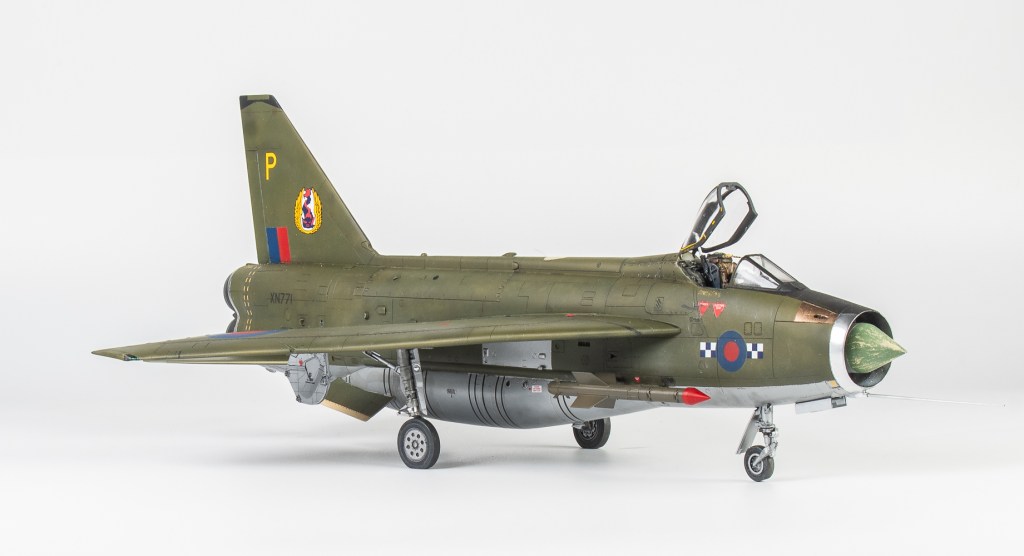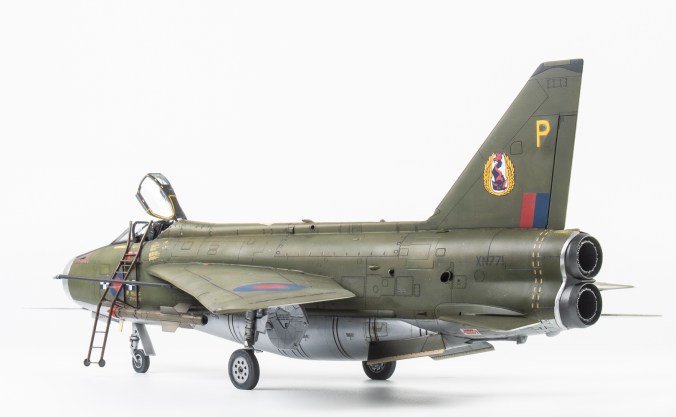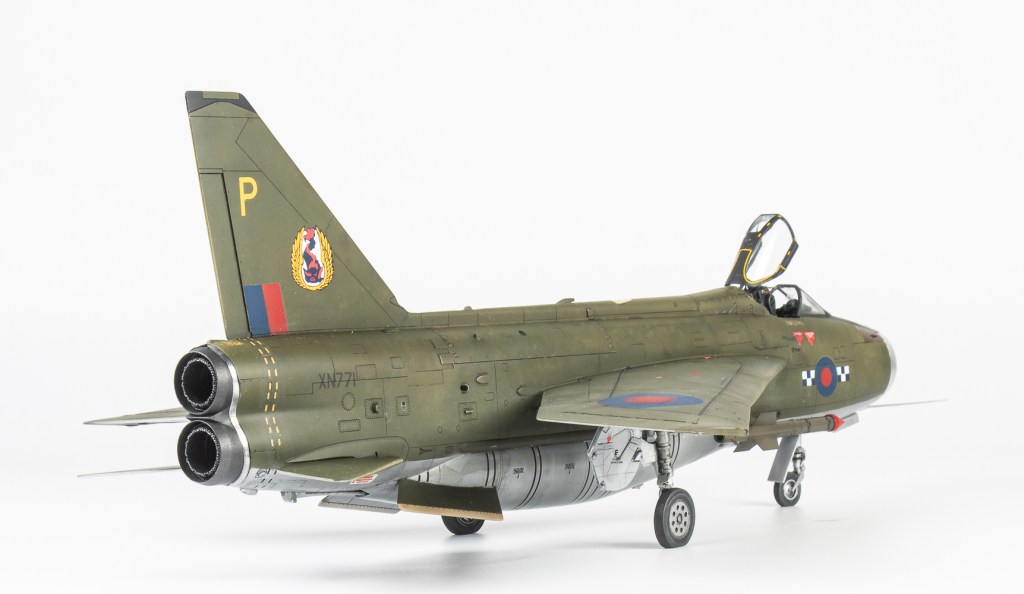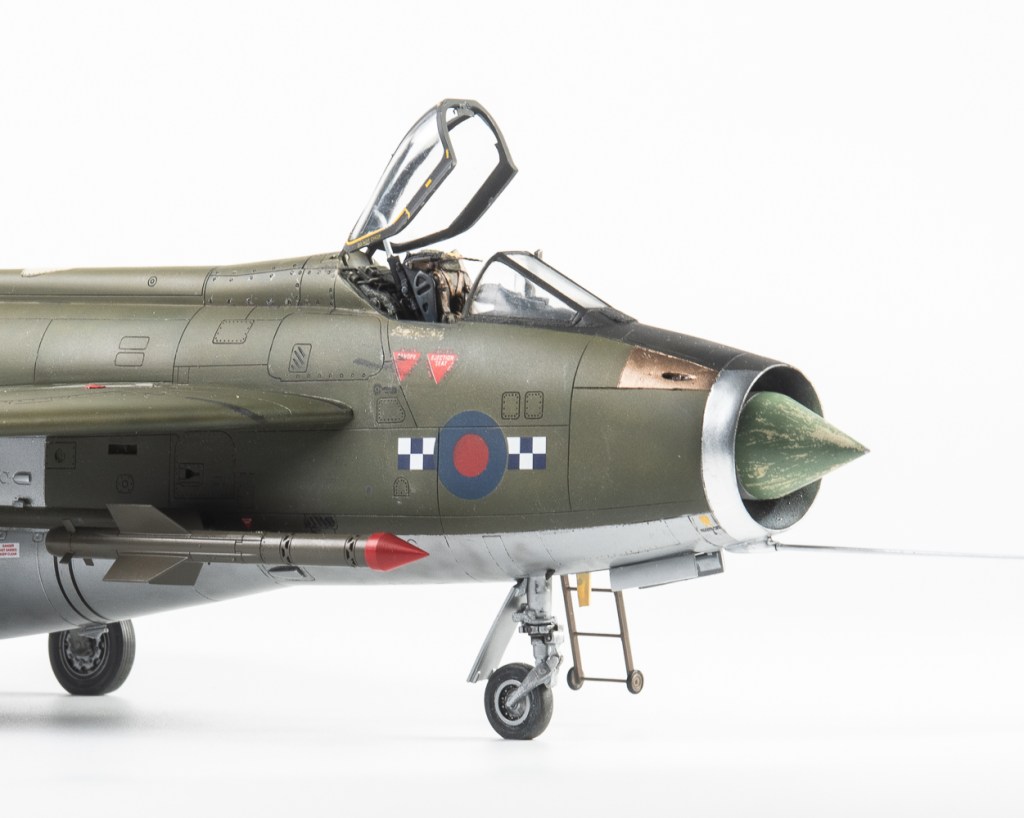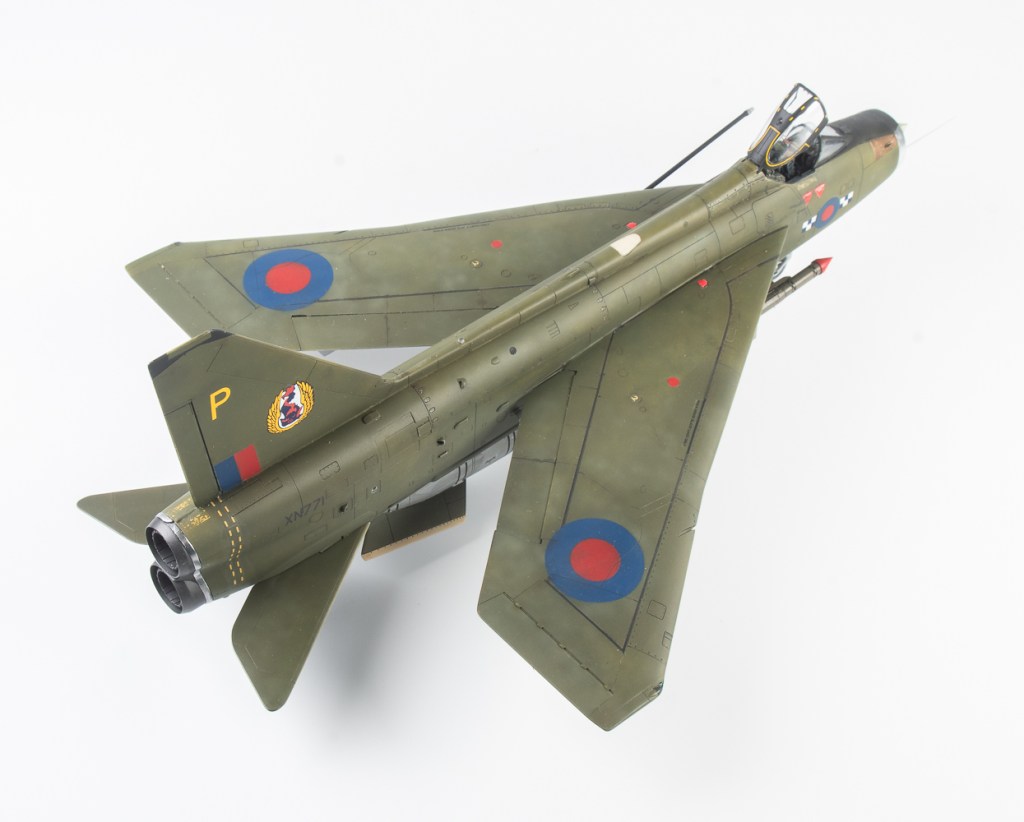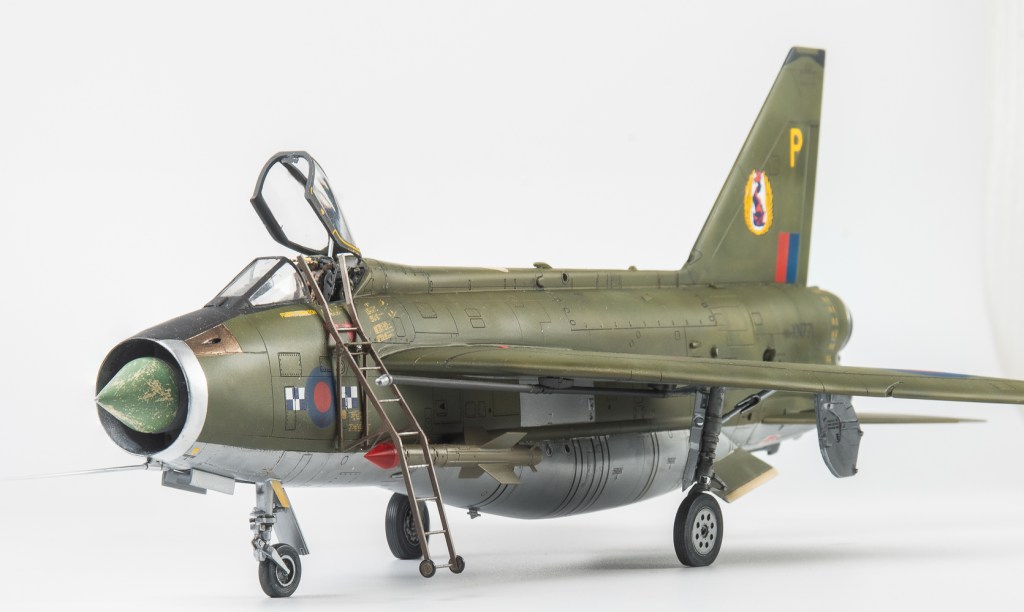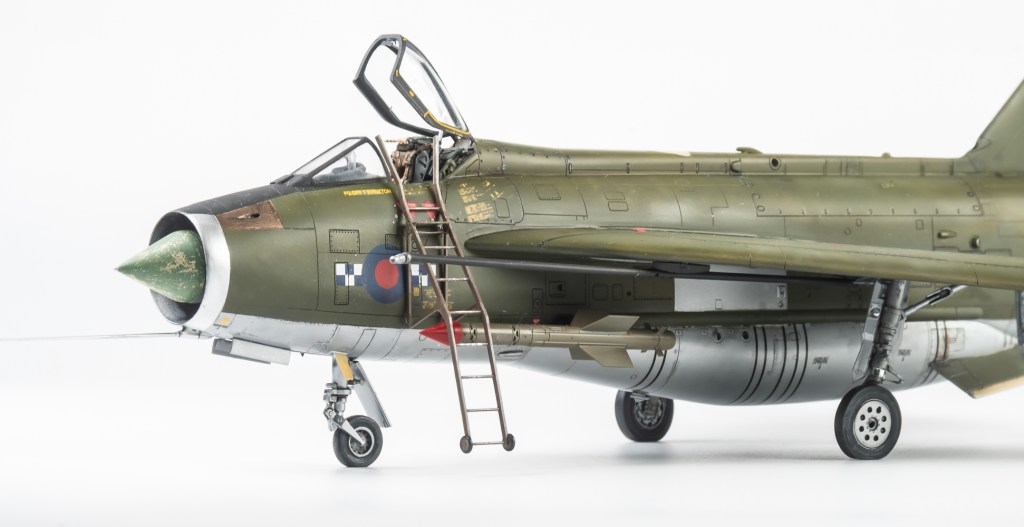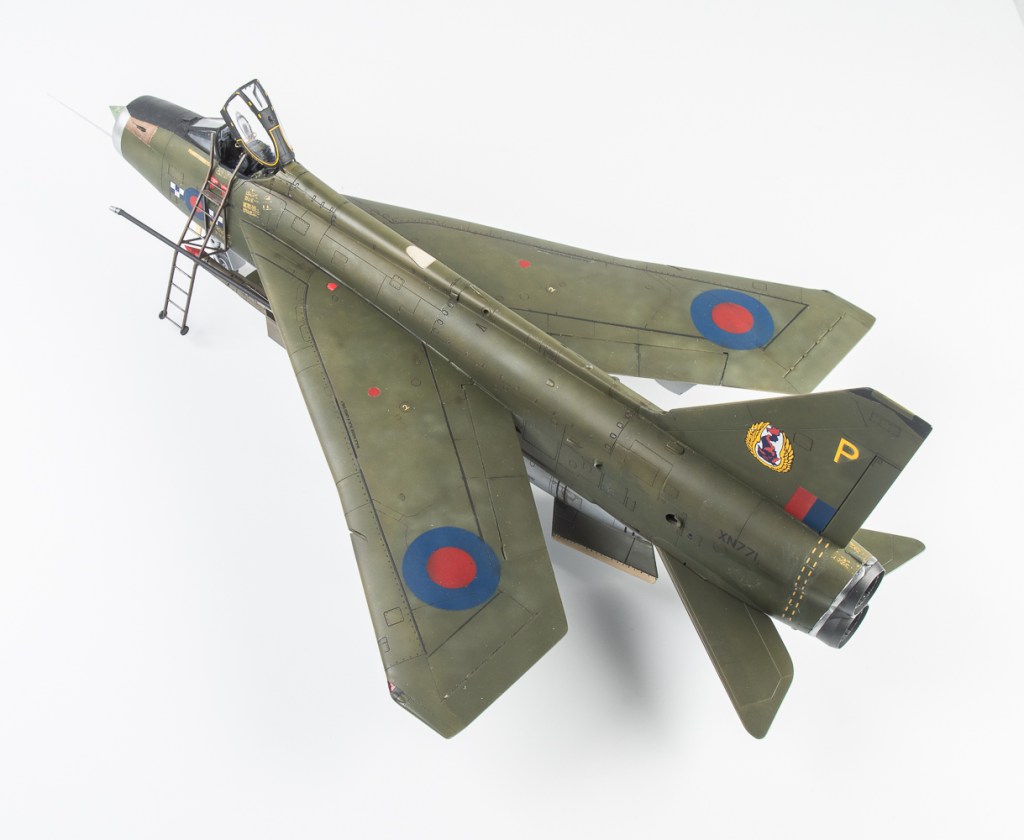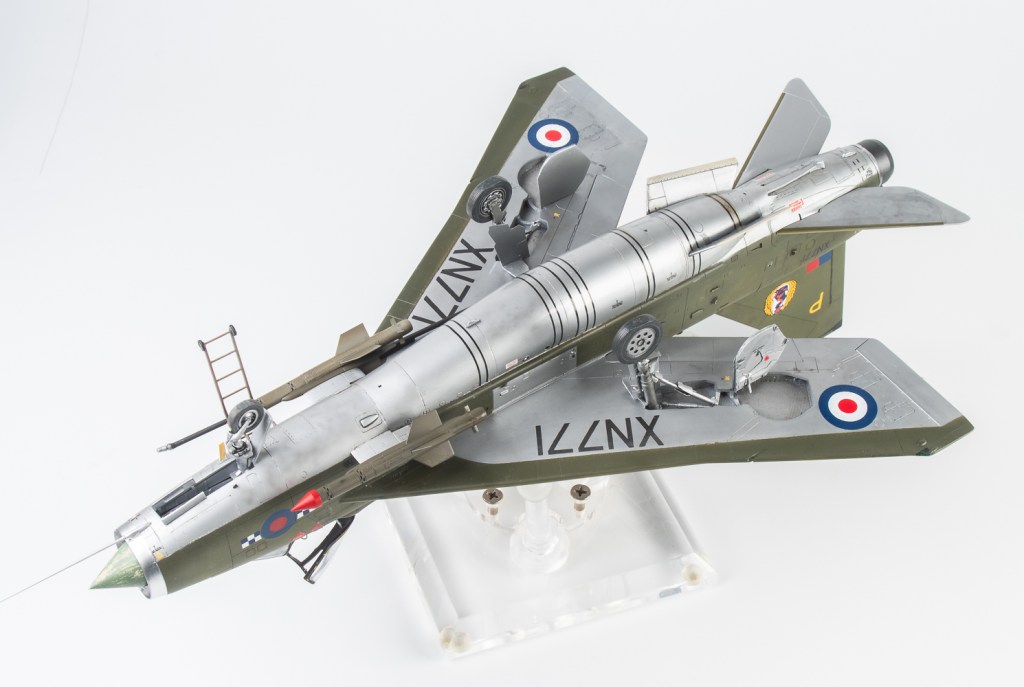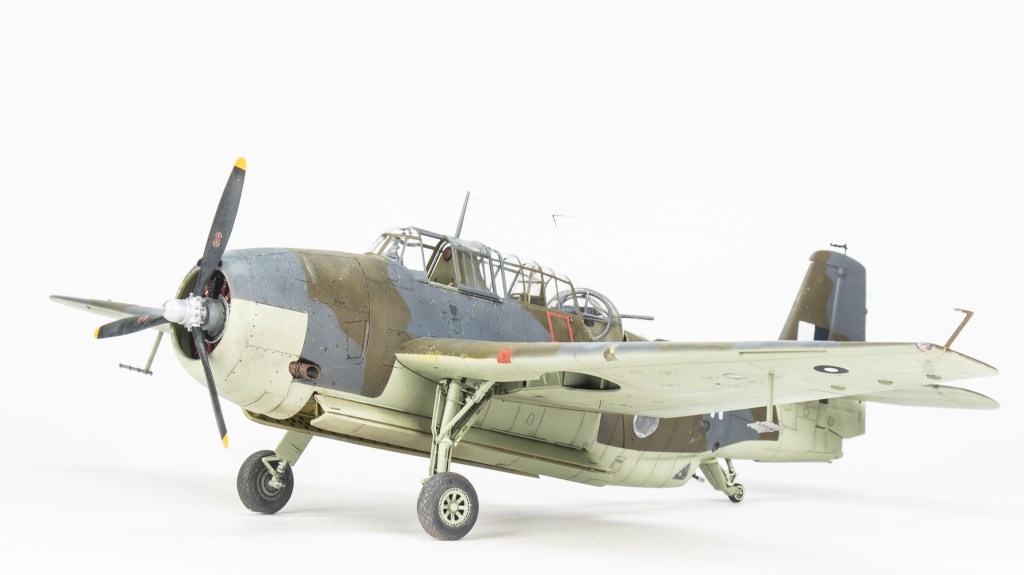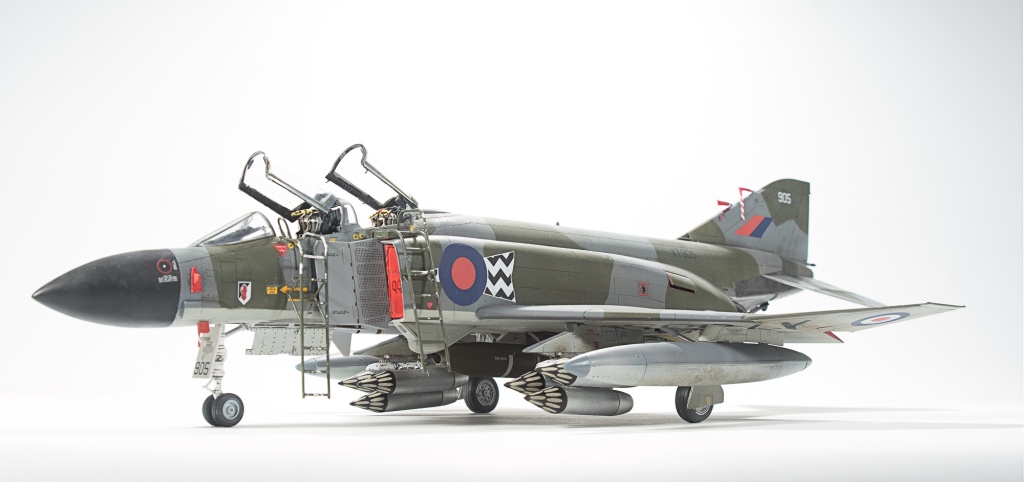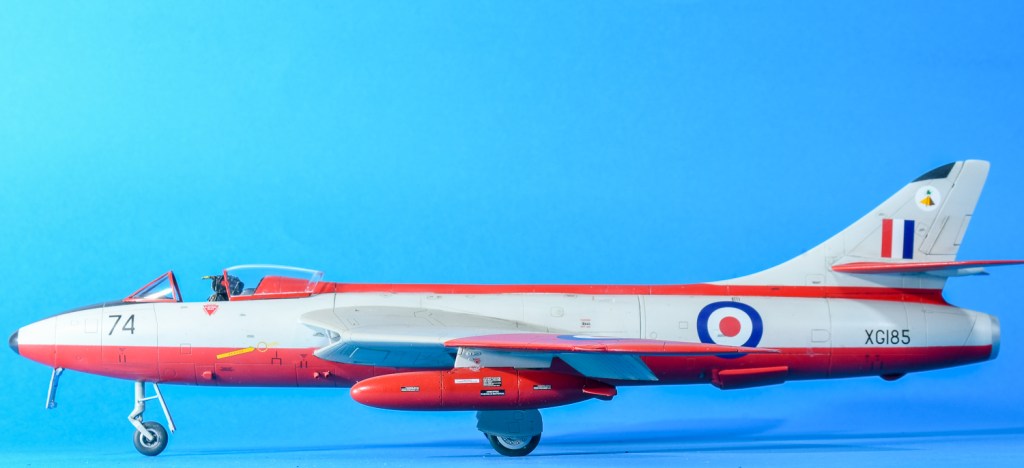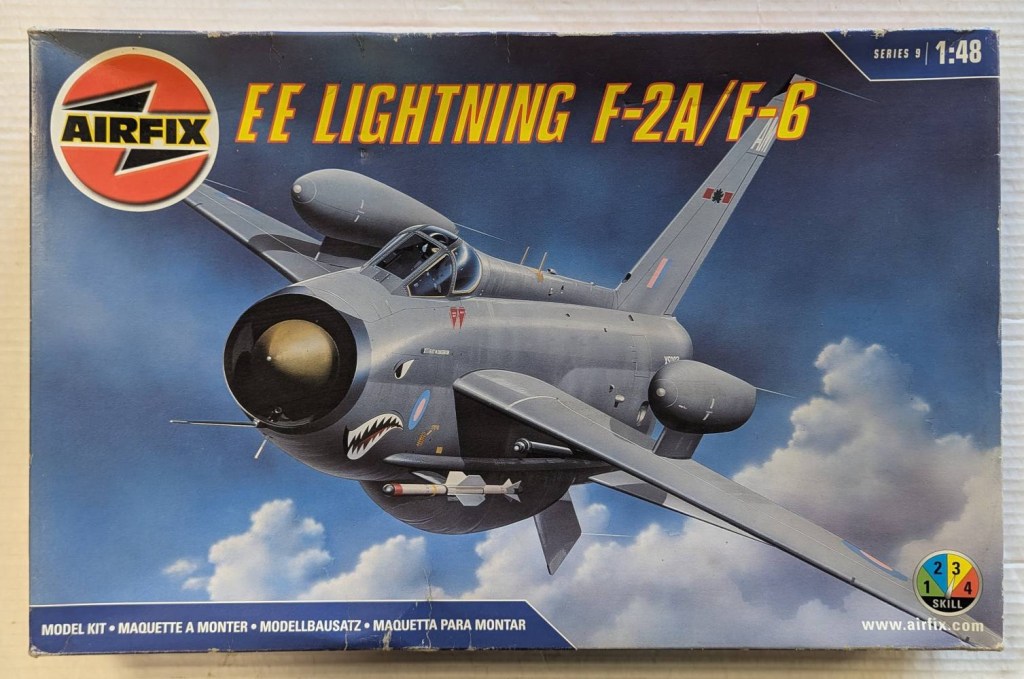
Airfix 1/48 Lightning F2A

image credit. Kingkit website
  • Purchased: 1998
  • Built: 2025
  • Enhancements:
  • Cockpit and seat – Cutting Edge
  • Wheels – Armory
  • Exhausts – Reskit
  • Wheel well roofs : Eduard PE
  • Missiles – Reskit
  • Pitot Tube – Master Details
  • Ladder: LP Models
  • Decals- Cutting Edge, then Model Alliance, then painted!

Introduction

This, after the Phantom is the oldest kit in my stash. It was purchased shortly after its original release from Wonderland Hobbies Scotland for the princely sum of 21.99 pounds according to the sticker on the box. Back when the only way to order kits from overseas was to actually telephone the shop! Back in the Jurassic Period before on-line ordering became the norm.

Upon release the Airfix Lightnings were lauded in the modelling press as Airfix at its zenith. And many modellers, particularly those from the UK still seem to think this.

This modeller though certainly does not. Perhaps if I had built the model upon its release, my impressions of it too, would still be favourable. However, building it in 2025 and measuring it – perhaps unfairly – against newer Airfix kits brings forward all its shortcomings. In fact, even measured against contemporary Japanese kits, it falls a little short. Poor cockpit details, no wheel well detail at all, vague instructions, sink marks, thick decals. It certainly was not the kit I was expecting. A mate came to the same conclusion after building his. The kit was the subject of the Annual friendly Build-Off between The HamFisted Modeller and myself. The results are judged at a local competition we both attend. It should be noted that HFM handicaps himself to give me a chance. (EDIT.) Suspiciously that last sentence only appeared after I sent the article to HFM for proofreading

Construction Notes

The Cutting Edge Super detailed Cockpit upgrade was one of many aftermarket sets stuffed in the box. It was used to replace the woefully detailed kit cockpit. Calum had stated that pretty much nothing of the cockpit can be seen anyway. Anyway , as I had the set, it was used. Unlike an Aires set, minimal sanding was required to make it fit. Just the backs of the sidewalls and some material removed from the casting block to ensure the tub sat down over the intake trunking.
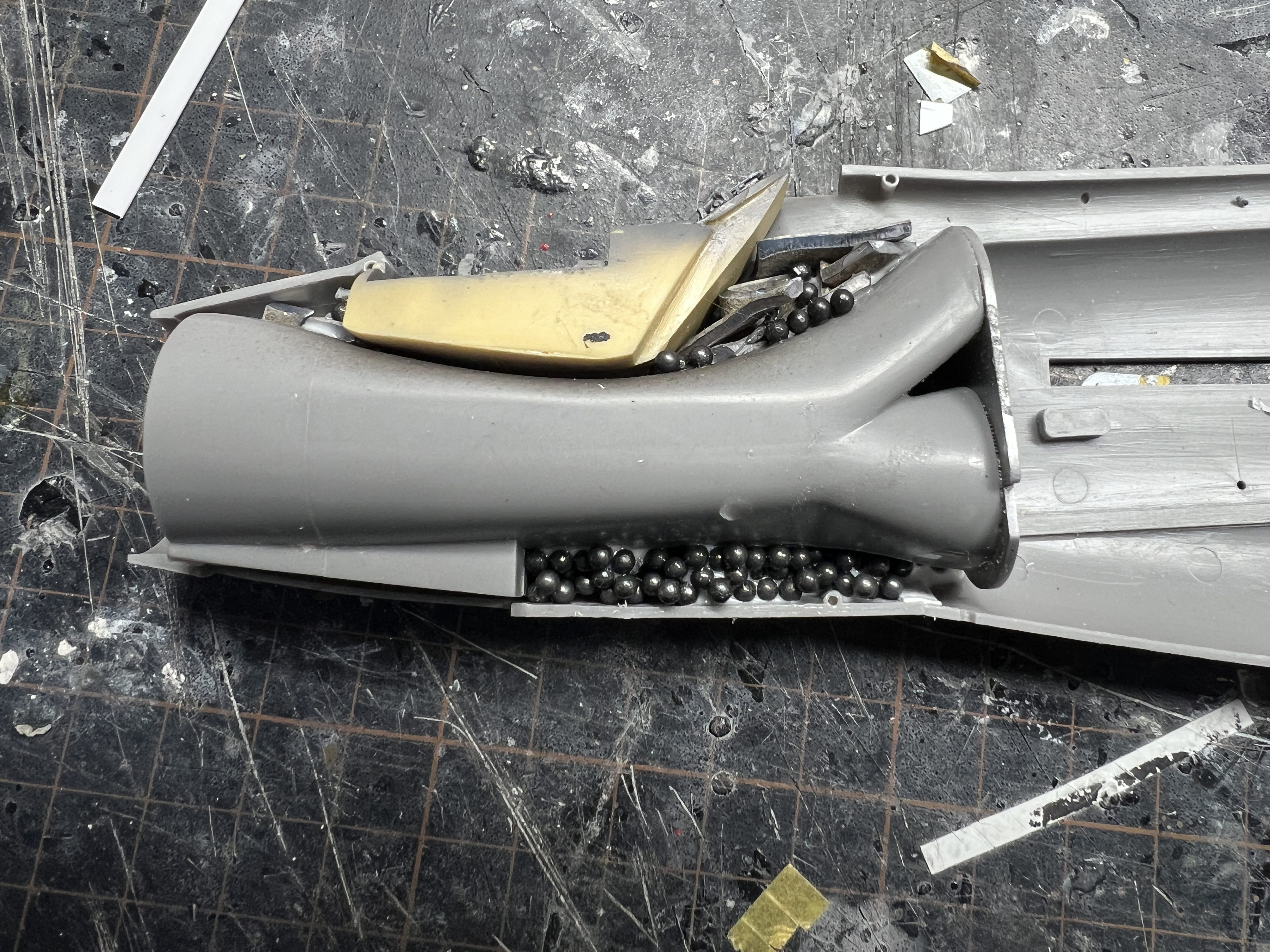
The cockpit was painted with MRP Medium Sea Grey, this being a later mark Lightning.

Building the intake we come to the first “WTF Airfix?” moment. The bottom of the nose wheel well is a rectangle to fit the wheel well opening. Airfix want you to mate it to the top half which is an elliptical shape. This of course leaves large visible gaps. I left it as is, as there id very limited viewing up into the well. Very poor engineering on Airfix’s part.

Take care to ensure the radar bullet nose cone is central in the intake. Also don’t forget the nose weight, remembering to take into account the added weight of resin exhaust cans if you are using some. Airfix helpfully includes a diagram in the instructions of the best place to pack it. The fuselage on mine closed up OK, but the panel lines did not align across the seams, requiring them all to be filled and rescribed. The nose ring is a poor fit and will require fairing in.

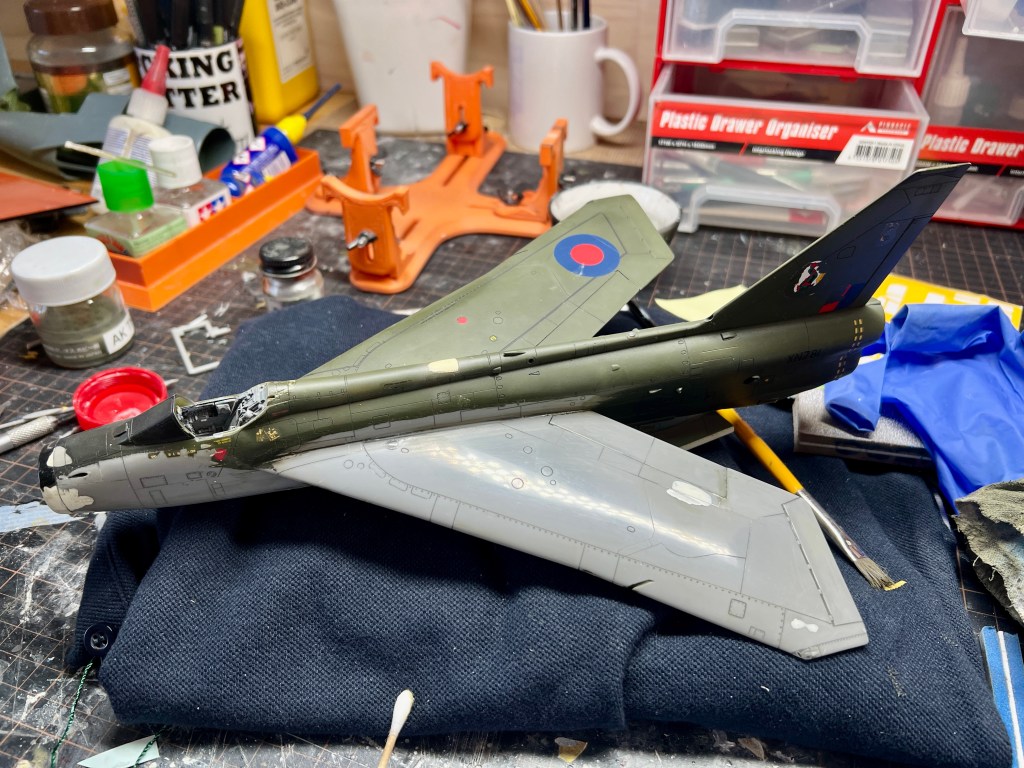
Onto the wings, and mine were looking a little warped. There were also several sink marks requiring filling. Airfix provide absolutely no wheel well detail. CMK and Aires both have resin sets in their ranges. I decided to steer clear. I knew full well the work these would require fitting to the model. Instead, The HamFisted Modeller generously provided an Eduard PE set. It was put to use to add the distinctive patterned roofs to the wheel wells. It is very worth your time to set up the undercarriage leg components now. Dry fitting them helps in seeing how they fit together. You must carefully look at photos of the real jet. The Airfix instructions are of no use at all. I had to add small blocks of sprue to each leg to allow the retraction strut to locate. There is nothing moulded on the leg. Again, really poor engineering by Airfix. I must apologise here as I thought I had photographed this step, but apparently not!

Out of the box, the kit wings do fit to the fuselage quite well, only problem is they are level, whereas the real wings had slight anhedral. Adding this to the kit wings left a slight gap on each top surface which was filled with Milliput

So far, despite the noted annoyances, the model had gone together reasonably well, and construction progress was swift. Unfortunately this was about to change rather drastically with the decalling.

Painting and Decalling

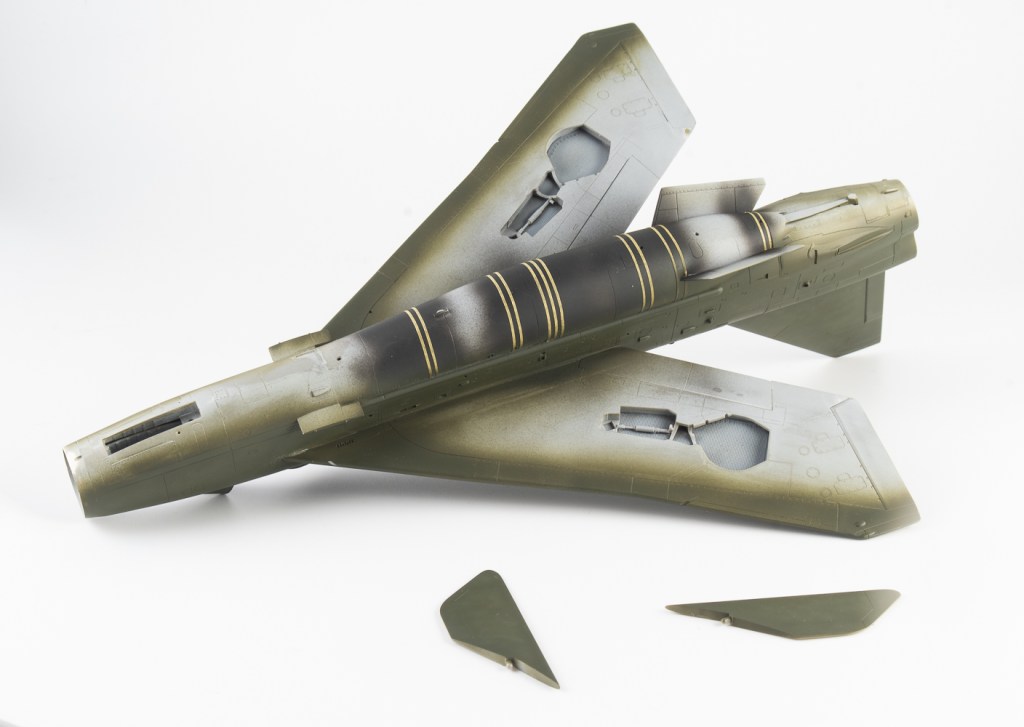
To limit the chances of silvering, I opted to paint the walkway and tank stripes. First, I applied a coat of matt black. Then, I masked out the stripes with thin strips of tape.
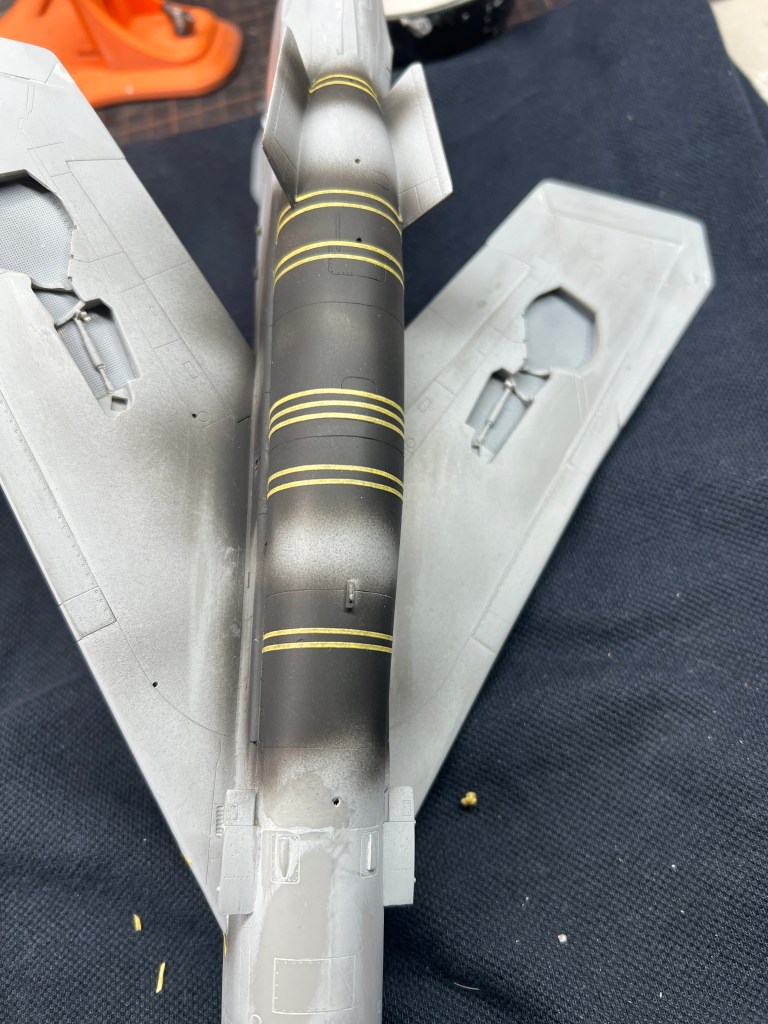
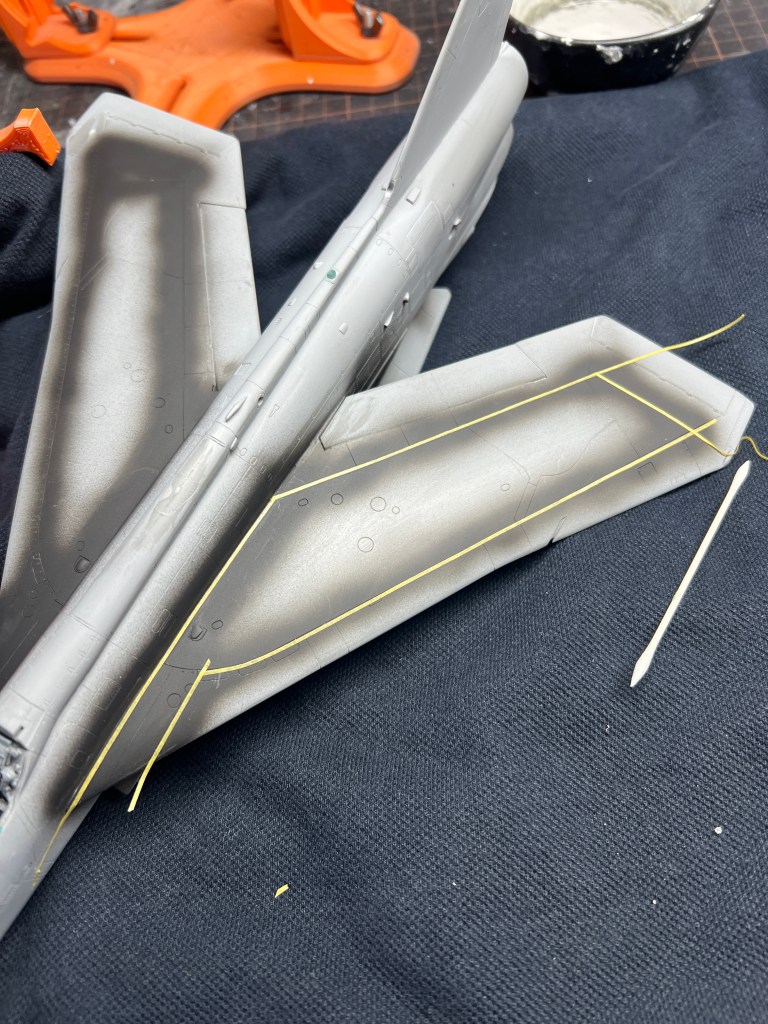
For the top surfaces, Gunze Mr Color 330 was used. Lightened as out of the bottle it is quite dark. Various shades lightened with yellow and white were applied with the undersides being spread with Tamiya LP-11 Silver
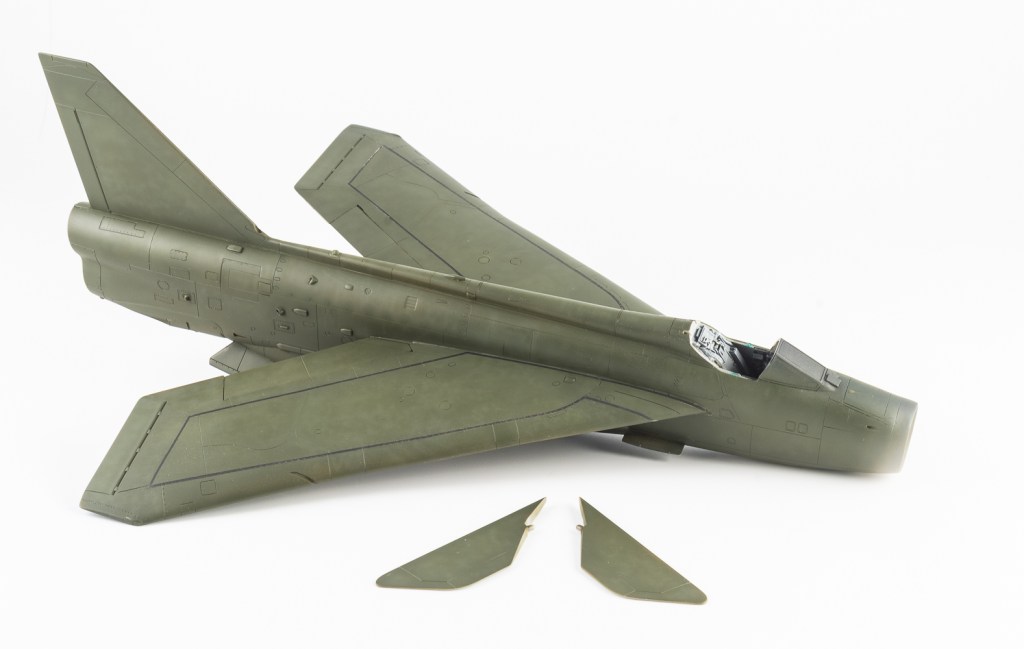
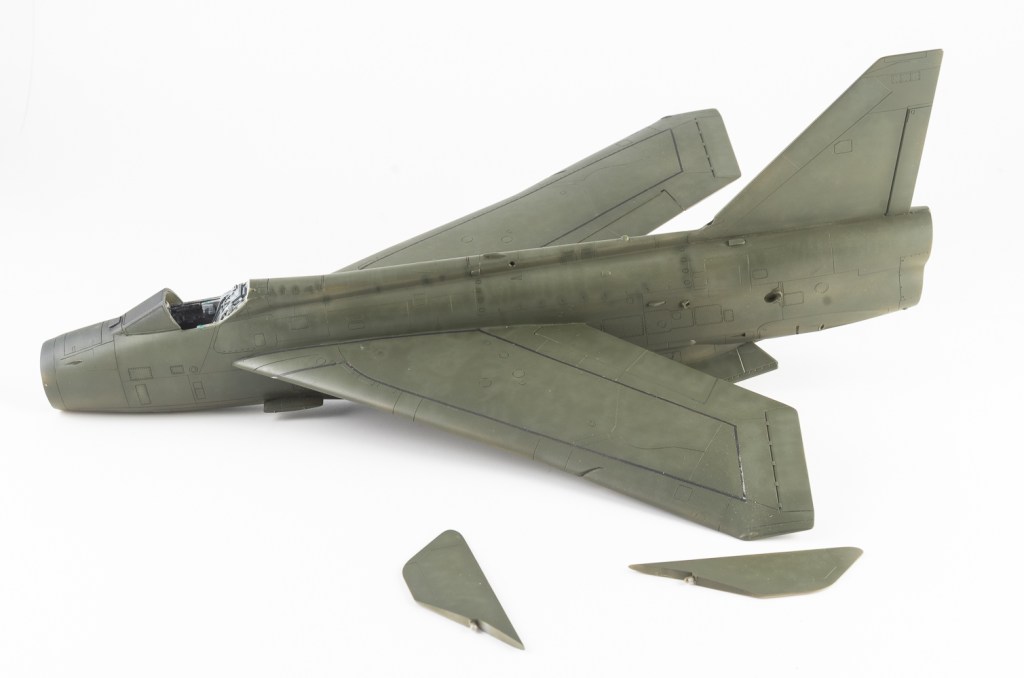
I was actually quite pleased with the appearance of the model. at this point so it was straight on to decalling. After applying a coat of Tamiya Gloss varnish. The decal sheet I was using was a Cutting Edge set. It had far better printing, colour, and register than the Airfix sheet. It should be noted that the sheet in my kit was the original issue. Later releases of the kit have included better printed decals

The Cutting Edge decals looked fine on the sheet, so the two large upper wing roundels were applied. One promptly tore whilst moving it into position , and the other separated into bits whilst in the water. Not a great start, but not to worry as these would be easy to mask and paint. Next up were the various individual jet markings. All decals were sandwiched between a layer of Mr Setter and Mig Ammo decal solvent.. I rolled a cotton bud across some of the decals to squeeze out excess solution. This revealed some of the decals were not adhering to the model very well..

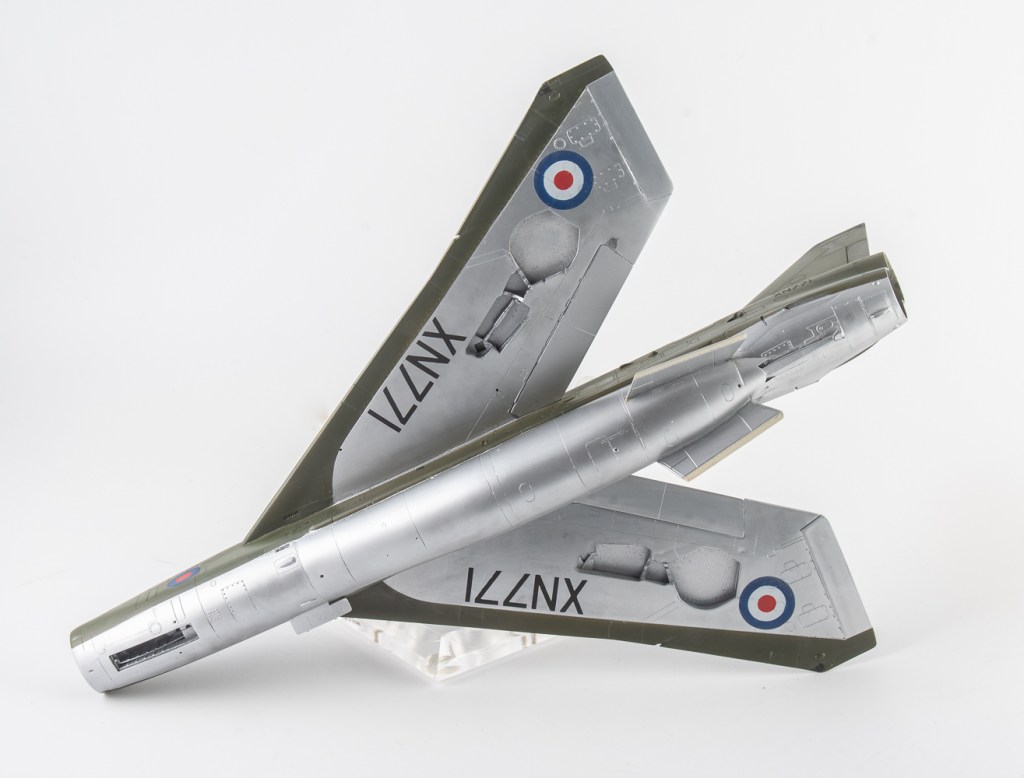
A sealing clear coat was applied. Then, a wash using Tamiya dark Brown accent colour was run into all the panel lines. It was now that the lack of adhesion from the decals started to give me problems. After inspecting the model, I found that I had managed to remove the face of the gargoyle at some stage. Possibly with my sticky mitts! This was patched using a bit of the Airfix decal. Further handling of the model pulled the nose checks off, despite my gloves and the protective gloss coat. Some of the underwing serial numbers also pulled off, again requiring replacement.
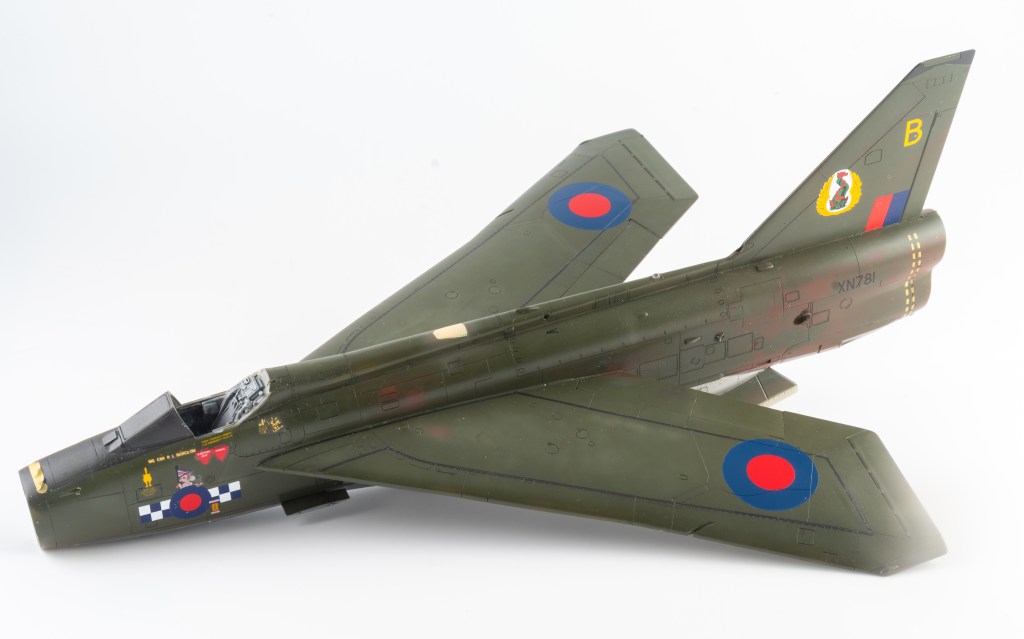
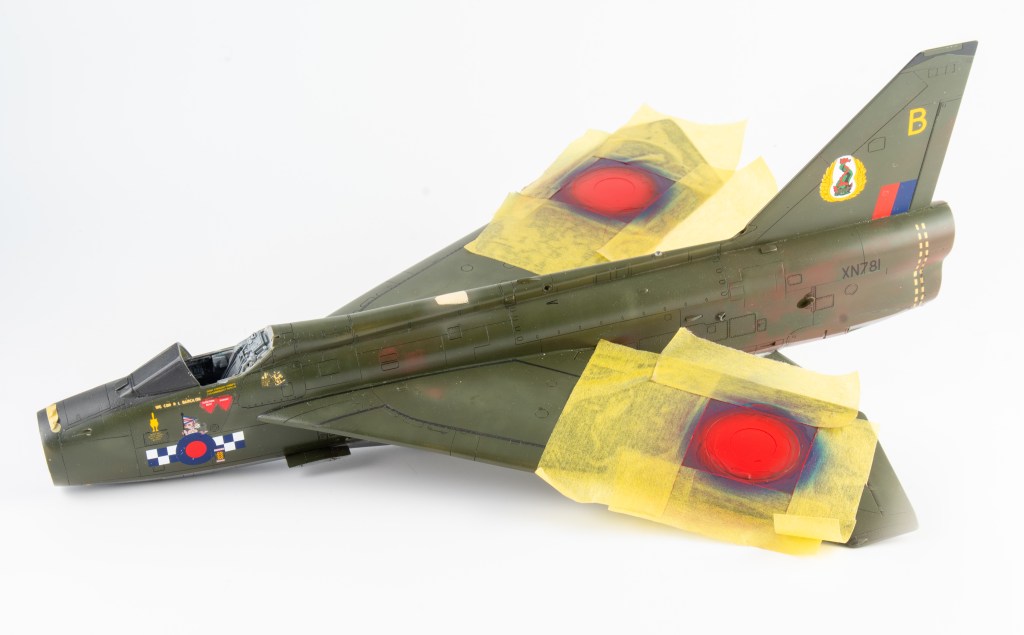
SMS Matt coat was used to dull down the gloss to achieve the flat finish I wanted. SMS is one of my favourite matt coats, drying to a low sheen smooth finish. Not this time though, as there was frosting evident around the flanks of the fuselage behind the wings.

With its mid mounted swept back wings, the Lightning has a multitude of tricky areas to get an airbrush into. All those right angles caused turbulence in my spray pattern. They resulted in texture and buildup of the clear coat. I had some frosting along the fuselage underneath the wings. There was also some silvering evident on some of the smaller decals. I was starting to feel like the model was getting away from me but I pushed on anyway as I really wanted it off the bench. Everything came to a head., when whilst masking off the nose ring, a corner of the tape caught the nose check decal. It pulled them off with far too much ease.
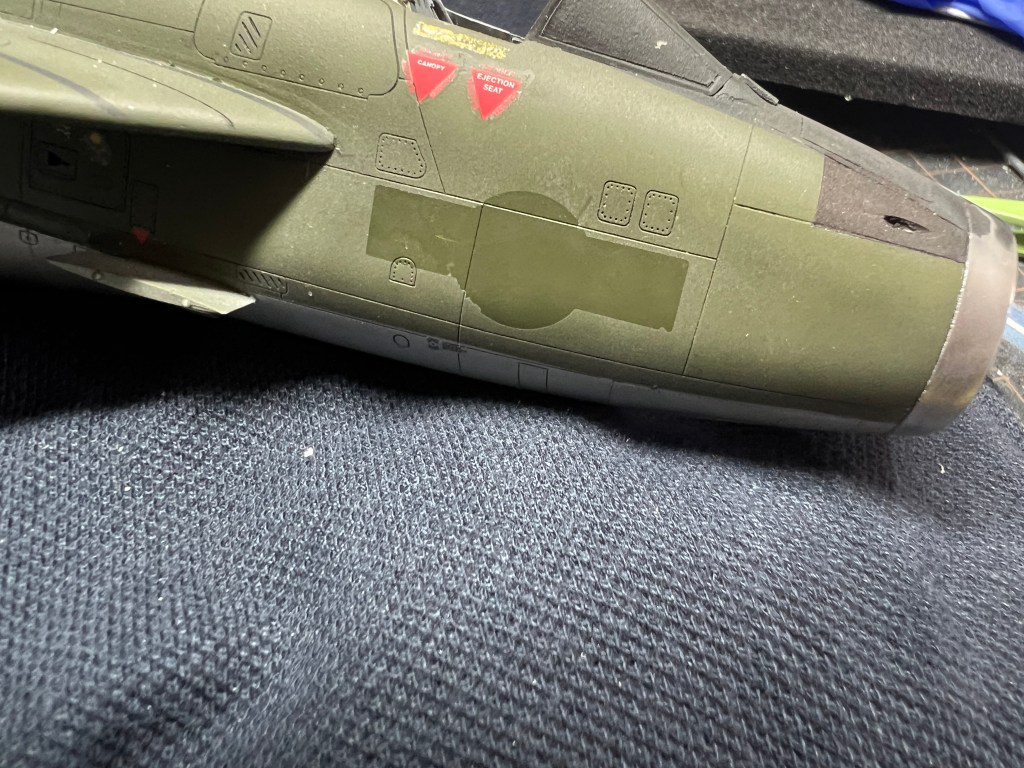
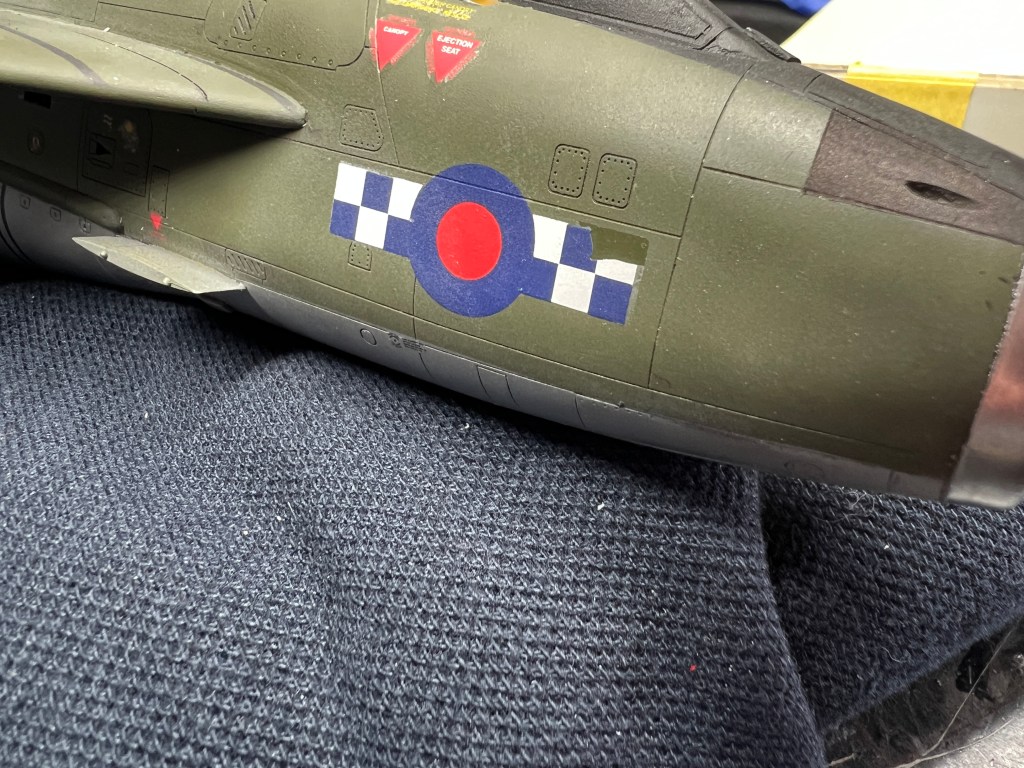
To be honest, the kit almost got binned at this stage, but I decided to sleep on it. In the morning, a thorough analysis was taken of my progress on the model. There were several aspects I was not happy with. These included the frosty matt coat, silvered decals, and textured paint. Therefore, the decision was made to strip it back to bare plastic. Also I knew a DNF (did not finish) would subject me to much “Gibson Grief”, and no-one needs that!

So, out came the VMS Clean Slate and after some vigorous scrubbing we were indeed back to a clean slate.
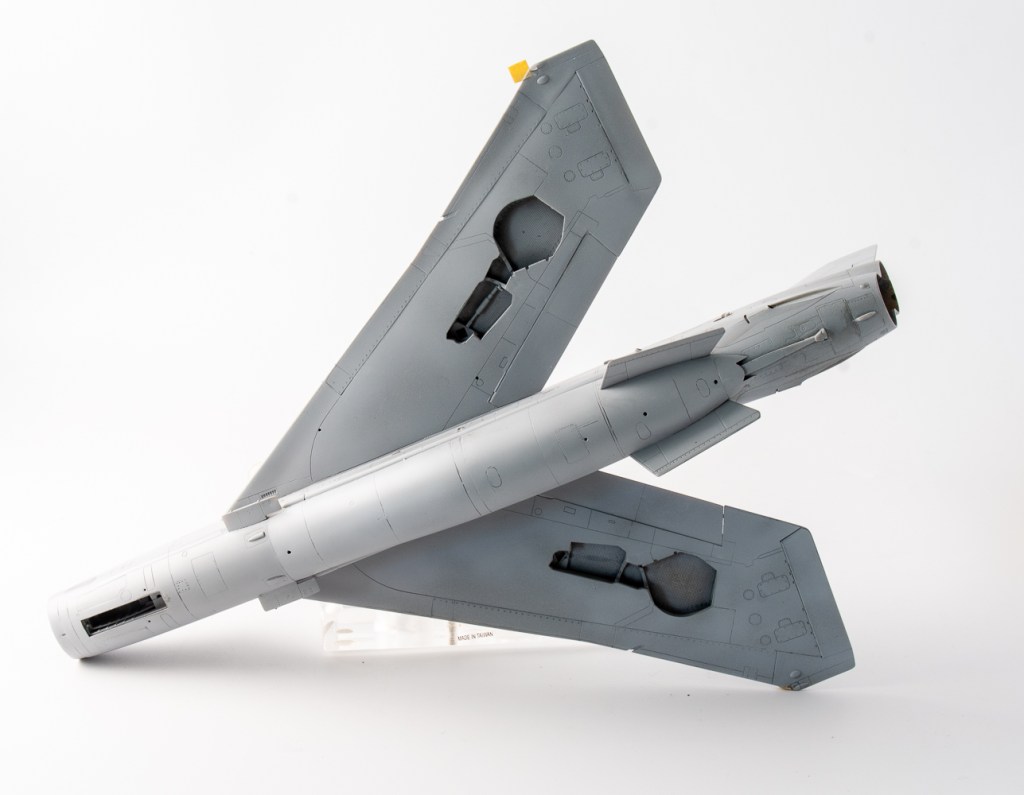
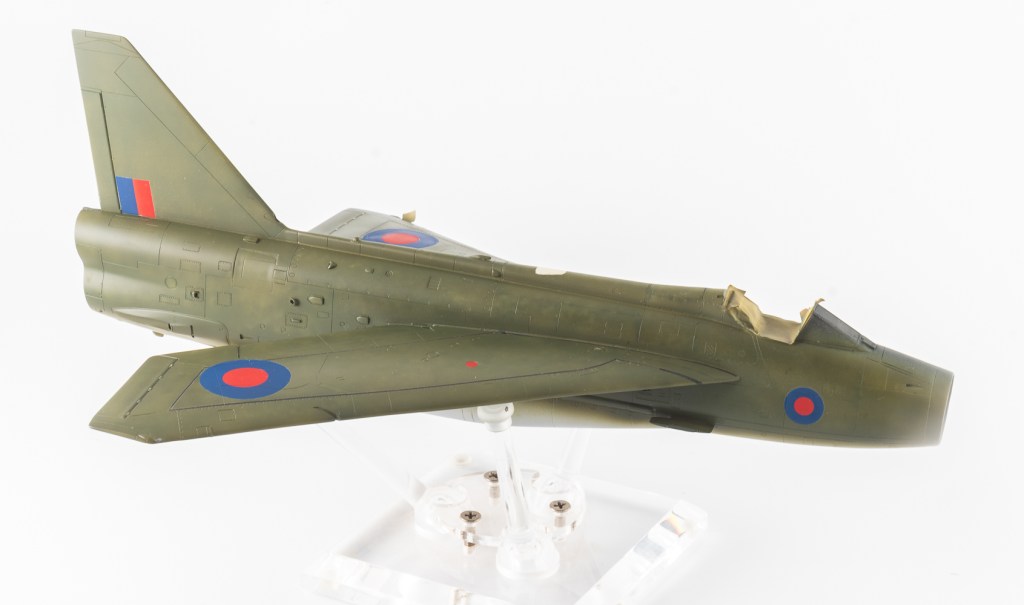
Then, it was simply a matter of repeating all the steps. This time, I painted all the National Markings and serials.
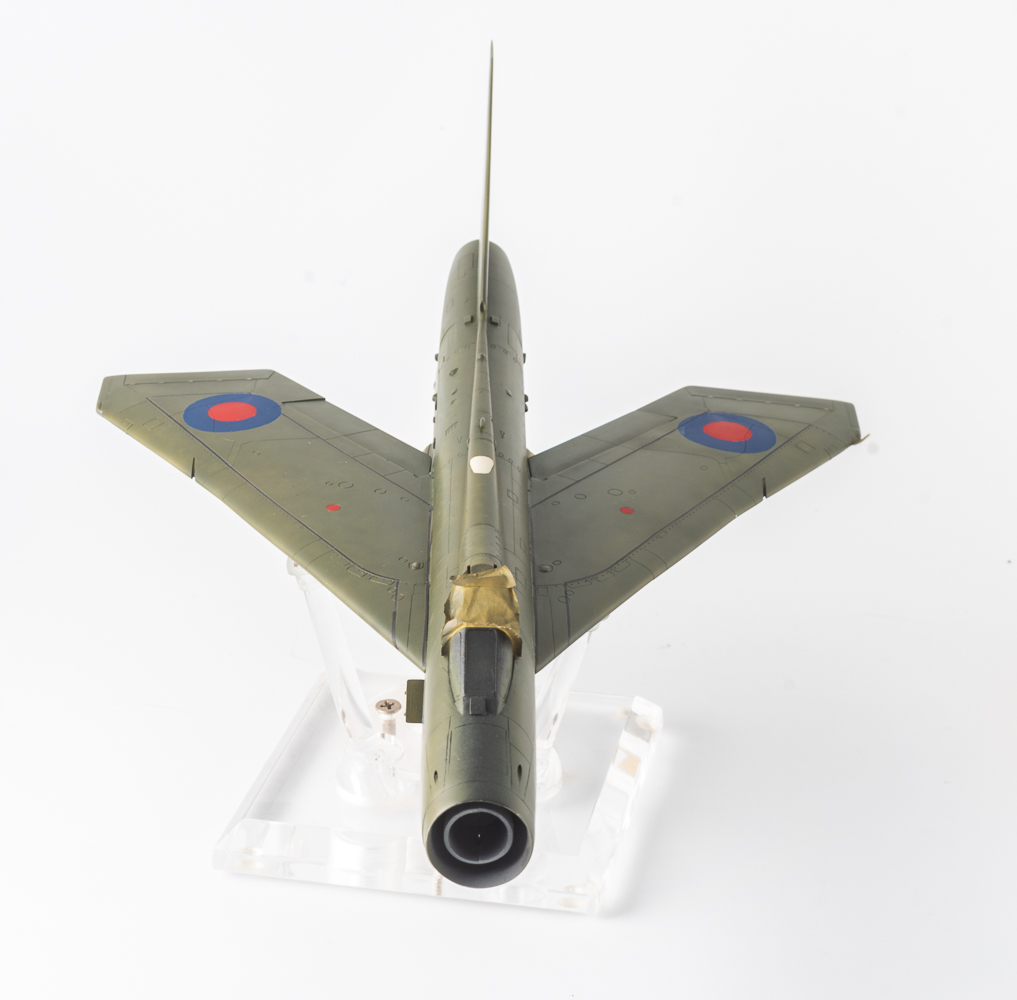
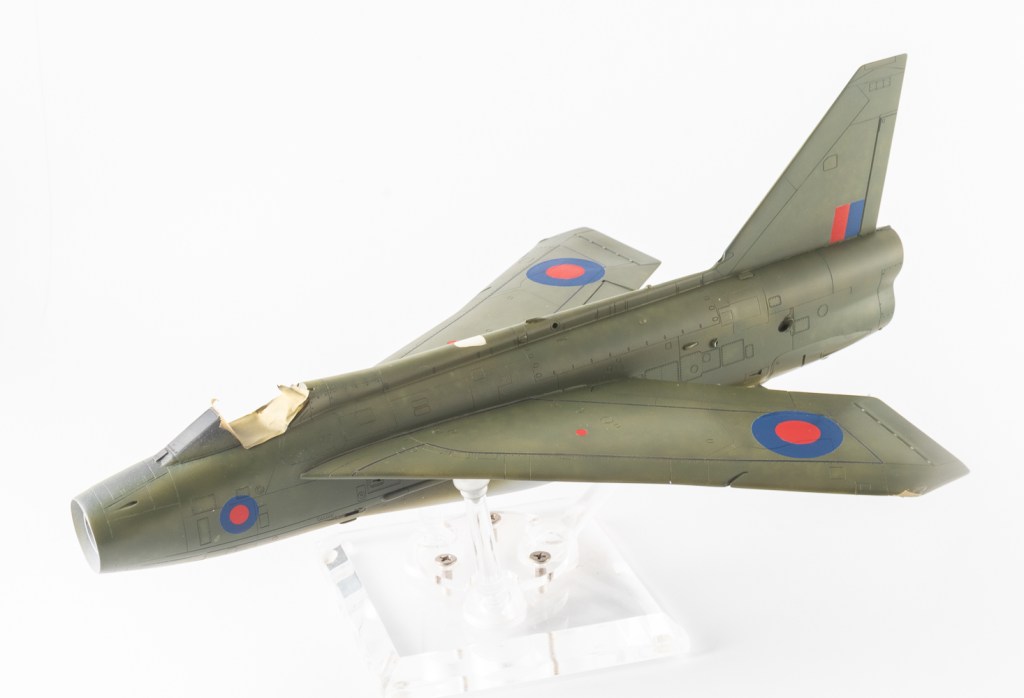
A mate sent me a set of Model Alliance decals for another jet from the same SQN. These were applied without issue. However, I had to scrimp on the stencilling out of necessity this time around. There were no yellow stencils left on any of the sheets. The Barracuda stencil sheet is very comprehensive. However, Roy, for some reason, includes none of the unique yellow stencilling seen on the RAFG jets. Quite a glaring omission in my book.

Again a Sepia wash was applied to all the panel lines. By this time, I was well over the model. Weathering was limited to some chipping around fasteners. This chipping was evident in all photos of these jets I looked at. The chipping on the nose cone was done using the hairspray method. That just left final assembly. Whilst the Reskit missiles are beautiful models in their own right, they lacked positive location devices. There was no way to mount them on the rails. I understand this is to preserve the detail on them and the rails. If you wish to mount them off the jet, 3DP should surely allow you to print them with solid locating pins. These pins can be cut off or filled if not needed. I glued them on with copious amounts of white glue.

The undercarriage was easy to locate, thanks to my pre-planning. and adding those bits of plastic stock.

Conclusion

Finally, it’s done, But, Man! What a slog in getting there! This was mainly to do with unforced errors on my part, but the kit certainly played its part.

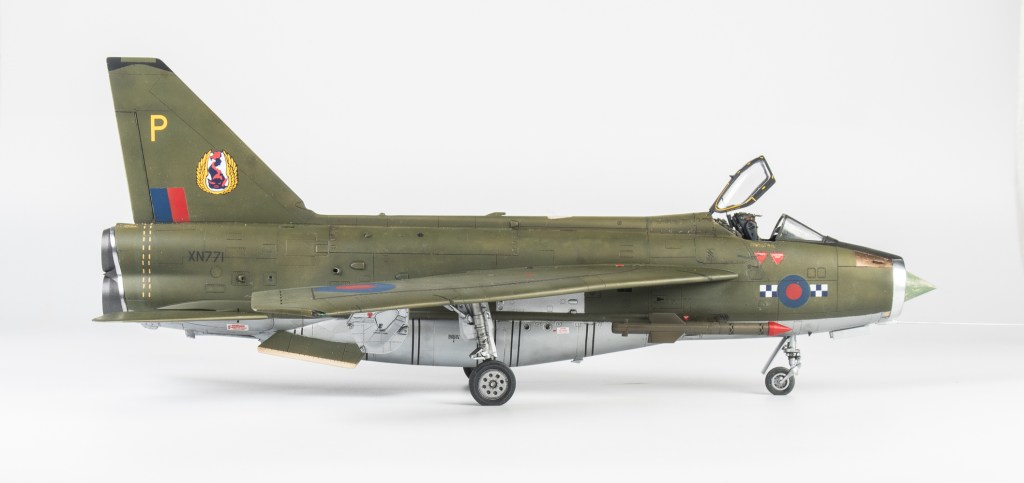
It’s great to have a Lightning in the green RAFG gracing my shelves again. My first Lightning in this scheme being the ancient Matchbox kit way back in the 1970s. My love for this scheme has stayed with me ever since. To my mind’s eye, it looks like what I envisioned when the build was started. This is due to me making the decision to strip and repaint the model. Even so, it’s not my best work. It looks just workmanlike. However, it is far better than it would have looked if I had continued pushing ahead with the original finish.

Regarding aftermarket used, the only essentials in my opinion would be a seat and metal pitot tube. Nothing can be seen of the cockpit, or even the wheel wells, despite the high wing. The Armoury wheels look good and are weighted but ,the kit wheels also suffice.

The Lightning is such a brute of a machine and an icon of Cold war British Air Power. It deserves to be retooled up to Airfix’s current standard. In its current form, Im not sure I’d build another one.

E.E Lightning F2A. Royal Air Force 19 SQN. Guttersloh Germany 1973
Leave a comment

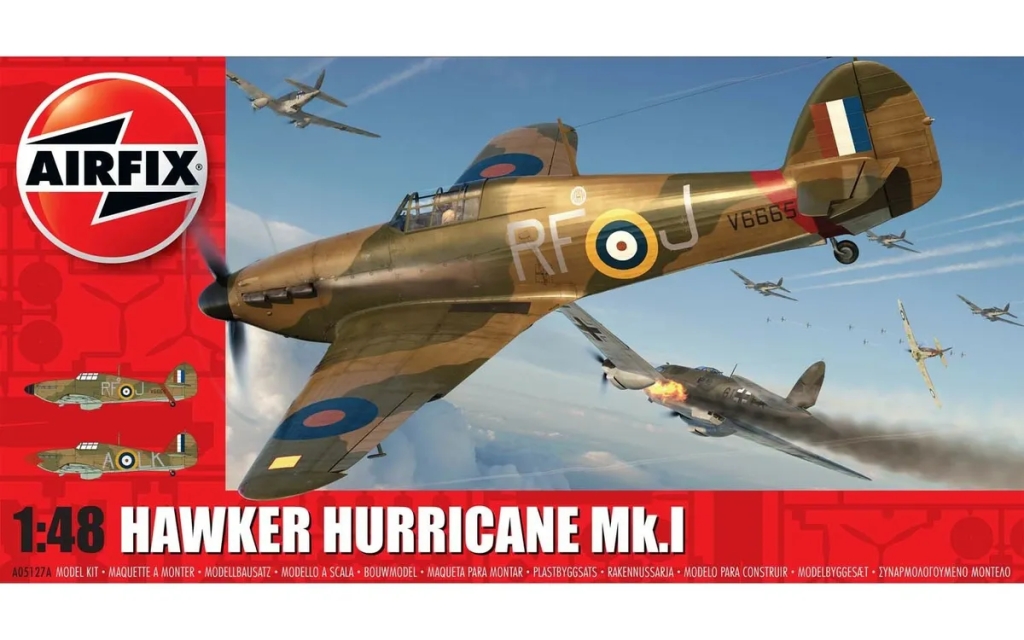
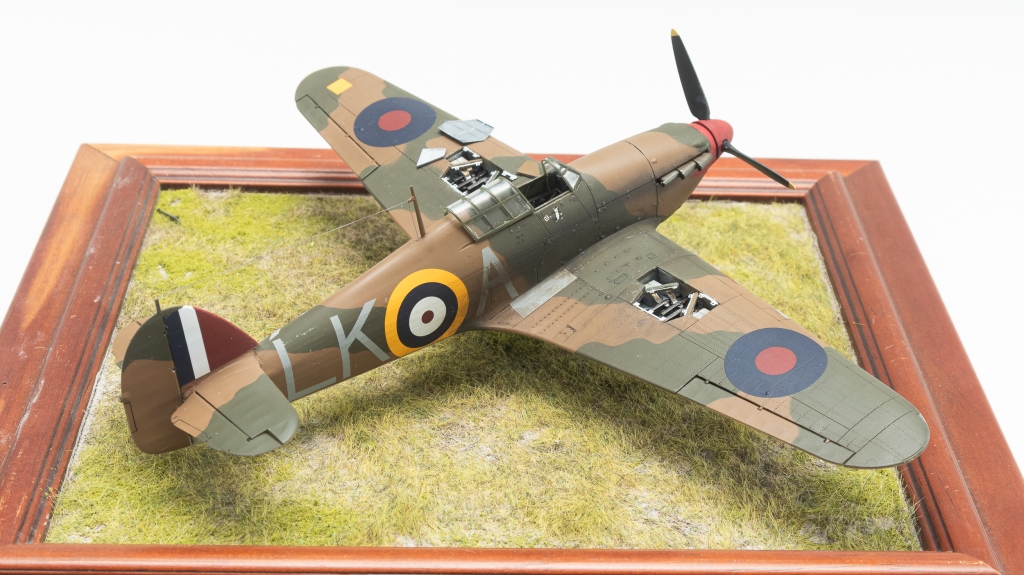
Airfix 1/48 Hurricane Mk1

  • Purchased; 2023
  • Built; 2023
  • Enhancements
  • Seat Belts; Eduard
  • Exterior details Eduard
  • Decals; Kit

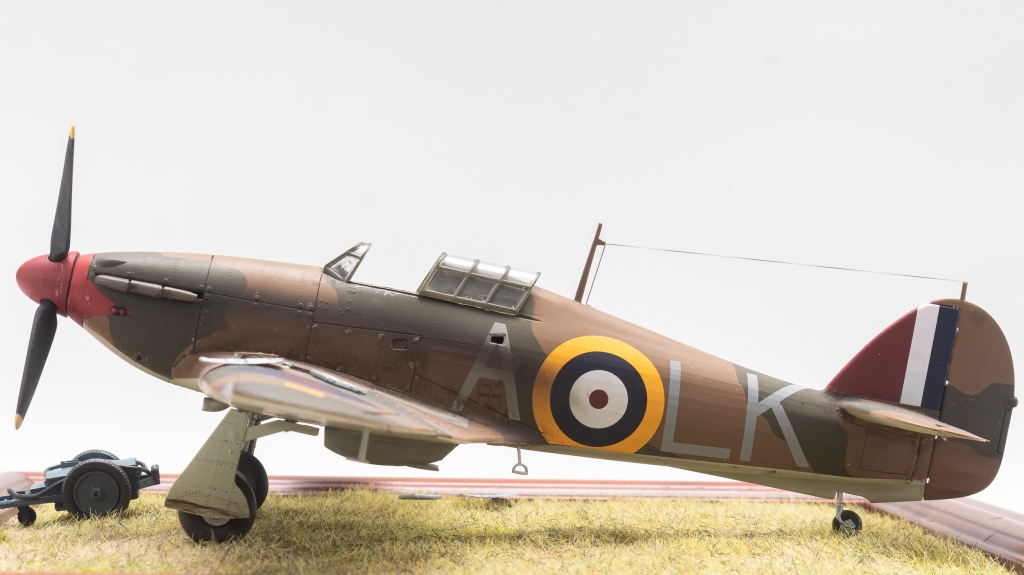
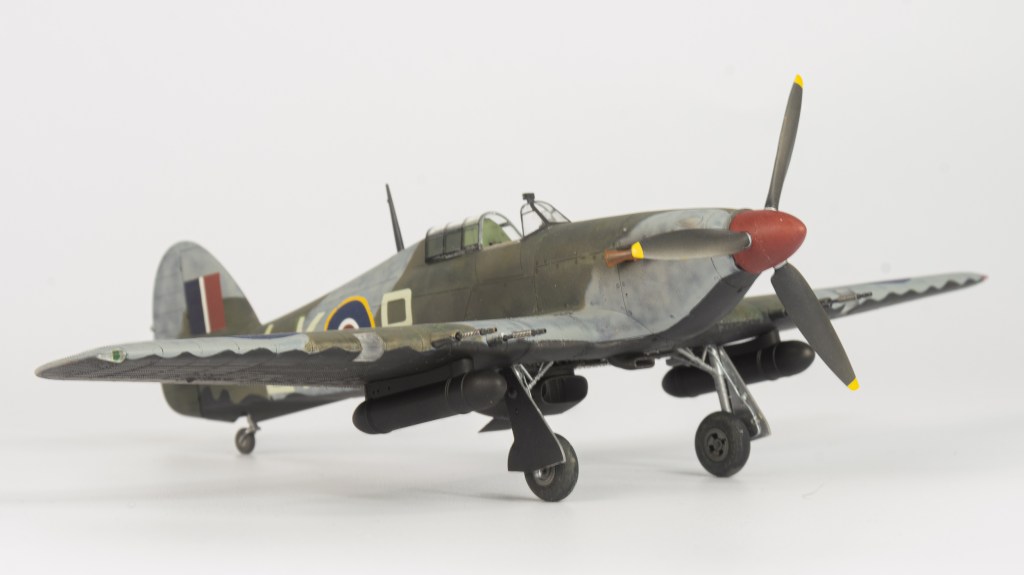
What could be easier than an Airfix Hurricane to complete the years builds? A quick slammer, that should comfortably fit into the remaining three weeks of 2023. Well, only just as it turned out, with the EZ line being attached – the full stop to the sentence if you like – on the 29th December. PHEW! That was close.

Construction Notes

Judging by the many on line builds of the Hurricane, modellers either have an easy time ” took me back to my childhood memories of building models” or, its the kit from hell “the wing to fuselage join left gaps like the Grand Canyon”

My experience of the kit fell into the latter. Given the two extremes relayed by previous builders, Im still not sure whether it was the kit or me, although my lower wing half was slightly deformed out of the box, requiring gentle coaxing to meet the inner forward wing fillets of the upper wing parts.

I took particular care in ensuring all wing spars sat square, but still the wing would not fit snugly to the fuselage. Industrial type clamping was required! That said, with this, everything did close up quite tightly. Prior to this, the gun bay hatches were cut out so the nicely detailed bays could be displayed. A nice option on Airfix’s part.

It was here things sort of veered away from a quick build, as prior to closing the fuselage , the fuselage hand hold was drilled and cut out, but then things got crazy as the decision was taken to rivet the whole airframe. This was actually easier than first thought, although there were a few wavy lines requiring correction. The purpose of the exercise was to determine how involved it would adding rivets to the plain wings of the Revell 32 scale Hurricane. Overall, I feel far more confident now in adding detail like this.

Painting and Decalling

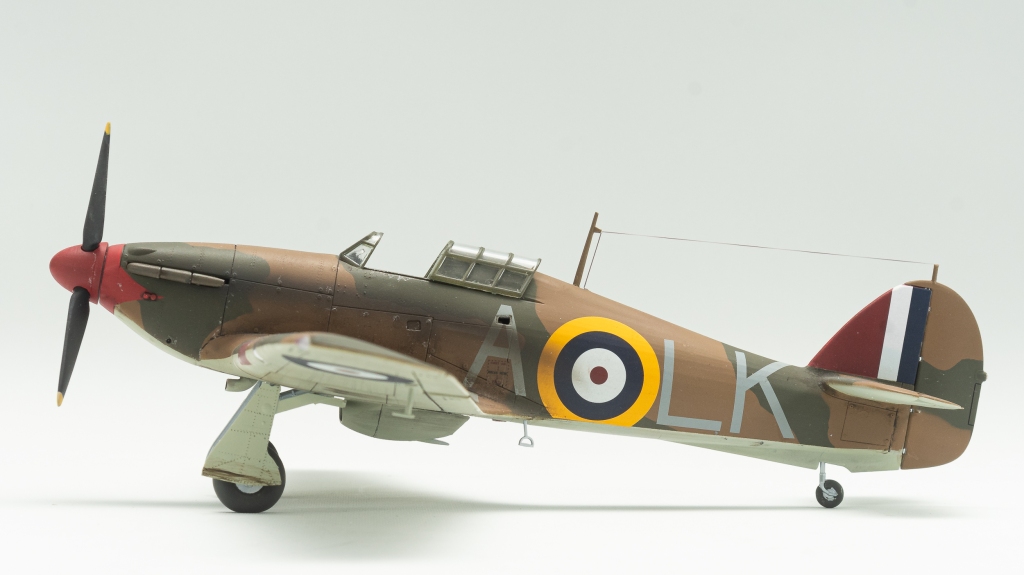
Gunze dark Earth and Tamiya Dark Green type 2, coupled with SMS Sky provided the classic British early war scheme. One of my favourite schemes, as evidenced by the growing number of models in my cabinet that wear it. The spinner colour and fin leading edge were matched to the decals using Vallejo flat red with a touch of vallejo cavalry brown. The kit decals performed without trouble, even the nose flash laying down over the nose drain detail with the aid of Micro set and sol.. Weathering was by way of Ammos PLW for brown and green camouflage. The jar was then binned as there was a ton of sediment in it that no amount of stirring would reduce. Binning it was also in line with my 2023 goal of consolidating my consumables. In future, my washes will be mixed from oil paints.

Stains ands other weathering was added with small dots of starship filth oil paint, then blended in with a dry brush. This is something I still very much need to refine though.

And That, as they say, was That!

Conclusion

Many modellers seem to have reported a trouble free build of the Airfix Hurricane. An equal number have found it a troublesome build. Further proof, that modelling experiences can be such an individual thing. I’m sure there will be other Hurricane Is along in 48 scale. Eduard and Arma are two brands that spring to mind that could potentially offer one, and if I make another Hurricane, it will be from these companies, rather than Airfix.

Thanks to everyone that has read my ramblings throughout the year, I hope that there will be many more in 2024.

Hawker Hurricane Mk1. 87 SQN Royal Air Force. Exeter England. August 1940

Leave a comment

My 2023 Modelling year

Rather than just cataloguing my builds I thought the modelling year as a whole should be recorded. This means the events I attended as well as any thoughts I had.

This should provides some good laughs when I re read it some years in the future.

The year started with me asking my friends to pick models at random, that I would then build that year. This is the same system I have used for the last 5 years. That doesn’t stop me from using it every year though. One day I will build ALL the selected kits!

It never really works, I think the most I have built was 4 out of the 6 selected kits

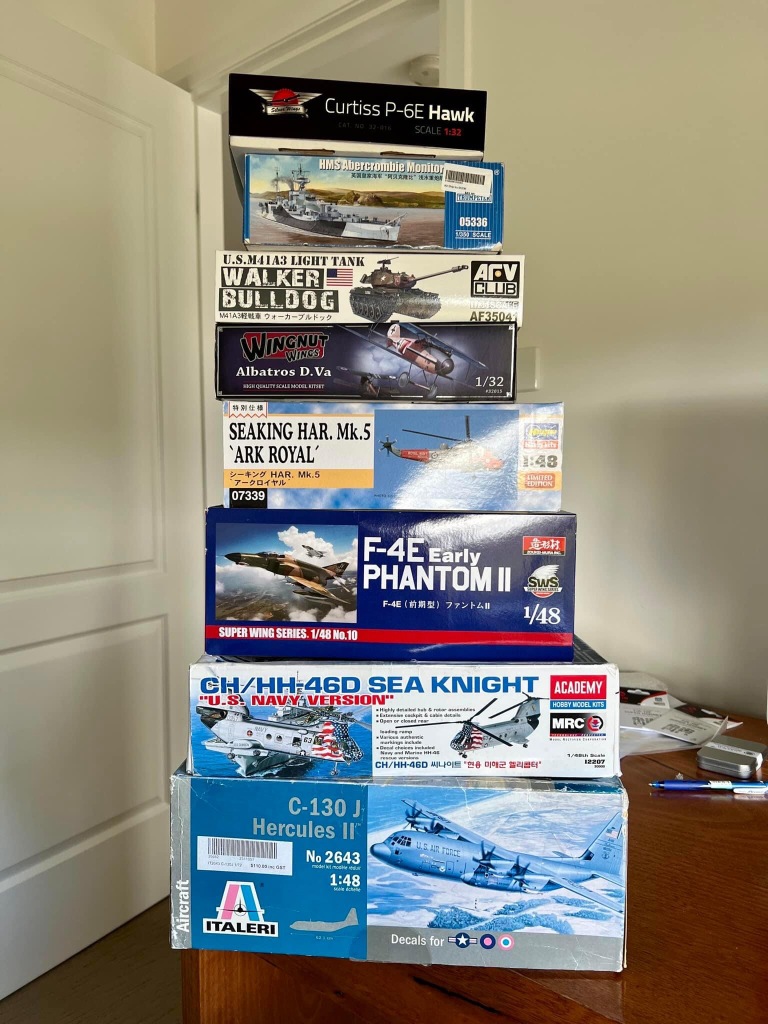
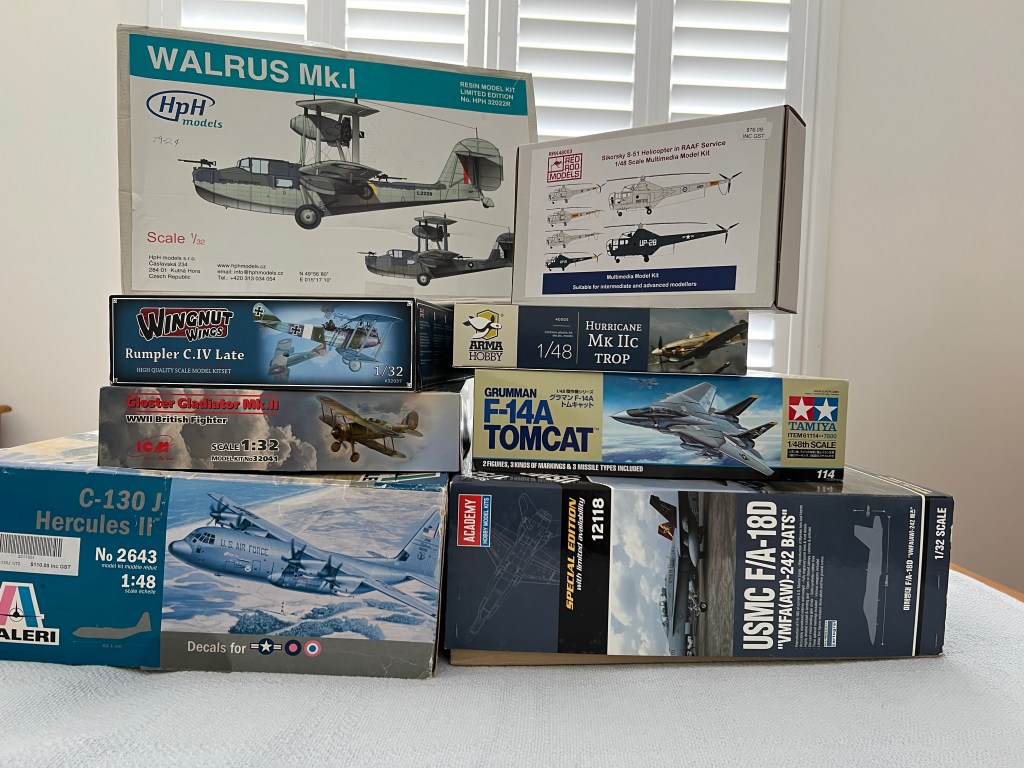
Anyway, here was the pile of kits elected for 2023

Quite the undertaking. Of course posting it on my FB page met with much laughter and banter from my friends.

So, how many of these did I actually build? Well the walker bulldog came the closest before being binned. What is they say about battle plans only lasting until the first contact!

It became apparent I was not ready for modelling just yet. As well as recently retiring from the Ambulance Service, my wife and I had also moved to a different State and new house. Obviously there was a lot more to concentrate on than modelling, so my attention turned to building a new model room.

With this done, the modelling mojo soon returned and in quick succession three Airfix Spitfires made it into the display cabinet. Two of these were left overs from 2022,

I was back in the saddle. There were seven completions for the year, which I’m quite happy with, given my shaky start.

In addition two shows were attended, The NSW Scale Model Show and ScaleACT in Canberra, where I caught up with many modelling friends.

My other hobby is Aviation Photography, and three airshows were attended through the year as well

Hunter Valley Airshow

Classic Fighters Omaka New Zealand

ADF Newcastle Airshow Newcastle NSW

In addition there was a trip to West Australia and a road trip across to Canberra to view an Open day at the Australian War Memorial storage facility

WOW, So quite a busy year then!!

Modelling goals for the year were to start consolidating modelling consumables and tools. This will carry over into 2024, but Im quite happy with progress so far selling off quite a few tools and paints that just weren’t getting used. I bought far too may kits again but this was somewhat countered by selling just about all of my armour and ships kits at show swap and sells.

So, without further ado, onto the models

In order of completion;

And from the various events and airshows I attended

For more photos, see my Flickr page https://www.flickr.com/photos/131700029@N03/

Goals for next year will be to continue scaling down tools and the various brands of paint and glue used, concentrating on just using tamiya and gunze as the other brands are used up.

My collection of books and magazines will also be markedly downsized after the realisation, once bought, these just end up on the shelf, many of them not being further picked up after that initial read. Id also like to publish an article in one of the magazines.

May you all have a safe and Happy New Year you are celebrating that at this time of year. My sincere Thanks to those of you who have subscribed to the blog.

Now! To get my friends to pick 8 random kits for 2024!!

Leave a comment

Airfix 1/48 Spitfire Mk XIVe (conversion)

  • Acquired: 2023
  • Completed: 2023
  • Enhancements;
  • Wheels; Brassin
  • Gun Barrels; Master Model
  • Exhausts; Brassin
  • Seat Belts; Eduard
  • Decals; Xtradecal

Another project (and Spitfire) started on nothing but an impulse. That impulse came in the form of fellow modeller Andy King publishing a post on his blog on how he was tackling converting the above two kits to arrive at an early Spitfire MkXIV,

His clear photos and narrative indicated what seemed a fairly straight forward conversion, one possibly even I could handle despite my inability to constantly cut straight lines.

A mate very graciously sent me the required Airfix kits, those being the Spitfire MkVb and XIV. Thanks Norm!

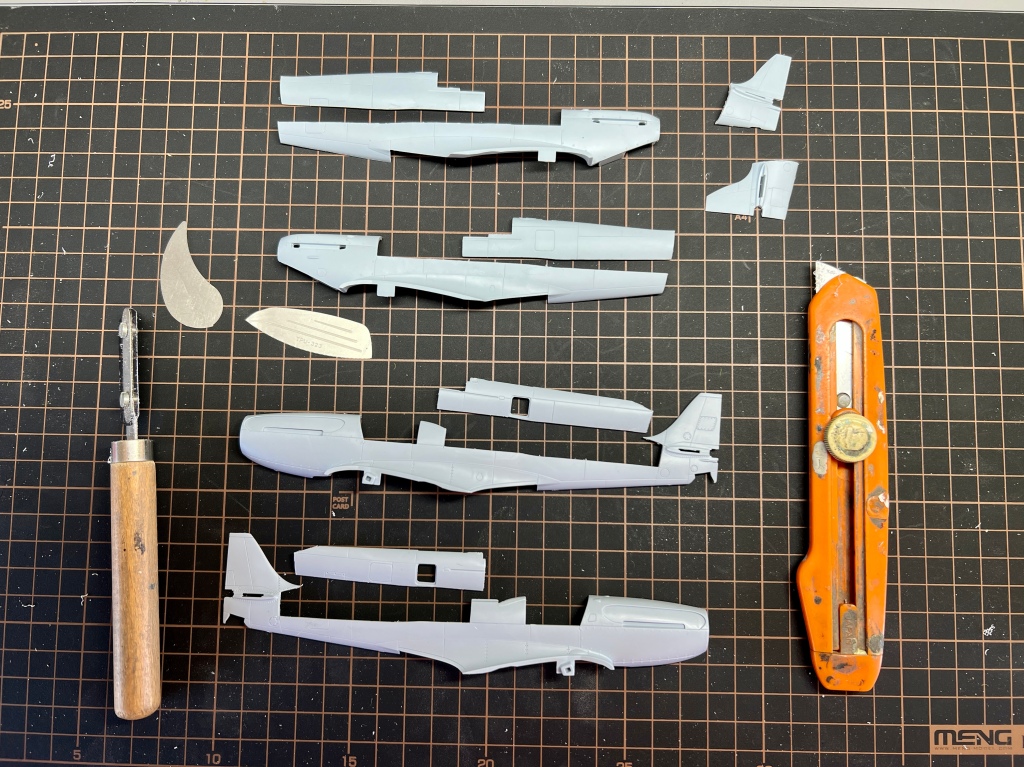
First order of (de) construction was too cut the kits along the required panel line as indicated in Andy’s article, although I deviated from Andy in just cutting straight through the rear access hatch rather than cutting around it to make the cut easier. Take particular care around the fin fillet of the XIV. Once cut, I traced the fillet onto the Vb fuselage halves with a pencil so I had an accurate edge to cut to.

It was then a simple matter of joining the spine from the Vb kit to the lower fuselage of the XIV.

This had been the deciding moment. If this had not worked, the project probably would have been binned, but I was very happy with the result.

A tape together showed everything that needed to match up did

From here it was just a matter of assembling the spitfire as per the XIV instructions. The fuselage join did require some filler and subsequent rescribing of the lost panel line with that troublesome little jig just aft of the canopy. My work here was not great and I wish i had of had the patience to persist with it until I was truly happy with the result rather than settling for just “good enough”

If I could offer one bit of advice to modellers on the oft asked question of “How can I improve ?” it would be to persist until you are happy with your efforts rather than just accepting mediocrity. If only I took my own advice more often!

For the cockpit, the rear bulkhead from the Vb was married to the sidewalls of the XIV cockpit, and the fit of the fixed rear clear section from the Vb checked for fit. All good

What wasn’t so good though was when it came time to offer the lower wing section up to the fuselage, I could not get to mate to the wing fillets as it was fouling on the rear of the cockpit tub. Talking to Andy, he’d faced the same problem although in his case it was possibly due to him using the Eduard cockpit.

A long process of elimination and trouble shooting revealed the Vb bulkhead was not sitting as deep into the tub as it could. Remedying this sorted the problem and i got the lower wing fitted without further problem, and before you say “Bruce, that photo does not look like the fit is problem free,” the clamps are actually ensuring the underwing radiators sit flush with their cutouts. They mating surfaces do require some judicious sanding to ensure their fillets sit flush with the wing.

The top surfaces were then added for a nice tight fit. There was a small misalignment on the cannon stubs, but a skinny sanding stick paid short shift to that!

Painting time!

Annoyingly I had small flecks of paint pull up with tape all through the painting stage, no idea why as I had cleaned the plastic prior to painting with tamiya thinner X20A, and also used a primer. Nothing major, until I went to swab up some surplus Mig Ultra decal solvent with a cotton bud and removed not only the decal solvent, but also the clear finish and paint down to the plastic.

I have never had this happen before. It was easily touched up, although you can still see the scar. Also evident in the above pic are my dodgy scribing skills.

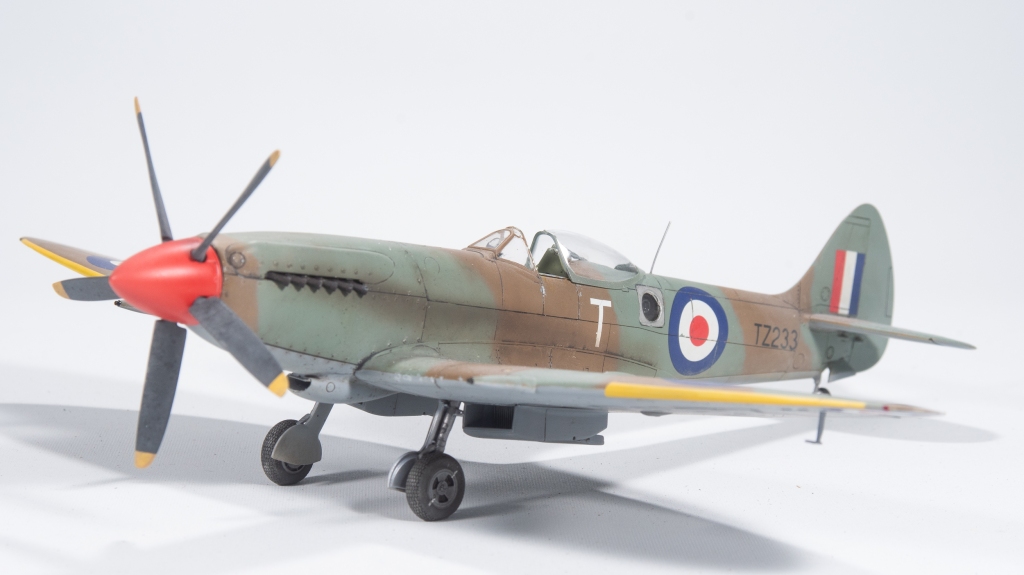
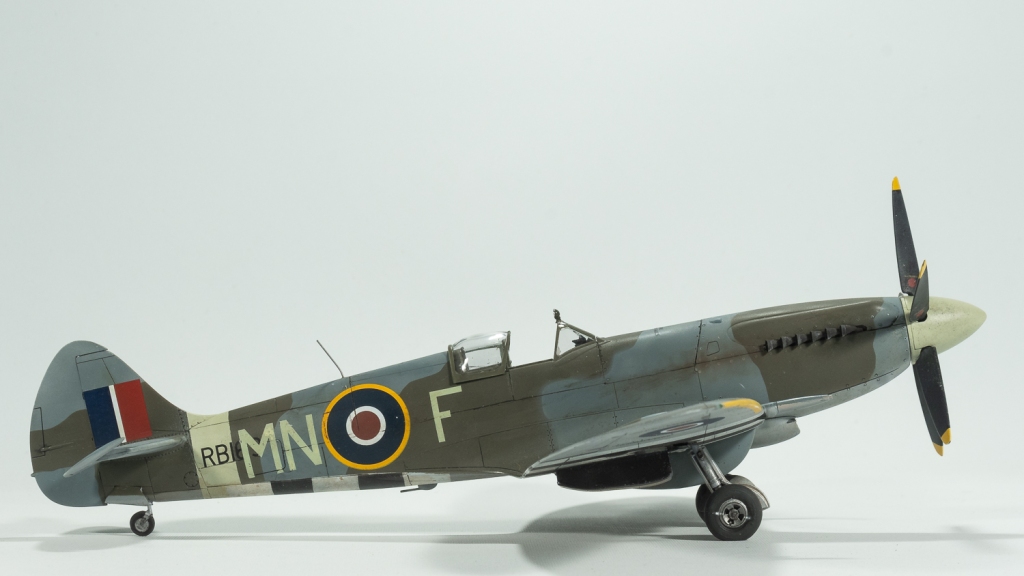
The camouflage demarcation was achieved by using the AML camouflage mask set. Its designed for the Academy kit, but still fits the airfix kit nicely. I managed to create a few ridge lines though with over judicious coats of paint.

Weathering was achieved with oil washes and spattering on Tamiya brown panel liner to represent spaces of mud kicked up by the propeller. Just needed to add the exhaust pipes and the mirror that came from a quick boost set and she was done

There exhausts were base coated in dark iron, then washed progressively with tamiya dark brown panel liner, Vallejo pale german camouflage brown and finally Vallejo white grey.

Im very happy to have this mark of Spitfire in the cabinet. A shout out to Andy King for doing the conversion as I never would have thought of it. Do check out his blog. He has always got something interesting on his bench.

Supermarine Spitfire XIVe. 350 (Belgian) SQN. R.A.F Lympne. 1944

Leave a comment

Airfix 1/48 Spitfire FRXIV (yes, another one!)

  • Added to Stash; 2022
  • Completed; 2023
  • Enhancements:
  • Exhausts: Brassin
  • Wheels: Brassin
  • Seat Belts: Eduard
  • Guns: master barrel
  • Decals: Xtradecals

Well! I certainly did not see myself completing another of these kits, immediately following on from my other one, but I had become intrigued by a few comments on my Facebook page as to how to get a better fit at the wing roots.

The suggested method was to fit the upper wings direct to the fuselage . This allowing the best way to get a tight fit, then the lower wing is added.

I was doubtful this would work on this model, given the very small contact area for the upper wings abutting the wing fillets. Instead I added the upper wings to the lower wings, only glueing the tips together to ensure there would be no step. As the wings had had no glue added inboard of the aileron cut outs, the soft plastic allowed me to spread the upper and lower wing to fit over the undercarriage location stubs moulded in situ along the wing root. My wing root gap was almost non existent this time, needing only a thin smear of Mr Surfacer to reduce the join.

My other major departure from the instructions with this build was to glue the fuselage halves together, completely dress the join, then add the fuselage from below. The fuel tank was still a poor fit.

I added a 10thou shim to the front. The shim was sanded to conform to the cross section of the cover before it was put fit on. Result was a much tighter fit.

The construction on this was looking a lot tighter than my first one, which pleased me. For the finish, a modified desert day scheme used by the RAF post war was settled on. The different scheme a mate had used on his really appealed to me, so I wanted something similar for mine.

Not the same, obviously as I didn’t want to show him up!

The modified desert scheme was only used on two aircraft types that I know of, the Spitfires XIVs of 208 SQN and Tempests of 6 SQN. It was arrived at to differentiate the spitfires of the RAF from those of the Israeli Air Force and the Royal Egyptian Airforce, following a couple of “friendly’ fire incidents, which led to the loss of a few RAF machines.

During this time frame, all three Air Forces flew Spitfires, albeit different marks, so making your aircraft different from the others was a necessity.

Colours used were Gunze’s dark earth and MRPs light slate grey and medium sea grey for the undersides. The camouflage being freehand with my Iwata HP-C. Some tonal variation was achieved by utilising a random preshade of differing colours such as yellow, tan and light grey,

Decals were from xtradecals and there was no problems with applying them over a gloss coat, the post war D type roundels looking superb against the drab camouflage. With the national markings done it was time for the stencils which came from the kit sheet, well that was if I hadn’t accidentally thrown them out during packing up for the house move. Actually, there was nothing accidental about it as I can remember looking at them and thinking “I won’t need these, its a field applied camouflage” so in the bin they went.

I may have been correct in this assumption as the only two photos I could find on the net of these machines showed weren’t the best quality, so I couldn’t make out if there was stencilling or not. Given the machines were completely painted in a new scheme – well the top surfaces anyway – my supposition was stencilling was reapplied. In any case a lat mark spitfire stencil sheet by Barracuda Studios was duly ordered

Given Roy Sutherland markets this as suitable for any Spitfire from mark nine to mark 22, it was disappointing to find only enough stencils for four propeller blades, not five as needed in my case, or in fact for a mark 22/24.

Wing Walk lines were masked and painted as long thin decals and I don’t get on well!

An interesting little fact I discovered on Spitfires post VIII – the mechanical undercarriage down rods which extend above the wings when the gear is down, were deleted. So I didn’t add them as was my original intent and what started me down the stencilling rabbit hole

I was particularly pleased with my handling of the canopy on this kit. It was sharply masked and remained crystal clear, which is not usual for me, well thats how I remembered it before the move.

Imagine my horror when I pulled it from the box to discover a dirty great crack the length of it.

No problem, there’s two in the kit, in fact I had two remaining ones from both kits. I had used one as a mask when painting this kit, so cleaned it up with some MR Thinner, which revealed that this one was also cracked, I mean for christs sake!!!! Maybe I applied too much pressure whist holding it when painting the kit. So, the remaining canopy was masked up and painted. Unmasking this revealed………. a tiny spot where the plastic had crazed, what caused it. I don’t know, no glue had been near it, only lacquer paint, whether it pooled on this spot whilst painting, I have no idea. The offending area was sanded out and repolished but I could not eradicate it completely.

Thanks though to some fellow modellers following a plea on one of the facebook sites, I soon had not one but two extra canopies to replace my marred example. The whip aerial was added from some piano wire and she was done.

Looking at the completed model with a critical eye, there are a few areas Im not happy with, and some unforced errors I continue to make, but the different camouflage certainly sets it apart from my other Spitfires, and I have really grown to love the Griffon engined spits.

Supermarine Spitfire FRXVIII 208 SQN Royal Air Force Egypt 1949

Leave a comment

Airfix 1/48 Boulton Paul Defiant Mk1

  • Built: 2019
         Enhancements :  Eduard Interior and exterior details
  •                                    Landing Flaps: Eduard. 
  •                                    Gun barrels; Master Model
  •                                    Wheels; Barracuda Studios 
  •                                    Exhausts: Quickboost    
  •                                    Paint:  Gunze
    ​                                   Decals: Ropasmodels 
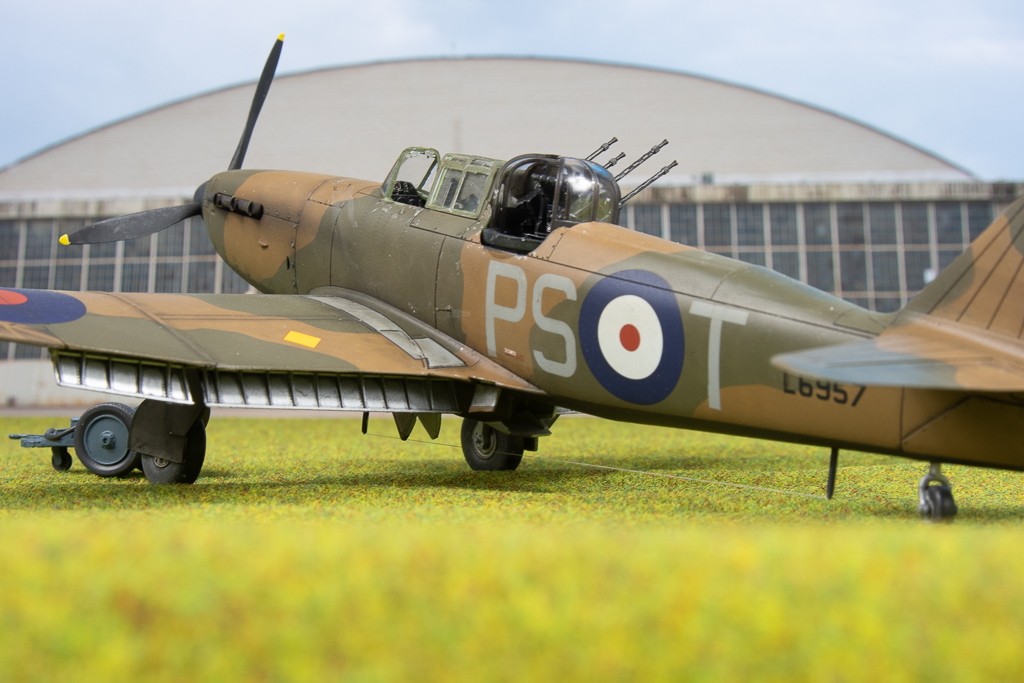
Airfix’s 1/48 Defiant, released in 2016, and purchased by myself soon after is what we have now come to expect from Airfix’s new line of kits.   Evocative box art, soft grey plastic, sharply printed decals and well illustrated  clear instructions outlining the different  ways you can complete your defiant, in flight, or wheels down, separate control surfaces, choice of open or closed canopy, this also extends to the turret, which can be modelled with the doors open, and raised or lowered turtledeck  (why are they called turtle decks?)
Neither the now obsolete Classic Airframes or Trumpeter kit offered that.

I decided that wasn’t enough for me though, so added Eduard’s flap set.  My search of defiant photos revealed a few on the ground with flaps cracked open, certainly not fully open as I have depicted, but that’s how I pictured I wanted the completed model to look.
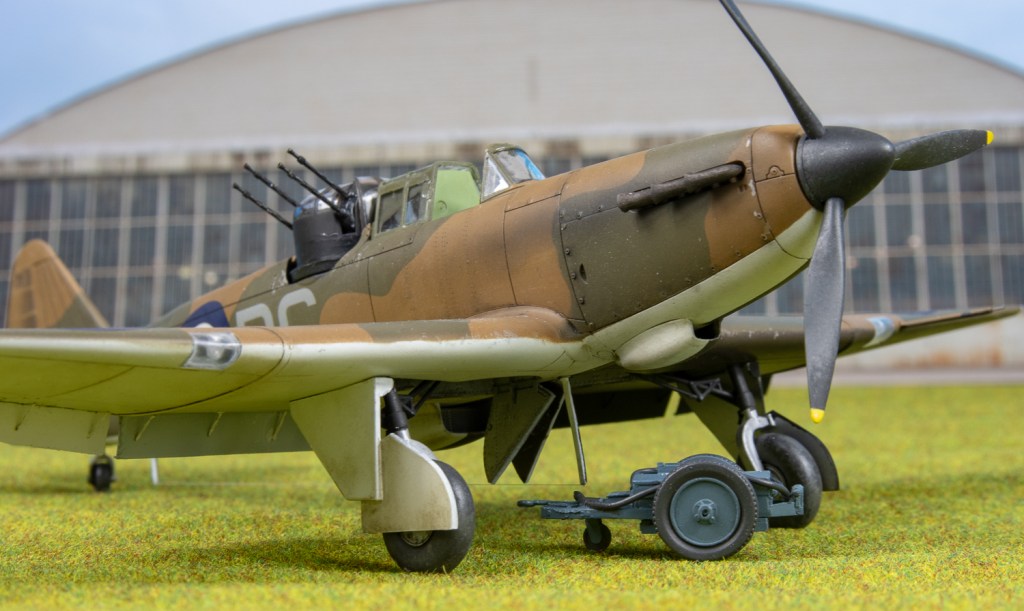
Construction was fairly painless, fit being almost excellent.  I needed to trim the cockpit floor on one side as the wing assembly did not not quite close up snugly underneath the fuselage on one side.  The cowling also needed a bit of clamping, as again on one side I had a bit of a gap underneath the oil tank cover.  I can only surmise I had the floor slightly out of alignment.  The eduard set added the colour printed instrument panel and some side console detail plus the seat straps for pilot and gunner.  I have read some on line reviews bemoaning the simplified cockpit, to me, what you get in the box is fine, especially when dressed with the eduard PE.  The wheel wells also get a helping of PE around their walls which brings them to life.  The model built up quickly, the smallest amount of filler being needed around the tailplanes and the rear underside join of the power wings to the fuselage.  The PE flaps were folded up without difficulty (surprisingly for me) and offered up to the previously cut out kit flaps.  Some shimming was needed to spread the open areas of the rear wing to ensure the rear wall of the brass flap bay sat at the same level as the underside of the wing.  I should have taken my time a bit more here ensuring a better fit, and cutting out the slots for the flap actuators which I completely missed.
The machine gun barrels were cut off and the breeches drilled to take the sublime master Models barrels. I fit these wherever possible as they really add to the look of the model.  It would be icing on the cake if they came pre blackened!  The kit pitot tube was also replaced with Albion Alloys tubing.  Although there is nothing wrong with the kit wheels, being moulded as they are, weighted and with separate hubs, I had a set of Barracuda wheels in the box, so these were duly added.  Waste not, want not. The landing lights were not the best fit, so were fitted at this time, so they could be faired in prior to painting.

The turret popped into place without all the fuss, some other online and magazine builds report, but I was surprised to have trouble pushing the clear dome down onto the base, thinned white glue being required to fill the resultant small gap.

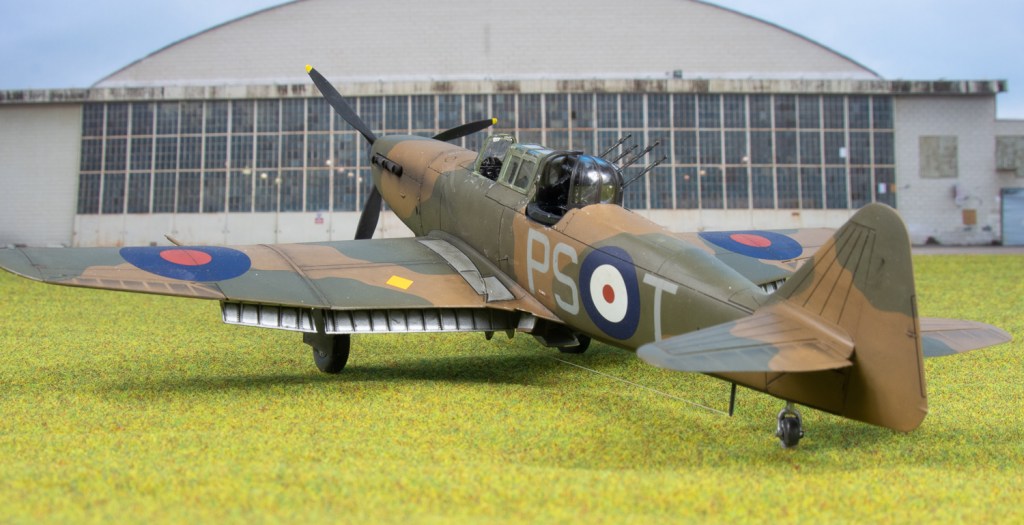
Painting was made easy using a set of camouflage masks from Mal Mayfield.  From the decal sheet, I had decided on an early war scheme with the black and white undersides and A type fuselage roundel to push home the early war use of this aircraft.  The decal manufacturer was new to me, I ended up using the kit roundels and codes and Ropos’  roundels looked a little bright, whilst the codes looked too pale.  The “T” was sourced from an Extradecal Medium Sea Grey RAF Codes sheet, as  With the multitude of decal sheets on the market, these generic sheets are not as probably as handy as they once were, but to me, they are still a must have in my decal bank for this very reason.  The only decals I used from were the serials and these performed fine, being quite thin.  No stencilling was applied to the underside as they would have all been overpainted when the undersides were done. AK panel line wash for brown/green aircraft was used as  a wash on the top surfaces.  Chipping was added using vallejo silver, whilst highly thinned tamely black was used for the exhaust stains.  Emboldened by watching Plasmo use his dremel to  surgically cut parts out, I set forth with my dremel to open up the kit exhausts.  30 seconds later, I was ordering quickboost  exhausts from BNA Modelworld. Rather than displaying the same skill as Plasmo, my exhausts looked like Dexter, the serial killer had gone to work on them.  You will need to cut off one of the locating tabs  in order to fit them into the airfoil slots.  Whilst you are ordering your exhausts, also order a set of landing gear covers, as the kit ones are overly thick and simplified, and do not portray the real ones very well.

Final assembly involved adding the undercarriage which fitted snugly into their respective sockets.  I was expecting a fight with the flaps and their tiny actuators, but was pleasantly surprised how easy they were to place.  In reality the actuators should fir in their respective slots, but I failed to cut out the ones on the bottom wing and clogged the flap ones with a thick coat of future I had applied to also act as a glue.  Therefore my actuators are a butt fit to wing and flap which is not correct for the real machine.
An  aerial line from EZ line  and a bit of sprue and punched plastic disc to represent the extended gunners footstep bought my first build for 2019 to a close. 

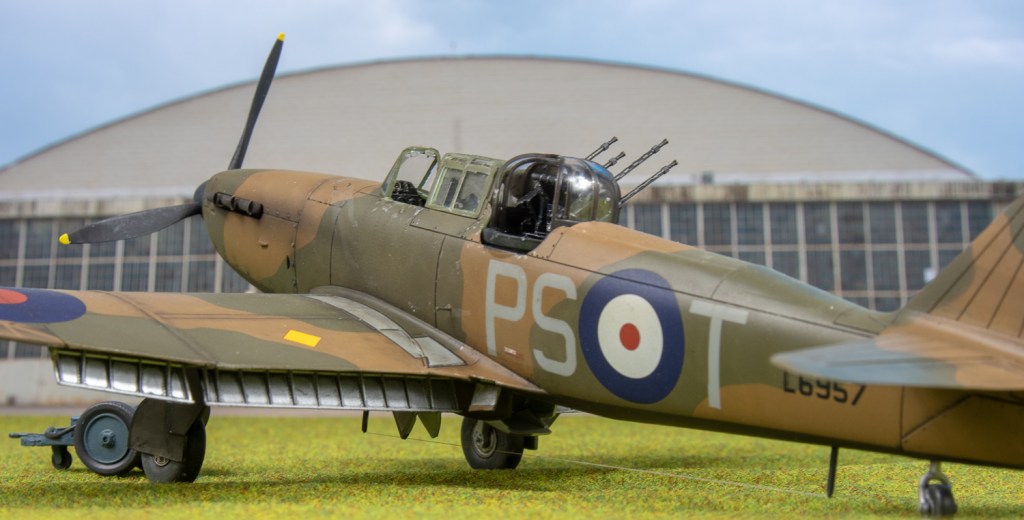
Boulton Paul Defiant Mk.1 264 SQN Royal Air Force. Biggin Hill. February 1940

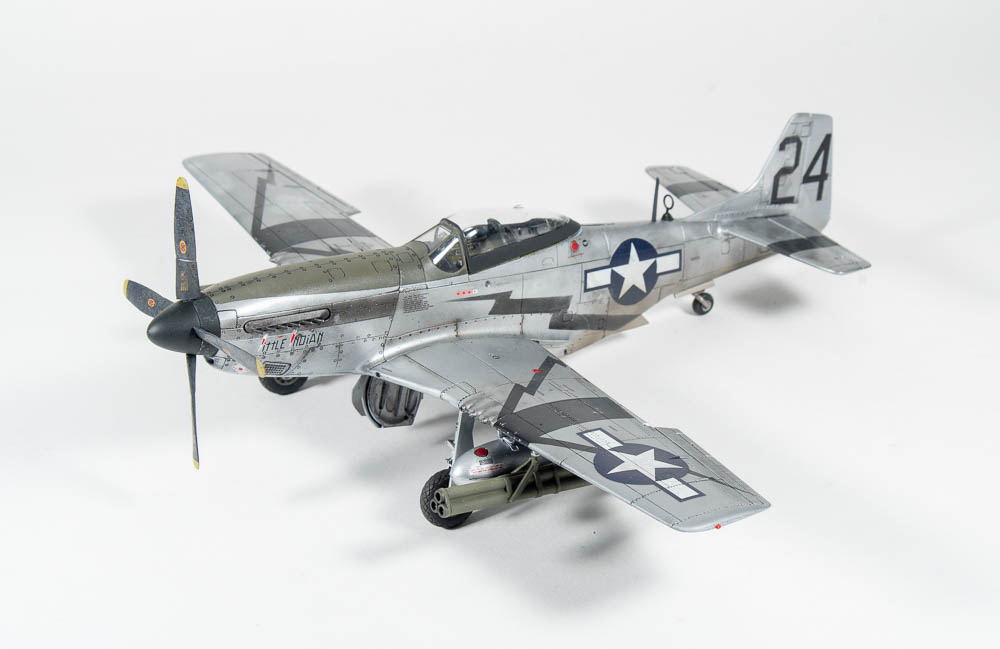
Airfix 1/48 North American P-51D Mustang

Year Purchased: 2018
Date Completed:  April 2018
Aftermarket Used: Eduard Brassin shrouded exhausts
Paint: Floquil Bright silver, Xtracolour Olive Drab, various vallejo and tamiya colours used for detail painting

Construction Notes: Im loving the new Airfix kits.  This is the second Ive built after the walrus.  From the excellent box art to the many options included in each kit, you can tell they are designed with the modeller in mind.
Airfix’s mustang was a very enjoyable build, with excellent engineering, detail and fit.  That there will be other boxings is evident from the options in the kit for different windscreens, canopies and tail units.  A Commonwealth boxing has already been announced.  As good as the kit is, it is let down by a few parts, mainly the cross hatched wheels, where the tread just does not extend to the centre of the tyres.  You will either have to source replacements, or scribe the tread in ( badly) as I did.  Brassin make resin replacements, but inexplicably would have you drill out the hubs rather than use the same mounting as the kit uses.  I would also recommend the Brassin M-10s as the kit ones are a little clunky.

 The propeller has some sink marks on the blade tips, and the gun inserts aren’t the best fit.  Other than these minor quibbles, the kit is a joy. 
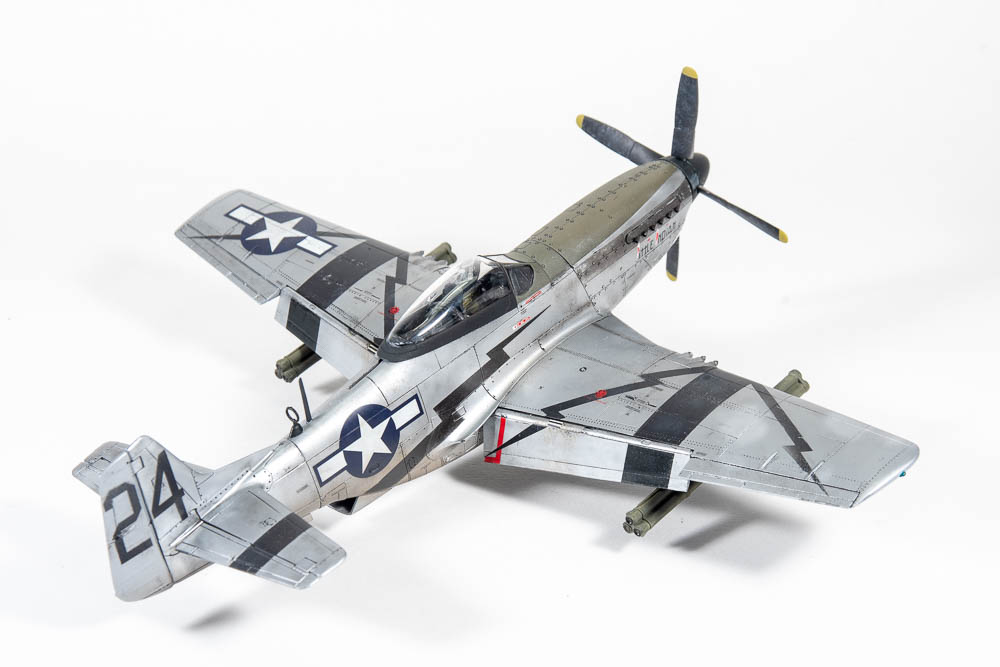
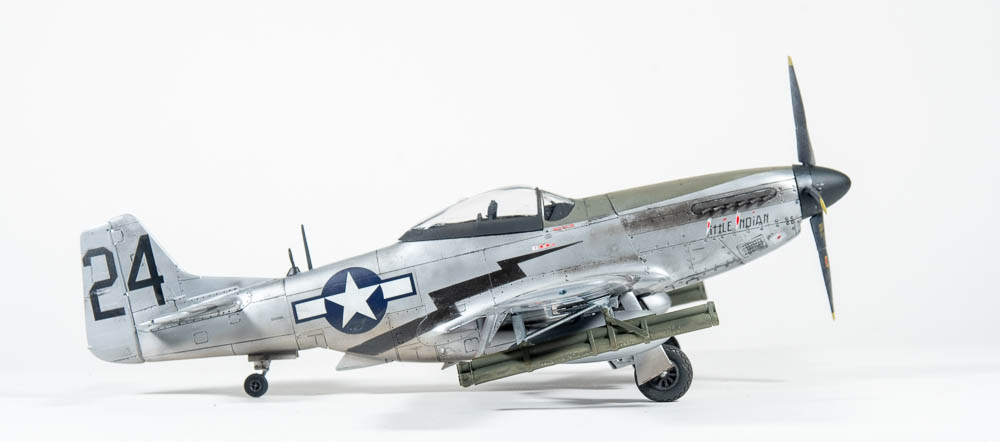
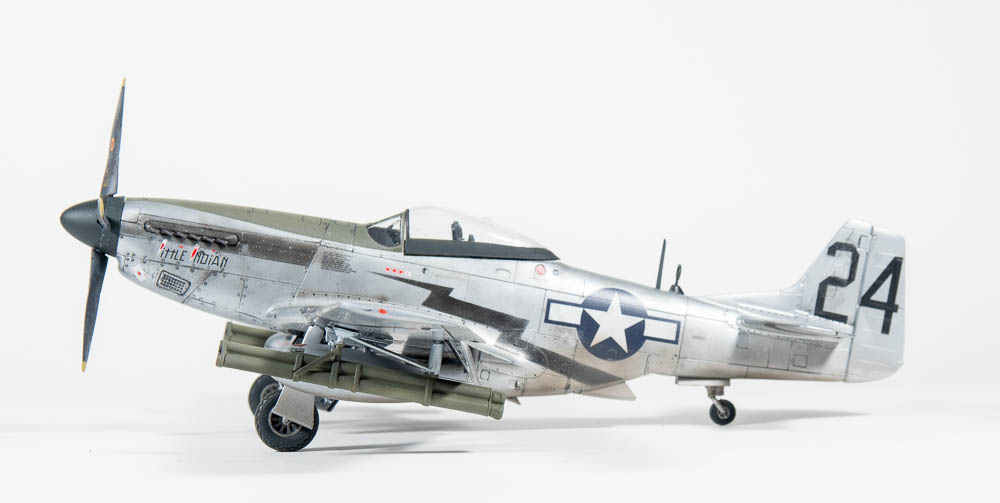
There is some rivet detail on the wings which you will need to fill should you so desire, but the wheel wells are moulded correctly with the straight rear spar. The kit cockpit looks busy enough assembled OOB and even comes with decals for placards.  When choosing a scheme, I could not go past the striking 2ACG machine with its Black Lightning bolts on wings and fuselage, and it meant I could use those M-10 airborne bazooka tubes.
Rather than use the kit decals for the arrows I had a friend cut some masks for me.  Other than the black arrows, the kit decals were used and performed flawlessly.

I used Floquil Bright silver for the finish, with grey and black preshading underneath to try and get a bit of tonal variety. This will bear further experimentation as in certain light, you can see a bit of variation in the silver finish.
 I decided on impulse to build the kit for an upcoming themed competition, so feel I rushed it a little bit. Everything was going fine until I applied one of the Mig Panel line washes over what I thought would be an  impervious base of Future but to my horror, as well as removing the excess wash with an old T shirt, I also removed paint in some areas.  This then began the downward spiral of touchups which never match.  Anyway, its done, but Im annoyed that this is another finish that was going nicely until this stuff up sent it down a different path.  I can only surmise my coat of future was not thick enough.  Another enjoyable build, although these days I would build the Eduard kit.

U.S.A.A.C P-51D Mustang 2nd Air Commando Group India 1945

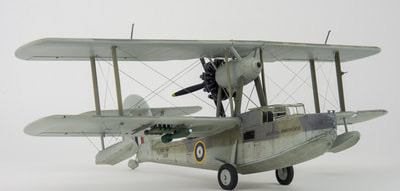
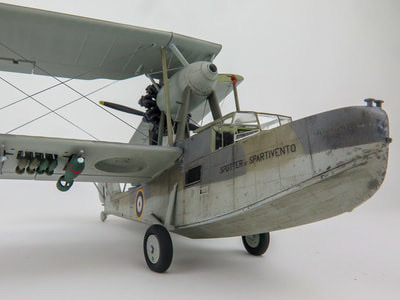
Airfix 1/48 Supermarine Walrus Mk1

  • Year Purchased: 2017
  • Date completed     March 2018
  • Aftermarket used:  Eduard mask set
  • ​Paint: Xtracolour Dark sea grey, Dark slate grey,  FAA sky grey

I had held off on getting Airfix’s new Walrus due to me having HPHs big resin 32 scale kit to build, however upon seeing a mate’s I just had to buy it. Not only that, I had to build it straight away!
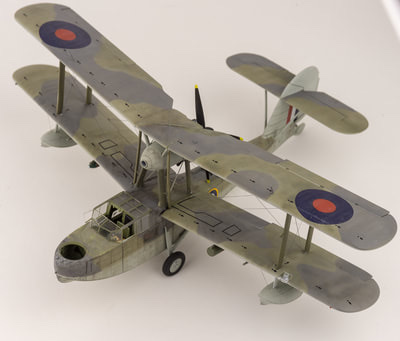
Airfix are really kicking goals with their new 48 scale kits, and this is no exception, with a fully riveted hull,  stressed skin effect on the roof, a nice interior, and  several options that allow you to model the wings folded or spread, canopies open or closed and wheels up or down 
The model assembled well with good fit. I found it a thoroughly enjoyable build, well, until I got to the rigging!

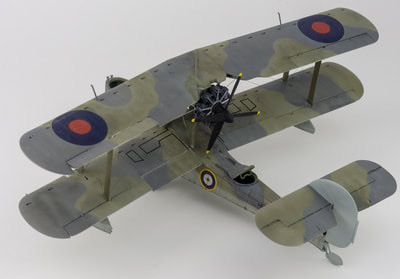
Painting was done with xtracolours and all was good until I got to the rigging.  A combination of super glue that had gone off and would not instantly set and not really knowing what I was doing sort of bought the build undone.  Still, I got their in the end, better equipped to handle that wingnut wings kit I want to tackle this year.
Construction Notes
Although there are plenty of injection moulding pins present on the interior surfaces, you cant see any, apart from two in the extreme nose once the fuselage is together.
I elected to glue the roof to one side to better handle the joint as I could then attack it from both sides. Airfix have moulded some lovely surface detail into this kit so you want to reduce any need for sanding as much as possible
The centre “fan looking thing” needs all traces of the moulding seam sanded off before glueing between the two engine nacelle halves
I found the open cockpit a little too wide for the fuselage, although that could have been a fault on my part.
Back to my kit.  I found when on its wheels the folded wing float dragged on the ground due to me not securely glueing the wing spar.  At the last minute I decided to cut the spar off and have both wings extended, This is the wing with the aileron deflected up.  I could not debond the glue join unfortunately, so I will just have to live with it.
An enjoyable kit, although the rigging turned it into a bit of a grind in the end.

Supermarine Walrus Mk1 700 N.A.S Royal Navy. H.M.S Sheffield

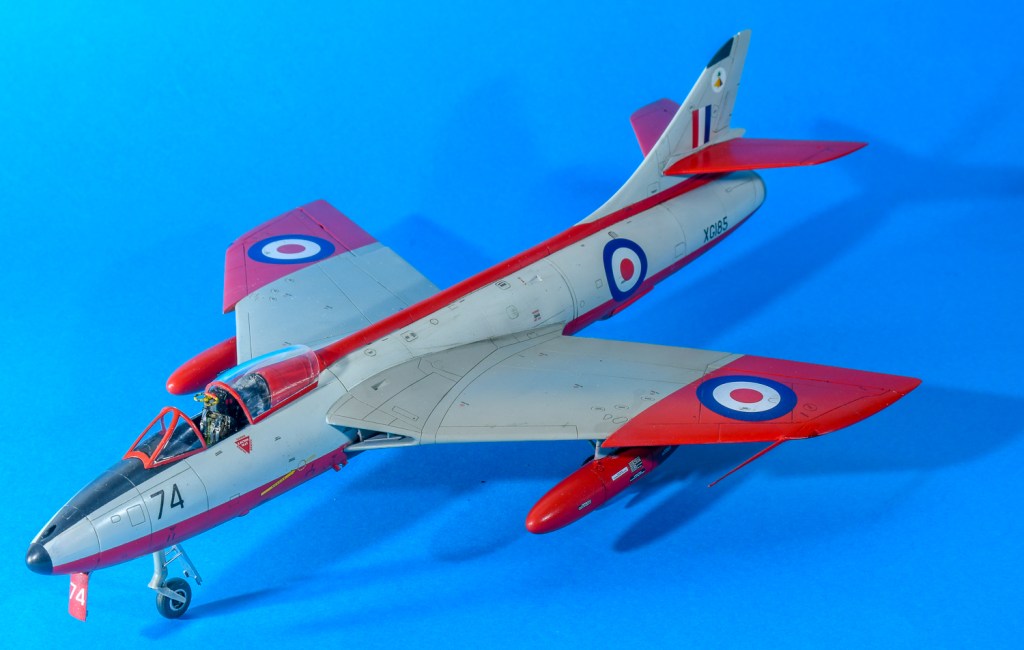
Airfix 1/48 Hawker Hunter F6

  • Built: 2019
  • Aftermarket Used: Eduard P.E Flap set . Eduard dedicated cockpit set
  • Decals: Xtradecal

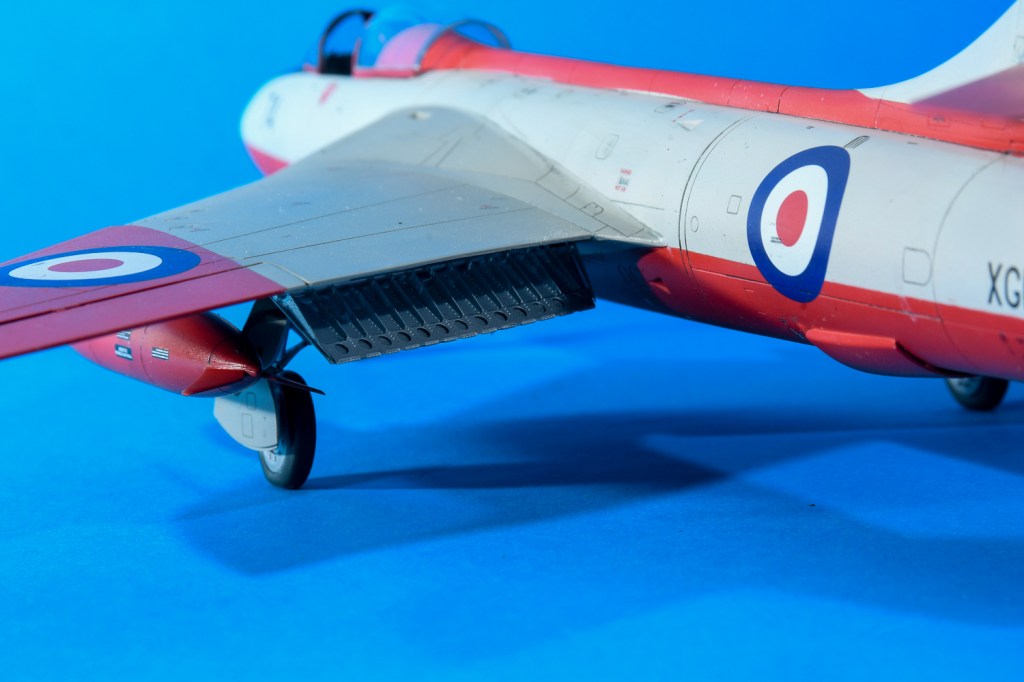
Ive previously mentioned I’m loving Airfix’s new releases. The Hunter was a monty for them to put out in 48 scale, but I feel they have rushed this kit a little. It is decidedly lacking the detail of some of their other releases such as the Walrus and Blenheim. Lacking in both cockpit and surface detail, the flap bays are also strangely devoid of detail despite Airfix offering them as separate parts, so the lack of moulded ribs and stringers is mystifying can be displayed down. Airfix have also missed a door actuator off the front nose wheel leg, as only one is provided.

The model builds quickly and easily. I cant remember too many issues. ( for some reason, I failed to write this up after completing the kit, so this is being written up about two years after building the kit) The blue tac I used to hold the canopies to an old paintbrush handle whilst spraying them left a stain that could not be removed, even using Mr Thinner, which normally removes everything else. A reaction to the blu tac is the only thing that comes to mind that would have caused the stain as it would not polish out or wipe off using the afore mentioned Mr Thinner. This forced me to cut apart the closed canopy as the model would be displayed with open canopy.

The hunter had many interesting schemes, airfix though provide options for three simply camouflaged machines, albeit, from two different Air Forces. A more interesting scheme was found on an Xtradecals sheet which had been in the decal bank for some years, looking for an excuse to be used.

Gunze Shine Red stood in for a very passable R.A.F. Signal Red. Gunze was also used for the Light Aircraft Grey with M.R.P Light Arctic Grey which is an off white being used for the white. It looks white out of the bottle, but when compared to the white of the roundels one can definitely see its a very pleasant grey. Its defiantly a masking intensive scheme, but certainly is eye catching.

And thats the Airfix Hunter, a decent, but not outstanding kit. I am perplexed though why Airfix has not followed it up with the F.G.A.9

Hawker Hunter F6