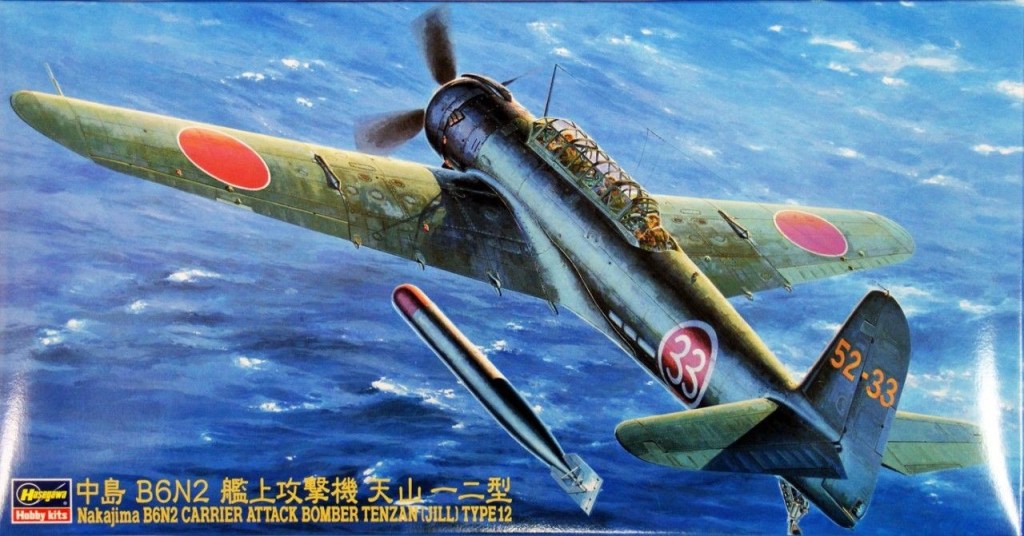
- Purchased; 2023
- Completed: 2025
- Enhancements: OOB
- Decals: Myk-Design
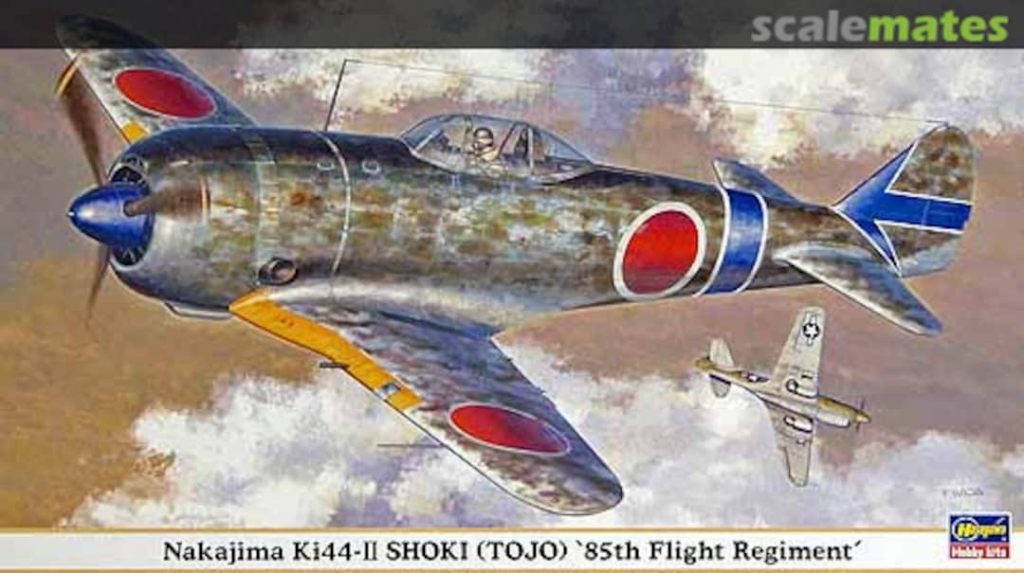
For modellers that first built these kits upon their release, there is something comforting about returning to a Hasegawa kit, many years later. Yes, far better examples of their subjects can be found in other manufacturers ranges these days. However, there is still that wonderful emotive box art by Shigeo Koike. Those nicely moulded grey parts with their sharp, but shallow engraved panel lines the crisp detail, and, for the most part, a fairly uncomplicated build. Of course, there were also the odd fit issue, the not-quite-white decals, sometimes vague instructions, and not-quite-crystal-clear transparencies. The builds were usually very enjoyable, albeit the models could be a bit bland, Hasegawa not generally offering options for open hatches or separate control surfaces to give your model a bit of individuality.
Construction Notes
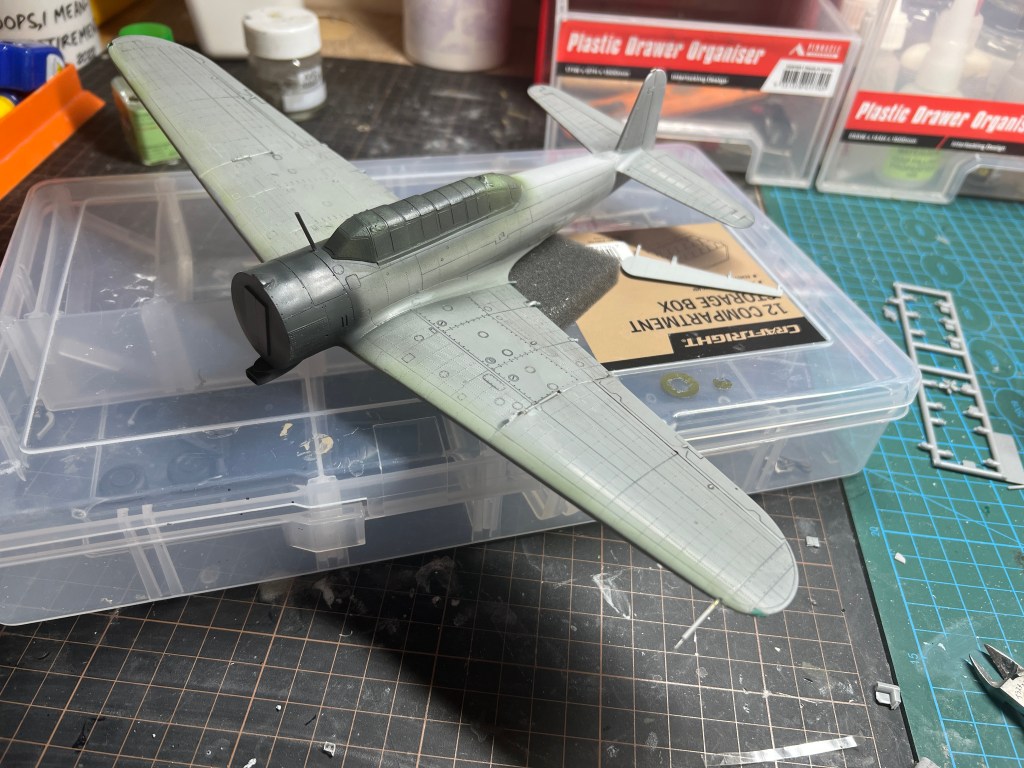
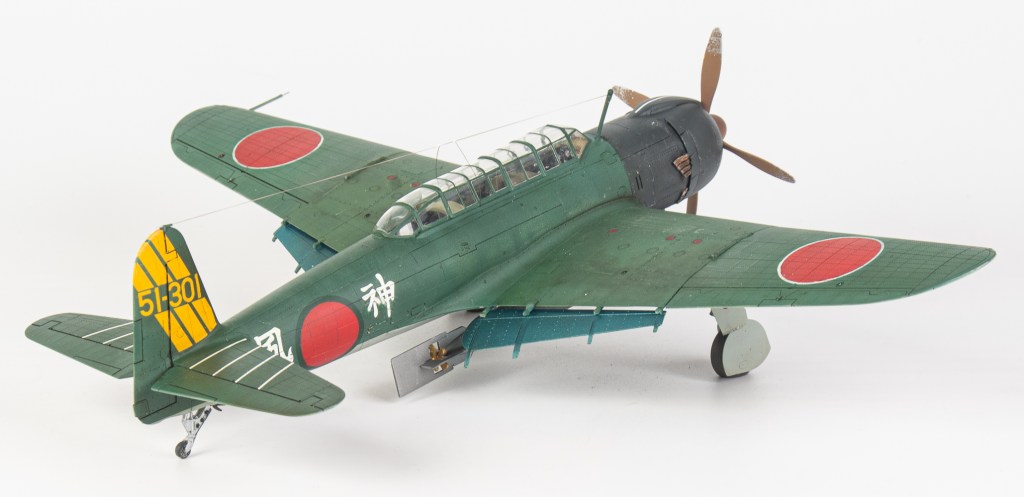
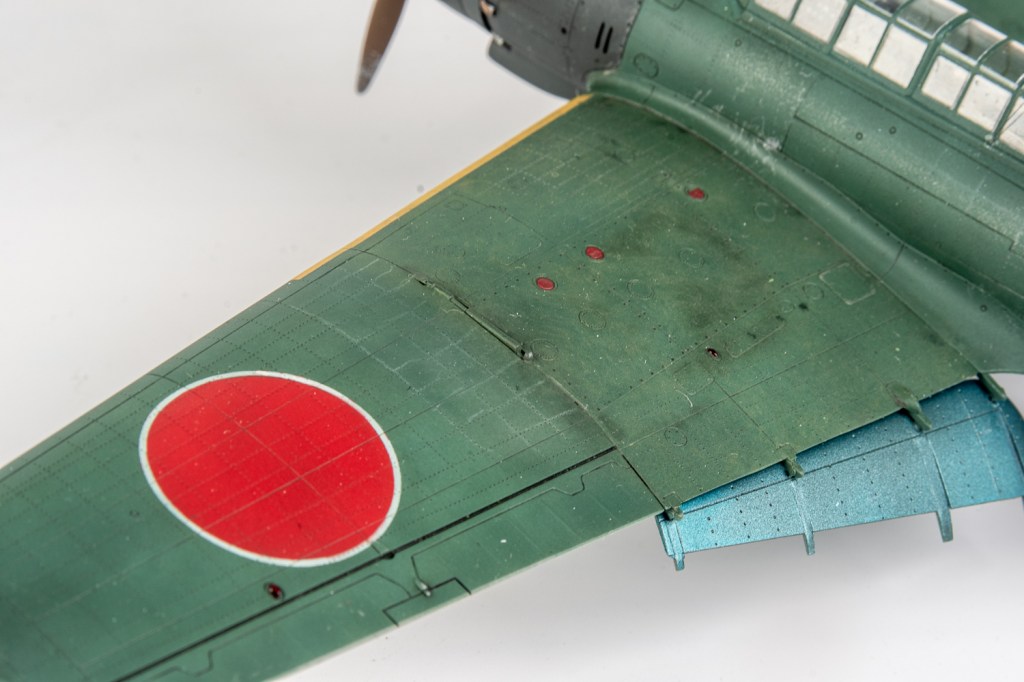
And so we come to Hasegawa’s Tenzan. It is a fitting end to my year’s builds. This one was going to be purely built from the box. It serves as a pause from my other sometimes long and protracted builds. The complication (there’s always a complication!) added by me was the decision to rivet the surfaces to add a bit of “busyness” to the airframe. To be fair, this wasn’t that much of a complication. It involves finding suitable drawings that show the rivet details. In this case, the drawings come from a Kagero Top Drawings book. The next steps are scaling the drawing up and transcribing the lines onto the model. A riveting tool is then used to push the rivets into the plastic. Search YouTube for “The Model Guy” who has a video of how to do it step by step. I couldn’t post the video here for some reason. After the riveting was completed, a black wash was run into all the rivets and panel lines to assess them. there were a few wonky lines! And as a friend mentioned there should also be river lines alongside all the panel lines as well.
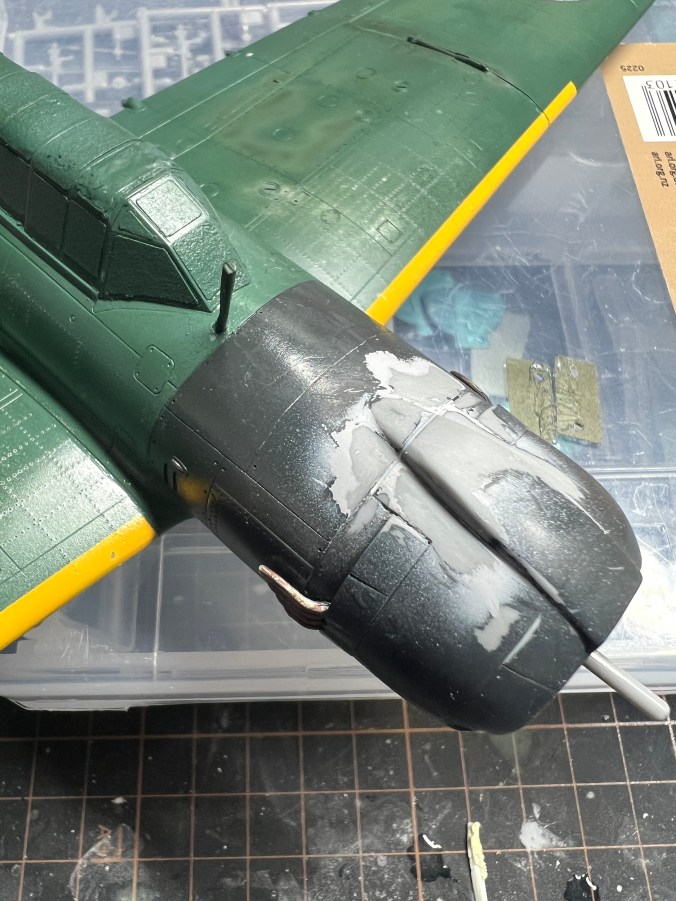
The actual build proceeded with few real issues. There was a gap when joining the front cowling to the rear cowling, despite all the parts being lined up correctly. Talking to other modellers who have built the kit, it’s a known issue. Plastic card took care of this. after the problem was discovered far too late in the build.
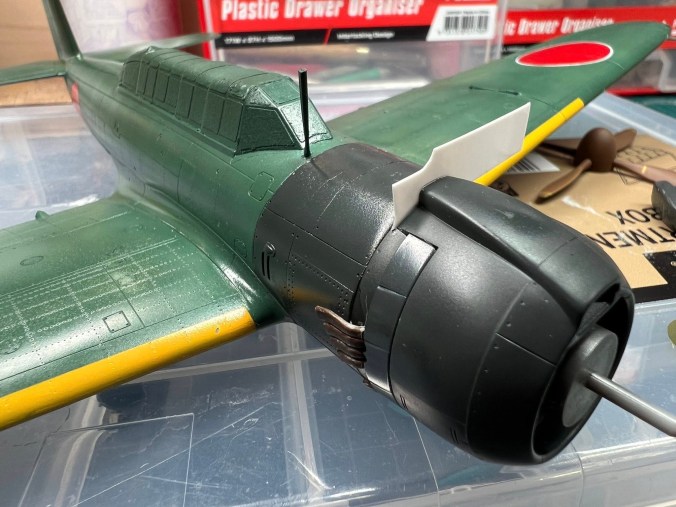
I would suggest adding the cockpit sidewalls to their respective fuselage halves rather than the floor as the instructions illustrate. I found building the kit as per instructions, my sidewalls sat a bit proud from the cockpit sills. The kit includes the option of folded or extended wings. Poly caps hold the wings in either position. This allows the modeller to change the attitude of the kit, even after completion. I thought I was smarter than Hasegawa and left their wing ribs out choosing to reinforce the wings with plastic strip. Turns out I’m not smarter than Hasegawa though, as the floppy wingtips prove!
Painting and Decalling
MRP Super silver was first laid down on the centre section of the wings and fuselage. The next coat to follow was a lightened version of Tamiya IJN followed by another application, this time straight from the jar. All paints were thinned with Mr Hobby thinner.
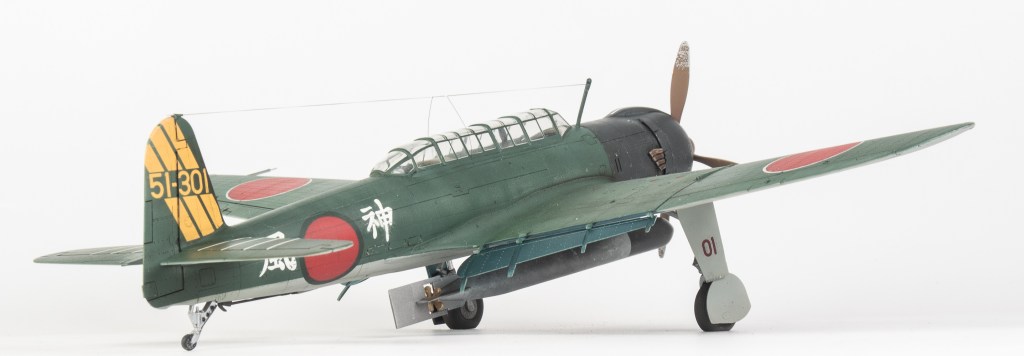
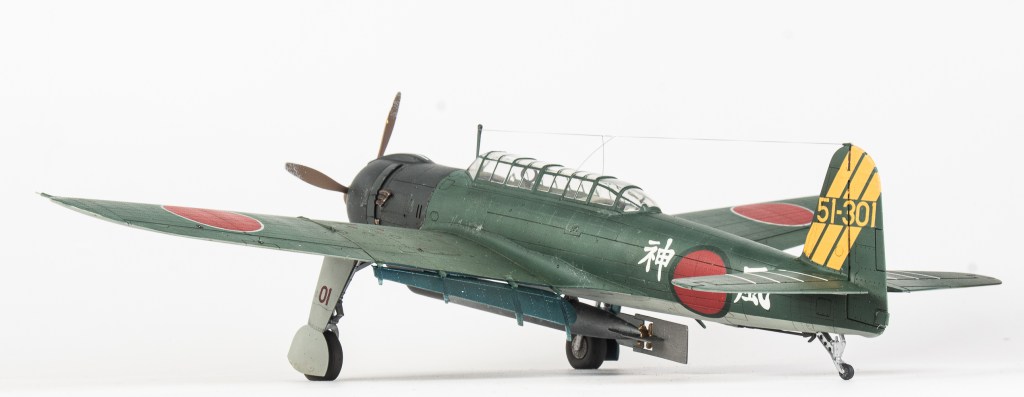
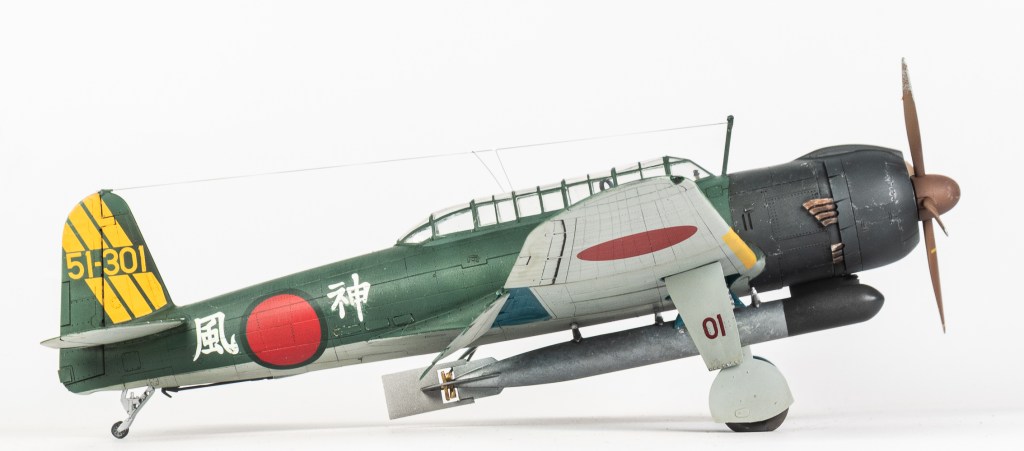
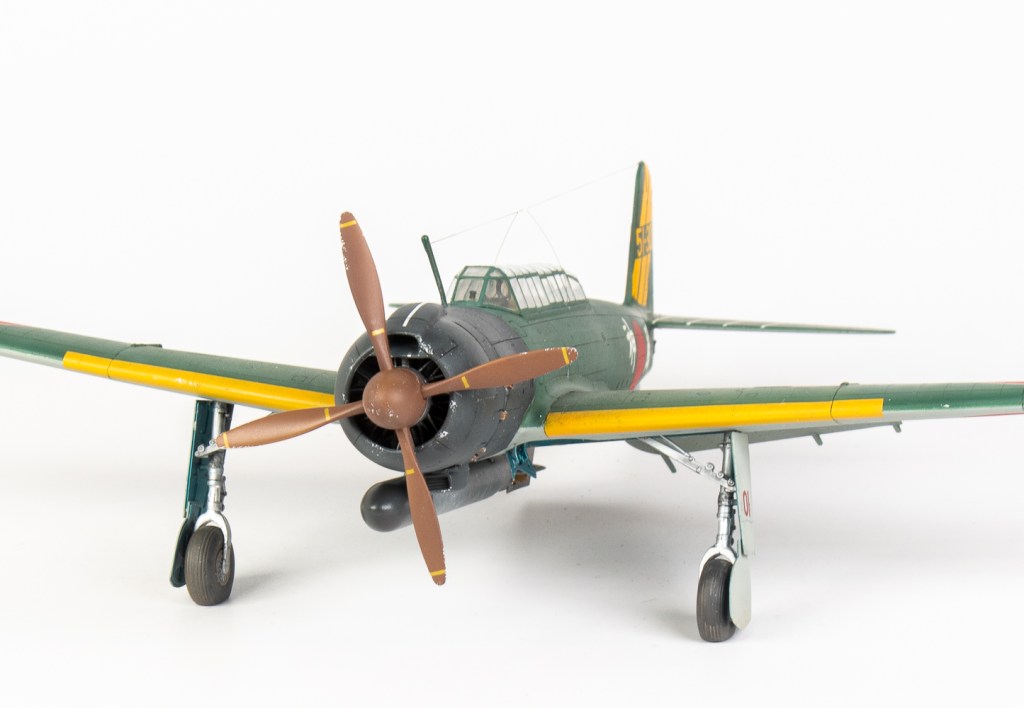
Undersides were SMS Storm Grey, which is a grey with a slight tinge of green in it. I think it does a reasonable job of standing in for IJN Grey, of which I had none. Once the colours were set, a small worn piece of 800 grit wet and dry was used. This gently abraded the inner wings, just enough to allow the rivets to show through. While researching the unit’s history, I found out they were ferried to Truk Island and only flew a couple of missions after arriving before being wiped out. Thus my weathering on this aircraft is only slight. There is just some staining and touchups on the wings. Additionally, there is chipping around the cowling. None of the photos examined showed any sort of exhaust staining. Japanese contemporary photos are pretty much universally of poor quality though. Rather Ironic, really ! Speaking of the cowling, this was finished with SMS Blue Black, and the propeller with Tamiya Red Brown. Gunze Metallic Blue was used in the wheel and flap wells.
Decals were a brand called Myk-Design that I picked up whilst roaming hobby shops in Japan. The instructions are all in Japanese, but they do have a website with English instructions on how to apply. It was here that I discovered they had peelable film, like Eduard and HGW, Unlike Eduard though, the film on these is designed to be peeled off. They were applied over Mr Setter and left for 12 hours as per the instructions. The film peeled off very easily, , usually coming away in one big sheet. An oil wash mix using Abterlung dark green and black oil paint was applied to the upper surfaces with dark brown used on the undersides . The excess being wiped off before the final matt coat was applied.
Final Assembly
Somewhere along the way, the kit aerial mast was misplaced so a replacement was made from brass rod. It was filed to a rough aerofoil section before adding it to the model. The pitot tube was also fabricated from brass rod.. Whilst we are talking about fumbles, I also managed to glue the retraction struts to the wrong gear legs, and then snapped them off trying to remove them. In addition the locating holes for the gear doors were mistakenly filled as I thought they were ejector pin holes. I probably should have just built this as an in -flight model! Did I mention the gear door that I also managed to snap in half?
The included torpedo is one of the weaker parts of the kit, and a resin replacement was almost purchased before deciding it was going to be underneath, so not really visible. The kit part was therefore used. All these parts plug in due to Hasegawa’s copious use of poly caps as locating aids throughout the kit. In fact I don’t think Ive seen another aircraft kit that uses so many of the things, even Tamiya kits!
The antenna wire was EZ Line. My enthusiasm for this product though has started to wane. Its just too easy to introduce twists into the elastic, unless you reeeeeeaaaaaly stretch it out, which just puts undue stress on everything. Although in this case I had also glued a small length of micro tube to the top of the tail fin, The EZ line was just run through this and then glued in place
Conclusion
In the end, quite an enjoyable painfree build. Yes there are some compromises in detailing and paintwork, but I long ago reconciled myself to the fact that not every model built will be a showstopper. Its a compromise that needs to be made if you want your end game to be building as many models from your stash as you can, before you are forced to give up the hobby through age or medical issues.
To close, the Jill is quite a pretty aeroplane. There will be more Japanese builds in my future.
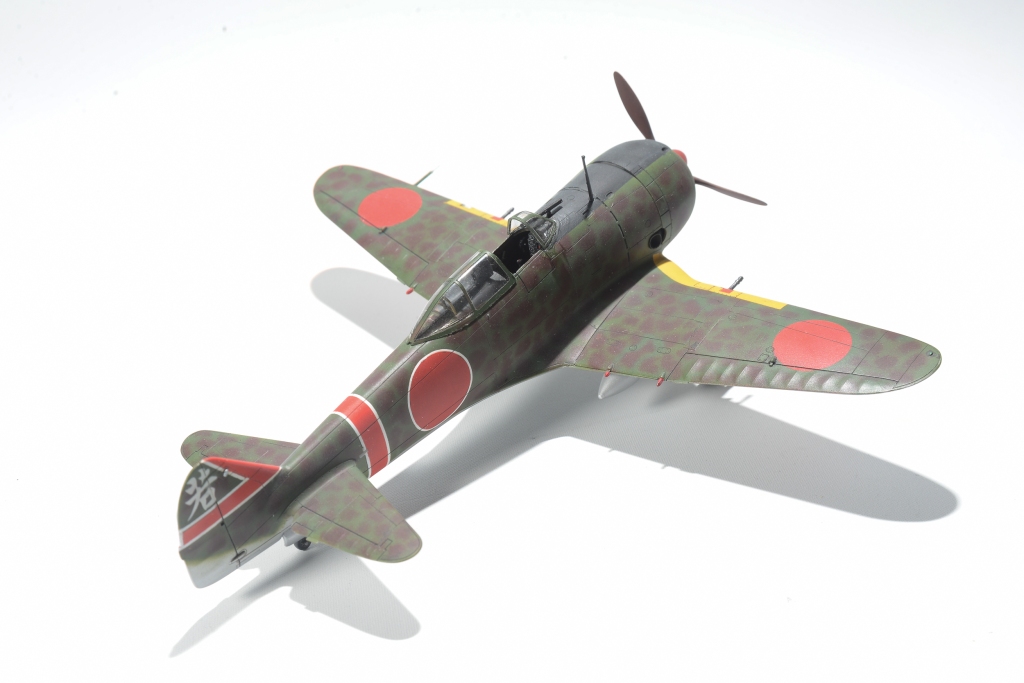
Nakajima B6N2 Tenzan. 251st Attack SQN. 551st Naval Flying Group. Imperial Japanese Navy. Chuuk Lagoon 1944











 Bruce’s-Scale-Models
Leave a comment