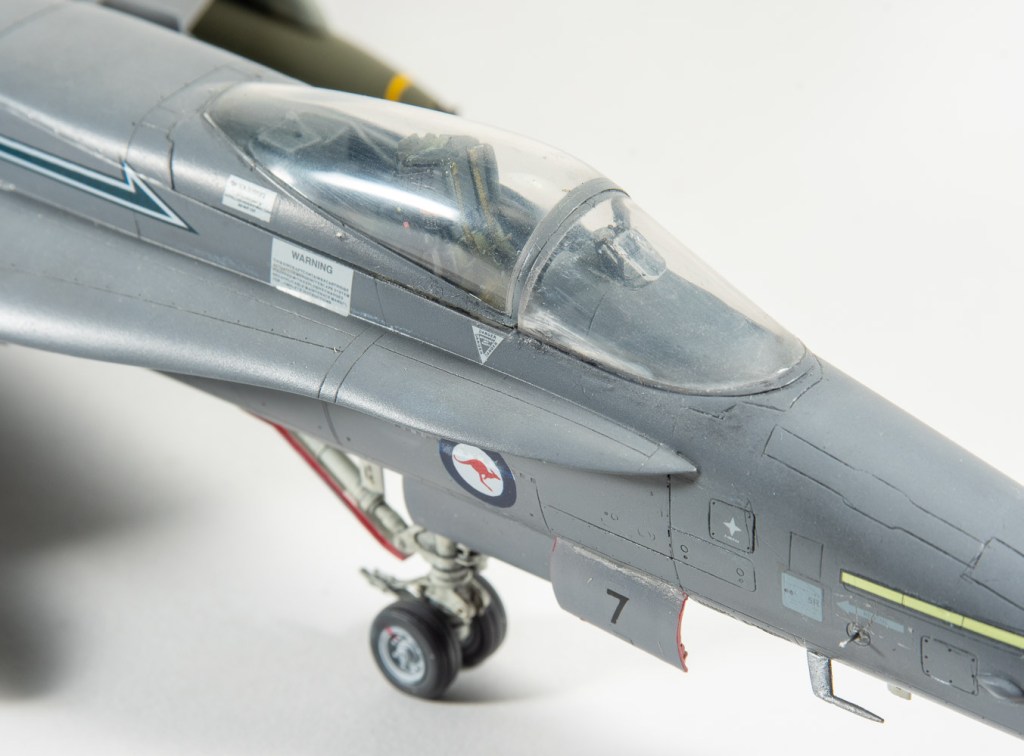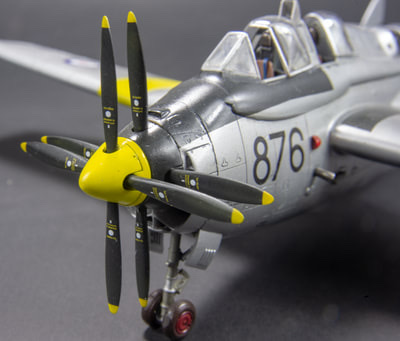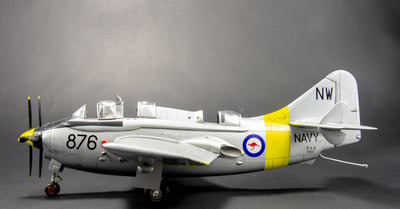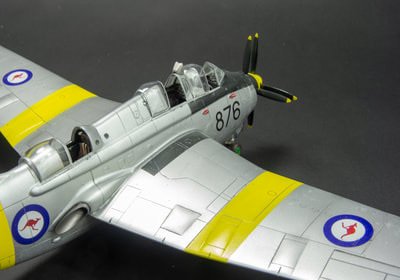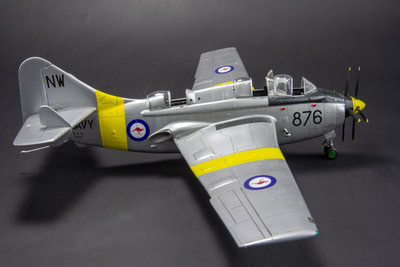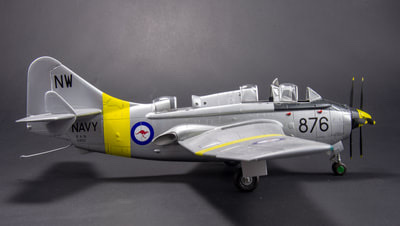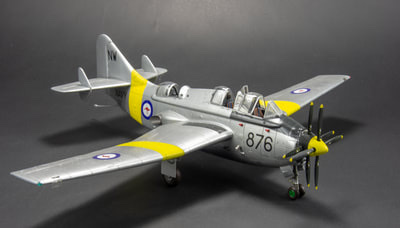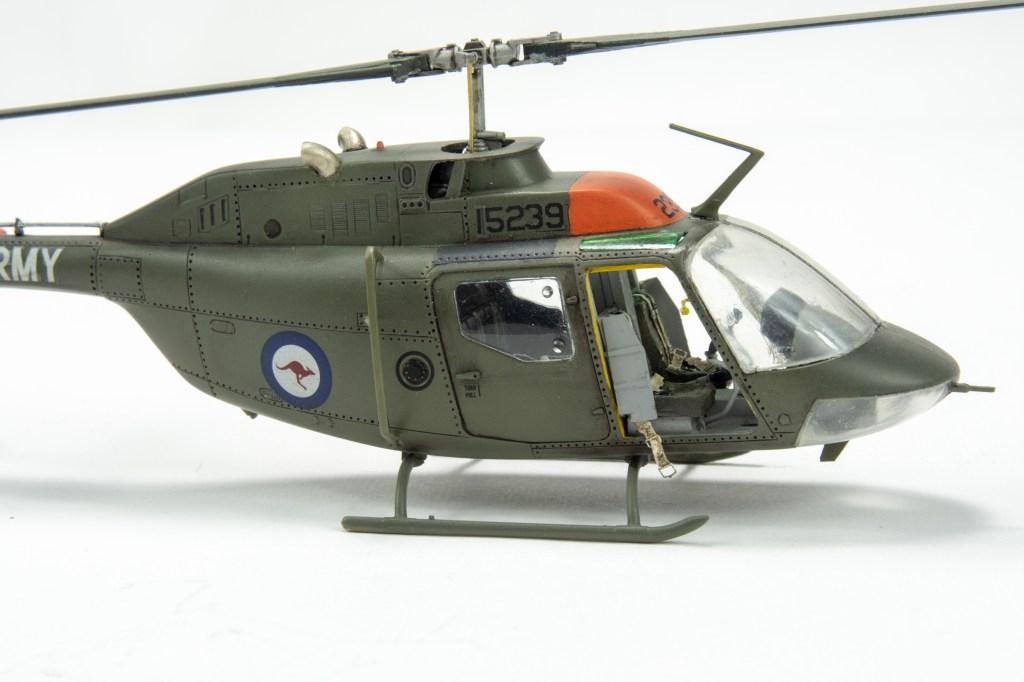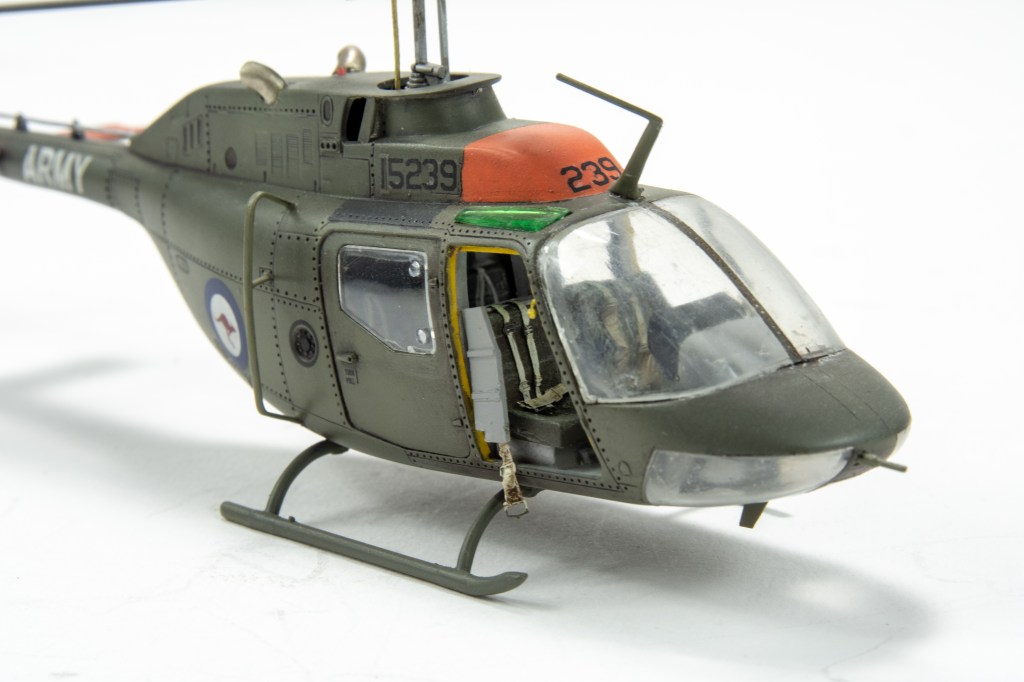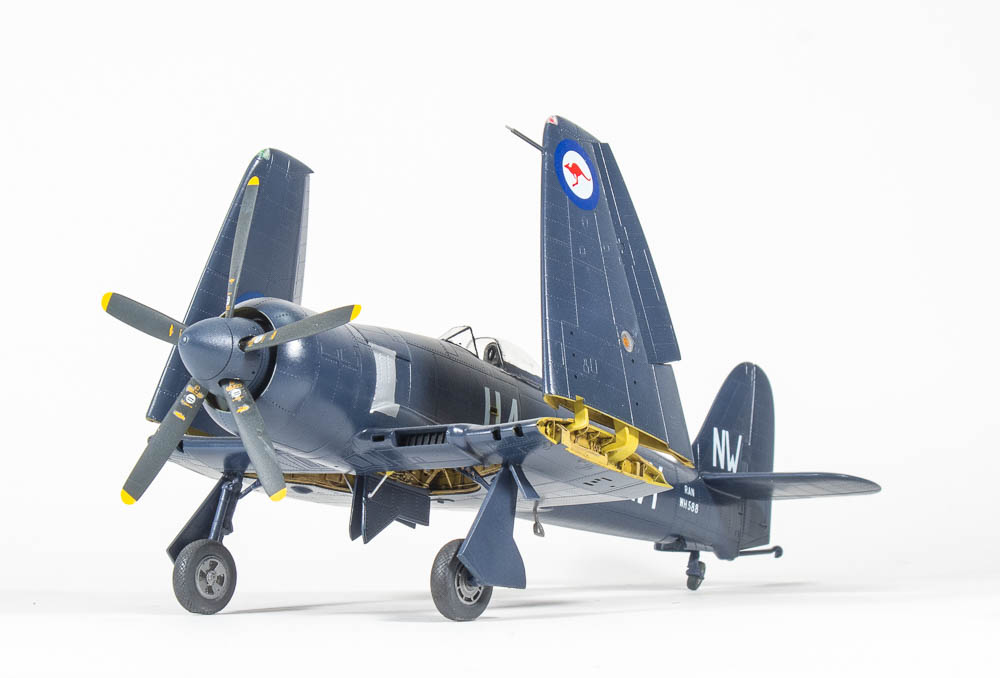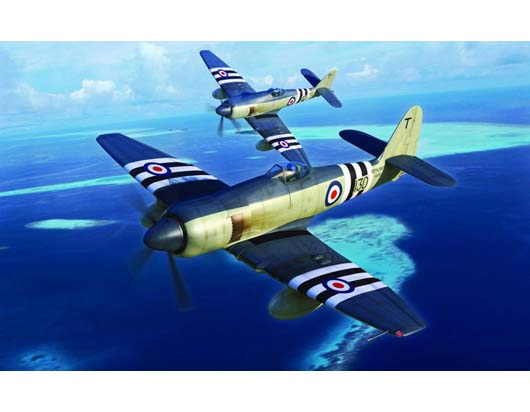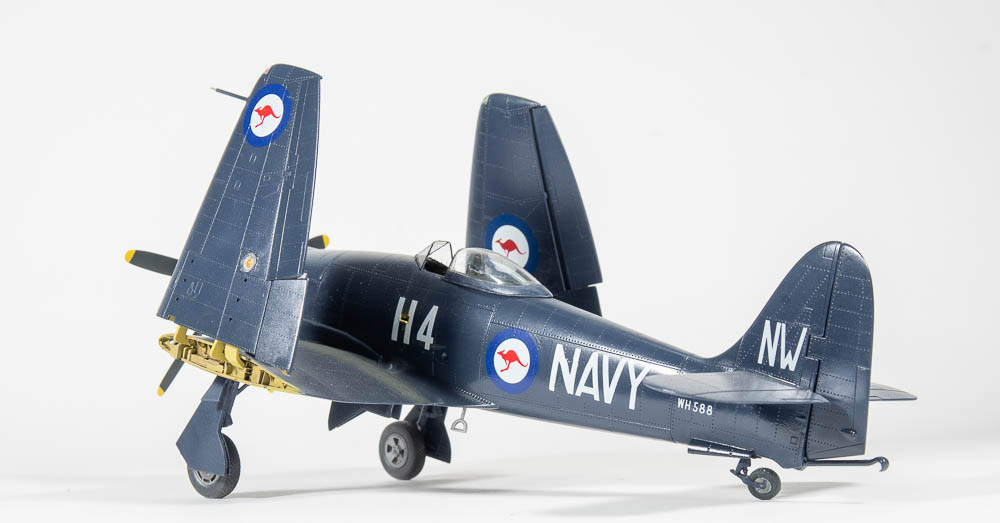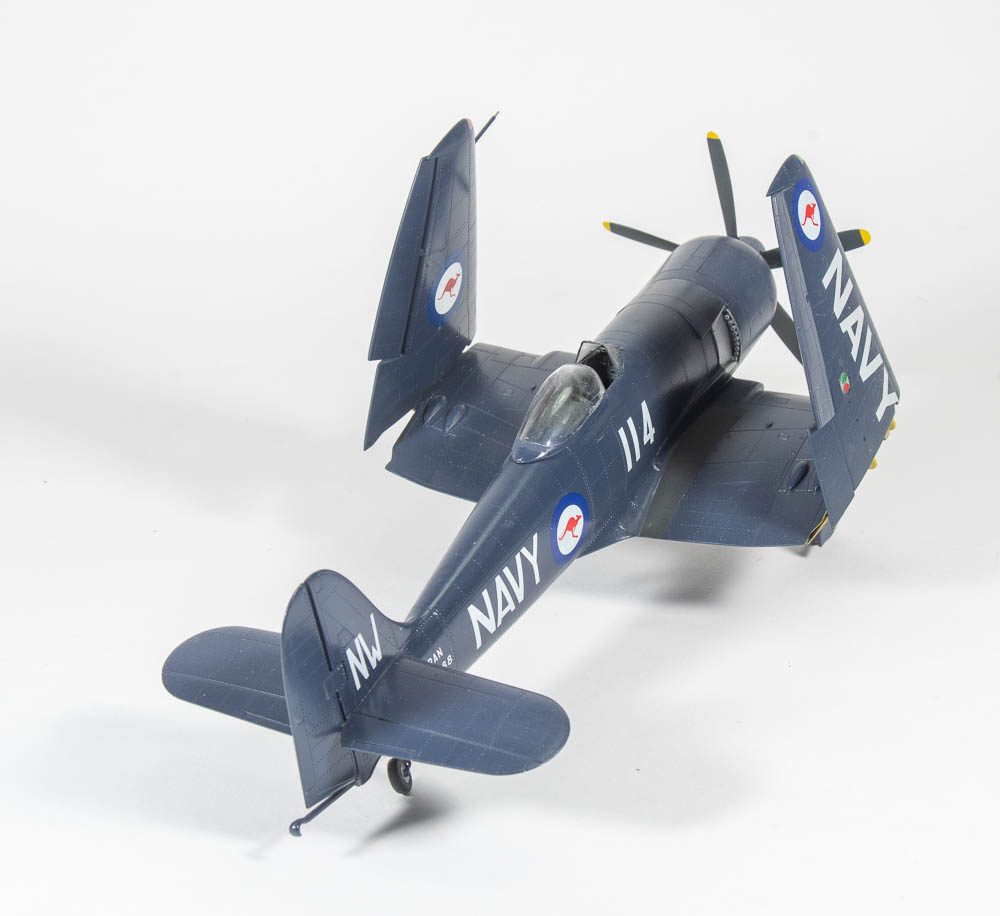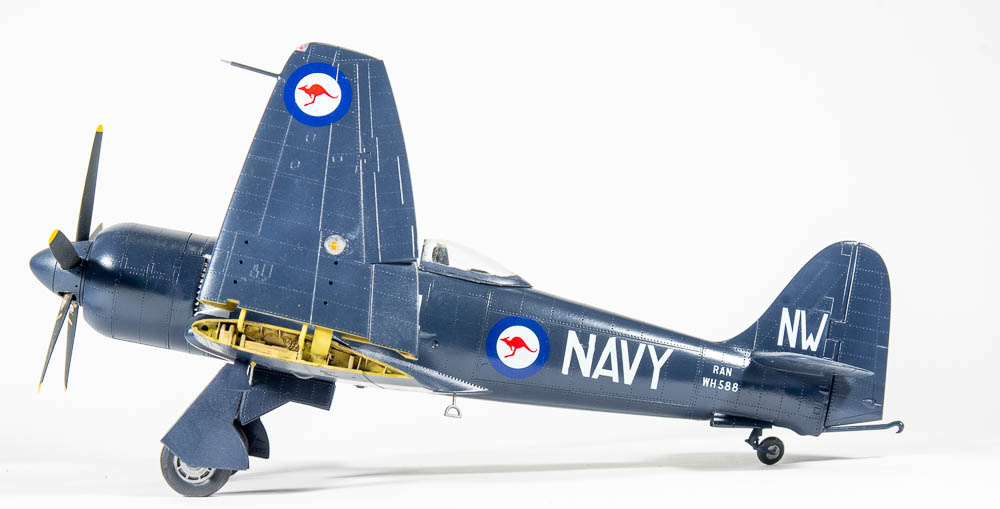
Classic Airframes 1/48 Fairey Gannet T2

  • Built 2012
  • Aftermarket Used: Nil
  • Decals: Combination of kit and spare to make specific airframe


Build Notes:
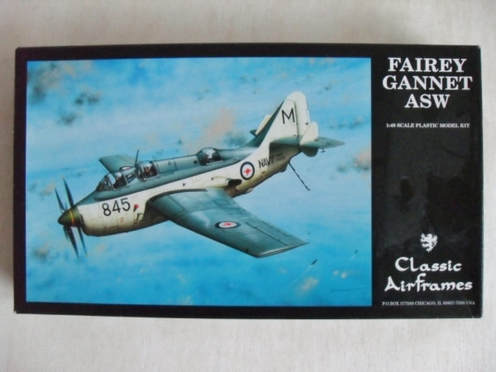
This was the second Classic Airframes Gannet that I built.  I wanted to do a Training Machine as the colour scheme appealed to me with those bright yellow training bands.  As I have noted in my previous build, I didn’t find this one of C.A’s better kits, although I love them for doing it.
OOB the model can only be built into the ASW version, luckily I still had a dynavector vac form kit lying around, which you really need anyway to build the CA kit if you want to open the canopies.  The beauty of the Dynavector kit is it includes the parts to make the training version.  These comprise the white metal periscope for the student and the extended cable bulge.  These parts can be easily incorporated into the injection moulded kit. As I lacked good reference photos for the students cockpit, I just mirrored the front cockpit with a spare control stick from the spares box.  The instrument panel was the white metal item from the Dynavector kit.  The assembled model was painted with xtracolour silver, the bands were xtracolour training yellow from memory

Fairey Gannet T2 725 SQN Royal Australian Navy Nowra 1960

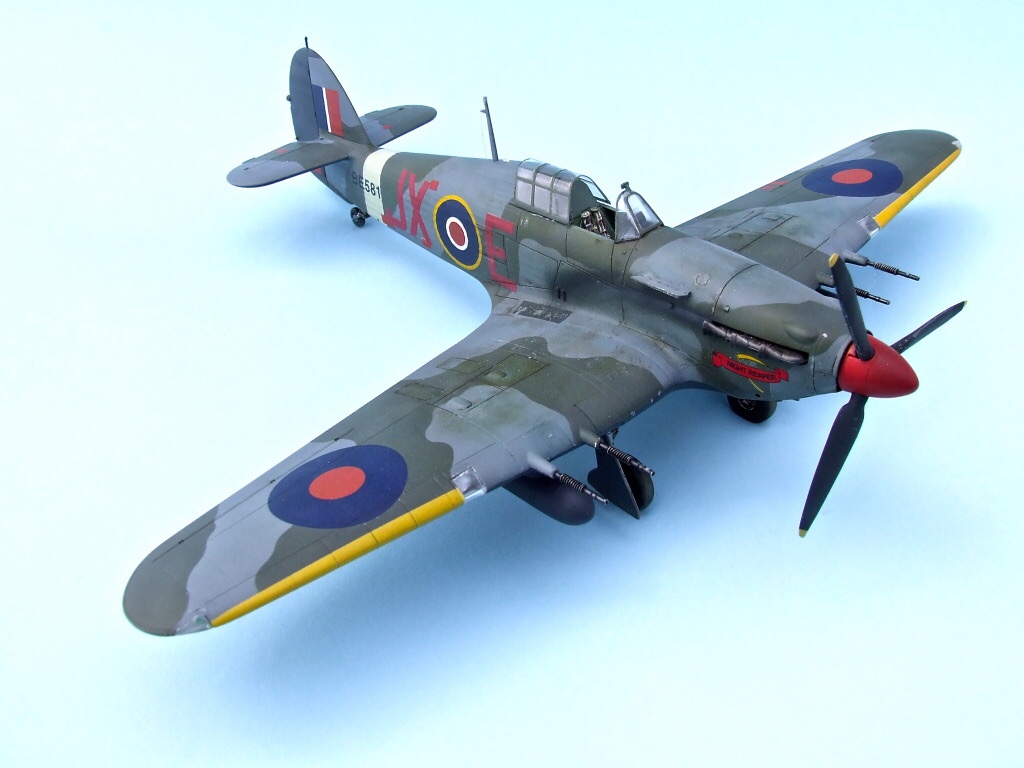
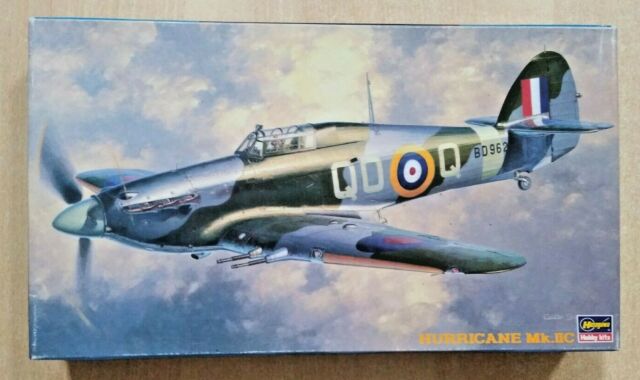
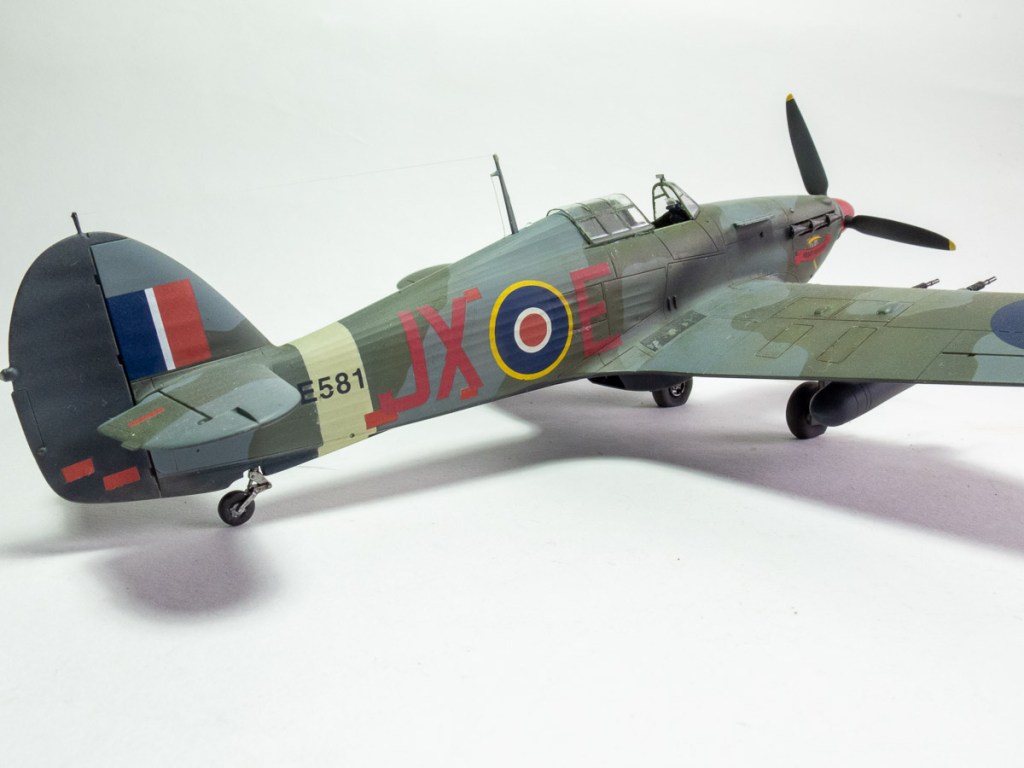
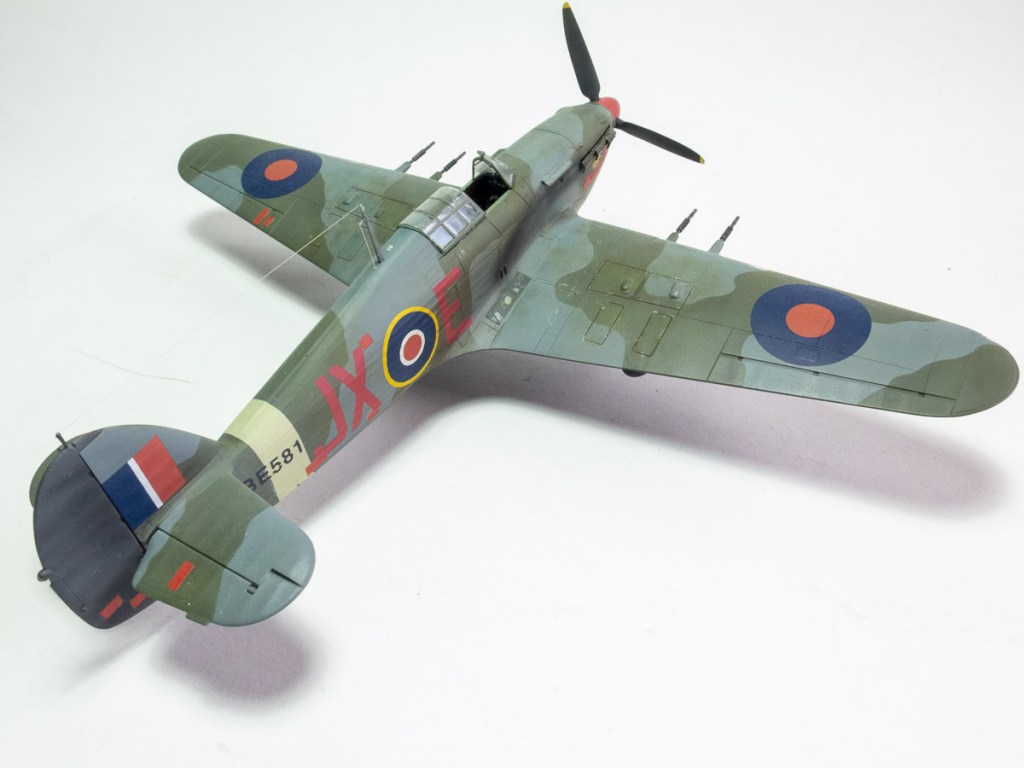
Hasegawa 1/48 Hawker Hurricane IIc

  • Built: 2012
  • Aftermarket Used: CMK Drop tanks, Ultracast seat
  • Decals: Sky Decals

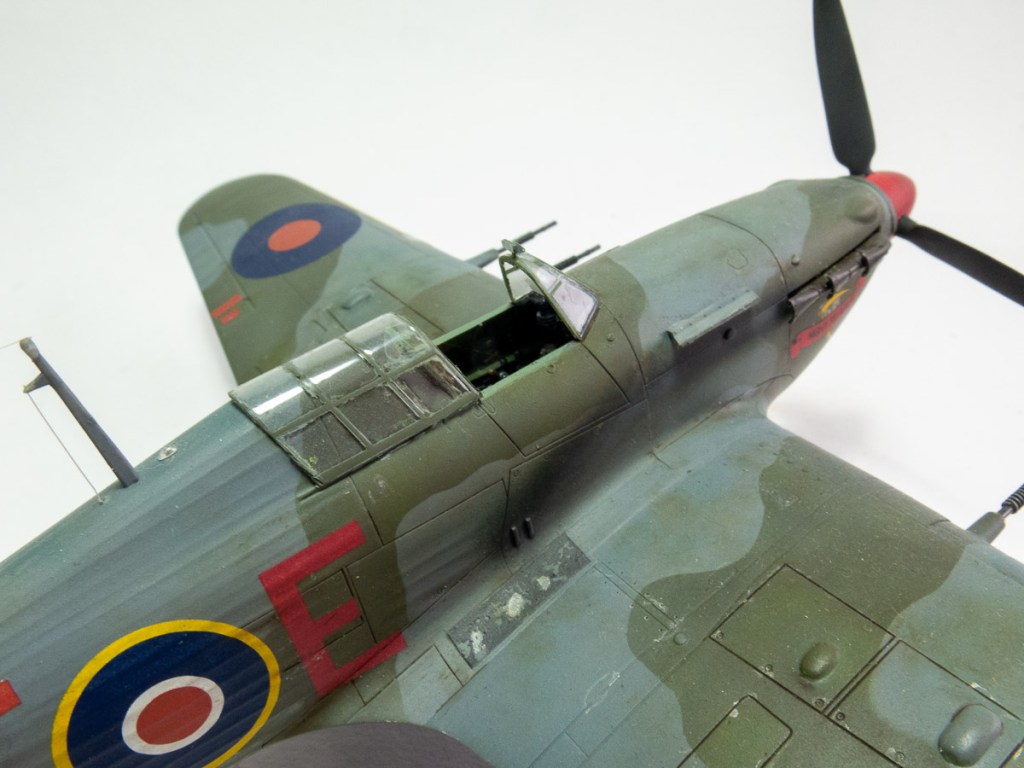
The Hurricane has to rate as one of my favourite WW2 aeroplanes. At the time it was released, hasegawa’s was probably the pick of the bunch. It did have some inaccuracies, the fabric effect was a bit too pronounced and assembly was made unnecessarily complicated by the underside, fuselage wing join being straight through the middle of the fabric detail. Totally bizarre engineering from Hasegawa. That said, its finesse and crispness of detail was light years ahead of the Monogram and Hobbycraft kits, those being the only other players on the 48 scale Hurricane field. Although the monogram kit could be built as a IID and a IV with rockets which was totally cool.

As a child I can remember building the ancient Frog kit in these markings. Who can forget that box art of Kuttlewascher blasting over the burning German hangars? So doing this kit in these markings is an ode to that original Hurricane I did long ago.

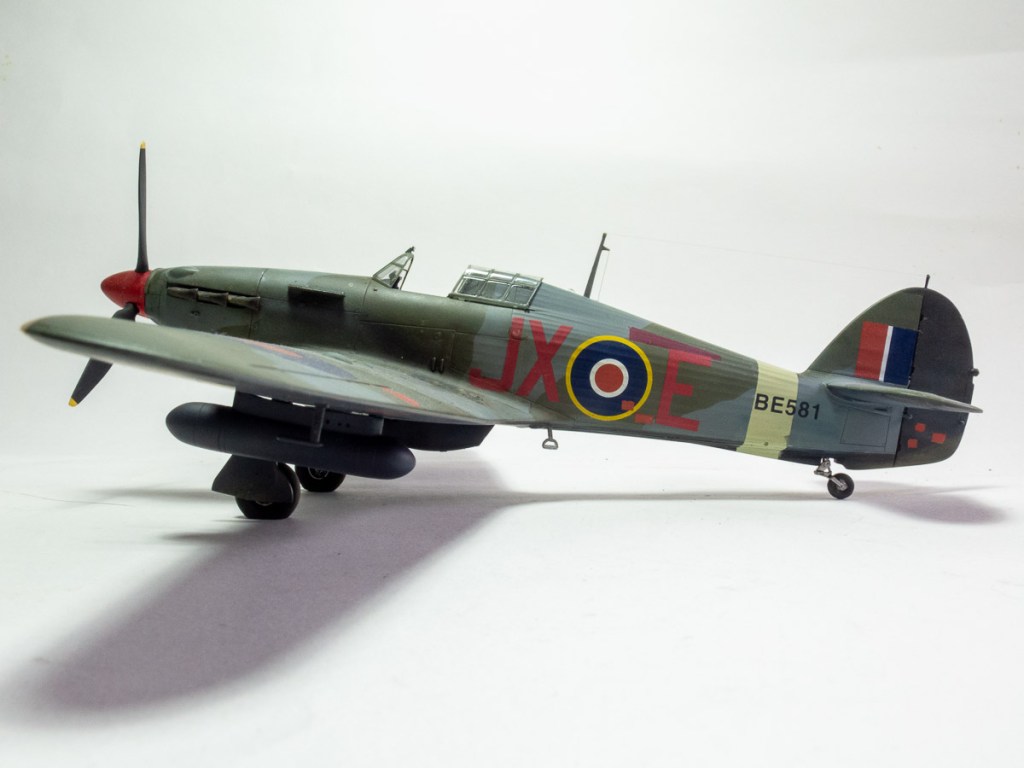
The decals came from a Sky decals sheet, with me sourcing the red dope repair patches from an old Monogram Hurricane sheet, which also came with these markings.

Paint would have been xtracolour, which was my go to paint for many years, until the Dangerous Goods Code imposed by Air carriers meant it could no longer be sourced here on shop shelves.

Hawker Hurricane Mk IIc 1 SQN Royal Air Force. Redhill. U.K 1942

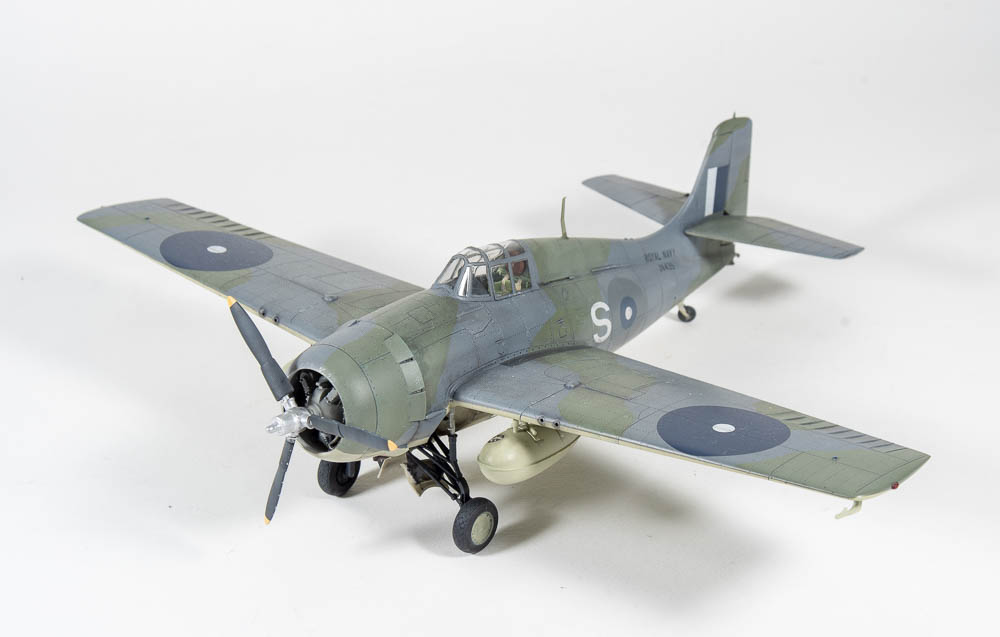
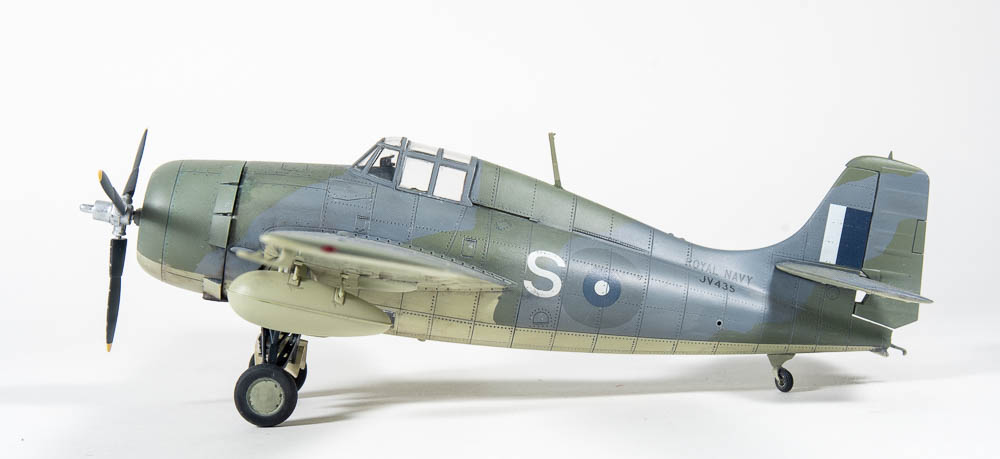
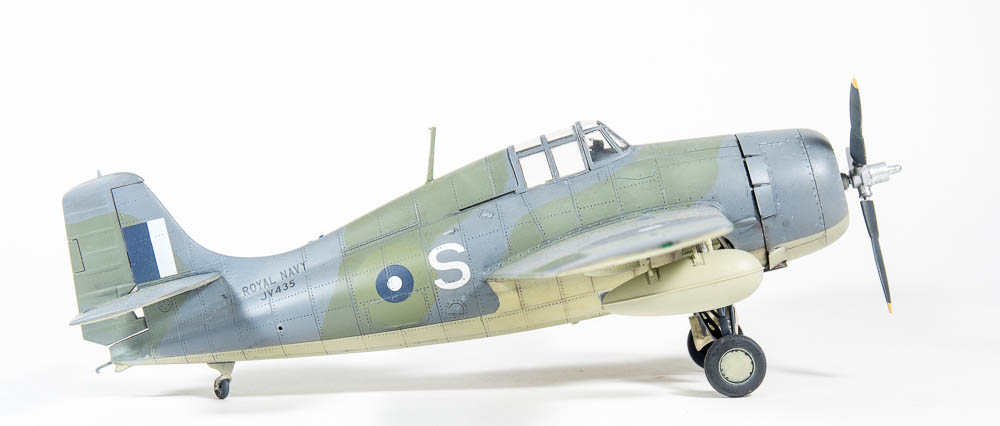
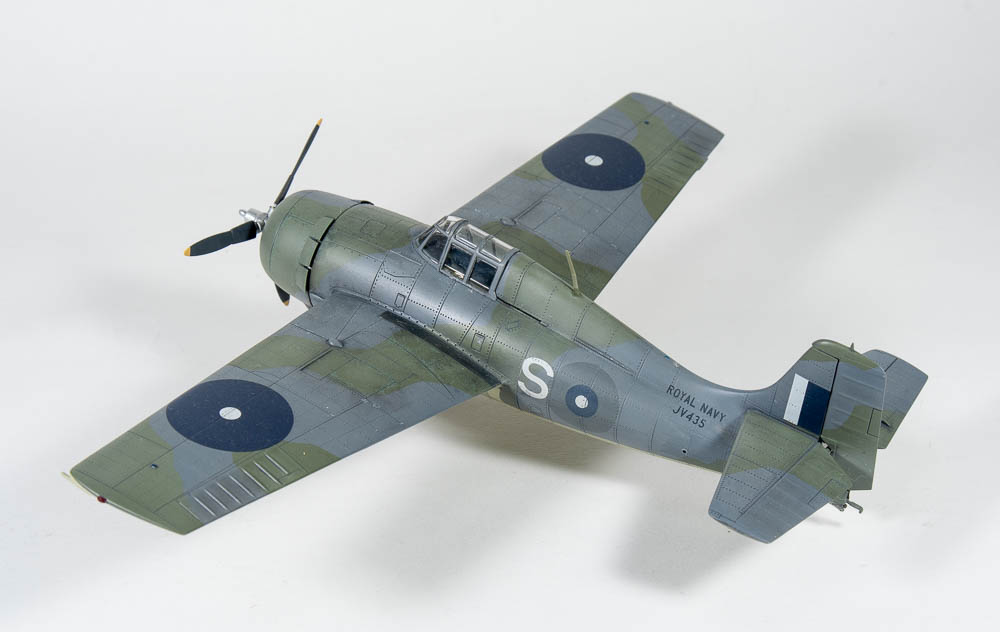
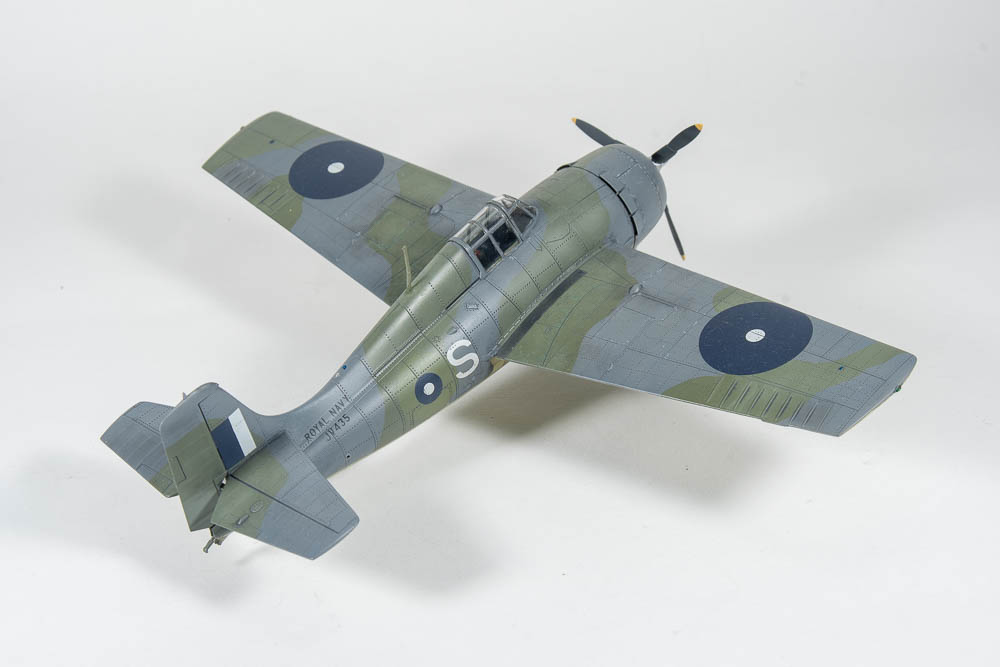
HobbyBoss 1/48 Grumman Wildcat V

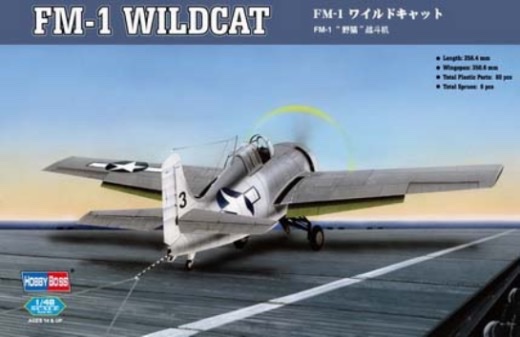
Hobby Boss 1/48 Wildcat FM-1

This image has an empty alt attribute; its file name is wildcat5.jpg

This image has an empty alt attribute; its file name is 420ce411-3482-4e99-b0c9-b7433e79f38b_4_5005_c.jpeg

  • Built: 2010
  • Aftermarket Used: Ultracast seat
  • Decals: Aeromaster

This was a lovely little kit to build, almost vice-less. As I had a F.A.A aftermarket decal sheet in the stash, I decided to build this as a British Wildcat. Working out the British equivalents to the U.S Wildcats can be a bit of a minefield, but a bit of research showed the FM-1 was called a Wildcat V by the British.

As this was built a while ago and I am writing this in 2021, I honestly can not remember too much about the build, which Im guessing means it was fairly painless.  do remember it got me a first place at Queensland Model and Hobby Expo that year, which was the first time I had won a category… So there’s that!

Paints used for this were Aeromaster acrylics.

Grumman Wildcat V 890 SQN Royal Navy 1944

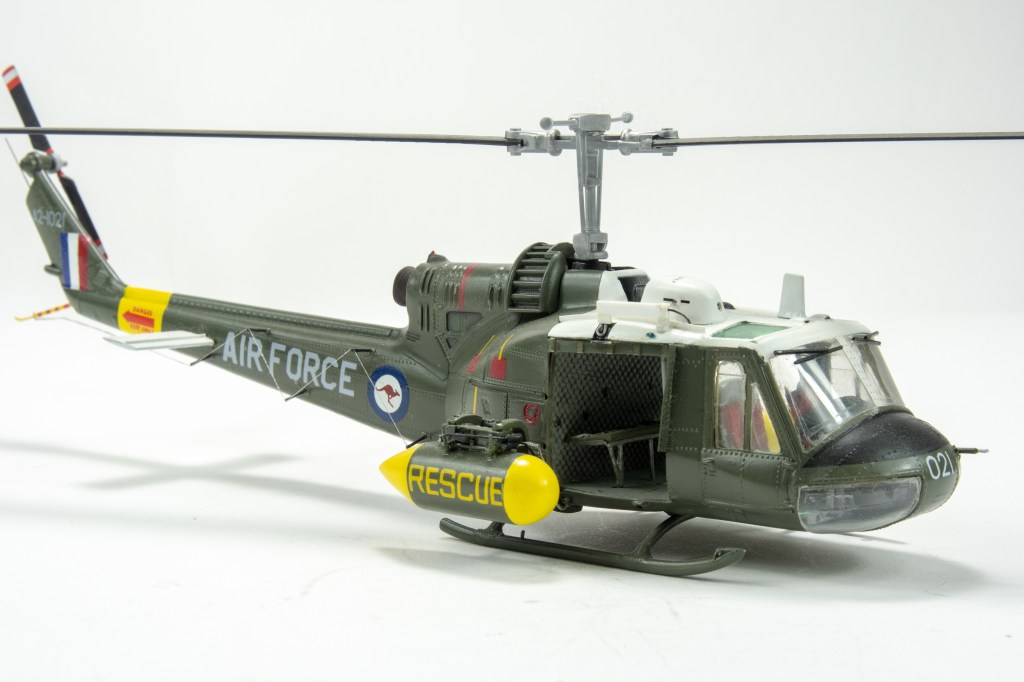
Revell 1/48 UH-1B


This image has an empty alt attribute; its file name is 5e5ea59c-8674-467c-aaf6-4df45a534280_4_5005_c.jpeg
 
 
  • Built: 2010
  • Aftermarket Used: Hamilton Hobbies UH-1B conversion
  • Decals: Custom made
Add block
 
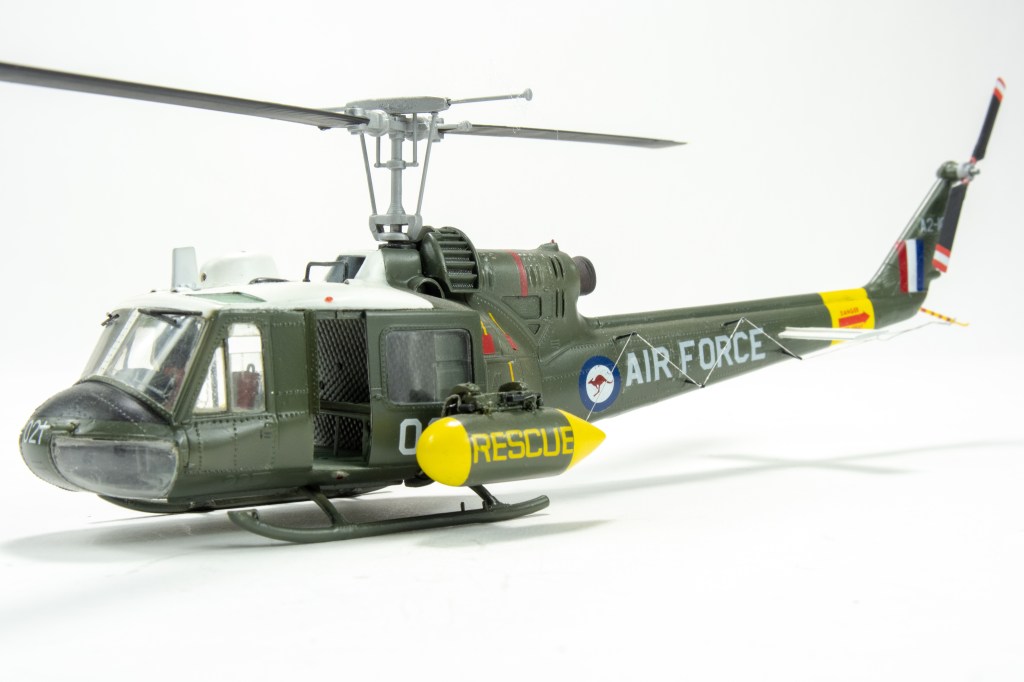
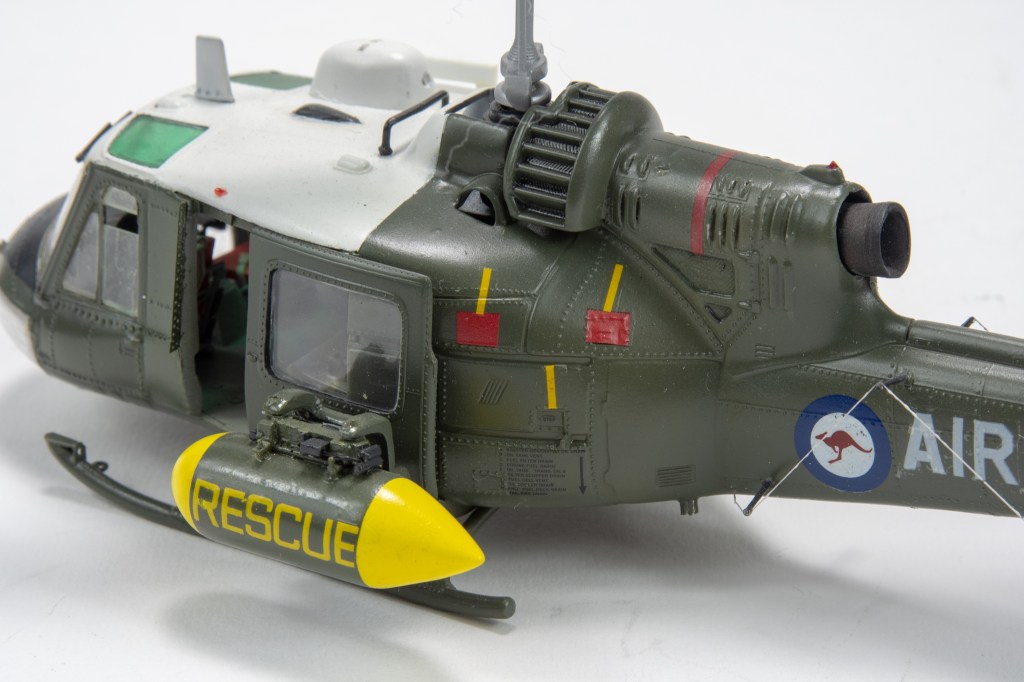
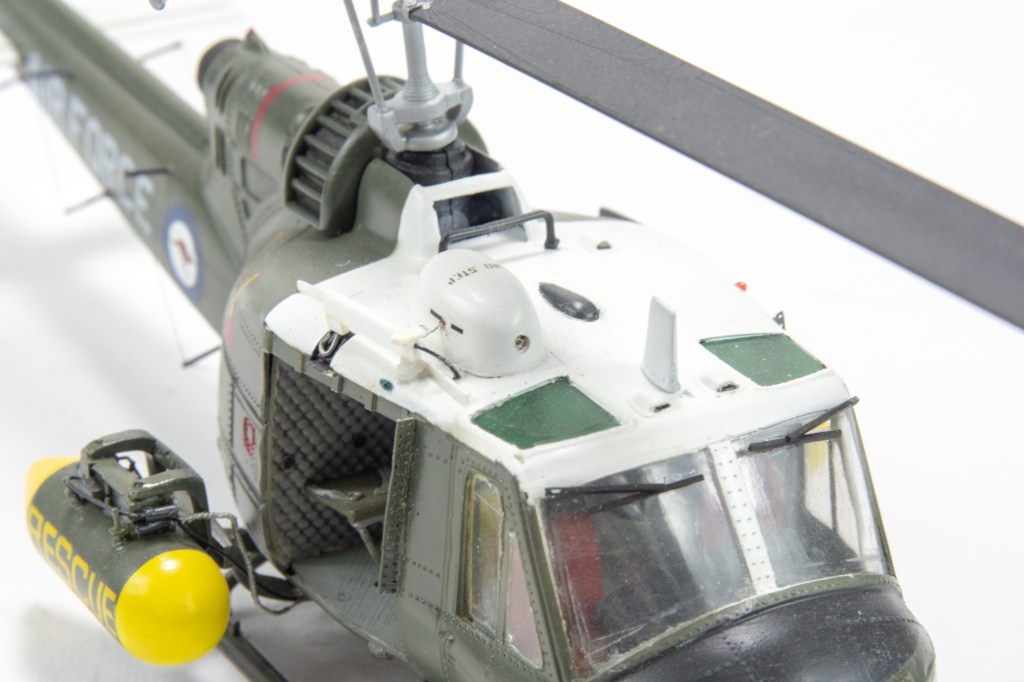
The short bodied Hueys have been woefully represented in 48 scale, with still no decent kit available.  The best of a bad bunch being the Monogram boxing, in its various boxings, which is the basis of this model.  As a young Air Training Corps cadet, this helicopter gave me my first ride in a military aircraft, and what a ride it was.  Based at RAAF Base Pearce as part of their SAR flight, in the mid seventies they were crewed by pilots and crewmen who had seen service in the recently ended Vietnam war, and boy, did they give us rides to remember.  I loved every minute of it and it started a love affair with helicopters, even though I don’t model a lot of them.
Out of the box, the monogram (although it is now boxed by revell) Huey C is a mix of B and C features, which need correcting.  As I was not building this as a gunship, I started off by cutting off the integrally moulded ammo box from the floor and filling the gap with plastic card.  The rear bulkhead is detailed with a curtain, that also got shaved off before the sound proof quilting was restored with embossed tin foil.  New scratchbuilt unarmoured pilot seats replaced the armoured kit seats.
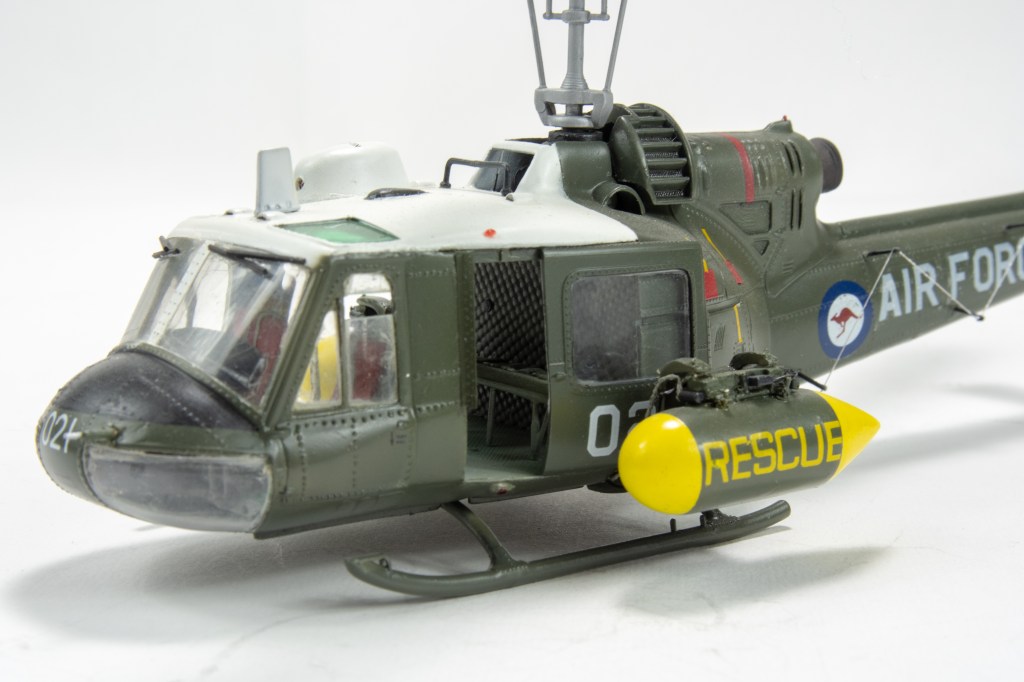
Sealing the fuselage halves up –  not a great fit-  attention turned to the roof. where a bit of rectangular stock was used for the hoist arm.  The motor housing came from Hamilton Hobbies. A local producer of home made resin conversions for ADF aircraft. Although a bit rudimentary at times they were a godsend for modellers of ADF aircraft. The roof also had the airvents repositioned to their proper locations.  The kit pylons were used to hang the Kellett tanks from.  Ryan Hamilton again doing the hard work for me by providing the tanks in his detail set. Copper wire was used for the fuel lines that run from the tanks to the airframe
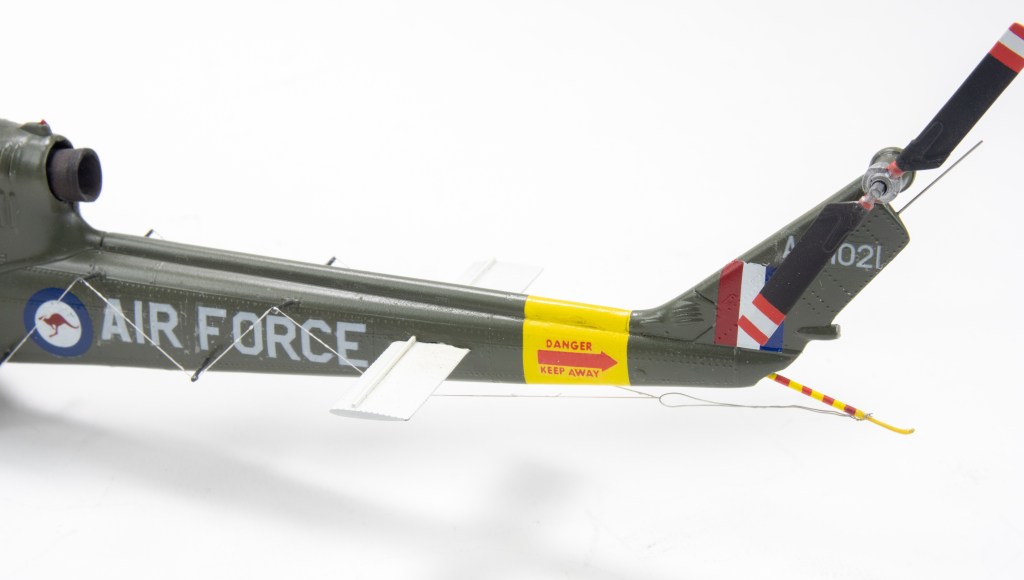
 The rotor head and blades came ftom an ESCI Huey 1D, the blades having been cut down to the shorter B length.  This assembly replacing the kits C type rotor head and wide chord blades, which were not used on the B model.  Finally, the model could be painted using Xtracolour olive drab and white with yellow trim on the tanks.  Speaking of yellow, I must have bought every sheet of yellow lettering available trying to source correct font and size for the RESCUE titles, without success, same with the AIR FORCE titles on the boom.  There was no other option, but to get custom decals made.  These cost me a small fortune, thanks to the manufacturer not using paypal or CC, so I had to transfer the money using Western Union.  This aside the finished items semed to match my photos of the real machine exactly, however they were translucent when applied, probably having been ALPS printed.  The Air Force titles have been built up with two layers to produce opaque lettering which still looks light grey rather than white.  White underlays were supplied for the tanks yellow titles, but for some strange reason, were differently sized from the yellow lettering.  In the end Ryan Hamilton came to my rescue (pun intended) with some decent yellow RESCUE titles.  All that was left to do was add the rear aerial from brass wire and EZ line and she was done.  Looking at the photos, you can make out it is well below my best work, but I just cannot bring myself to retire it yet.  Perhaps because of the memories it brings back to me.  It is definitely a model I will revisit once someone releases a decent B model in 35th scale.  Ronin Decals of Australia hopefully will release his long promised Huey history sheet in 35 scale as well EDIT, still has not been released as of 2021.

Bell UH-1B SAR Flight 2 Flying Training School. Royal Australian Air Force. Pearce. West Australia 1977

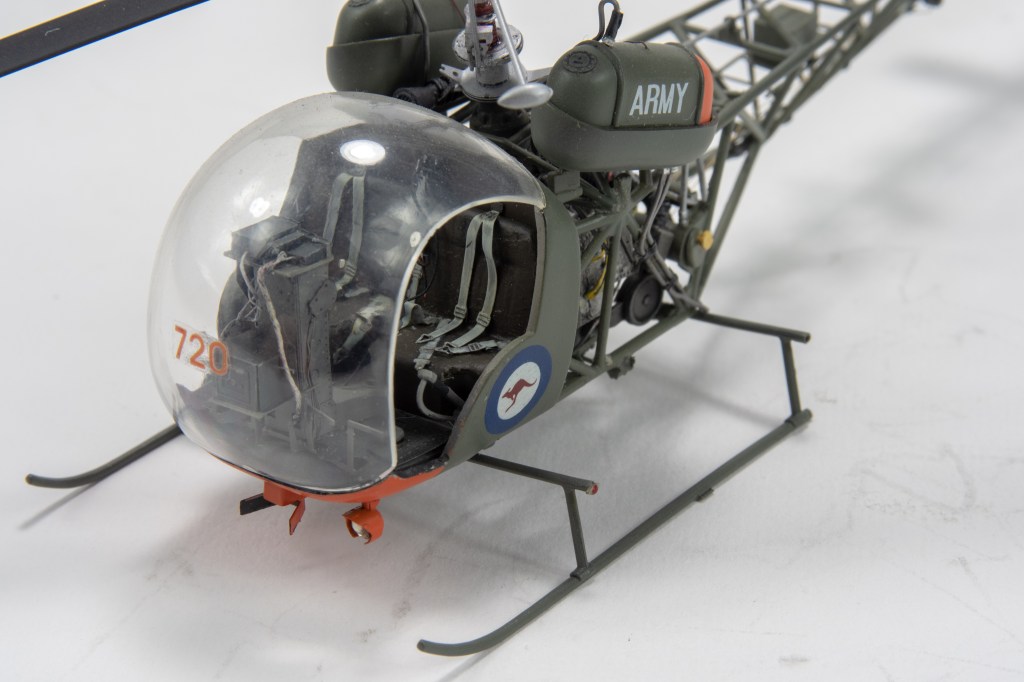
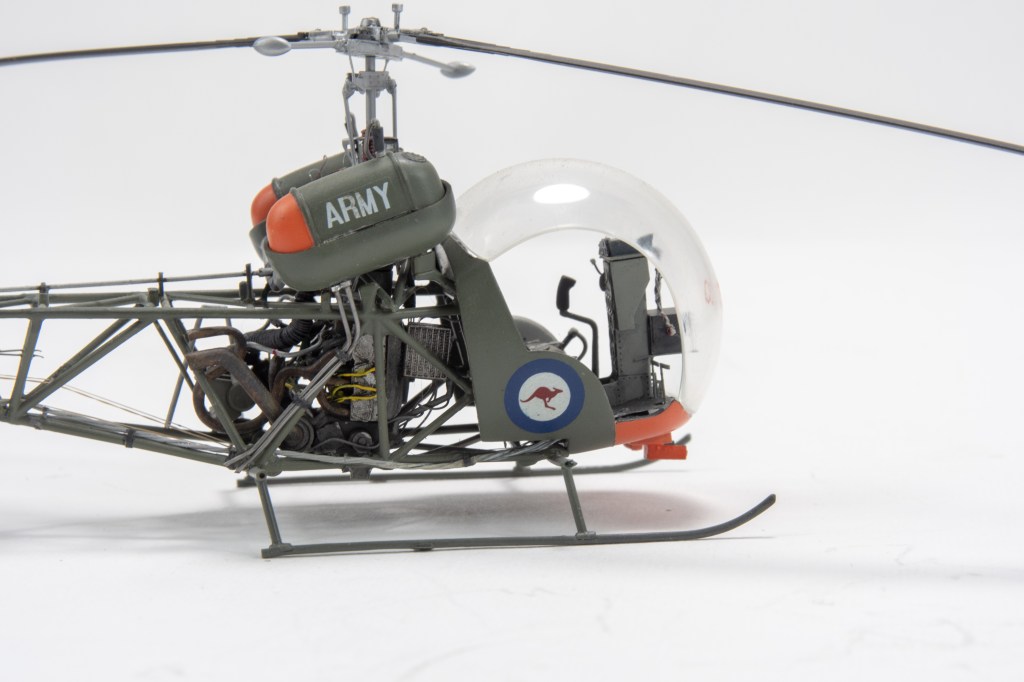
Italeri 1/48 Bell 47G Sioux


This image has an empty alt attribute; its file name is ced2d785-ae25-447a-893a-447401e2f2fc_4_5005_c.jpeg
 
 
  • Built: 2009
  • Aftermarket Used: Dedicated Eduard PE set
  • Decals: Hawkeye Australia decals
 

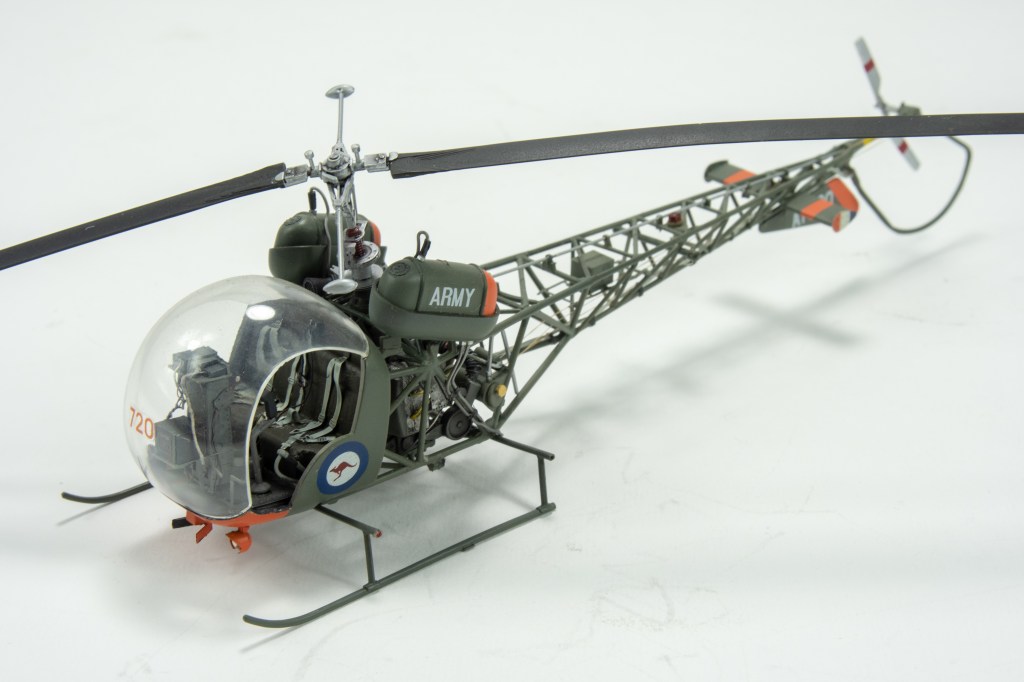
This is from a time when I was looking to build all post war Australian Defense Force aircraft, starting with helicopters.  A theme that kind of petered out despite me owning at one time all available kits of aircraft that fit this theme. 

Anyway, I had an excellent set of walk-around photos I took of the Sioux at the now closed, greatly missed Air World Air Museum in Wangaratta. Victoria.

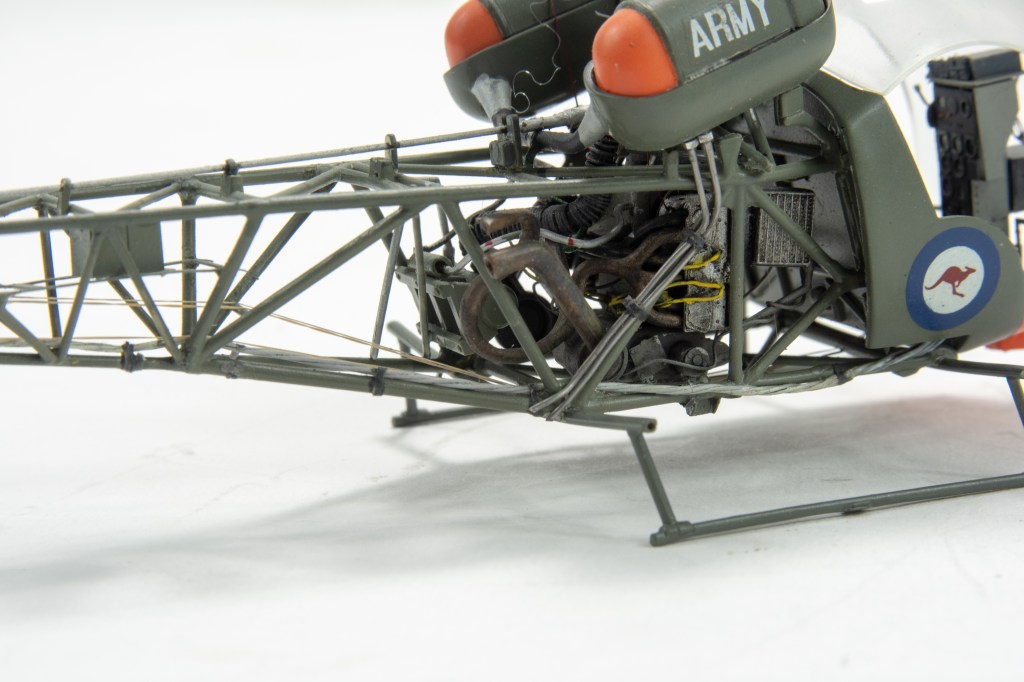
Using these as reference, I decided the kit boom was overscale and proceeded to cut out all the cross members rebuilding them  from brass rod.  I kept the plastic main horizontal beams for ease of working.  If I was to do it now, I would rebuild the whole boom, soldering all the joins.  PE was used from the set to enhance the engine, swash plates and cockpit. Additional radios were scratchbuilt and added to the instrument panel as per my photographs.  EZ line was used for the control cables, whilst wire was used for the fuel lines.
   Its a spindly little thing and I’m surprised its survived the house moves it has, and it still resides in my cabinet. It is starting to look a little sad as you can see by the drooping rotor.
  Paint was Xtracolour and decals by hawkeye.  I was not impressed with the decals at all, but they were the only game in town, and still are, although far better roo roundels are available from Ronin Aviation Graphics here in Australia and Xtradecal from the U.K. At the time I was quite impressed with it, although its certainly not up to my current standards.  I wouldn’t mind repeating the build at some stage with the 1/35 scale kit as I’ve always liked the little Bell.

Bell 47G Sioux 161 Recce SQN Australian Army. Oakey. Queensland 1973

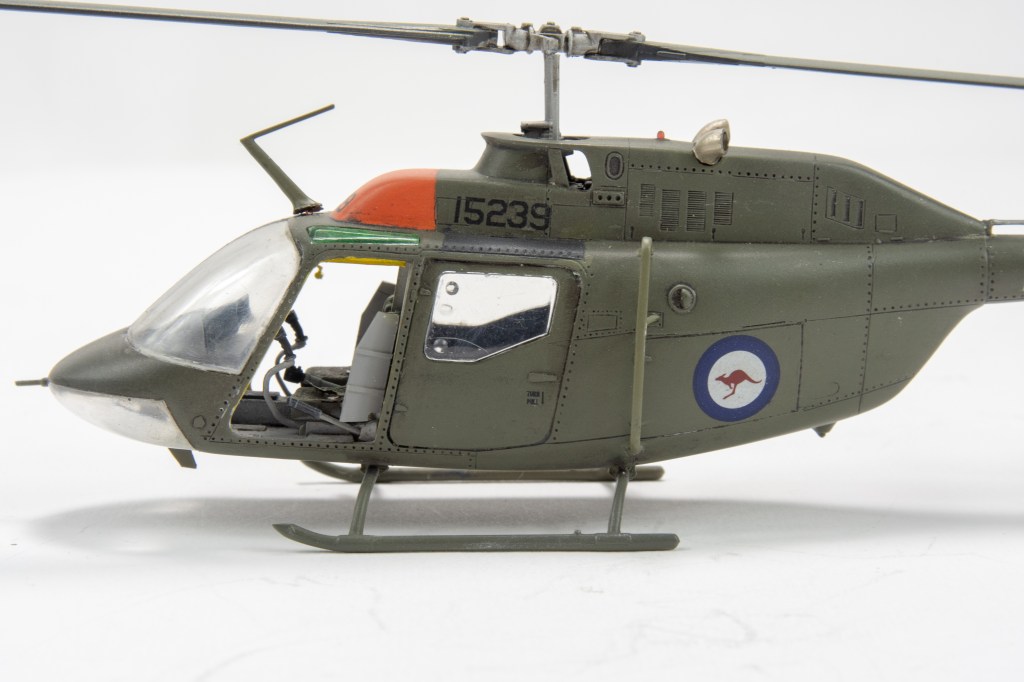
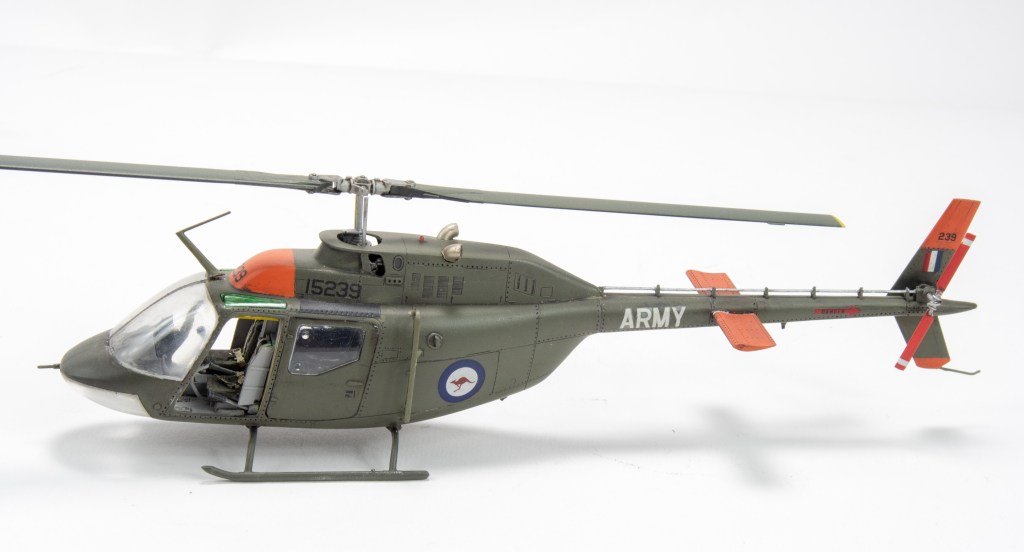
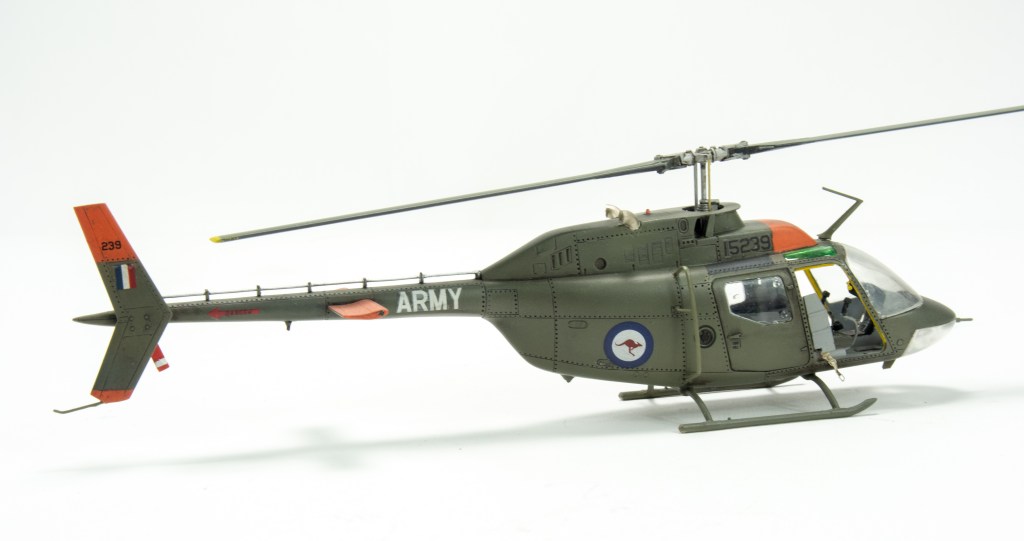
ESCI 1/48 OH-58 Kiowa

This image has an empty alt attribute; its file name is d013f57b-a929-4cdc-a6a4-a291c4f70cdd_4_5005_c.jpeg


Add block
  • Built:2008
  • Aftermarket: Used: Eduard Seat belts
  • Decals: Combination of kit and Hawkeye Australia
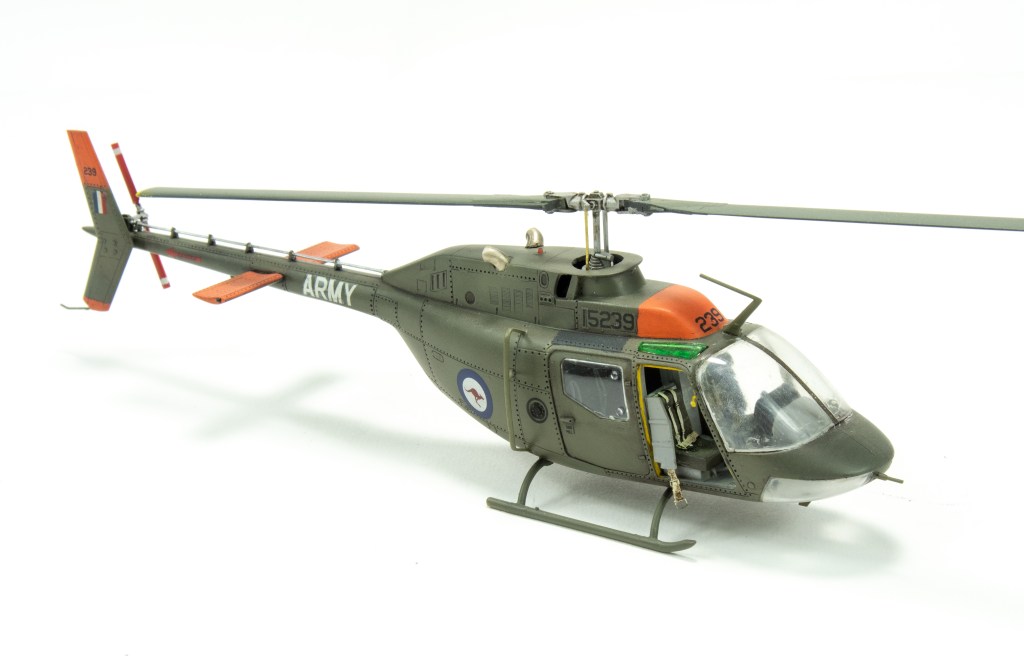
I did three models of the Kiowa to show its evolution and represent the various schemes it wore whilst used by the Australian Defence Forces during its service life.
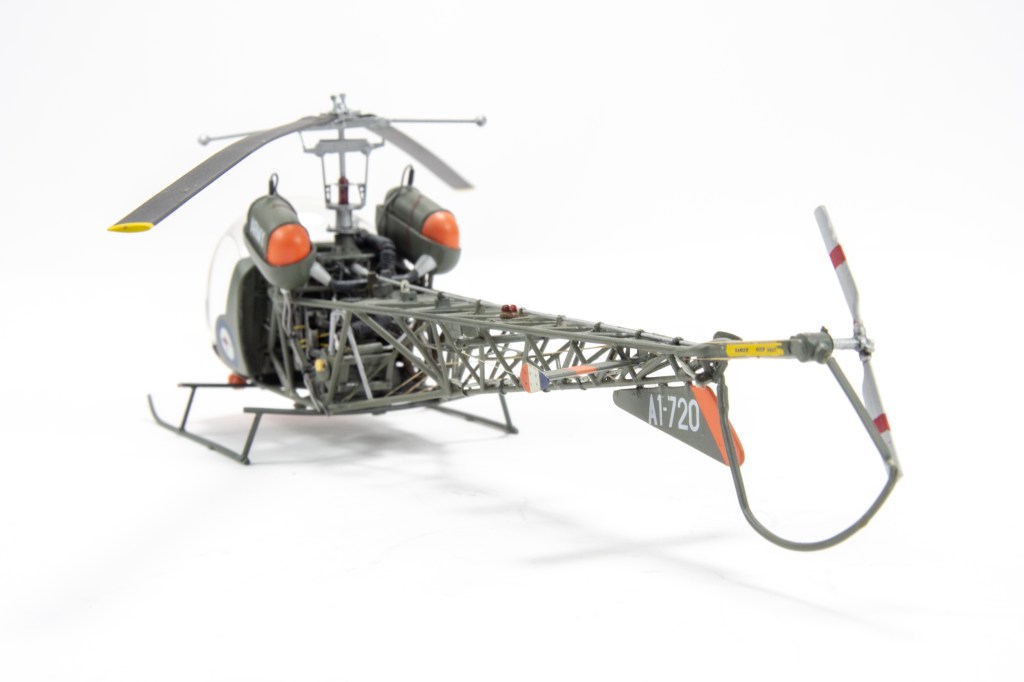
Our first Kiowas were leased from the US Army during the Vietnam War to replace the ageing Sioux, As such, these eight machines still retained the US serial numbers. In model form, this  was easy enough to do straight from the box, the only addition being seat armour added from plastic card and strip. A set of Eduard seatbelts completed the cockpit. The model was painted with xtracolour Olive Drab and international orange before being decalled using the ARMY titles from the box with the roundels and serial numbers coming from the spares box. This model left the collection in 2021.

Bell OH-58 Kiowa. 161 Flight. Australian Army. Nui Dat. Sth. Vietnam 1971

Trumpeter 1/48 Sea Fury F.B11

  • Built: 2012
  • Aftermarket Used: PP Aeroparts spinner and blades,
  • Decals: Aussie Decals

i Think everyone who likes this machine was quite excited when Trumpeter revealed they were releasing a badly needed new tool kit to replace the ageing HobbyCraft kit. That anticipation quickly melted when everyone saw what a complete hash Trumpeter had made it, as they do with a lot of their British subjects.

The details of this build have been lost to time, but I do remember a lot of remedial work was required to accurise it.

This involved building up the strange scallop shaped cockpit opening, replacing the bulborous spinner with a PP aeroparts one, or was it W.E.M, cant remember!

In fact quite a lot of PP aeroparts were used from their very comprehensive set designed for the Hoobycraft kit.

These days were I to do this one again, I would use the lovely Airfix kit. But I won’t be as I have the lovely Fisher Models 1/32 scale kit in the stash.

I only just recently sold this one, so it had stayed with me for quite some time.

Hawker Sea Fury F.B11 Royal Australian Navy F.A.A Nowra.

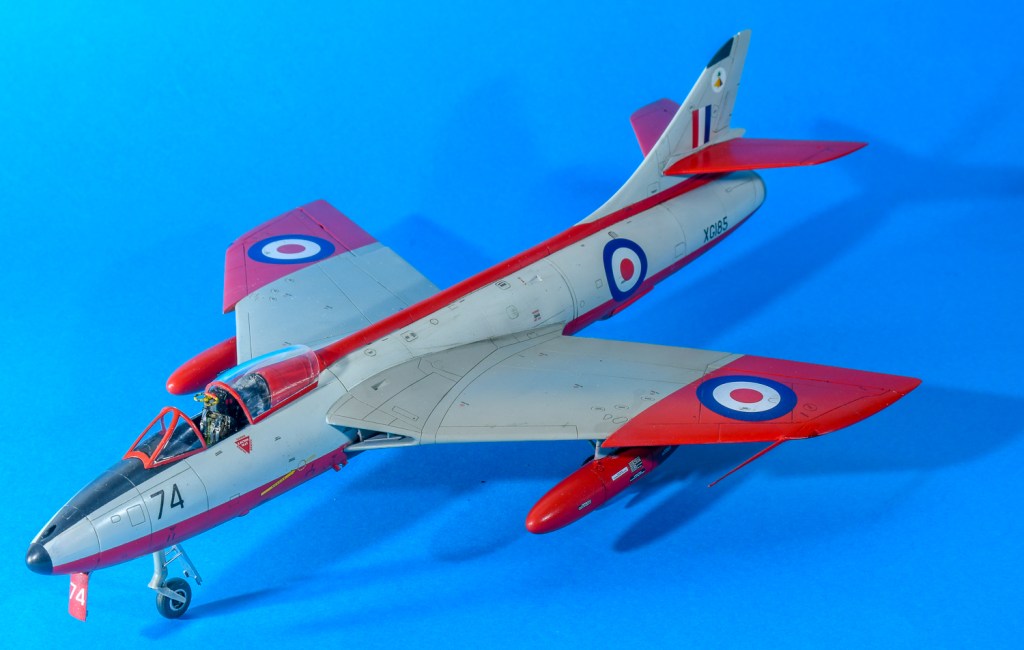
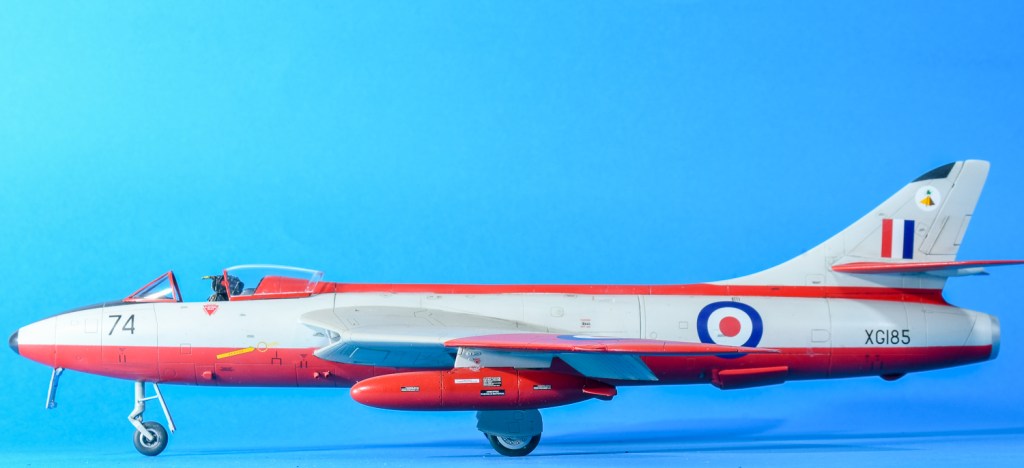
Airfix 1/48 Hawker Hunter F6

  • Built: 2019
  • Aftermarket Used: Eduard P.E Flap set . Eduard dedicated cockpit set
  • Decals: Xtradecal

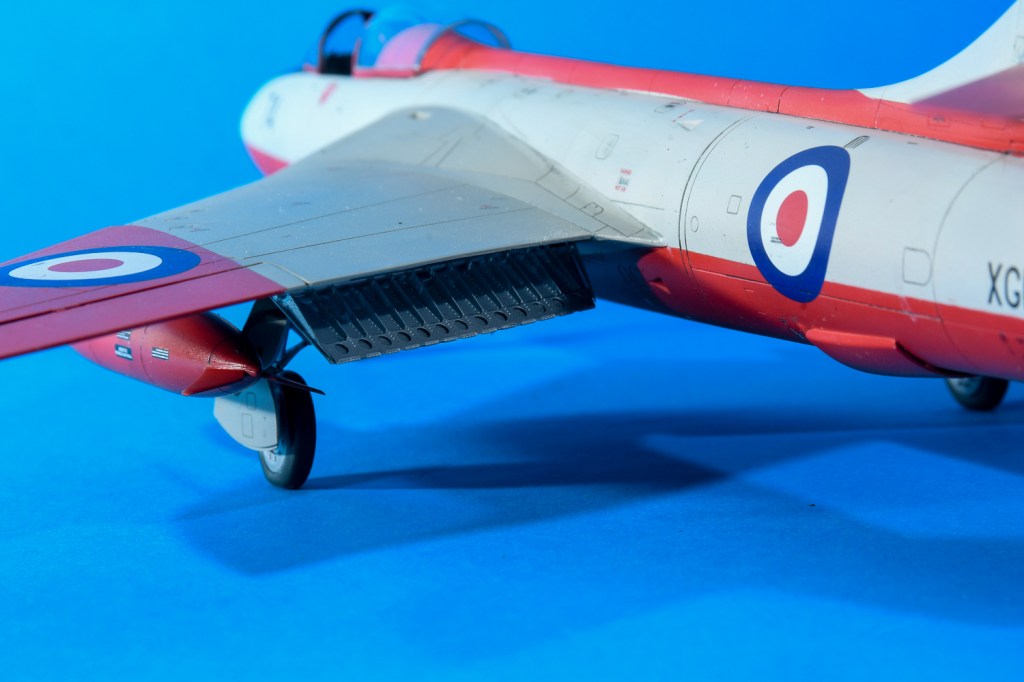
Ive previously mentioned I’m loving Airfix’s new releases. The Hunter was a monty for them to put out in 48 scale, but I feel they have rushed this kit a little. It is decidedly lacking the detail of some of their other releases such as the Walrus and Blenheim. Lacking in both cockpit and surface detail, the flap bays are also strangely devoid of detail despite Airfix offering them as separate parts, so the lack of moulded ribs and stringers is mystifying can be displayed down. Airfix have also missed a door actuator off the front nose wheel leg, as only one is provided.

The model builds quickly and easily. I cant remember too many issues. ( for some reason, I failed to write this up after completing the kit, so this is being written up about two years after building the kit) The blue tac I used to hold the canopies to an old paintbrush handle whilst spraying them left a stain that could not be removed, even using Mr Thinner, which normally removes everything else. A reaction to the blu tac is the only thing that comes to mind that would have caused the stain as it would not polish out or wipe off using the afore mentioned Mr Thinner. This forced me to cut apart the closed canopy as the model would be displayed with open canopy.

The hunter had many interesting schemes, airfix though provide options for three simply camouflaged machines, albeit, from two different Air Forces. A more interesting scheme was found on an Xtradecals sheet which had been in the decal bank for some years, looking for an excuse to be used.

Gunze Shine Red stood in for a very passable R.A.F. Signal Red. Gunze was also used for the Light Aircraft Grey with M.R.P Light Arctic Grey which is an off white being used for the white. It looks white out of the bottle, but when compared to the white of the roundels one can definitely see its a very pleasant grey. Its defiantly a masking intensive scheme, but certainly is eye catching.

And thats the Airfix Hunter, a decent, but not outstanding kit. I am perplexed though why Airfix has not followed it up with the F.G.A.9

Hawker Hunter F6